Artwork
The Mendicant Friar
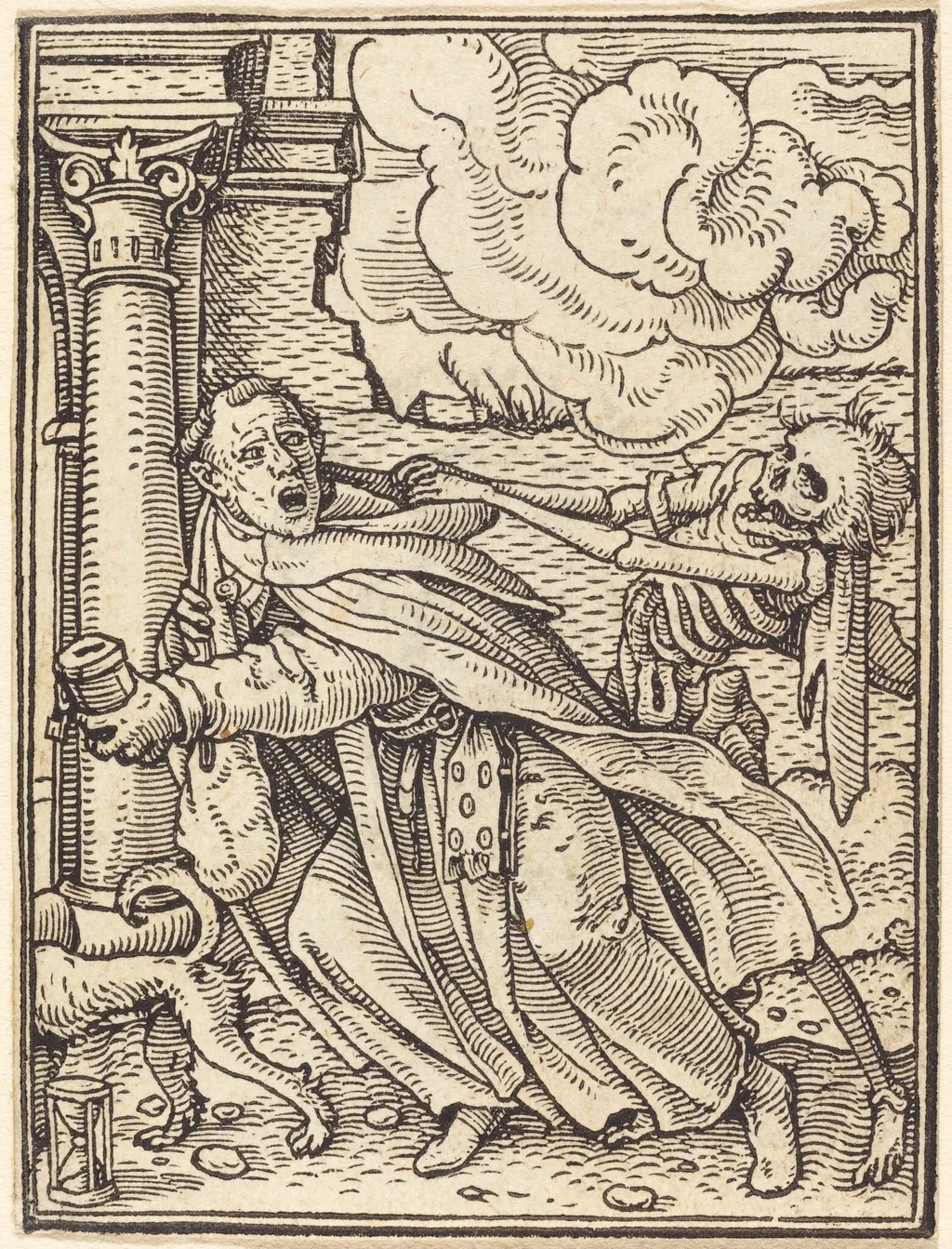
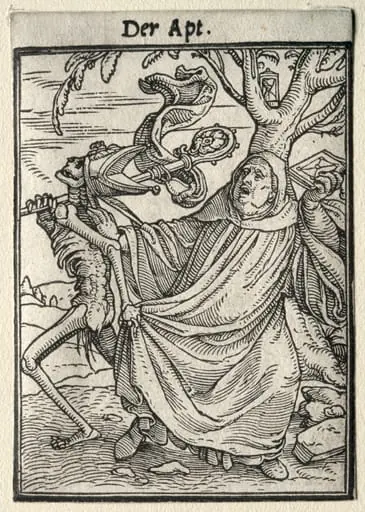
The Mendicant Friar is an ink print by the Renaissance artist Hans Lützelburger. It dates from 1526 and is held in the collection of the National Gallery of Art.
About this work
Overview
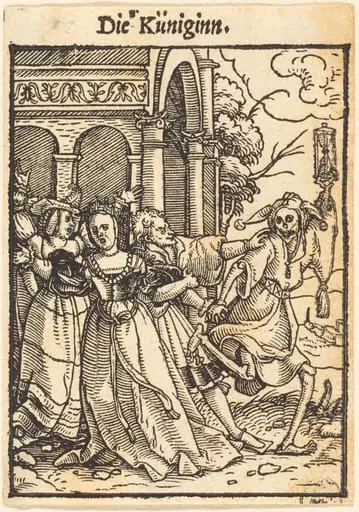
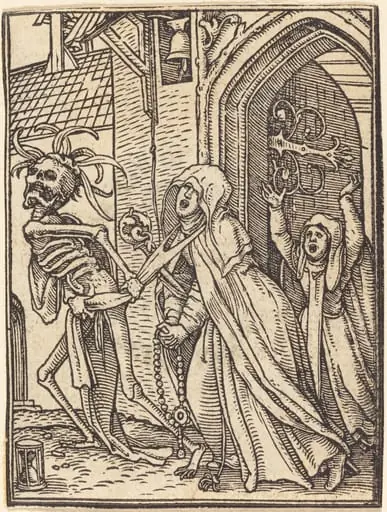
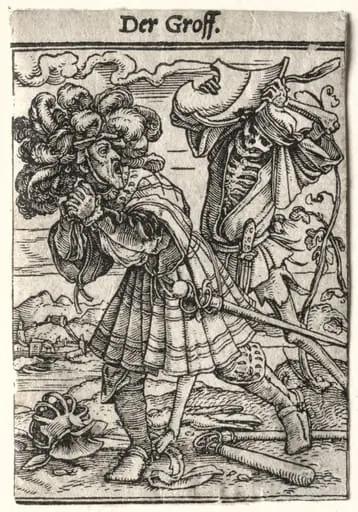
Lützelburger was renowned for his precision in carving woodblocks, particularly for the *Dance of Death* series after Holbein’s designs.
Created around 1526 by Hans Lützelburger, a skilled German blockcutter based in Augsburg, this woodcut is one of his final works. Lützelburger was renowned for his precision in carving woodblocks, particularly for the *Dance of Death* series after Holbein’s designs. He died in June 1526, leaving this piece unfinished or among his last outputs. The image reflects the technical mastery and thematic gravity characteristic of early 16th-century German printmaking.
Subject & Meaning
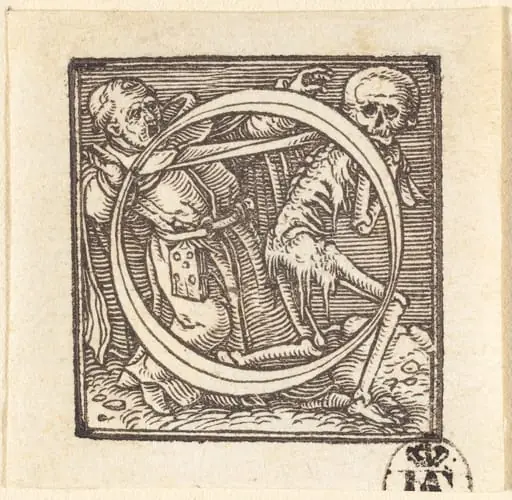
The figure is a mendicant friar, a member of religious orders that renounced personal property and relied on alms. Depicted in distress, entangled in ropes and surrounded by spectral forms, the friar appears subjected to spiritual or moral turmoil. The hovering cloud and winged figures suggest divine judgment or demonic influence, aligning with contemporary moralizing imagery that warned against hypocrisy or spiritual failure within religious life.
Technique & Style
Executed as a woodcut, the image relies on carved lines to create contrast between inked forms and the white paper. Lützelburger’s fine, dense linework generates a sense of agitation and overcrowding, with overlapping figures and intricate details in the friar’s robes and the surrounding apparitions. The lack of perspective and compressed space heighten the emotional intensity, typical of Northern European prints designed for moral instruction rather than naturalism.
History & Provenance
Lützelburger’s career centered on producing blocks for publishers in Augsburg, often collaborating with artists like Holbein. Though he died before completing the *Dance of Death*, his reputation endured through his technical contributions. *The Mendicant Friar* likely circulated as a standalone print, possibly used in devotional or didactic contexts. Its survival suggests it was valued for its imagery, though its exact early ownership remains undocumented.
Context
In early 16th-century Germany, religious reform and criticism of clerical excesses were widespread. Images of corrupt or suffering friars resonated with public sentiment, especially as reformers questioned monastic wealth and piety. This print fits within a broader visual culture that used allegory and supernatural elements to critique religious institutions, reflecting tensions that preceded and accompanied the Protestant Reformation.
Legacy
Lützelburger’s work, though limited in surviving output, influenced the development of narrative woodcut in Germany. His ability to convey complex scenes with fine detail set a standard for later printmakers. *The Mendicant Friar* remains a rare example of his independent composition, offering insight into how moral themes were visually articulated in the years just before the Reformation reshaped religious imagery across Europe.
Artist & collection

Artist
Hans Lützelburger (died June 1526), also known as Hans Franck, was a German blockcutter ("formschneider") for woodcuts, regarded as one of the finest of his day.