Artwork
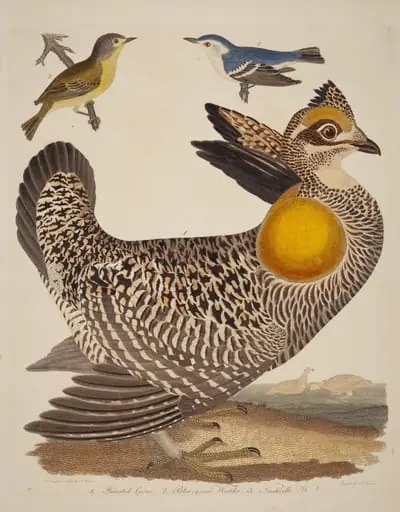
American Ptarmigan and White-tailed Grous
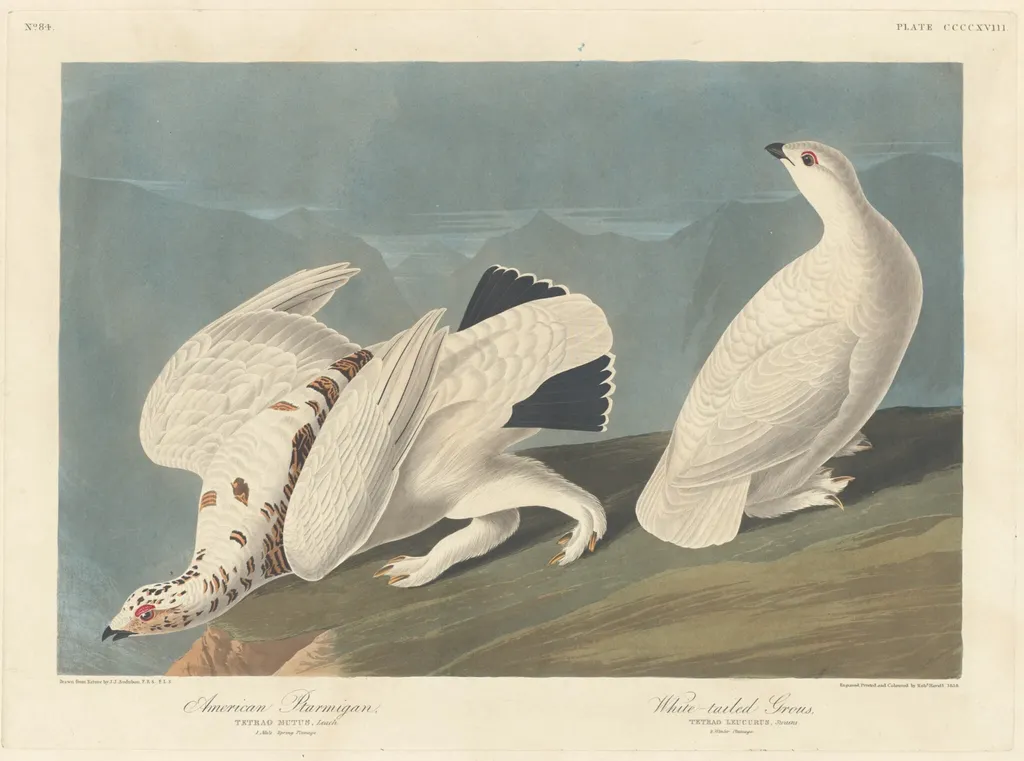
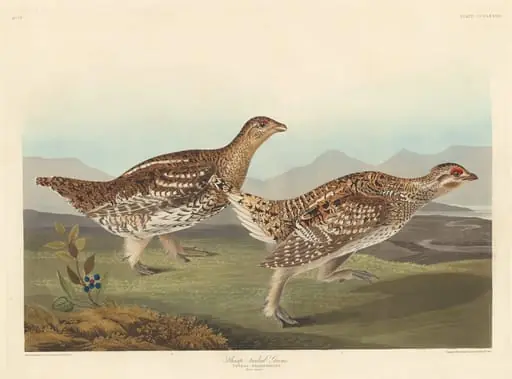
American Ptarmigan and White-tailed Grous is an ink print by the Romanticist artist Robert Havell Jr.. It dates from 1838 and is held in the collection of the National Gallery of Art.
About this work
Overview
, this print combines hand-colored engraving and aquatint on Whatman wove paper.
Created in 1838 by Robert Havell Jr., this print combines hand-colored engraving and aquatint on Whatman wove paper. It belongs to a series of ornithological illustrations produced during the early 19th century, reflecting the Havell family’s reputation for technical precision in printmaking. The work was made in London, where the Havells were prominent publishers of natural history imagery, particularly through their association with John James Audubon’s projects.
Subject & Meaning
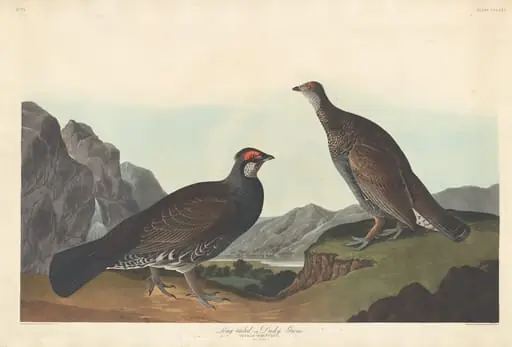
The image depicts two North American grouse species: the American ptarmigan and the white-tailed grouse. One bird displays a mottled brown-and-white plumage, while the other is nearly all white, likely representing seasonal plumage variation. Their placement in a quiet, open landscape suggests an emphasis on natural behavior rather than scientific documentation. The composition invites contemplation of the birds’ adaptation to their environment, aligning with broader 19th-century interests in wilderness and ecological observation.
Technique & Style
Havell employed aquatint to achieve subtle tonal gradations in the sky and terrain, while fine engraving defined the birds’ feather textures. Hand-coloring was applied with care to match the birds’ natural hues, enhancing realism without overt stylization. The use of Whatman paper, prized for its durability and smooth surface, allowed for precise ink retention and delicate color layering. The style reflects a commitment to scientific accuracy tempered by aesthetic restraint, characteristic of British natural history illustration of the period.
History & Provenance
Robert Havell Jr. inherited his father’s print shop and continued its legacy of producing high-quality natural history prints. This work was likely part of a larger publication or commission tied to ornithological studies of North American fauna. Though not directly linked to Audubon’s Birds of America, it shares the same milieu of detailed avian illustration. The print’s survival in museum collections indicates its early recognition for technical merit and its role in disseminating knowledge of American wildlife to European audiences.
Context
In the 1830s, European interest in American wildlife surged as naturalists and collectors sought to document the continent’s biodiversity. British publishers like the Havells capitalized on this trend, producing illustrated works for educated audiences. While Romanticism influenced the serene landscapes in such prints, the primary aim remained empirical: to record species with fidelity. This print exists at the intersection of science, commerce, and visual culture during a period of expanding natural history publishing.
Legacy
The Havell family’s prints, including this one, contributed to the standardization of ornithological illustration in the 19th century. Their technical approach influenced later natural history publishers and helped shape public understanding of North American birds. Though less celebrated than Audubon’s larger works, these prints remain valued for their craftsmanship and quiet precision, serving as enduring records of early American wildlife documentation through European artistic traditions.
Artist & collection

Artist
The Havell family of Reading, Berkshire, England, included a number of notable engravers, etchers and painters, as well as writers, publishers, educators, and musicians.