Artwork
Blue-winged Yellow Warbler
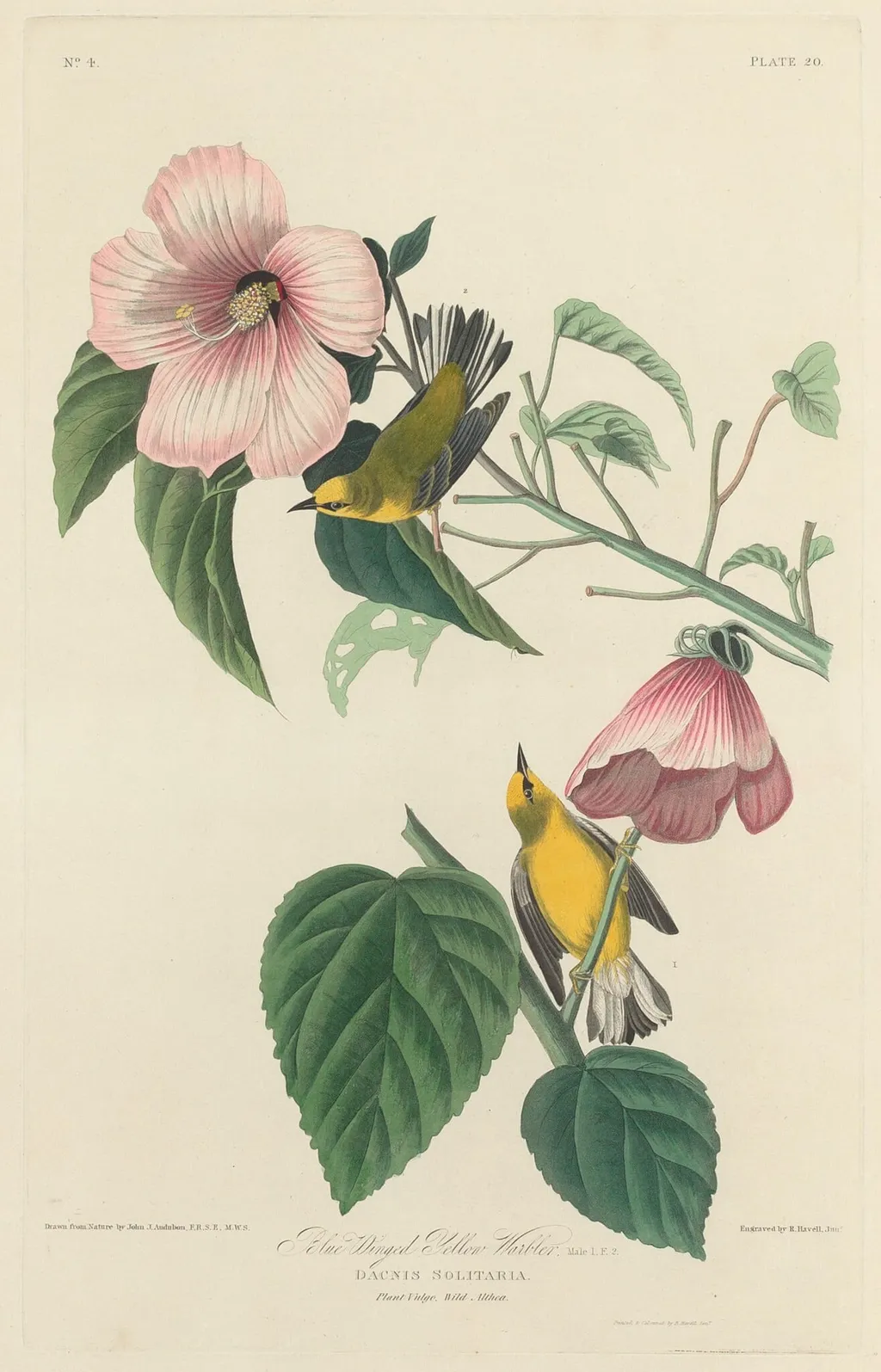
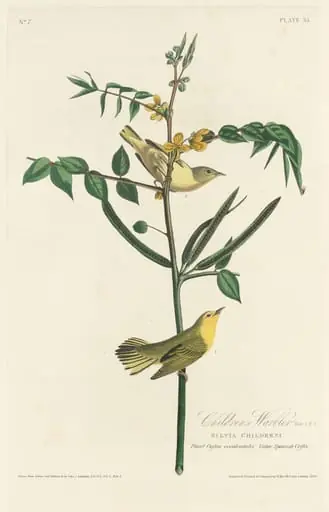
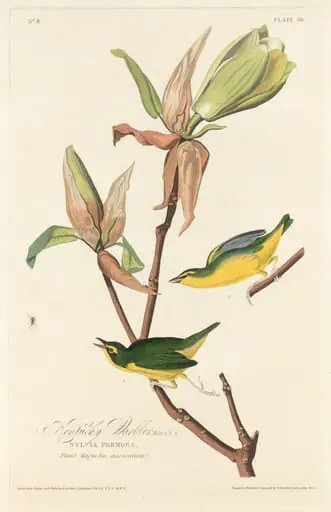
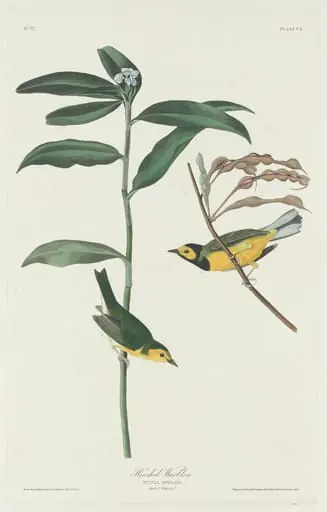
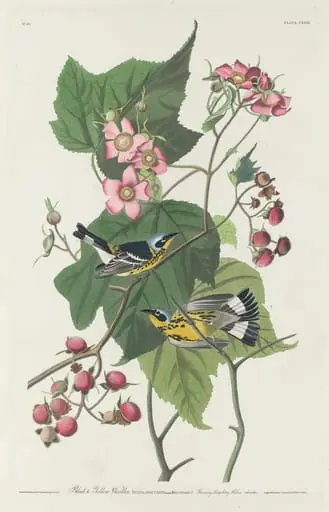
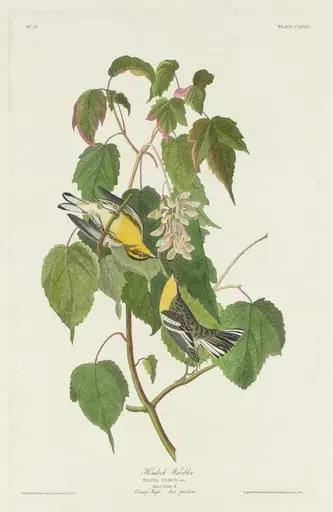
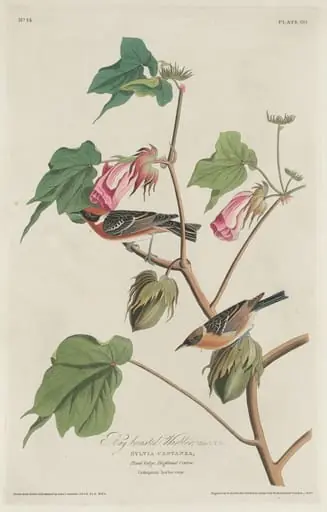
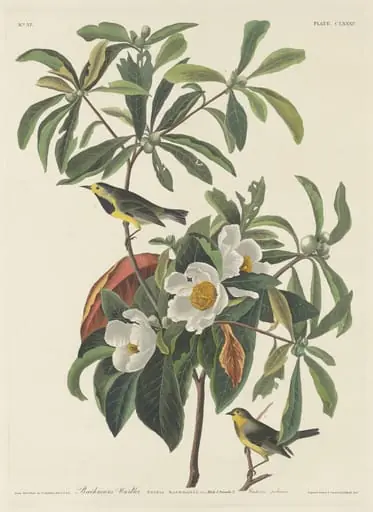
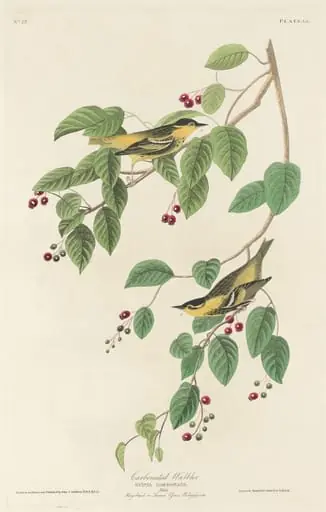
Blue-winged Yellow Warbler is an ink print by the Romanticist artist Robert Havell Jr.. It dates from 1827 and is held in the collection of the National Gallery of Art.
About this work
Overview
Robert Havell Jr.’s *Blue‑winged Yellow Warbler* is a hand‑coloured engraving combined with aquatint, executed in 1827 on Whatman wove paper. The print measures a modest size typical of natural‑history studies of the period and presents a single bird rendered in profile against a neutral background.
Subject & Meaning
The image records a blue‑winged yellow warbler, a small North‑American passerine, shown in a lifelike pose that emphasizes its distinctive plumage and form. By isolating the bird, the work serves both as a scientific illustration and as a visual celebration of the species’ delicate anatomy.
Technique & Style
Havell employed fine line engraving to delineate the bird’s outline, then applied aquatint to achieve subtle tonal shifts across the feathers. Hand‑colouring adds precise hues to the yellow body and blue wing patches, while the aquatint’s gradations convey depth and a sense of three‑dimensionality without resorting to heavy shading.
History & Provenance
The print emerges from the Havell family of Reading, Berkshire, a lineage of engravers active in the early nineteenth century.
The print emerges from the Havell family of Reading, Berkshire, a lineage of engravers active in the early nineteenth century. Robert Havell Jr. followed his father, Robert Havell the Elder, and his uncle Luke, both noted for aquatint work and for reproducing Indian art. The piece was likely produced for a natural‑history publication or as a collector’s item, reflecting the family’s reputation for meticulous scientific illustration.
Artist & collection

Artist
The Havell family of Reading, Berkshire, England, included a number of notable engravers, etchers and painters, as well as writers, publishers, educators, and musicians.