Artwork
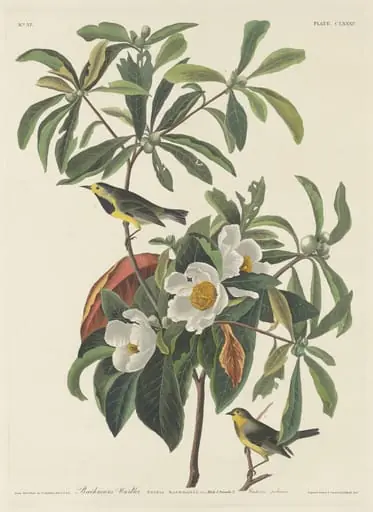
Blackburnian Warbler
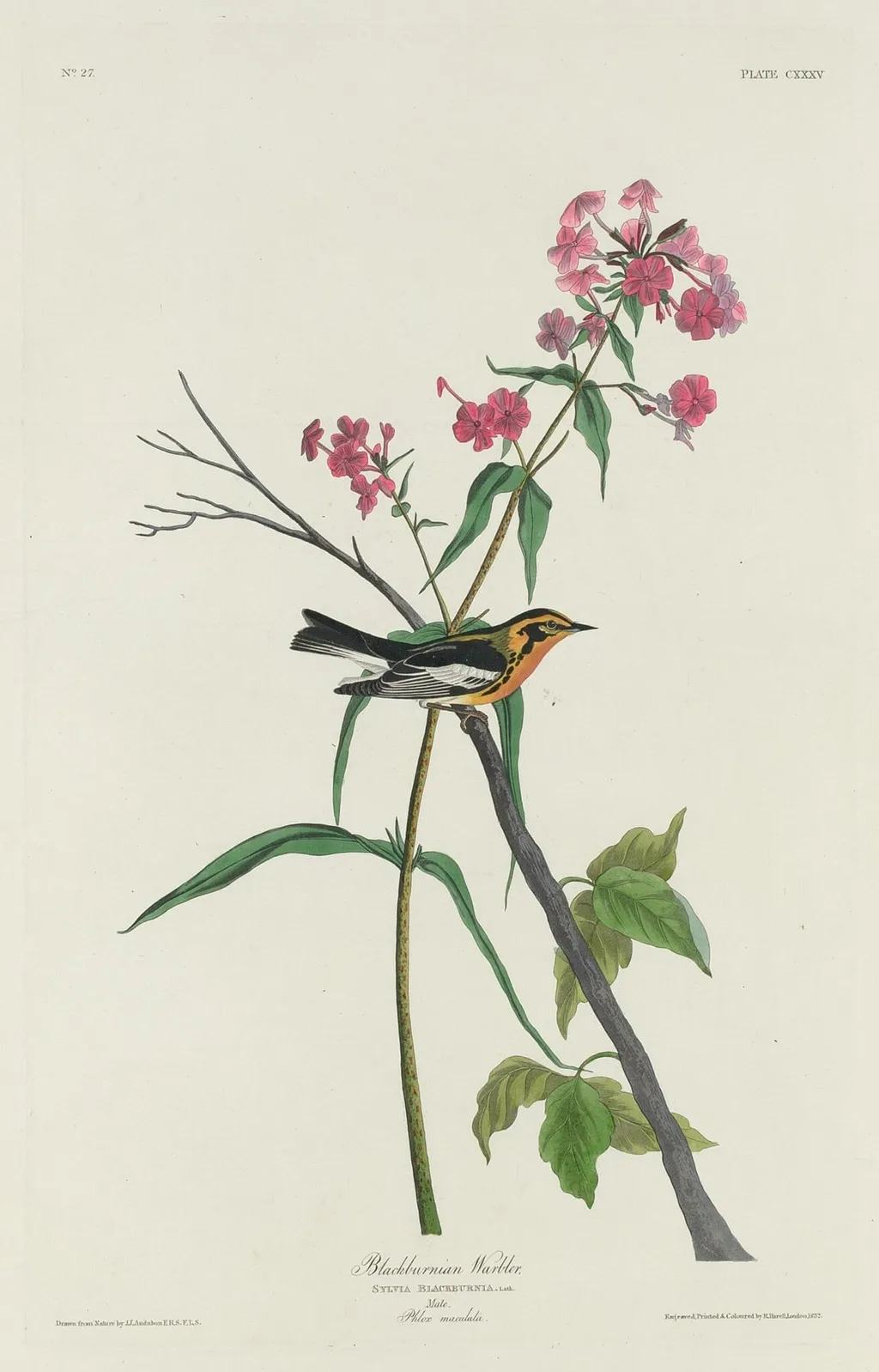
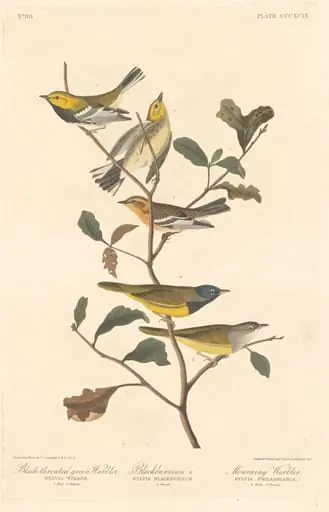
Blackburnian Warbler is an ink print by the Romanticist artist Robert Havell Jr.. It dates from 1832 and is held in the collection of the National Gallery of Art.
About this work
Overview
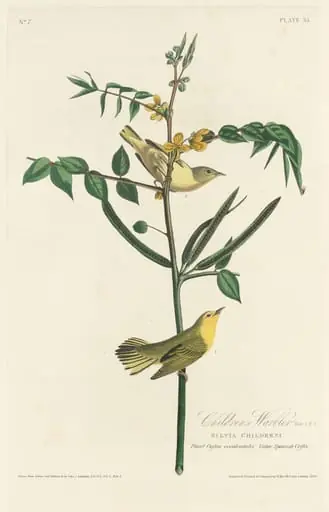
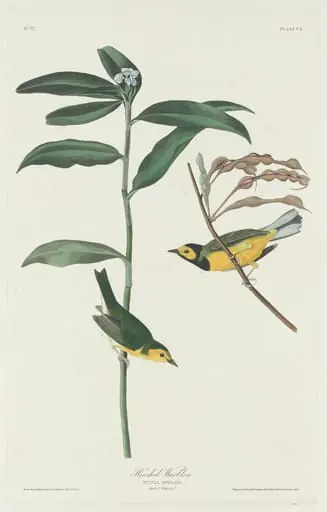
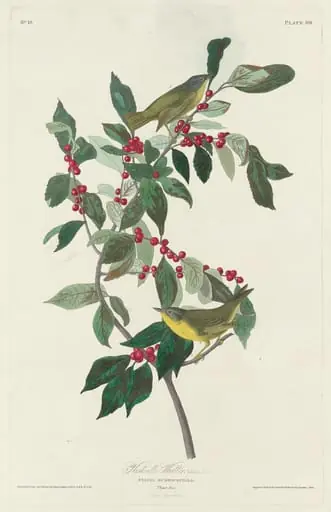
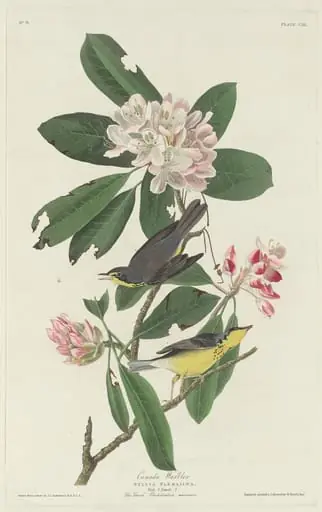
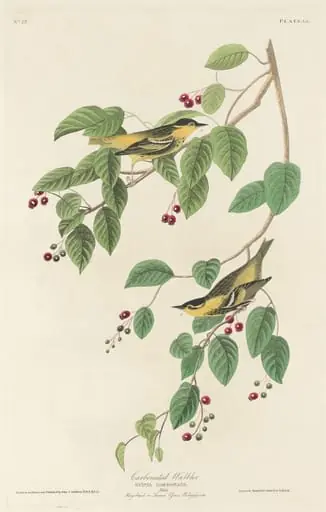
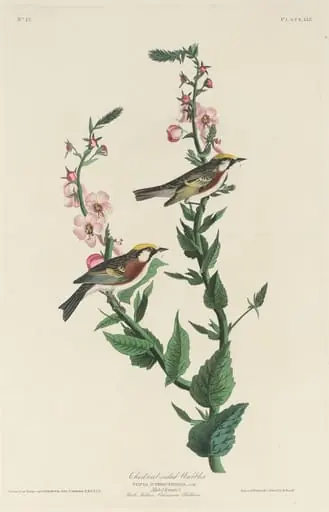
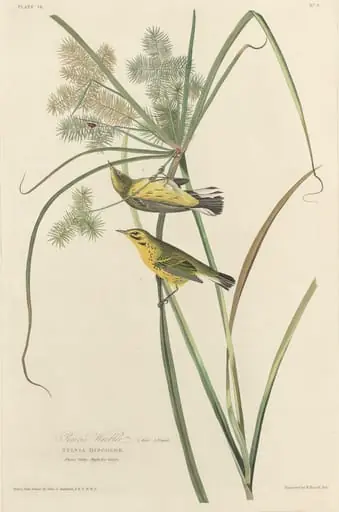
Robert Havell Jr. produced the hand‑colored print titled *Blackburnian Warbler* in 1832. Executed in engraving and aquatint on fine Whatman wove paper, the work presents a vividly rendered bird against a botanical backdrop, employing the family’s established printmaking techniques.
Subject & Meaning
The image portrays a small, brightly colored warbler perched on a slender twig, surrounded by pink blossoms with white centers and verdant foliage. The bird’s plumage is delineated with stark black stripes and a striking orange breast, emphasizing its natural vibrancy.
Technique & Style
The print combines line engraving with aquatint, a method that creates tonal washes through acid‑etched areas. After the plates were printed, color was applied manually, a process known as hand‑coloring. Fine cross‑hatching supplies texture and shading, while the aquatint provides broader tonal fields.
History & Provenance
The Havell family were prominent British printmakers in the early nineteenth century, renowned for their expertise in aquatint and connections to Indian artistic circles. Robert Havell Jr. continued the family tradition, working alongside his father, Robert Havell Sr., and nephew Daniel, who were also noted engravers.
Context
During the 1830s, detailed natural‑history prints were popular for scientific illustration and decorative purposes. The use of Whatman wove paper, prized for its smooth surface, allowed for the precise rendering of fine lines and delicate color washes typical of the period’s reproductive engravings.
Artist & collection

Artist
The Havell family of Reading, Berkshire, England, included a number of notable engravers, etchers and painters, as well as writers, publishers, educators, and musicians.