Artwork
Common Cormorant
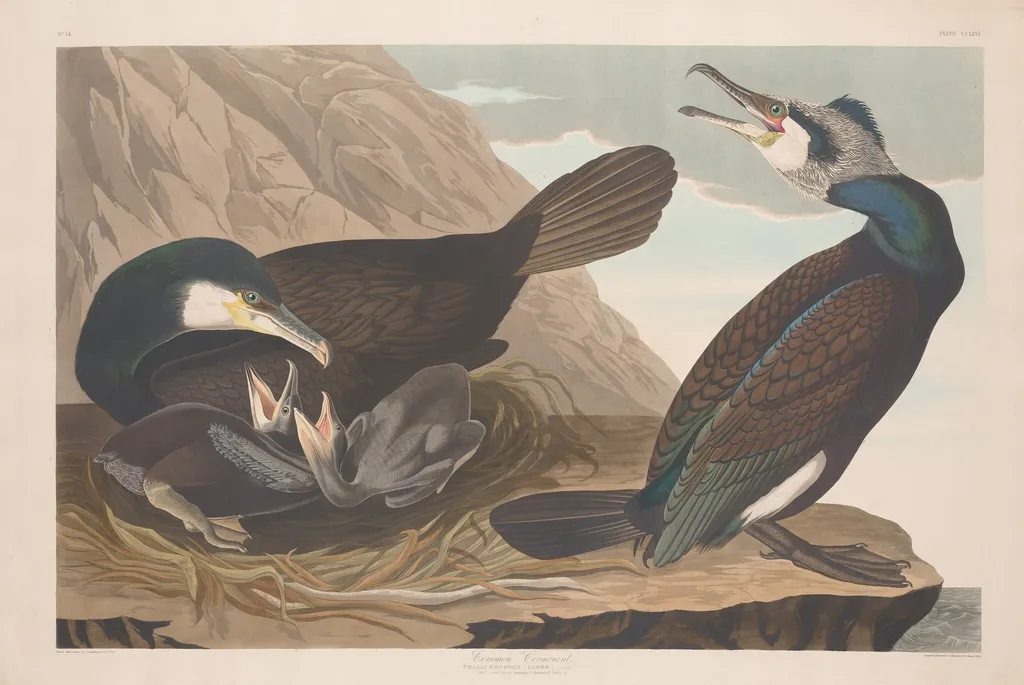
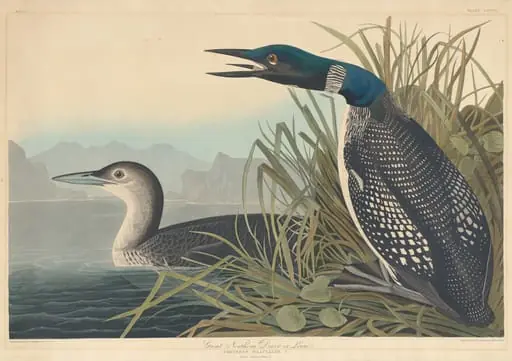
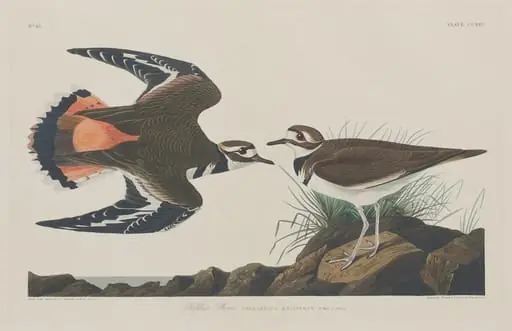
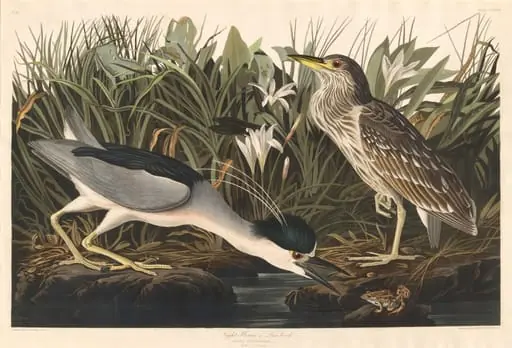
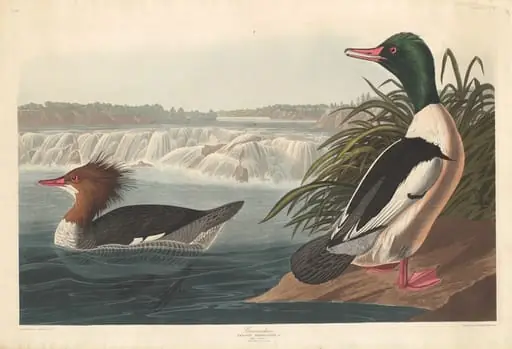
Common Cormorant is an ink print by the Romanticist artist Robert Havell Jr.. It dates from 1835 and is held in the collection of the National Gallery of Art.
About this work
Overview
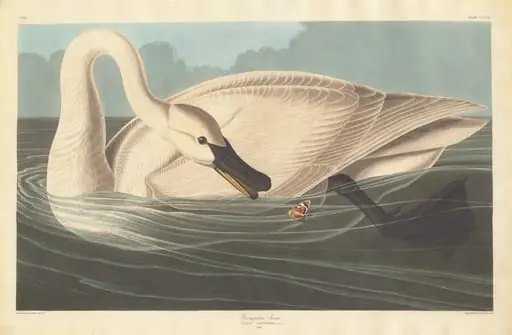
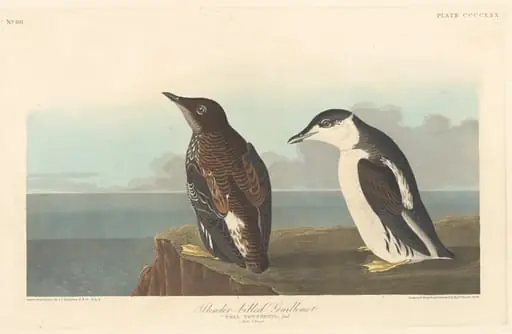
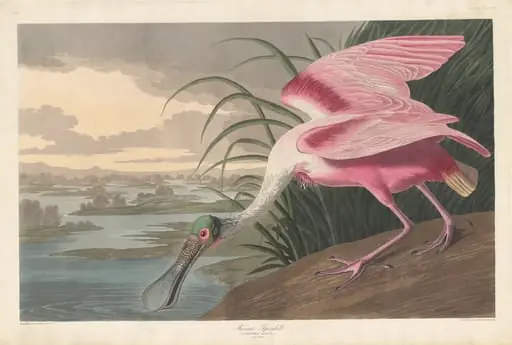
Created in 1835 by Robert Havell Jr., this hand-colored engraving and aquatint on Whatman wove paper is one of many ornithological prints produced during a period of heightened interest in natural history. The Havell family, based in Reading, Berkshire, were known for their technical precision in printmaking, and this work exemplifies their collaborative and multi-generational approach to illustrating wildlife with scientific accuracy and aesthetic care.
Subject & Meaning
The birds, native to coastal and freshwater habitats, are depicted in naturalistic poses that suggest daily life rather than staged display.
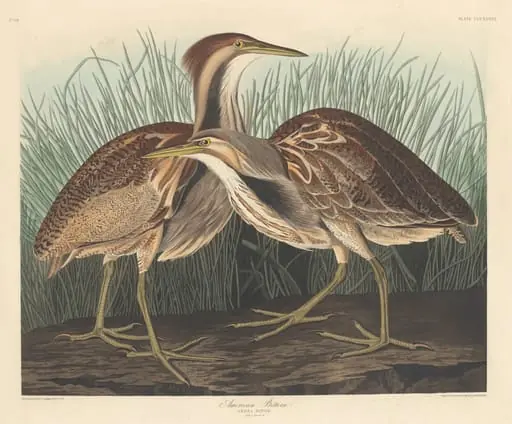
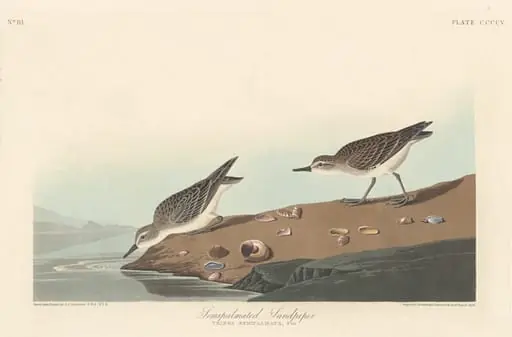
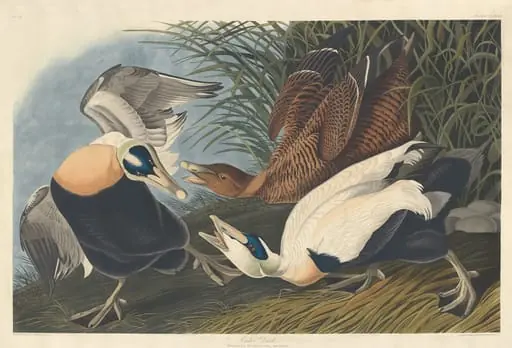
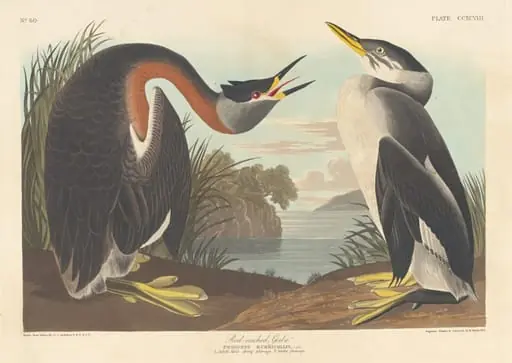
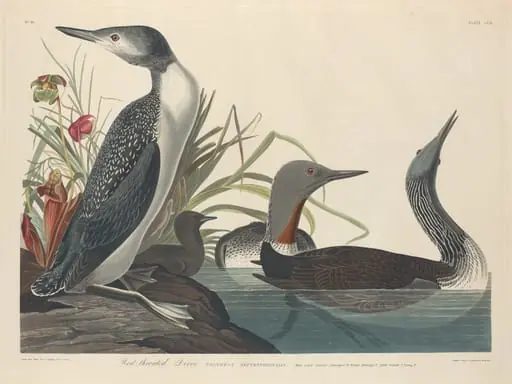
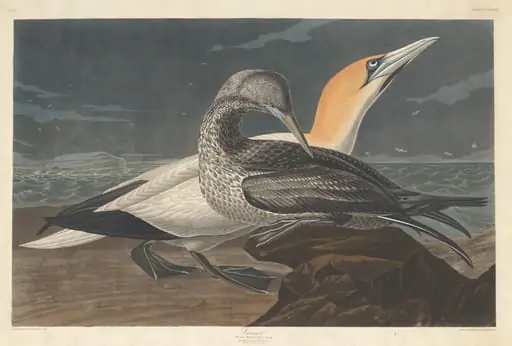
The image portrays three cormorants: an adult standing on a rocky outcrop, another perched near a nest, and two chicks feeding. The birds, native to coastal and freshwater habitats, are depicted in naturalistic poses that suggest daily life rather than staged display. The inclusion of the nest and chicks implies themes of reproduction and survival, aligning with the broader 19th-century effort to document animal behavior as part of natural philosophy.
Technique & Style
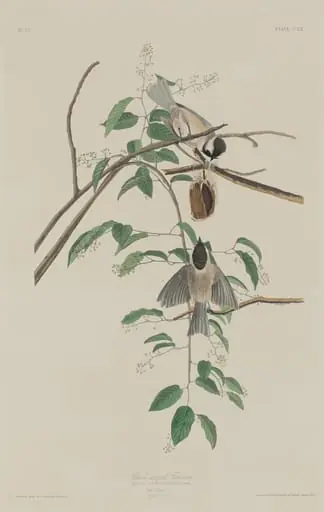
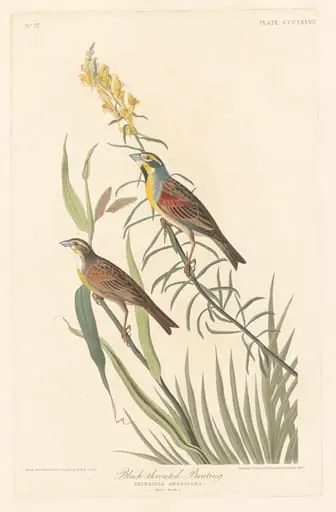
Havell employed aquatint for tonal gradations and engraving for fine linear detail, both methods requiring meticulous handwork. The feathers are rendered with subtle shading to convey texture and volume, while the beaks and eyes are highlighted in vivid yellow-orange against muted plumage. Colors were applied by hand using water-based pigments, preserving the naturalism of the birds’ appearance without artificial embellishment.
History & Provenance
Robert Havell Jr. worked within a family tradition of printmaking that spanned three generations, including his father Robert Havell the Elder and uncle Luke Havell. The family’s workshop produced illustrations for major natural history publications, often collaborating with scientists and artists. This print likely originated as part of a larger series documenting British birds, though its exact publication context remains unconfirmed.
Context
In the early 1800s, illustrated natural history texts gained popularity among educated audiences, driven by expanding scientific inquiry and colonial exploration. The Havell family’s prints contributed to this movement, offering accessible visual records of species previously known only through written descriptions. Their work bridged art and science, reflecting a cultural moment when observation and documentation were central to understanding the natural world.
Legacy
The Havell family’s prints remain valued for their technical skill and fidelity to natural forms. Though not widely exhibited today, their contributions to ornithological illustration influenced later generations of scientific artists. This print, like others in their oeuvre, stands as a quiet testament to the labor-intensive process of pre-photographic natural history documentation, where accuracy and artistry were inseparable.
Artist & collection

Artist
The Havell family of Reading, Berkshire, England, included a number of notable engravers, etchers and painters, as well as writers, publishers, educators, and musicians.