Artwork
Goosander
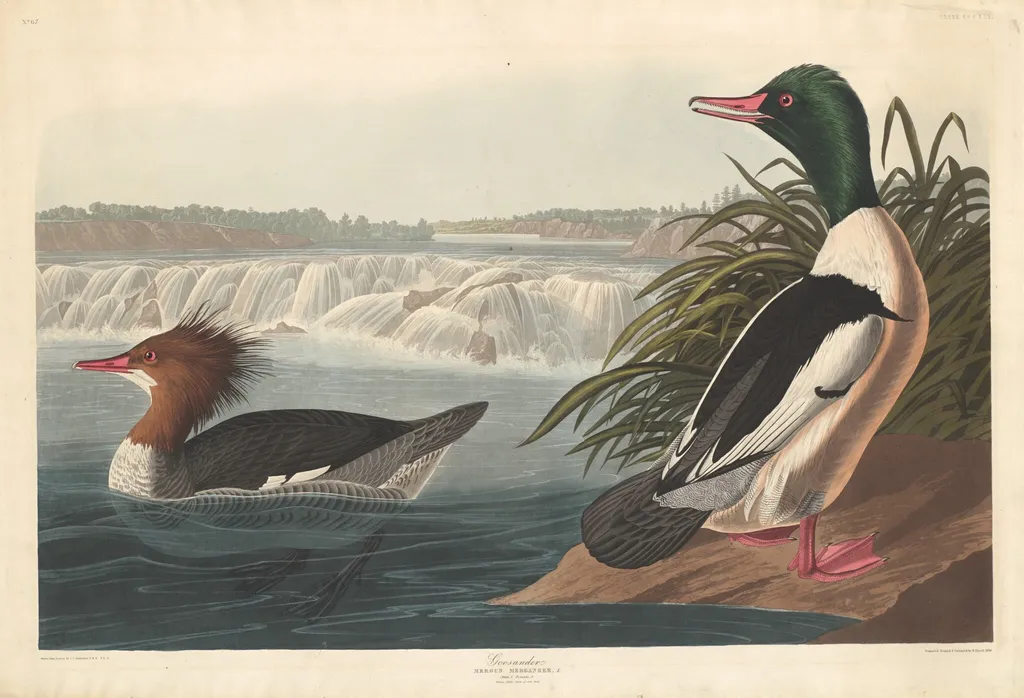
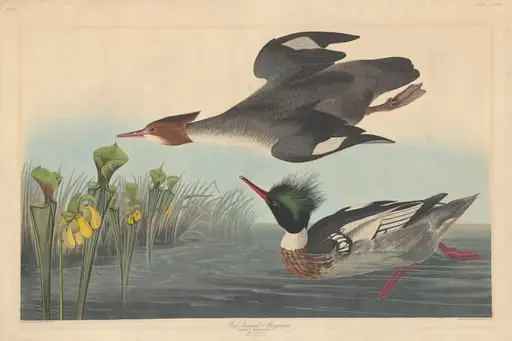
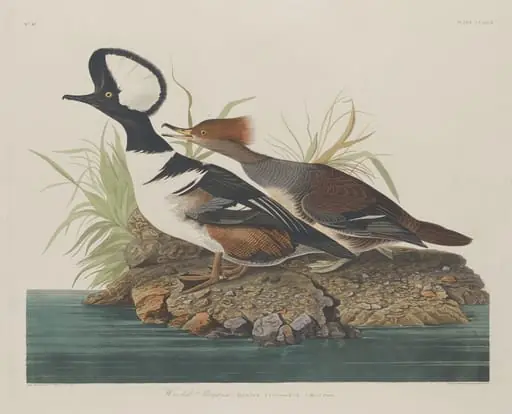
Goosander is an ink print by the Romanticist artist Robert Havell Jr.. It dates from 1836 and is held in the collection of the National Gallery of Art.
About this work
Overview
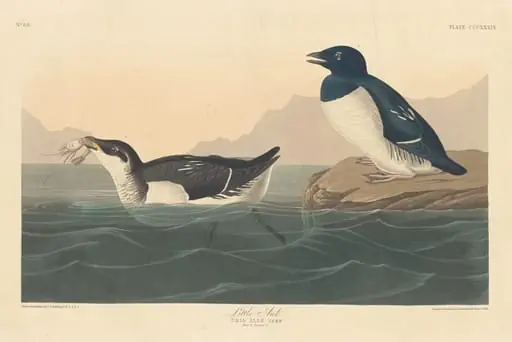
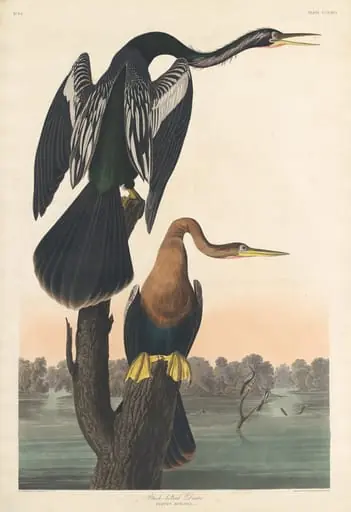
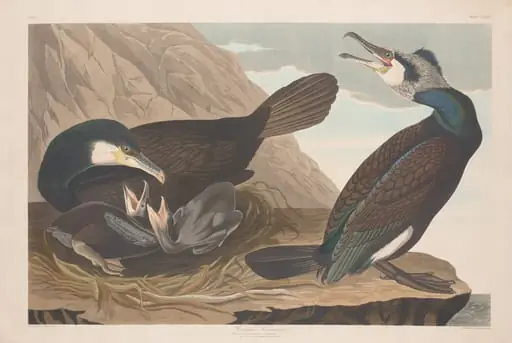
Goosander is a hand-colored engraving and aquatint print created by Robert Havell Jr. in 1836, showcasing the artist's skill in combining etched lines with tonal aquatint and subsequent hand coloring on Whatman wove paper.
Subject & Meaning
The print depicts two ducks of distinct plumage (brown-headed and green-headed) in a serene natural setting, emphasizing tranquility. The species, identified by their red beaks and feet, are set against a backdrop of a waterfall and lush vegetation.
Technique & Style
Havell Jr. employed a hybrid technique, layering etched details over aquatint for tonal depth, then enhancing the work with meticulous hand coloring, characteristic of the Havell family's printmaking expertise.
History & Provenance
Produced in 1836 by Robert Havell Jr. of the renowned Havell family from Reading, Berkshire, known for their aquatint proficiency and connections to Indian art, though the latter influence is not immediately apparent in this piece.
Context
While the work's immediate context within broader art movements is not overtly stated, its emphasis on natural serenity aligns with aspects of the Romanticism movement, which often celebrated the beauty and emotion evoked by nature.
Artist & collection

Artist
The Havell family of Reading, Berkshire, England, included a number of notable engravers, etchers and painters, as well as writers, publishers, educators, and musicians.