Artwork
Great Northern Diver or Loon
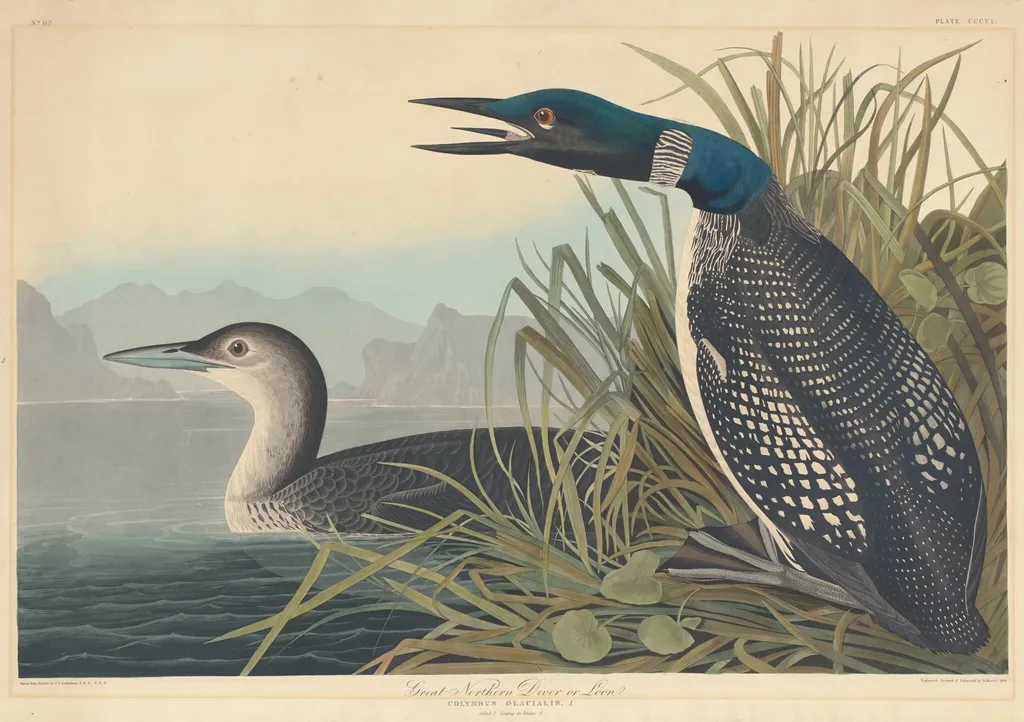
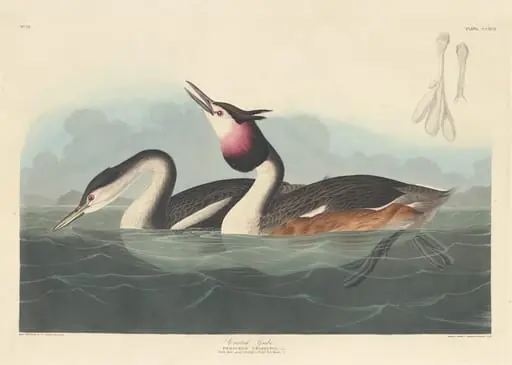
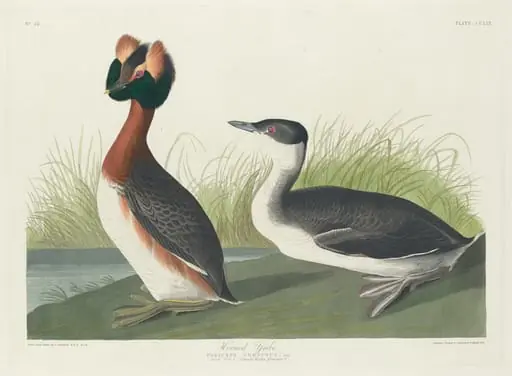
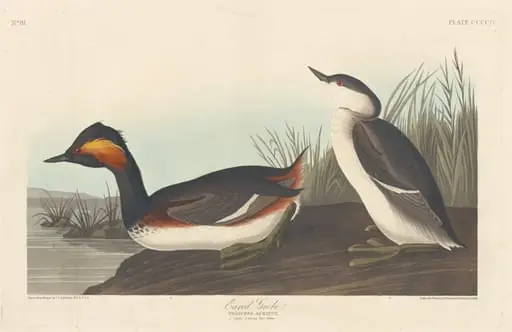
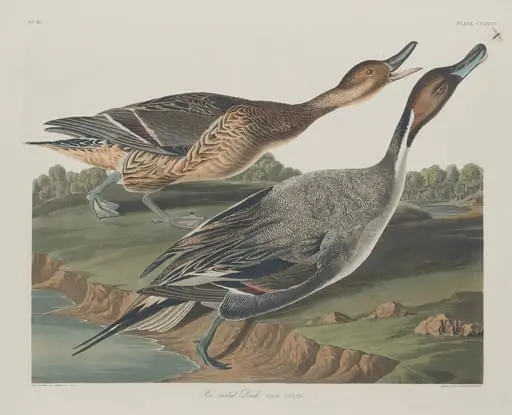
Great Northern Diver or Loon is an ink print by the Romanticist artist Robert Havell Jr.. It dates from 1836 and is held in the collection of the National Gallery of Art.
About this work
Overview
It belongs to a tradition of natural history illustration that merged scientific accuracy with artisanal printmaking.
Created in 1836 by Robert Havell Jr., this print is a hand-colored engraving and aquatint on Whatman wove paper. It belongs to a tradition of natural history illustration that merged scientific accuracy with artisanal printmaking. The Havell family, known for their technical skill in aquatint, played a significant role in producing detailed wildlife imagery during the early 19th century, particularly in documenting North American species.
Subject & Meaning
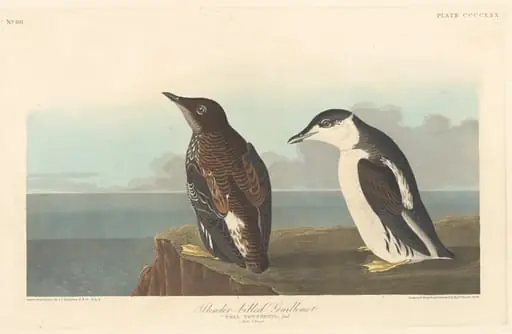
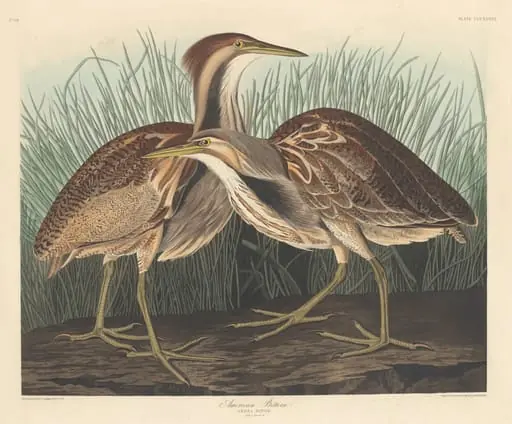
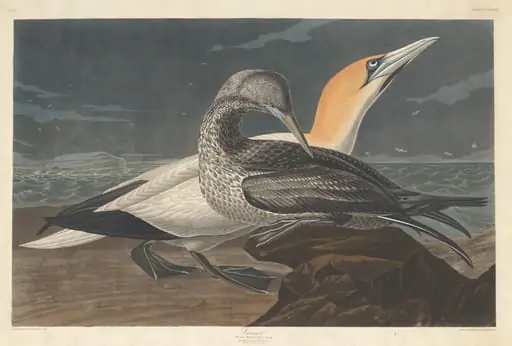
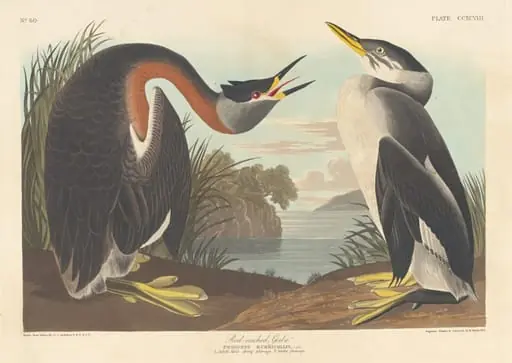
The image portrays two great northern divers, or loons, in a naturalistic setting—one perched on reeds, the other floating on water. Their postures and plumage are rendered with careful attention to anatomical detail, reflecting the period’s emphasis on observational accuracy. The quiet, contemplative atmosphere suggests an interest in the bird’s behavior and habitat, rather than symbolic or allegorical interpretation.
Technique & Style
Havell employed fine-line engraving and aquatint to capture the texture of feathers, reeds, and water. Hand-coloring was applied with precision, using muted blues, greens, and grays to harmonize with the landscape. The soft gradations in the sky and distant hills, achieved through aquatint, create depth without overwhelming the central subjects, demonstrating mastery of tonal control in print.
History & Provenance
Robert Havell Jr. worked within a family workshop established by his father, Robert Havell the Elder, which specialized in natural history prints. This piece likely originated as part of a larger project documenting North American birds, possibly linked to contemporary ornithological publications. The use of Whatman paper, prized for its durability and smooth surface, aligns with high-quality print production of the era.
Context
In the 1830s, there was growing interest in systematically recording North American wildlife, driven by scientific exploration and colonial expansion. Artists like Havell Jr. operated at the intersection of science and art, producing images for both academic and public audiences. His work reflects a broader trend of visual documentation that preceded modern field guides and conservation efforts.
Legacy
Havell’s prints contributed to the visual record of North American fauna at a time when few accurate depictions existed. While not widely known today, his technical approach influenced later natural history illustrators. The precision and restraint of his style remain notable for their balance between artistic sensitivity and empirical fidelity.
Own this work as a print
Artist & collection

Artist
The Havell family of Reading, Berkshire, England, included a number of notable engravers, etchers and painters, as well as writers, publishers, educators, and musicians.