Artwork
Golden-Crowned Thrush
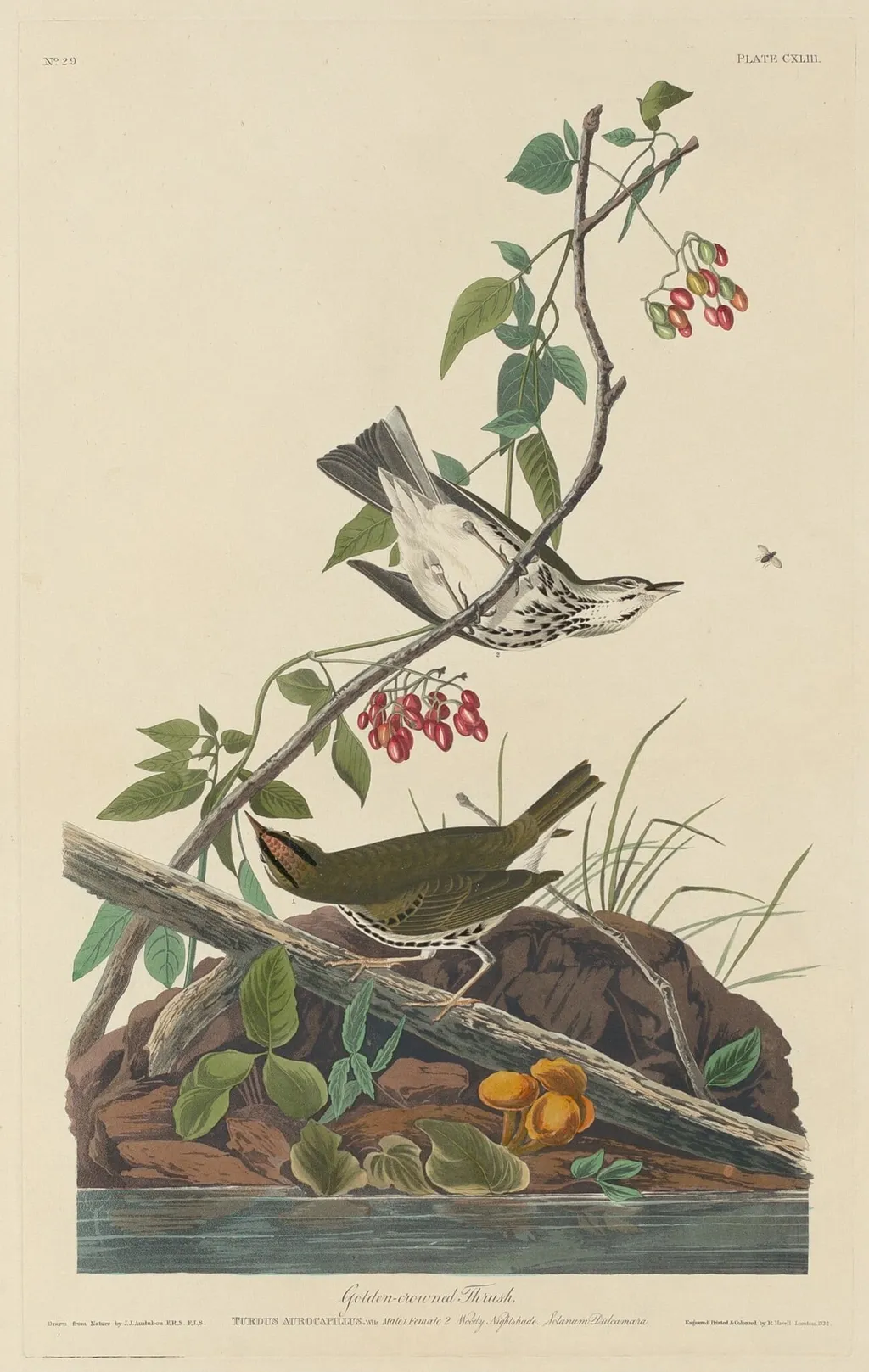
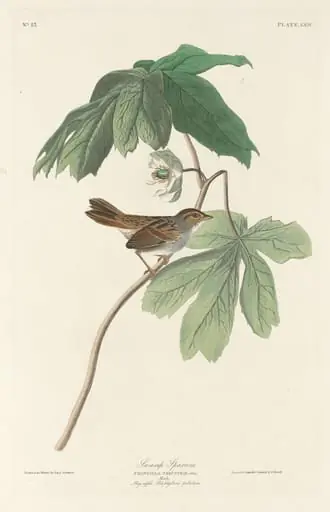
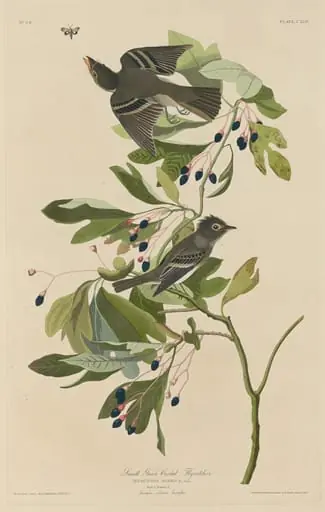
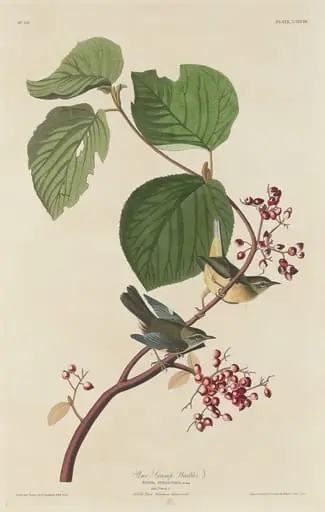
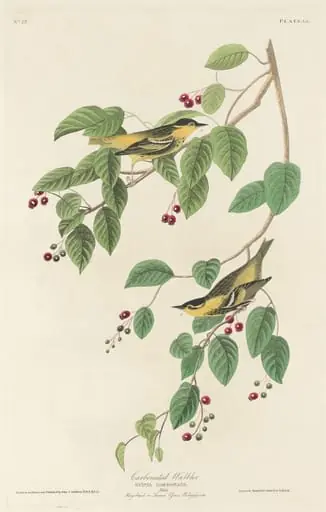
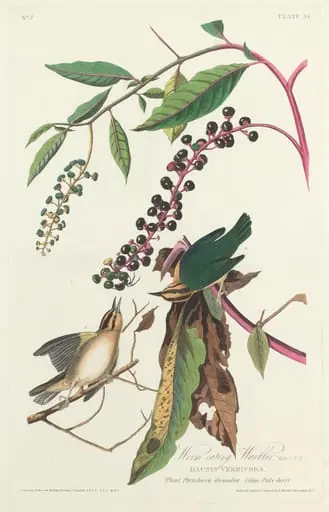
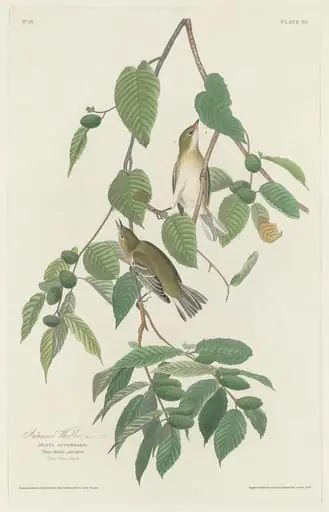
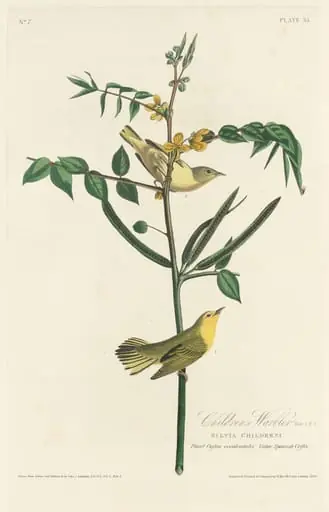
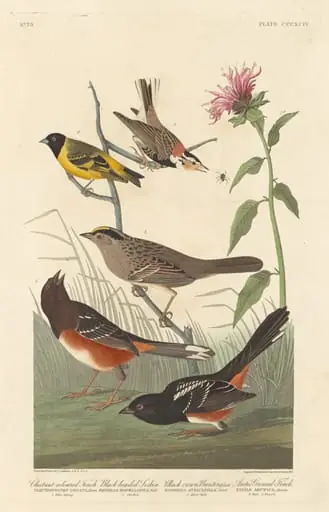
Golden-Crowned Thrush is an ink print by the Romanticist artist Robert Havell Jr.. It dates from 1832 and is held in the collection of the National Gallery of Art. Created in 1832, *Golden‑Crowned Thrush* is a hand‑colored engraving combined with aquatint, printed on smooth Whatman wove paper.
About this work
Overview
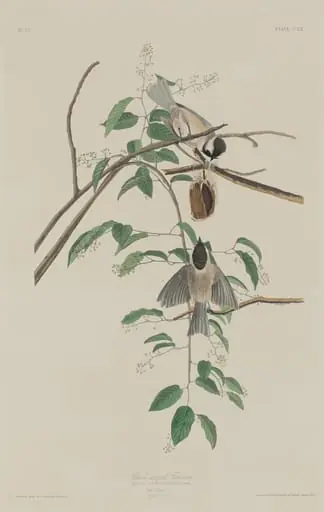
Created in 1832, *Golden‑Crowned Thrush* is a hand‑colored engraving combined with aquatint, printed on smooth Whatman wove paper. The image presents two small birds perched on a branch, surrounded by foliage and red berries, against a light‑toned background that hints at rocks and low plants.
Subject & Meaning
The work focuses on a pair of thrushes, one displaying a bright, golden‑crowned head. Their detailed plumage and the natural setting suggest an interest in accurate observation of avian life, a common aim of early nineteenth‑century natural illustration.
Technique & Style
Havell employed aquatint to achieve subtle tonal variations, then applied hand‑color to enhance the birds’ feathers and surrounding foliage. The combination of engraving lines with the wash‑like qualities of aquatint creates depth and texture, while the hand‑color adds a delicate, naturalistic palette.
History & Provenance
The print was produced by Robert Havell Jr., part of a family of engravers that included his father, Robert Havell the Elder, and his uncle Luke Havell. The Havell workshop had long been linked to Indian artistic traditions, a cultural connection that informed their broader output in natural history publishing.
Artist & collection

Artist
The Havell family of Reading, Berkshire, England, included a number of notable engravers, etchers and painters, as well as writers, publishers, educators, and musicians.