Artwork
Golden-winged Warbler and Cape May Warbler
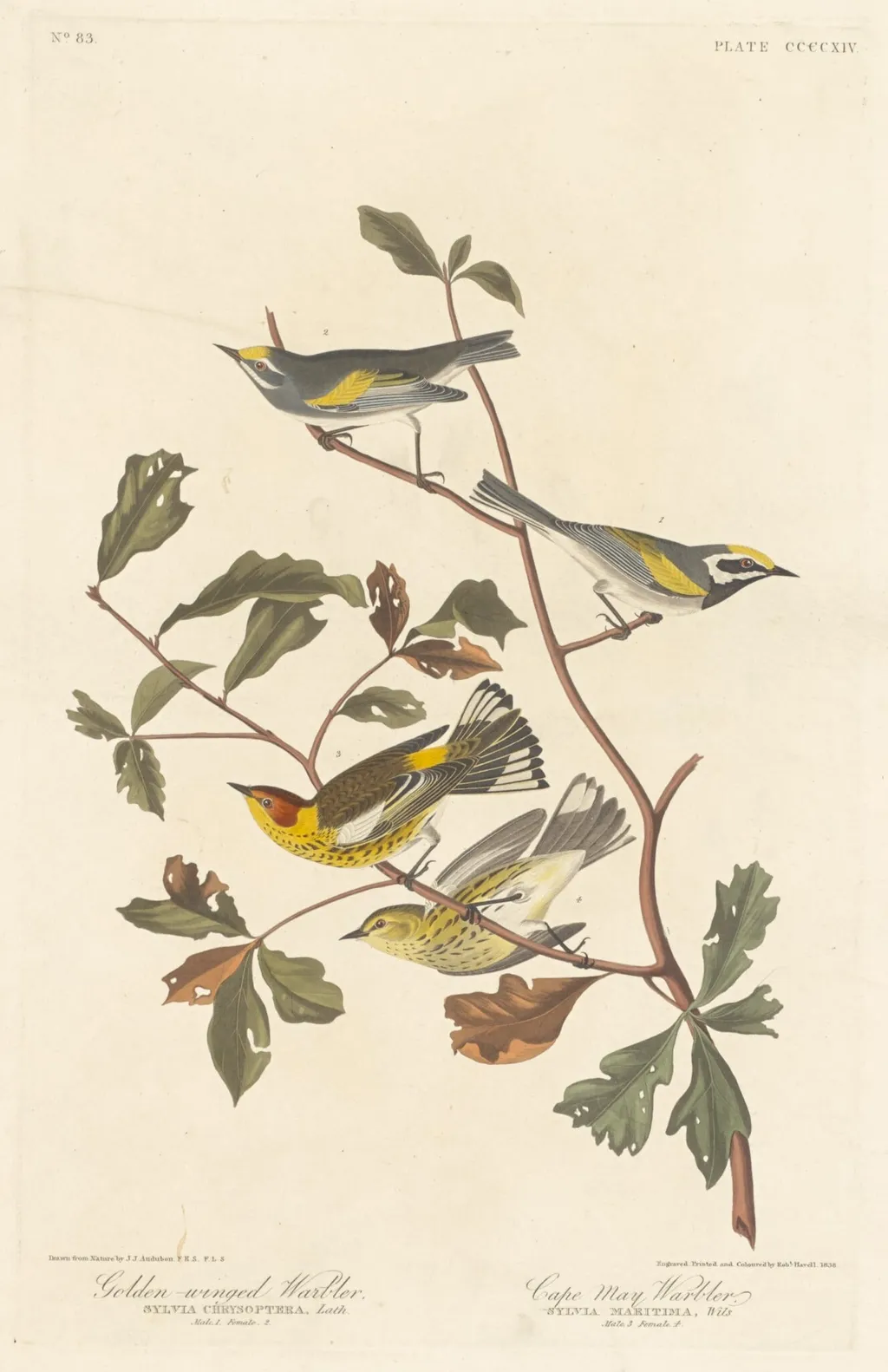
Golden-winged Warbler and Cape May Warbler is an ink print by the Romanticist artist Robert Havell Jr.. It dates from 1838 and is held in the collection of the National Gallery of Art.
About this work
Overview
It forms part of a broader project documenting North American bird species, executed with precision and care.
Created in 1838, this print by Robert Havell Jr. is a hand-colored engraving and aquatint on Whatman wove paper. It forms part of a broader project documenting North American bird species, executed with precision and care. The Havell family, known for their technical mastery in printmaking, contributed significantly to natural history illustration during the early 19th century, blending scientific accuracy with aesthetic refinement.
Subject & Meaning
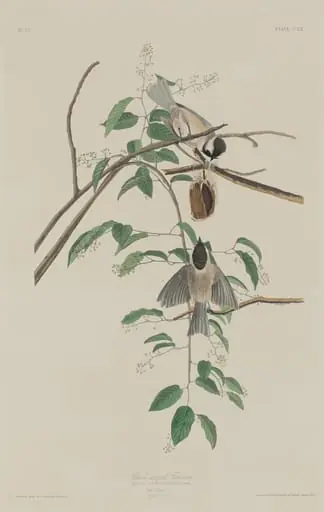
The print depicts two warbler species—the golden-winged and Cape May warbler—perched on a slender branch among foliage. Their placement and postures suggest natural behavior, emphasizing observation over idealization. The inclusion of both species reflects a growing interest in cataloging biodiversity, aligning with contemporary naturalist efforts. The birds’ distinct plumage is rendered to aid identification, grounding the image in empirical study rather than ornamentation.
Technique & Style
Havell employed engraving and aquatint to achieve fine detail and tonal variation, then applied watercolor by hand to capture the birds’ subtle hues. The background remains unobtrusively light, directing focus to the subjects. Leaves and branches are rendered with varied greens and browns, enhancing depth without clutter. The composition balances realism with quiet dynamism, as the birds’ orientations guide the viewer’s eye across the surface.
History & Provenance
Robert Havell Jr. came from a lineage of engravers, including his father Robert Havell the Elder and uncle Luke Havell, who operated a successful printmaking business in London. The family’s work often intersected with scientific publications and colonial-era natural history projects. This print likely originated from a larger series commissioned for academic or private collectors, reflecting the era’s demand for illustrated ornithological records.
Context
Produced during a period of expanding natural science in North America and Europe, the print reflects the intersection of art and biology. While Romanticism influenced aesthetic sensibilities, Havell’s approach prioritized clarity and fidelity to nature. His work paralleled that of John James Audubon, though executed in a more restrained, European printmaking tradition, emphasizing technical precision over dramatic flair.
Legacy
Havell’s prints remain valued for their contribution to ornithological documentation and printmaking history. Though less widely known than Audubon’s, his work exemplifies the quiet rigor of 19th-century natural history illustration. The Havell family’s legacy endures in institutional collections, where their prints continue to serve as references for both art historians and biologists studying historical depictions of avian life.
Artist & collection

Artist
The Havell family of Reading, Berkshire, England, included a number of notable engravers, etchers and painters, as well as writers, publishers, educators, and musicians.

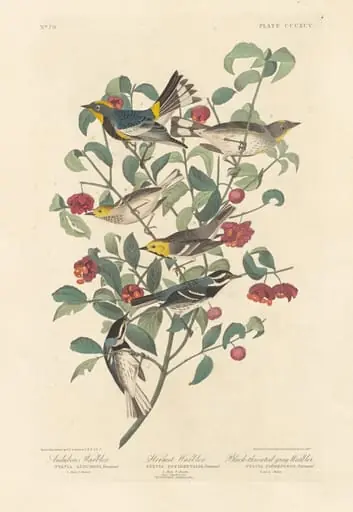 Audubon's Warbler, Hermit Warbler and Black-throated Gray Warbler
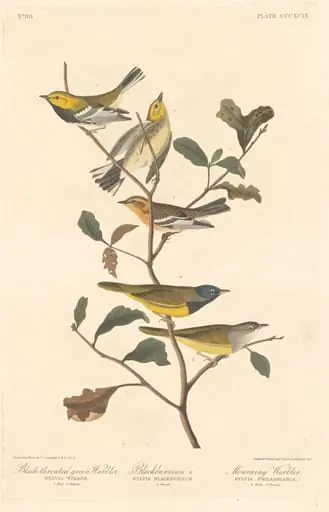 Black-throated Green Warbler, Blackburnian Warbler and Mourning Warbler
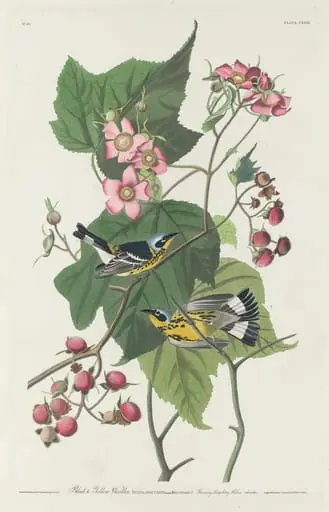 Black and Yellow Warbler
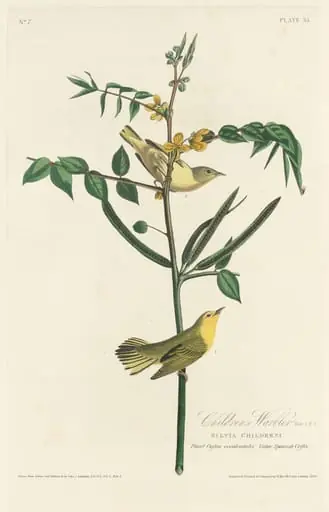 Children's Warbler
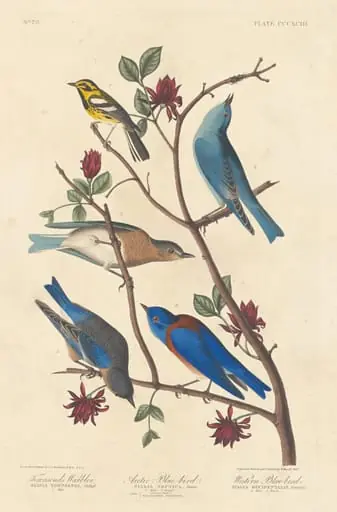 Townsend's Warbler, Arctic Blue Bird and Western Blue Bird
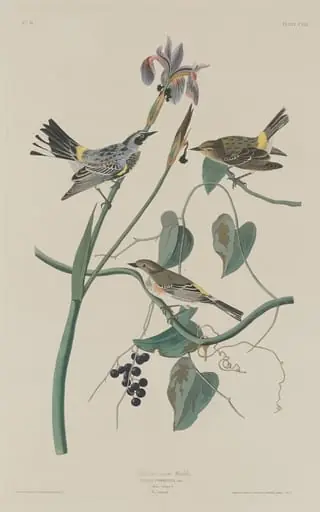 Yellow-crown Warbler
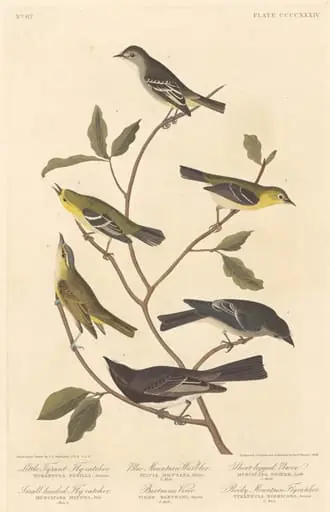 Little Tyrant Flycatcher, Small-Headed Flycatcher, Blue Mountain Warbler, Bartram's Vireo, Short-Legged Pewee, and Rocky Mountain Flycatcher
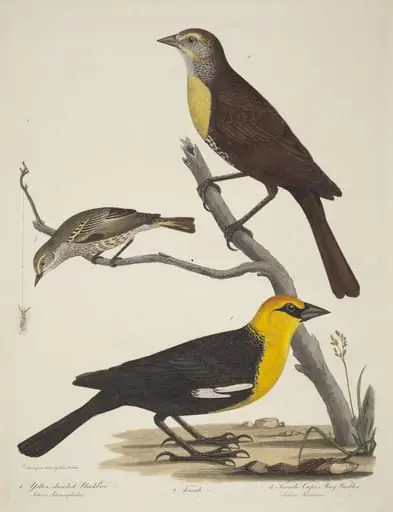 Yellow-headed Blackbird, Female Blackbird, and Female Cape May Warbler
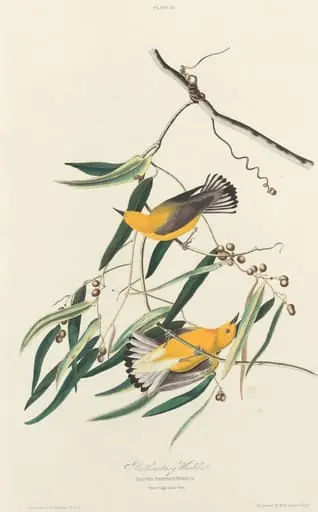 Prothonotary Warbler
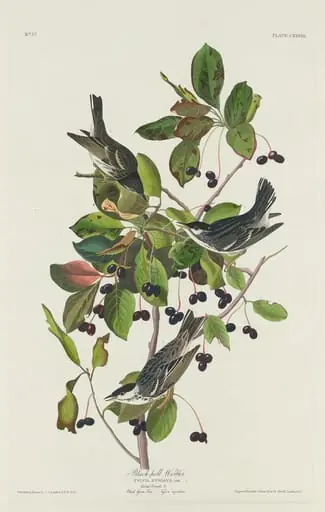 Black-Poll Warbler
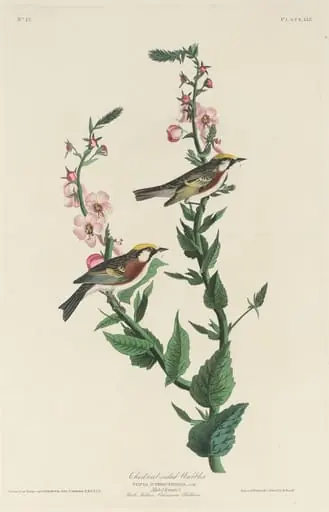 Chestnut-sided Warbler