Artwork
Orchard Oriole
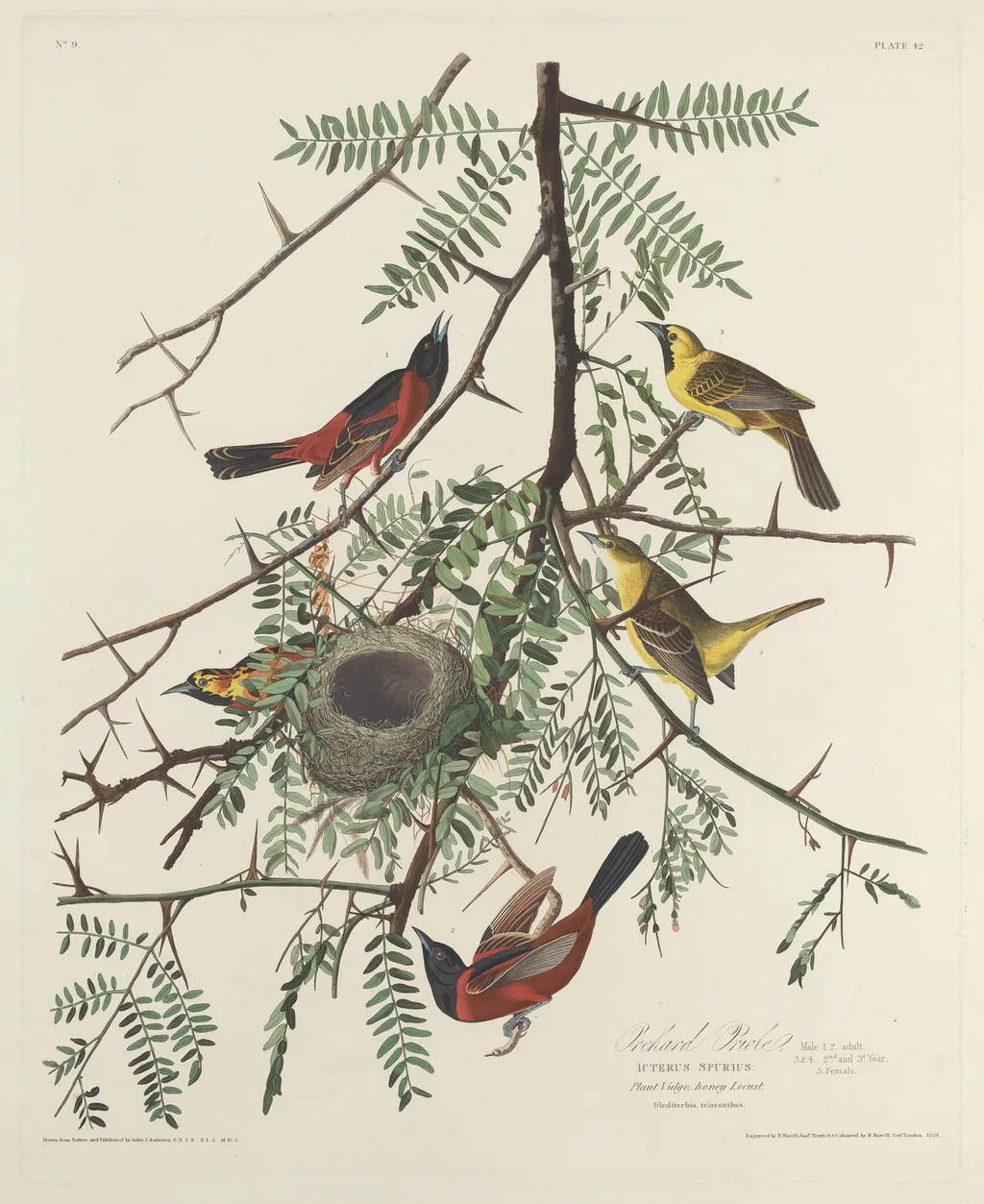
Orchard Oriole is an ink print by the Romanticist artist Robert Havell Jr.. It dates from 1828 and is held in the collection of the National Gallery of Art.
About this work
Overview
Orchard Oriole, executed in 1828, is a hand‑coloured engraving combined with aquatint on a sheet of Whatman wove paper. The print presents a small group of vividly rendered birds perched among branches, each annotated with brief labels indicating sex. The composition is set against an unadorned white background, allowing the coloured figures and foliage to dominate the visual field.
Subject & Meaning
The image focuses on several orchard orioles, a species noted for its bright plumage. By positioning the birds on a branch with a nest and providing gender identifiers, the work functions as a natural‑history illustration, intended to convey accurate visual information about the species’ appearance and behavior rather than to evoke narrative or allegorical content.
Technique & Style
The print merges traditional engraving with aquatint, a method that produces a range of tonal washes through acid‑etched plates. The Havell workshop, renowned for its mastery of aquatint, employed this approach to achieve subtle gradations of colour and light. Hand‑applied pigments enhance the engraved lines, delivering the sharp, saturated hues that define each bird and leaf.
History & Provenance
Created by Robert Havell Jr., a member of the prominent Havell family of engravers and scholars based in Reading, Berkshire, the work reflects the family’s long‑standing engagement with Indian natural history illustration. The print was produced during a period when the Havells supplied images for scientific publications, and it remains an example of their contribution to early 19th‑century ornithological art.
Artist & collection

Artist
The Havell family of Reading, Berkshire, England, included a number of notable engravers, etchers and painters, as well as writers, publishers, educators, and musicians.

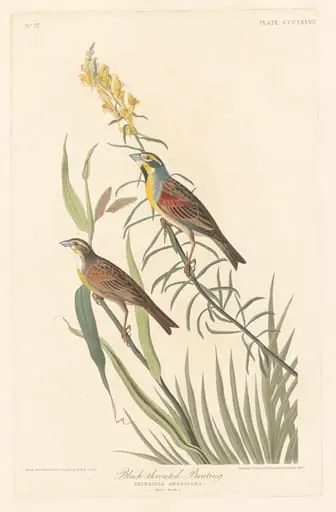
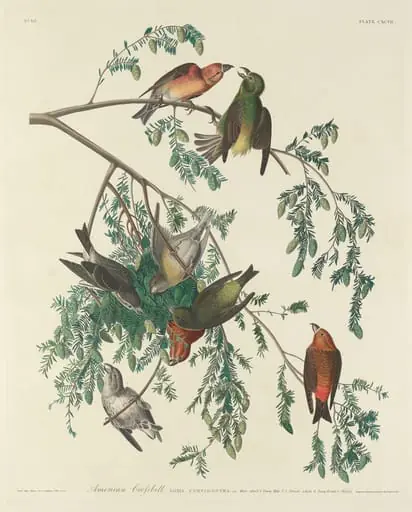 American Crossbill
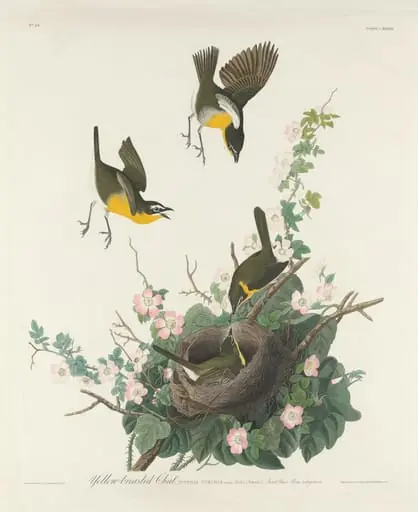 Yellow-breasted Chat
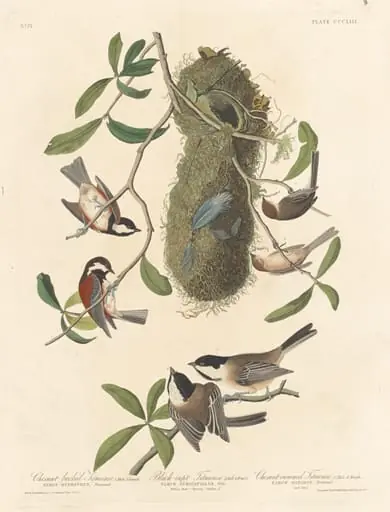 Chestnut-backed Titmouse, Black-capped Titmouse and Chestnut-crowned Titmouse
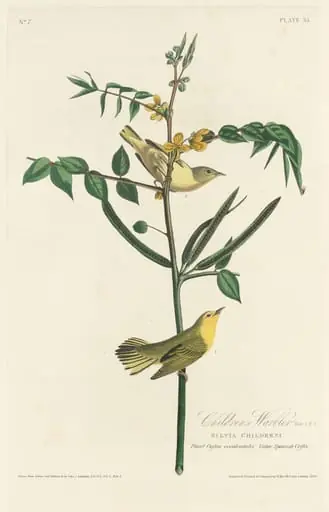 Children's Warbler
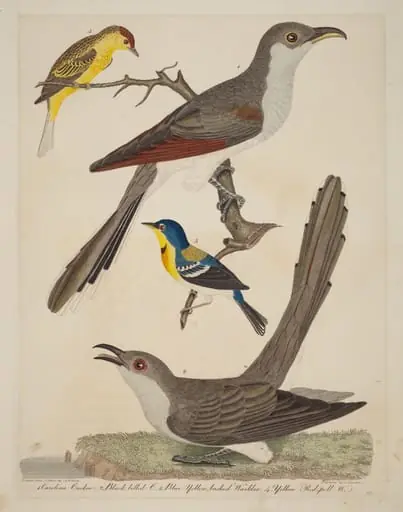 Carolina Cuckoo, Black-billed Cuckoo, Blue Yellow-backed Warbler, and Yellow Red-poll Warbler
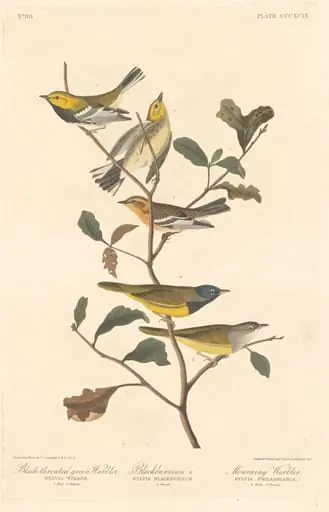 Black-throated Green Warbler, Blackburnian Warbler and Mourning Warbler
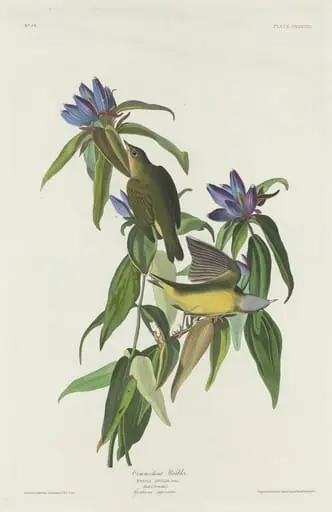 Connecticut Warbler
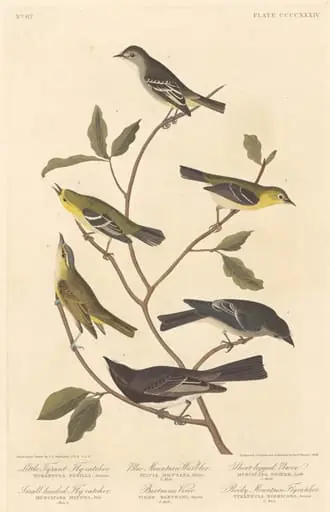 Little Tyrant Flycatcher, Small-Headed Flycatcher, Blue Mountain Warbler, Bartram's Vireo, Short-Legged Pewee, and Rocky Mountain Flycatcher