Artwork
Yellow-breasted Chat
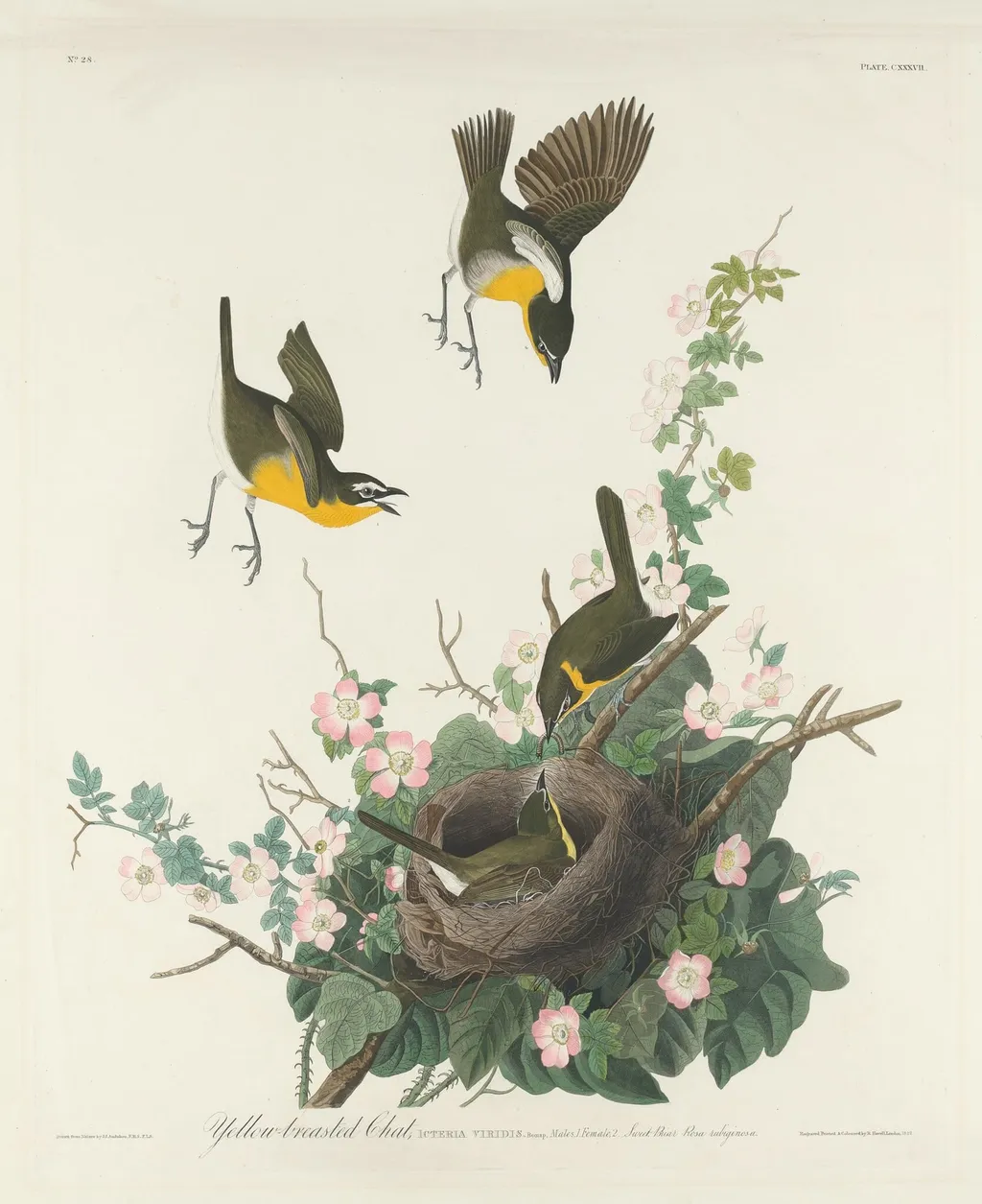
Yellow-breasted Chat is an ink print by the Romanticist artist Robert Havell Jr.. It dates from 1832 and is held in the collection of the National Gallery of Art.
About this work
Overview
It is part of a broader series of ornithological illustrations produced during the early 19th century, reflecting a growing interest in natural history.
Created in 1832 by Robert Havell Jr., this print is a hand-colored engraving and aquatint on Whatman wove paper. It is part of a broader series of ornithological illustrations produced during the early 19th century, reflecting a growing interest in natural history. Havell, trained in a family of printmakers, applied precise engraving techniques to capture fine detail, while aquatint provided subtle tonal variation essential for lifelike rendering of feathers and foliage.
Subject & Meaning
The image portrays three yellow-breasted chats: one perched in a nest, and two in flight among flowering branches. The birds, identified by their dark green backs, yellow underparts, and facial markings, are shown in naturalistic poses that emphasize behavioral traits. The inclusion of a nest with twigs and blossoms suggests a focus on the bird’s habitat and life cycle, aligning with scientific observation rather than symbolic allegory.
Technique & Style
Havell employed aquatint to achieve soft gradations of tone, particularly in the plumage and foliage, while fine engraving defined contours and textures. Hand-coloring was applied with care to match observed hues, enhancing realism without overt stylization. The composition balances detail with spatial depth, using overlapping branches and flowers to frame the birds, reflecting a commitment to accuracy over decorative flourish.
History & Provenance
Robert Havell Jr. belonged to a well-established family of London-based printmakers active in natural history publishing. His work on this print likely originated from collaborations with naturalists and collectors, possibly linked to John James Audubon’s projects. The use of Whatman paper—a high-quality, durable stock—indicates the print’s intended audience: institutions or private patrons seeking scientifically credible imagery.
Context
Produced during a period of expanding natural science in Britain and America, the print reflects the era’s emphasis on documenting biodiversity through visual means. While Romanticism influenced aesthetic sensibilities, Havell’s approach prioritized empirical observation over emotional expression. The work fits within a tradition of illustrated ornithology that sought to catalog species with precision, often for academic or institutional use.
Legacy
Havell’s prints contributed to the standardization of ornithological illustration in the 19th century, influencing later naturalists and publishers. His technical mastery helped bridge art and science, setting a benchmark for accuracy in wildlife depiction. Though not widely known outside specialist circles, his work remains a reference in the history of scientific printing and natural history documentation.
Artist & collection

Artist
The Havell family of Reading, Berkshire, England, included a number of notable engravers, etchers and painters, as well as writers, publishers, educators, and musicians.

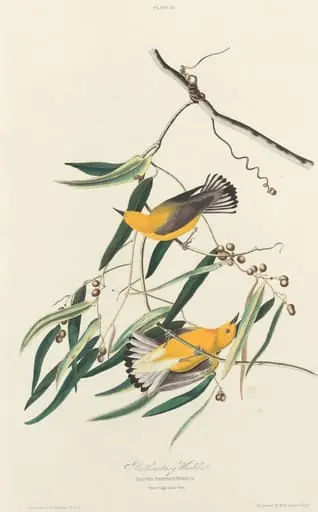 Prothonotary Warbler
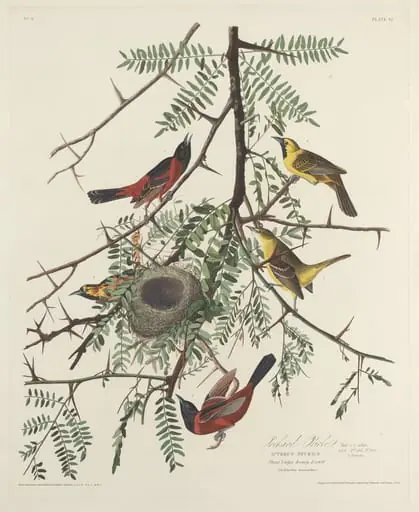 Orchard Oriole
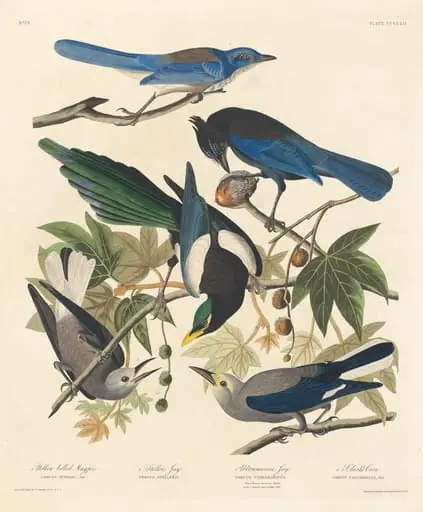 Yellow-billed Magpie, Stellers Jay, Ultramarine Jay and Clark's Crow
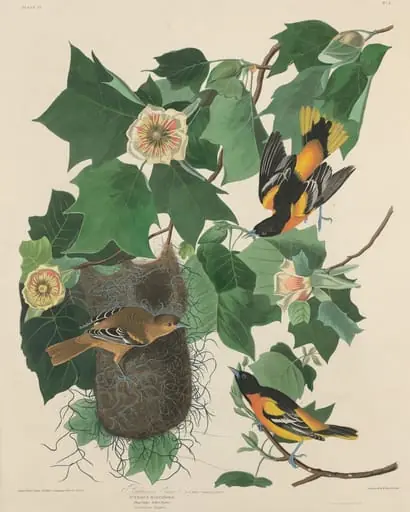 Baltimore Oriole
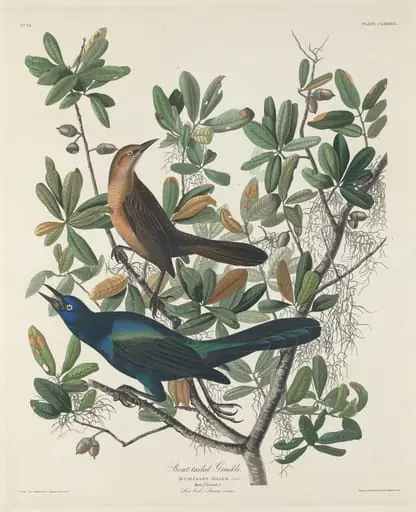 Boat-tailed Grackle
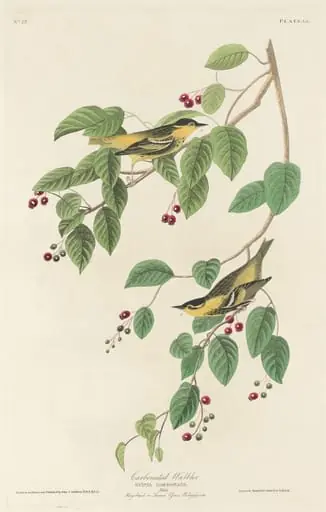 Carbonated Warbler
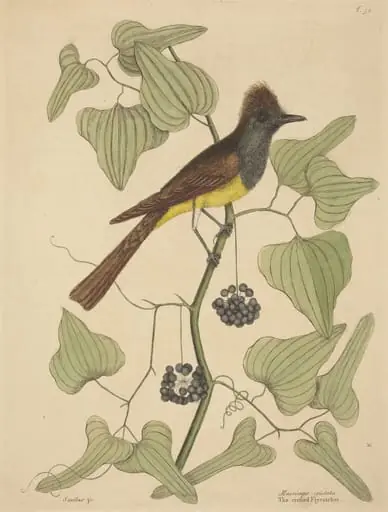 The Crested Flycatcher (Muscicapa cristata)
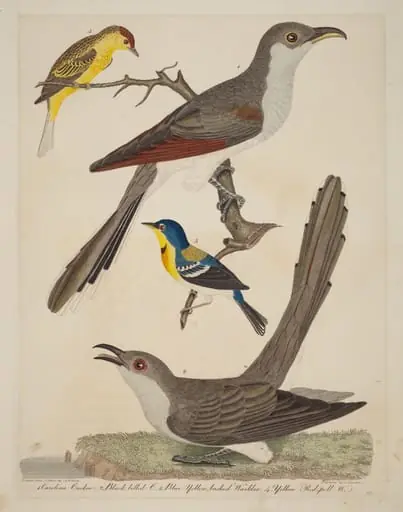 Carolina Cuckoo, Black-billed Cuckoo, Blue Yellow-backed Warbler, and Yellow Red-poll Warbler
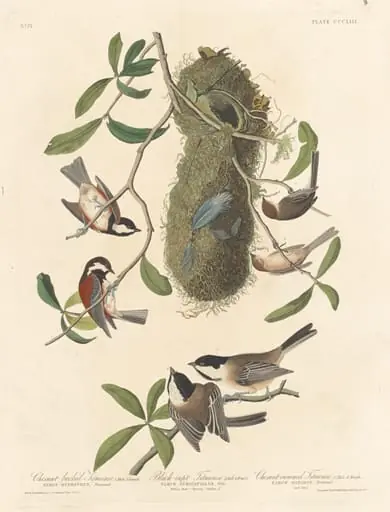 Chestnut-backed Titmouse, Black-capped Titmouse and Chestnut-crowned Titmouse