Artwork
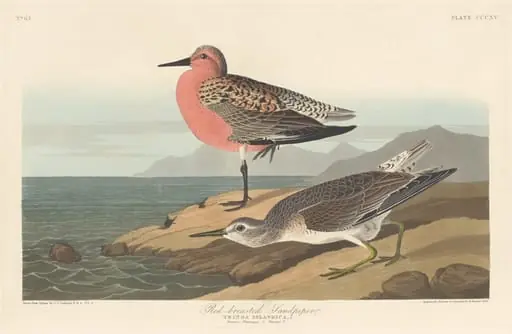
Red-breasted Snipe
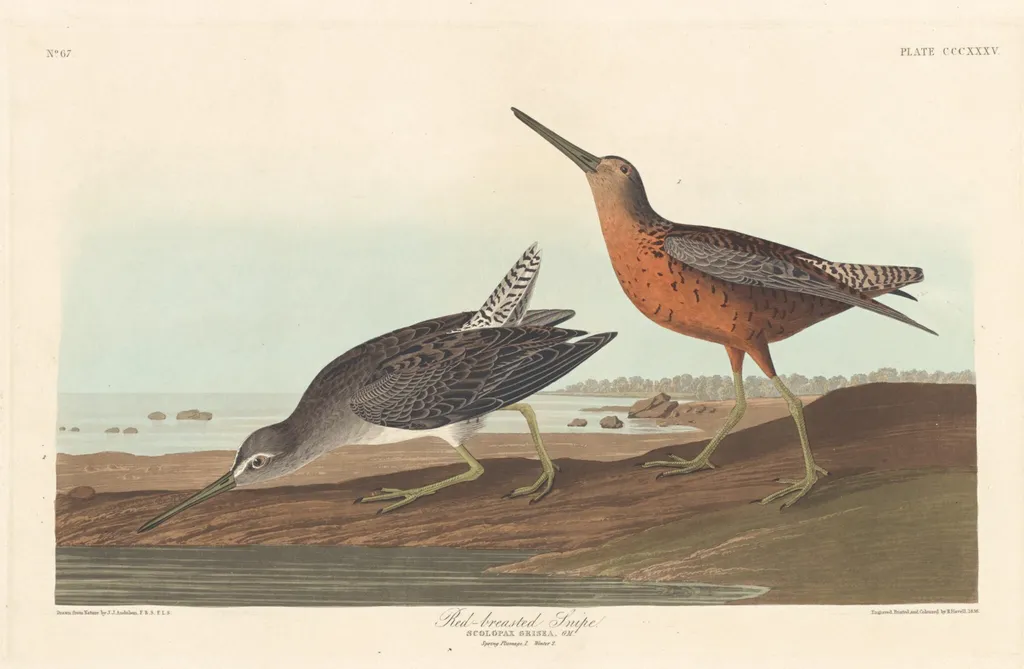
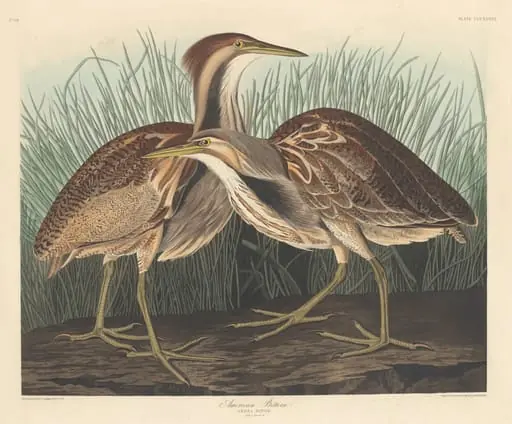
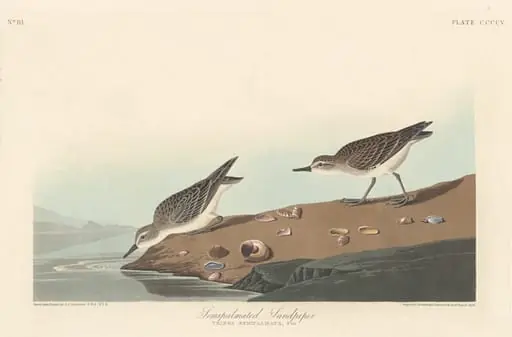
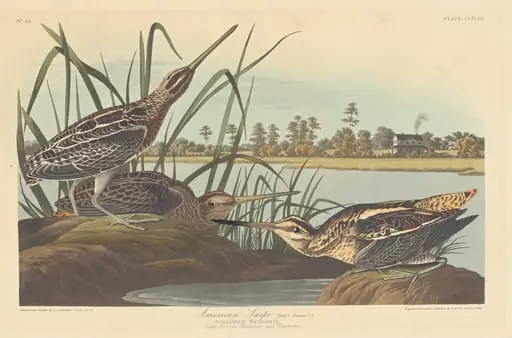
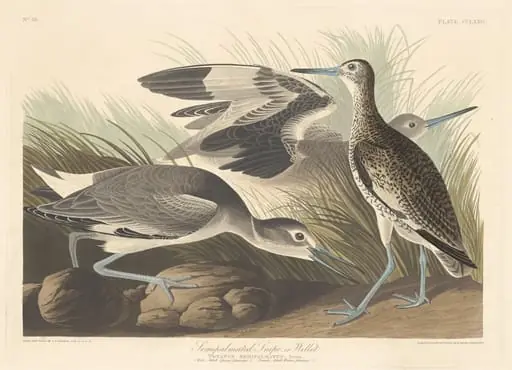
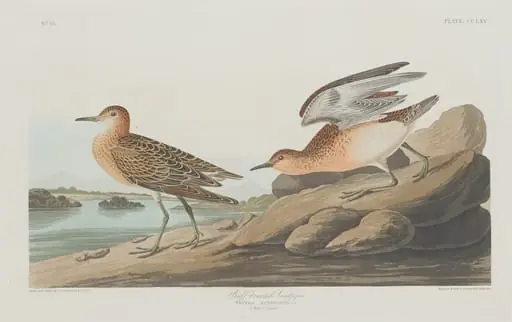
Red-breasted Snipe is an ink print by the Romanticist artist Robert Havell Jr.. It dates from 1836 and is held in the collection of the National Gallery of Art. Created in 1836, *Red‑breasted Snipe* is a hand‑colored engraving combined with aquatint, executed on fine Whatman wove paper.
About this work
Overview
Created in 1836, *Red‑breasted Snipe* is a hand‑colored engraving combined with aquatint, executed on fine Whatman wove paper. The print presents a single snipe perched on a rock, its brown‑white plumage set against a vivid red breast, rendered with the tonal delicacy typical of the aquatint process.
Subject & Meaning
The composition focuses on the red‑breasted snipe, a wading bird distinguished by its bright chest coloration. By portraying the bird in a natural pose on a rocky substrate, the work emphasizes the creature’s anatomy and plumage rather than allegorical or narrative content, reflecting a straightforward study of wildlife.
Technique & Style
Havell employed aquatint to achieve a range of subtle tones, then added hand‑applied colour to highlight the bird’s red breast and the contrast of its feather patterns. The engraving’s fine line work defines the bird’s form, while the aquatint’s washes provide depth to the background and rock surface.
History & Provenance
Robert Havell Jr., a member of the Havell family of engravers from Reading, Berkshire, produced the print. The Havells were noted for their expertise in aquatint and for publishing natural history illustrations that introduced British audiences to foreign fauna, particularly from the Americas and India.
Context
The piece belongs to a broader 19th‑century British interest in natural history illustration, a period when detailed prints of exotic species were in demand for scientific and popular collections. Havell’s work aligns with contemporary efforts to document wildlife from live observation rather than from taxidermied specimens.
Artist & collection

Artist
The Havell family of Reading, Berkshire, England, included a number of notable engravers, etchers and painters, as well as writers, publishers, educators, and musicians.