Artwork
Buff-breasted Sandpiper
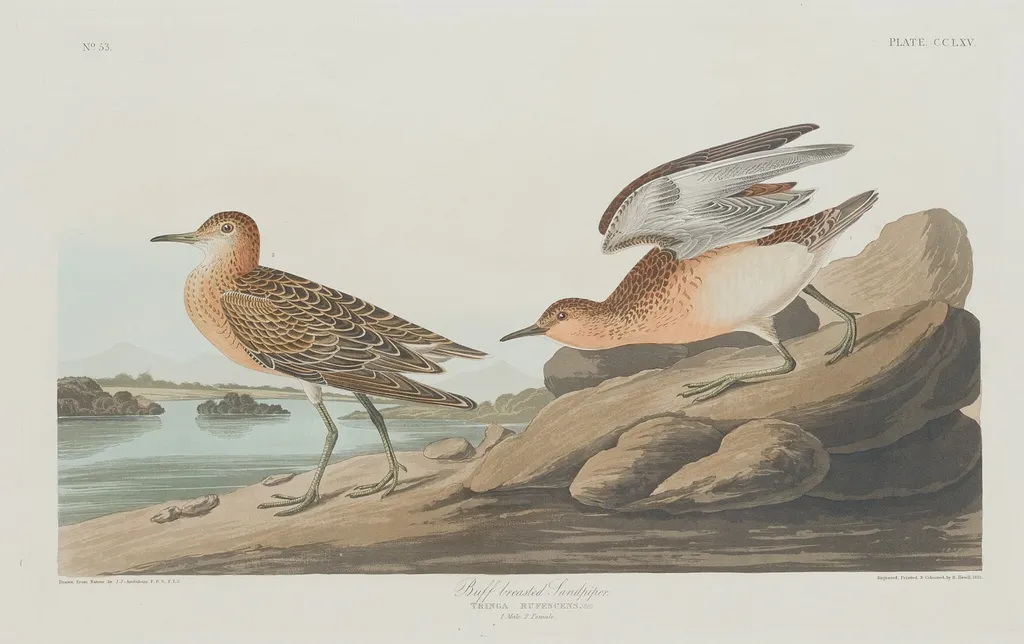
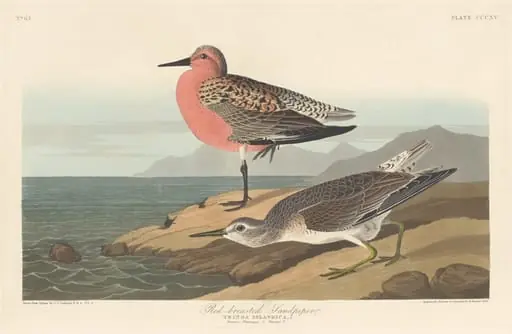
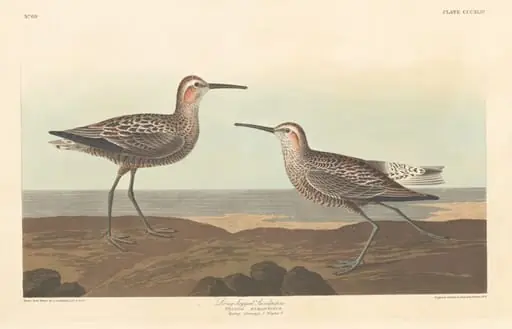
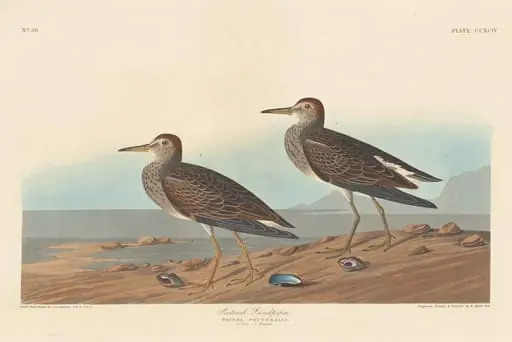
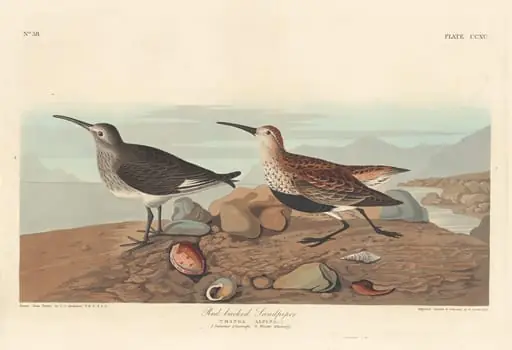
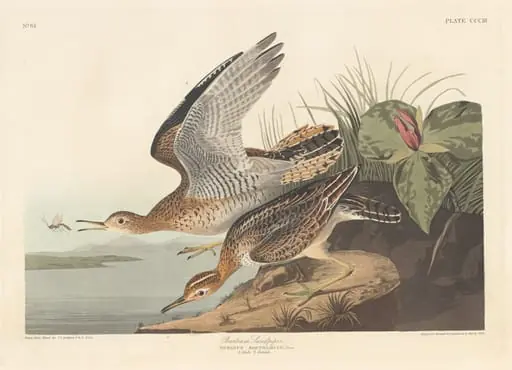
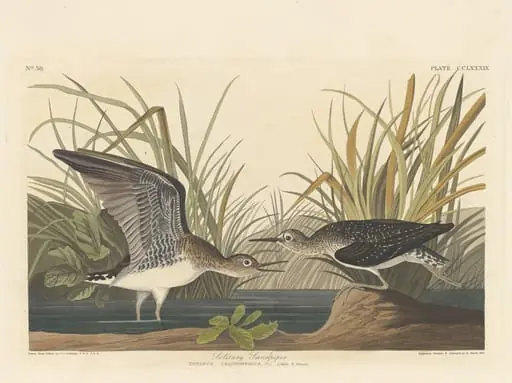
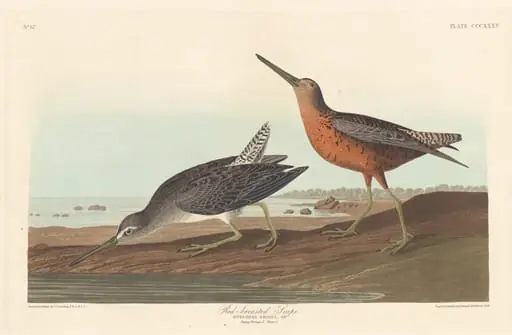
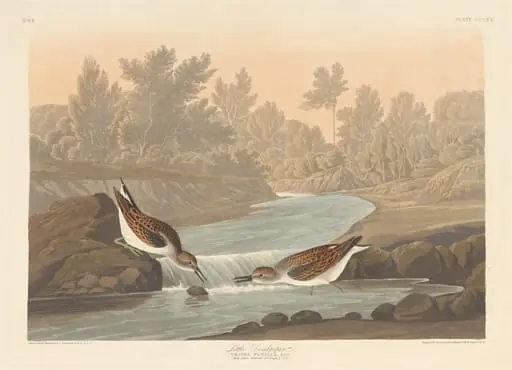
Buff-breasted Sandpiper is an ink print by the Romanticist artist Robert Havell Jr.. It dates from 1835 and is held in the collection of the National Gallery of Art. The work is a hand‑colored engraving combined with aquatint, executed on a sheet of Whatman wove paper.
About this work
Overview
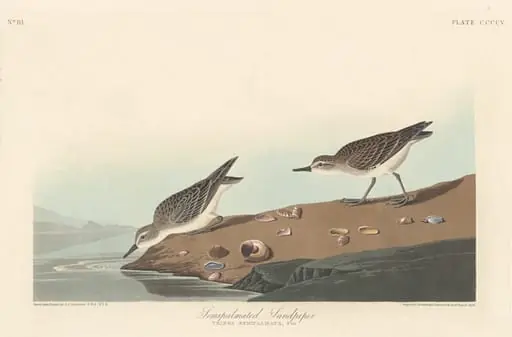
The work is a hand‑colored engraving combined with aquatint, executed on a sheet of Whatman wove paper. Produced in 1835, the image presents a solitary shorebird poised on one leg in shallow water, its plumage rendered in muted browns, whites and a touch of black on the wings. The print measures only a few inches in height, yet the detail conveys a lifelike presence.
Subject & Meaning
The bird depicted is the buff‑breasted sandpiper (Calidris subruficollis), a small migratory shorebird known for its distinctive coloration. By isolating the creature against a simple watery backdrop, the image emphasizes the bird’s delicate form and natural behavior, inviting close observation of its anatomy and habitat without narrative embellishment.
Technique & Style
The artist employed a combination of engraving and aquatint, applying fine cross‑hatching to model shadows and texture. After the print was pulled, selective hand‑coloring was added, using watercolor pigments that adhere to the thick, absorbent wove paper, preserving vivid tones. The method reflects the Havell family’s expertise in integrating line work with tonal washes.
History & Provenance
Created by Robert Havell Jr., a member of a prominent English family of engravers and etchers, the piece originates from Reading, Berkshire. The Havells were noted for their work in aquatint and for collaborations that linked British printmaking with Indian artistic traditions. The print now belongs to the collection of the National Gallery of Art in Washington, D.C.
Context
In the early nineteenth century, natural history illustration flourished as scientific societies sought accurate visual records of wildlife. Prints such as this served both educational and aesthetic purposes, providing scholars and the public with detailed representations of species that were otherwise difficult to observe directly.
Artist & collection

Artist
The Havell family of Reading, Berkshire, England, included a number of notable engravers, etchers and painters, as well as writers, publishers, educators, and musicians.