Artwork
Swainson's Warbler
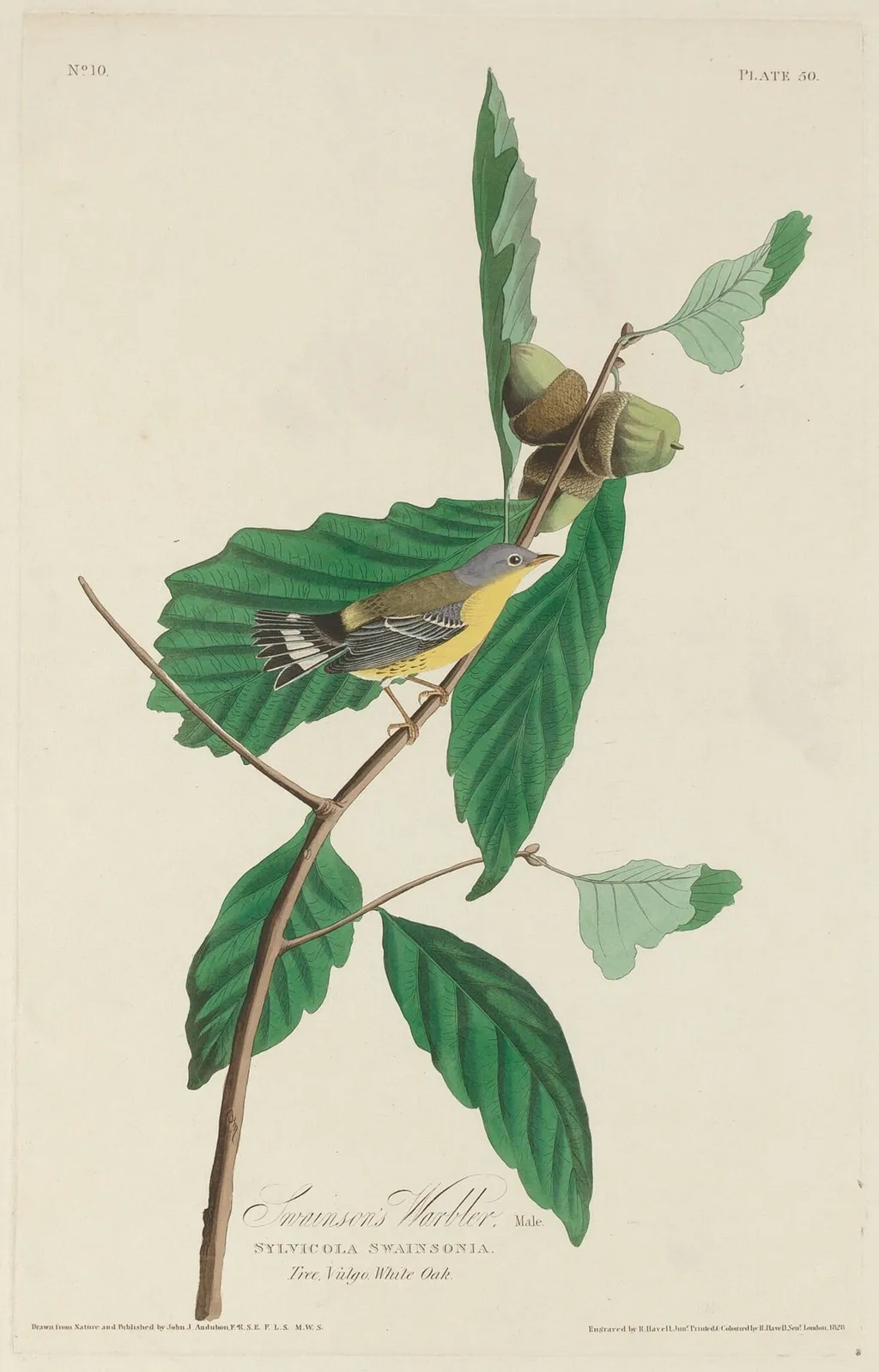
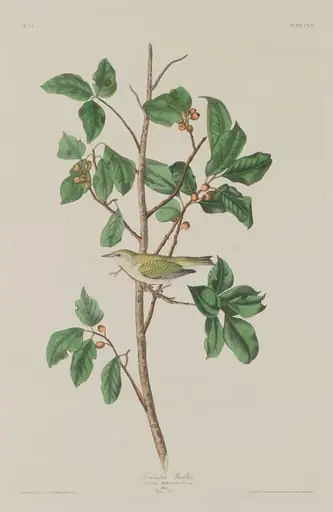
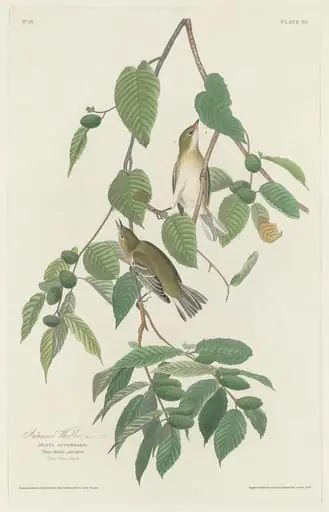
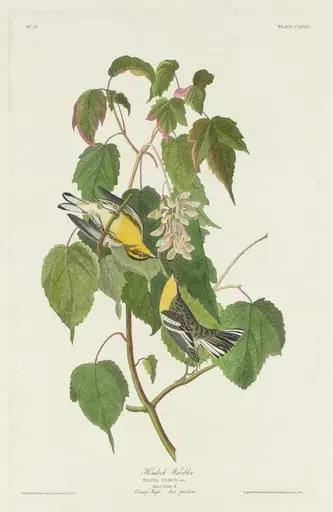
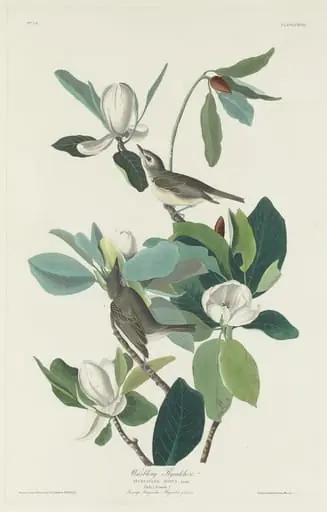
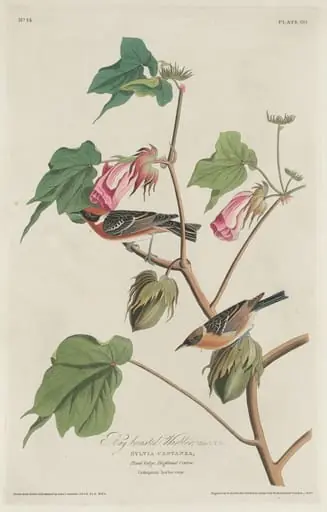
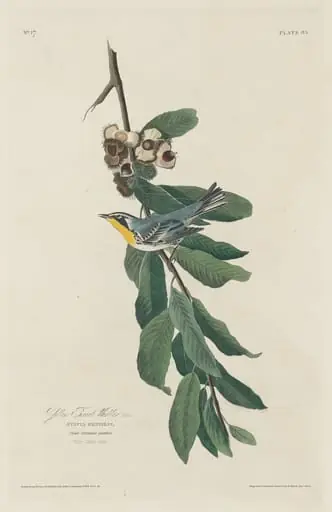
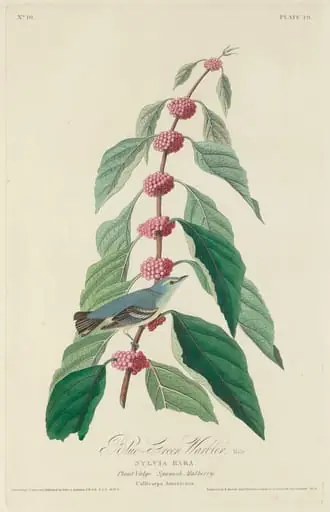
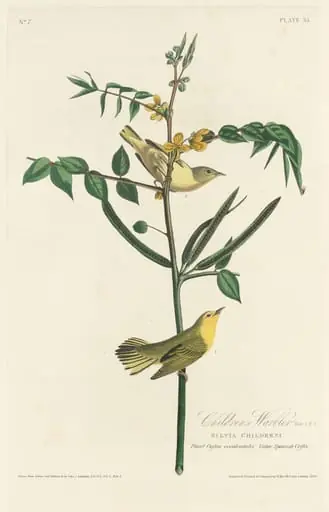
Swainson's Warbler is an ink print by the Romanticist artist Robert Havell Jr.. It dates from 1828 and is held in the collection of the National Gallery of Art.
About this work
Overview
created this 1828 print of Swainson's Warbler using hand-colored engraving and aquatint on Whatman wove paper.
Robert Havell Jr. created this 1828 print of Swainson's Warbler using hand-colored engraving and aquatint on Whatman wove paper. The work belongs to a series of ornithological illustrations produced during the early 19th century, when detailed natural history imagery relied on manual techniques before the advent of photography. Havell’s craftsmanship reflects the precision and care characteristic of his family’s printmaking tradition.
Subject & Meaning
The illustration captures a Swainson's Warbler perched on a white oak branch, surrounded by detailed foliage and scattered acorns. The bird’s yellow and gray plumage is rendered with careful attention to texture, emphasizing its natural form. The absence of a complex background directs focus to the specimen, aligning with scientific documentation goals of the period rather than decorative intent.
Technique & Style
Havell employed fine-line engraving and aquatint to achieve intricate detail in the bird’s feathers and leaf veins. Hand-coloring was applied after printing to enhance realism, a standard practice for natural history prints. The use of Whatman wove paper provided a smooth, durable surface that held fine ink lines and watercolor washes with clarity, supporting the image’s scientific accuracy.
History & Provenance
Robert Havell Jr. was part of a multi-generational family of English engravers known for their work in natural history illustration. He collaborated closely with naturalists and publishers, continuing the legacy of his father, Robert Havell the Elder, and uncle, Daniel Havell. This print likely originated as part of a larger ornithological publication, reflecting the era’s growing interest in systematic biological classification.
Context
In the 1820s, illustrated natural history texts were vital tools for scientists and collectors, as photography did not yet exist. Engravings like this one served as primary visual records of species, often distributed to institutions and private libraries. Havell’s work contributed to a broader movement in Europe and America to document biodiversity through precise, reproducible imagery.
Legacy
Havell’s prints remain valued for their technical precision and historical significance in ornithological illustration. Though superseded by photographic methods, his hand-colored engravings continue to inform modern studies of species appearance and habitat representation. The work stands as a testament to the intersection of art and science in pre-industrial natural history.
Artist & collection

Artist
The Havell family of Reading, Berkshire, England, included a number of notable engravers, etchers and painters, as well as writers, publishers, educators, and musicians.