Artwork
Wandering Shearwater
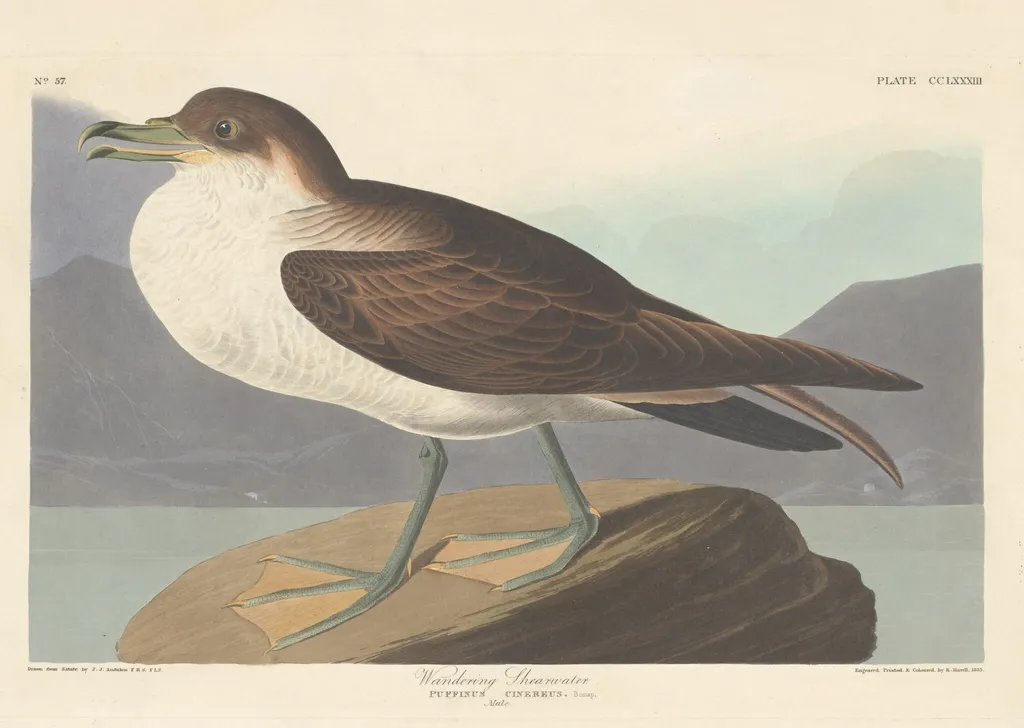
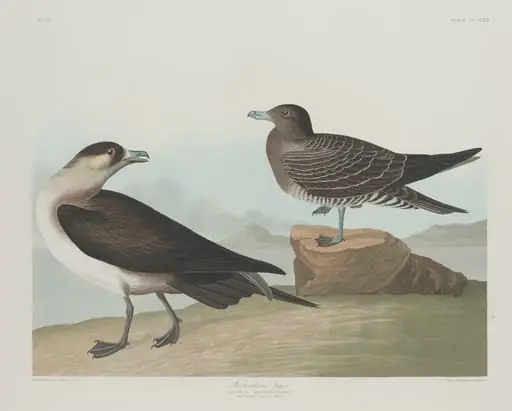
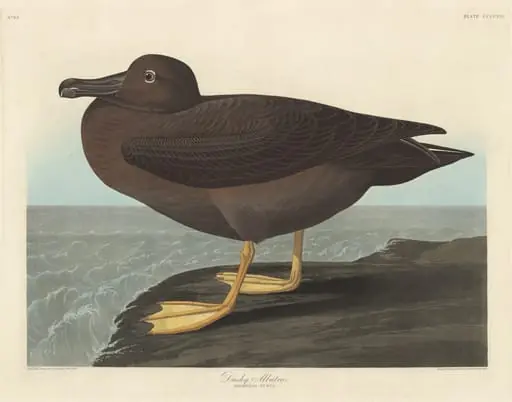
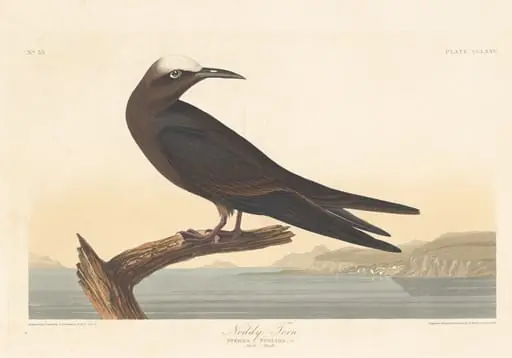
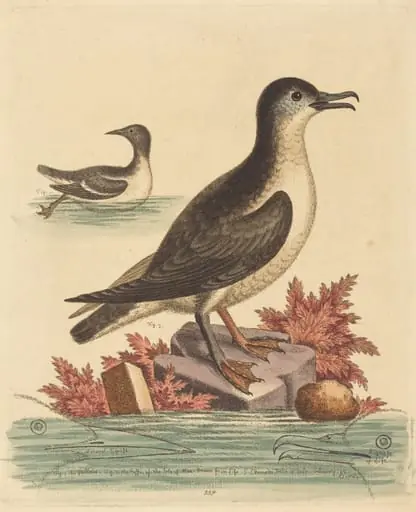
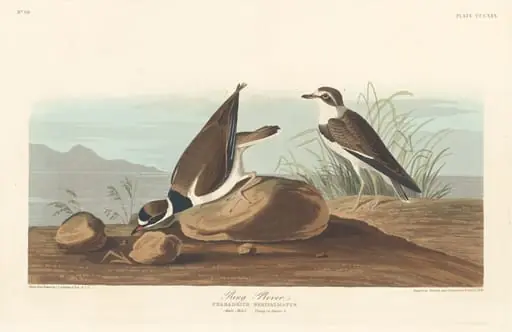
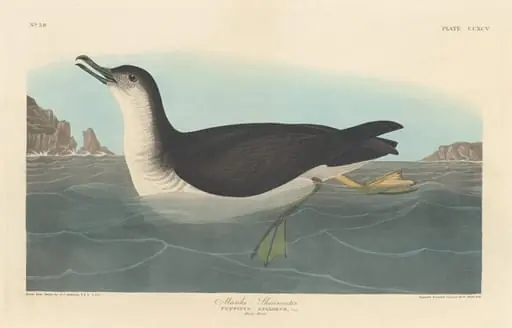
Wandering Shearwater is an ink print by the Romanticist artist Robert Havell Jr.. It dates from 1835 and is held in the collection of the National Gallery of Art.
About this work
Overview
Wandering Shearwater is a hand-colored engraving and aquatint print on Whatman wove paper, created by Robert Havell Jr. in 1835. It showcases the artist’s skill in a technique for which his family was renowned.
Subject & Meaning
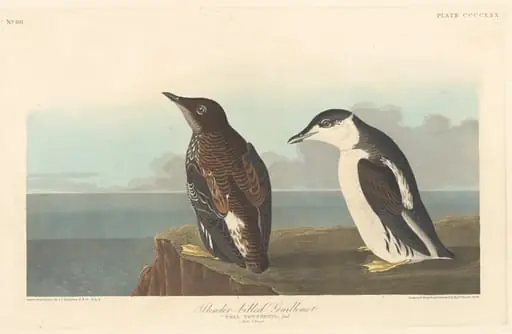
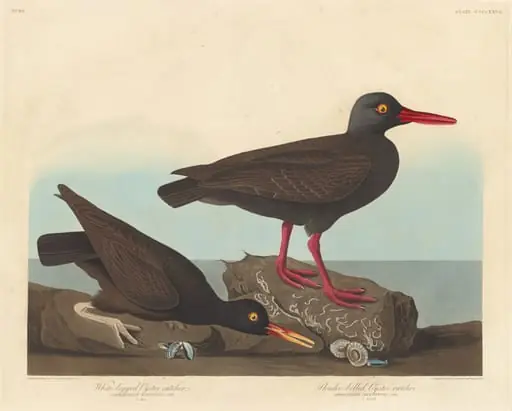
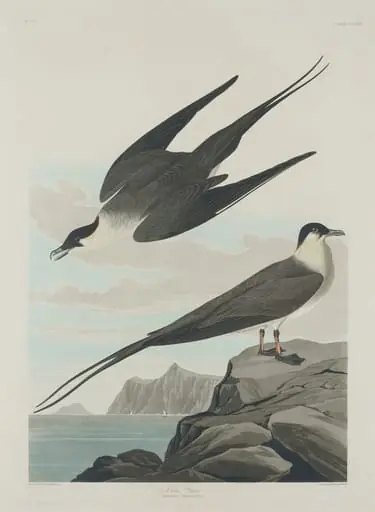
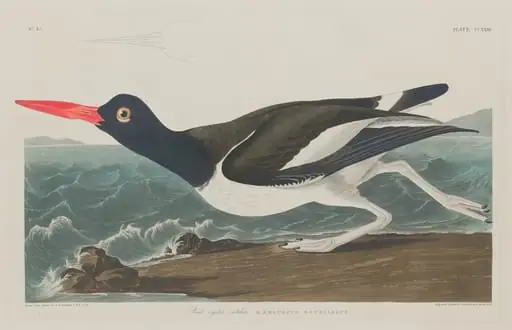
The print depicts a Wandering Shearwater seabird in meticulous detail, perched on textured rock with folded wings. The species’ characteristics are accurately rendered: dark brown head, pale face, white body with dark back and tail feathers. The bird’s natural habitat and migratory behavior are implicitly referenced.
Technique & Style
Executed in hand-colored engraving and aquatint, the work highlights the Havell family’s long-standing expertise in aquatint. The interplay of sharp, detailed bird and rock contrasts with the soft, blurry sky, demonstrating the medium’s expressive capabilities.
History & Provenance
Part of a natural history illustration tradition, Wandering Shearwater reflects the Havell family’s intersection of scientific documentation and artistic practice. Specific provenance details are not provided in the available information.
Context
Created within a broader 19th-century context of scientific and artistic collaboration, the print aligns with the era’s emphasis on detailed natural history illustrations, often used for educational and reference purposes.
Legacy
While specific legacy details of Wandering Shearwater are not outlined, it contributes to the enduring appreciation of hand-engraving techniques and the Havell family’s contribution to natural history art, influencing subsequent generations of illustrators and printmakers.
Artist & collection

Artist
The Havell family of Reading, Berkshire, England, included a number of notable engravers, etchers and painters, as well as writers, publishers, educators, and musicians.