Artwork
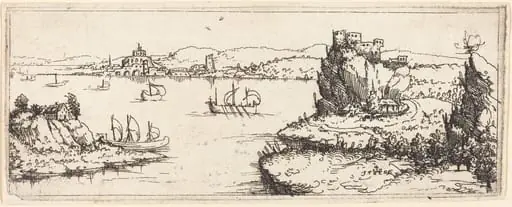
Landscape with Lake and Town
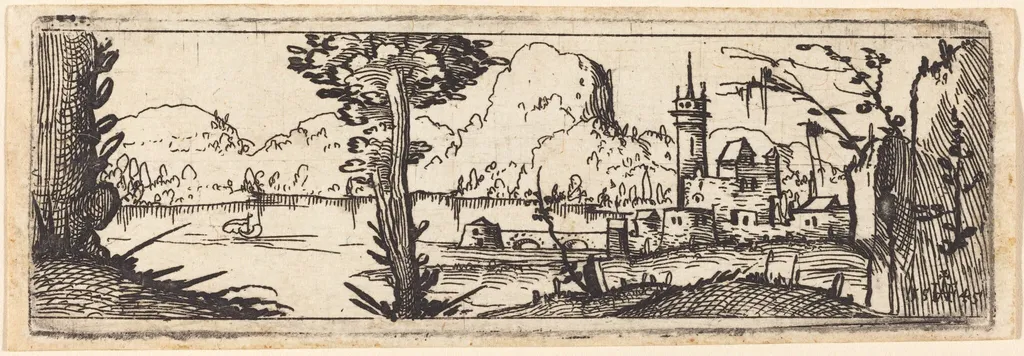
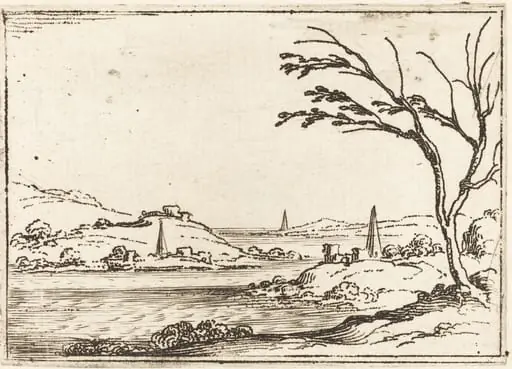
Landscape with Lake and Town is an ink print by the Renaissance artist Augustin Hirschvogel. It dates from 1545 and is held in the collection of the National Gallery of Art.
About this work
Overview
Created in 1545 by Augustin Hirschvogel, this etching presents a tranquil northern European landscape with a lake, surrounding hills, and a distant town.
Created in 1545 by Augustin Hirschvogel, this etching presents a tranquil northern European landscape with a lake, surrounding hills, and a distant town. As a print made using fine linear techniques, it reflects the artist’s background in mathematical precision and cartographic draftsmanship. The work is associated with the Danube School, a regional movement known for integrating natural observation with atmospheric detail in printmaking.
Subject & Meaning
The scene portrays a quiet lakeside setting with scattered buildings along the shore and a church steeple rising above a far-off settlement. There is no human activity depicted, emphasizing stillness and solitude. The composition suggests a contemplative engagement with place, possibly reflecting Renaissance ideals of harmony between nature and human habitation, without overt religious or narrative symbolism.
Technique & Style
Hirschvogel employed fine, controlled etching lines to model terrain, foliage, and water with subtle gradations of tone. The delicate cross-hatching and varying line density create depth and texture, particularly in the trees and the reflective surface of the lake. The precision of architectural details and the layered recession of hills demonstrate a methodical approach rooted in surveying and topographical rendering.
History & Provenance
The etching was produced during Hirschvogel’s active period in Nuremberg, a center for printmaking in mid-16th-century Germany. While specific early ownership records are not widely documented, the work aligns with the broader circulation of Danube School prints among educated collectors. Its survival in multiple institutional collections indicates its recognition within early modern print culture.
Context
This piece emerged during a time when landscape imagery in printmaking was shifting from symbolic backdrops to independent subjects. Hirschvogel’s work reflects the Danube School’s interest in regional topography and atmospheric effects, distinct from Italianate ideals. His dual expertise in art and mathematics contributed to a unique visual language that prioritized accurate spatial relationships and naturalistic detail.
Legacy
Hirschvogel’s etchings, including this landscape, helped establish landscape as a legitimate subject in Northern European printmaking. His technical rigor influenced later generations of draftsmen and cartographers. Though less celebrated than contemporaries like Dürer, his contributions to the integration of scientific observation into artistic representation remain a quiet but significant part of Renaissance visual culture.
Artist & collection
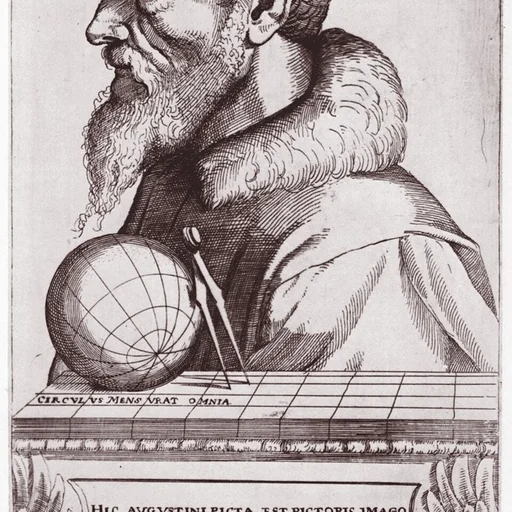
Artist
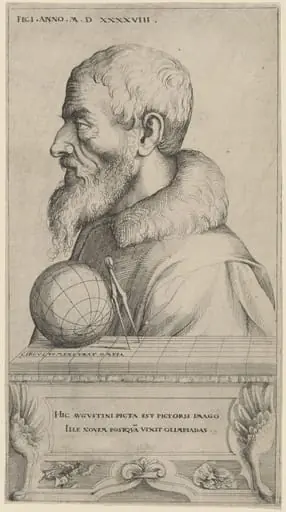
Augustin Hirschvogel (1503 – February 1553) was a German artist, mathematician, and cartographer known primarily for his etchings.

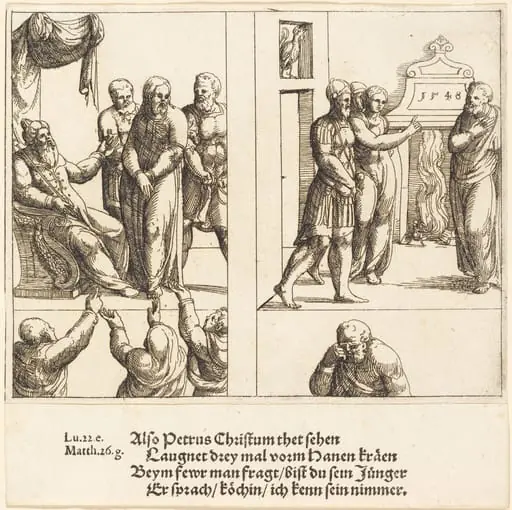
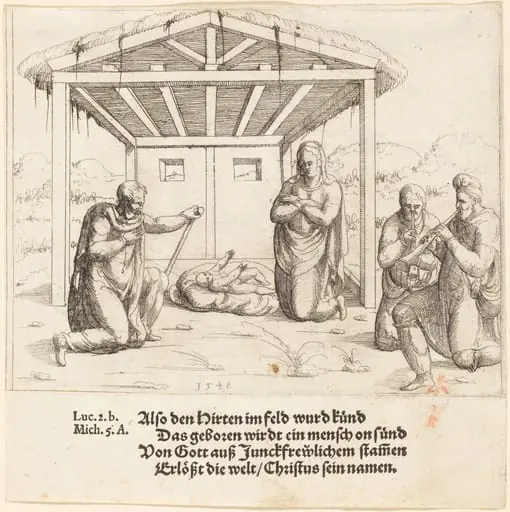
![Landscape with Sail Boats [bottom plate], by Augustin Hirschvogel](https://artifactworldgallery.com/img/augustin-hirschvogel--landscape-with-sail-boats-bottom-plate--80a2ff7dde9c982b-w320.webp)