Artwork
River Landscape with the Temptation of Christ
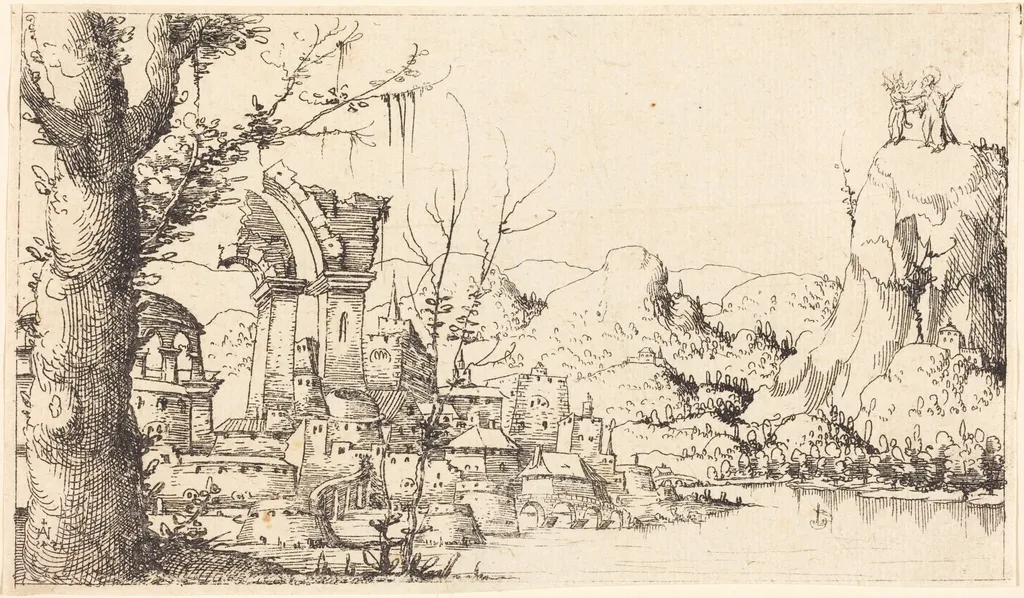
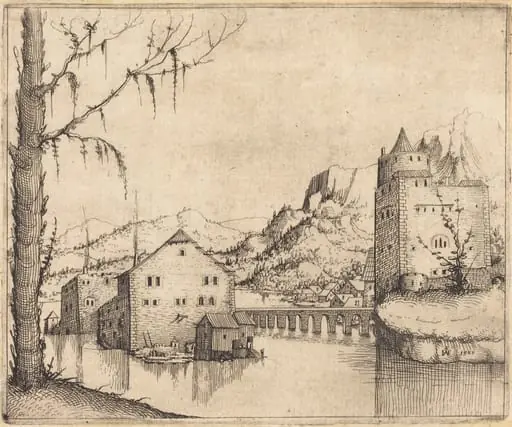
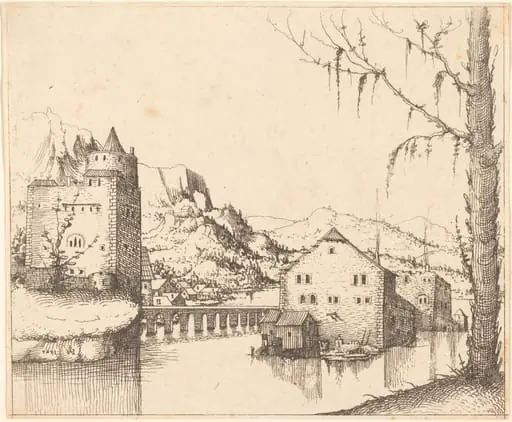
River Landscape with the Temptation of Christ is an ink print by the Renaissance artist Augustin Hirschvogel. It dates from 1545 and is held in the collection of the National Gallery of Art.
About this work
Overview
Though trained in mathematics and cartography, he applied these skills to intimate, densely composed scenes that bridge observation and allegory.
Created in 1545 by Augustin Hirschvogel, this etching is a counterproof—meaning it was pulled from the plate after the primary impression, resulting in a reversed image. It belongs to a series of thirty-five small landscape prints made between 1545 and 1549, reflecting Hirschvogel’s interest in combining topographical precision with biblical narrative. Though trained in mathematics and cartography, he applied these skills to intimate, densely composed scenes that bridge observation and allegory.
Subject & Meaning
The print integrates the biblical episode of Christ’s temptation in the wilderness into a bustling riverside town. Christ, minimally rendered, stands on a rocky outcrop near the water’s edge, while figures go about daily life—walking, climbing stairs, and moving between buildings. The juxtaposition suggests spiritual isolation amid human activity, inviting contemplation of faith within the ordinary world rather than in remote solitude.
Technique & Style
Hirschvogel employed fine, rapid etched lines to build a dense, layered composition. The river acts as a structural axis, guiding the eye through the town’s verticality and depth. Buildings, trees, and figures are suggested with economical strokes rather than detailed rendering, creating a sense of immediacy. The counterproof’s fainter, reversed image enhances the sketchlike quality, emphasizing process over polish.
History & Provenance
The print emerged from Hirschvogel’s active period in Nuremberg, where he collaborated with publishers and other artists. While the original plate’s later history is unclear, counterproofs like this one were often retained by artists as working records. Surviving examples of the series are held in European collections, including the Albertina and the British Museum, attesting to the prints’ circulation among collectors and scholars of the time.
Context
Hirschvogel’s work aligns with the Danube School’s focus on expressive landscape and intimate scale, distinct from the grand altarpieces of the era. His etchings reflect a broader 16th-century interest in secular and sacred coexistence, influenced by humanist thought and the rise of print culture. The detailed urban settings echo contemporary cartographic practices, merging geographic accuracy with symbolic narrative.
Legacy
Though Hirschvogel is less known today than his contemporaries, his landscape etchings contributed to the development of printmaking as a medium for personal expression. His integration of biblical themes into everyday environments influenced later Northern European artists who sought to ground spiritual narratives in recognizable, lived spaces, paving the way for more secularized religious imagery in the 17th century.
Artist & collection
Artist
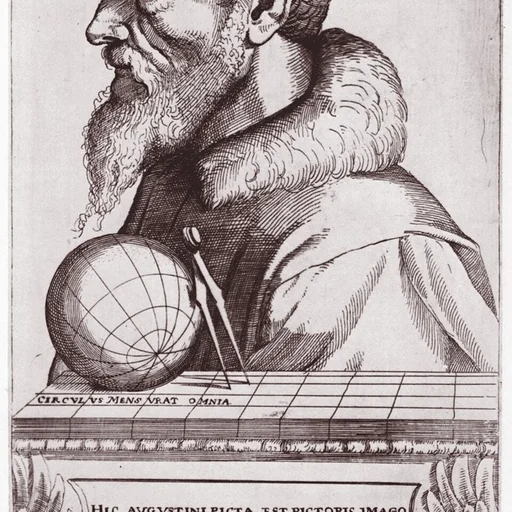
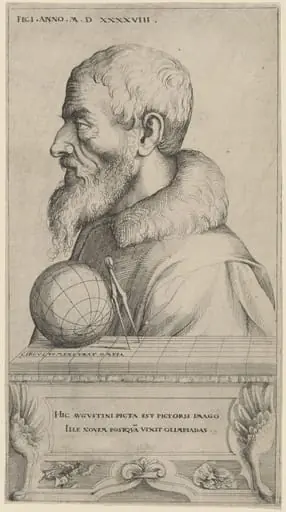
Augustin Hirschvogel (1503 – February 1553) was a German artist, mathematician, and cartographer known primarily for his etchings.

 River Landscape
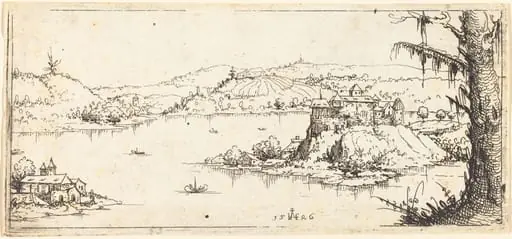 Landscape with a Large Lake at Center
 River Landscape with Two Buildings
![Landscape with a Lake [top plate], by Augustin Hirschvogel](https://artifactworldgallery.com/img/augustin-hirschvogel--landscape-with-a-lake-top-plate--e7bf3d066d3912a6-w320.webp) Landscape with a Lake [top plate]
Landscape with a Lake [top plate] Landscape with Fortress and River
 River Landscape with Two Buildings
 Landscape with a Lake
 River Landscape with High Cliffs
 River at the Foot of a High Rock
 Landscape with the Baptism of Christ
 Landscape with High Cliffs, River, and City