Artwork
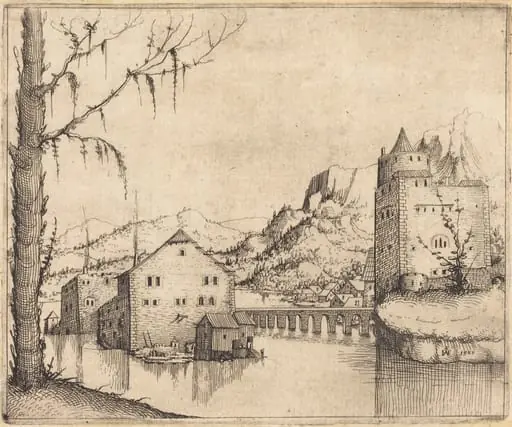
River Landscape with Two Buildings
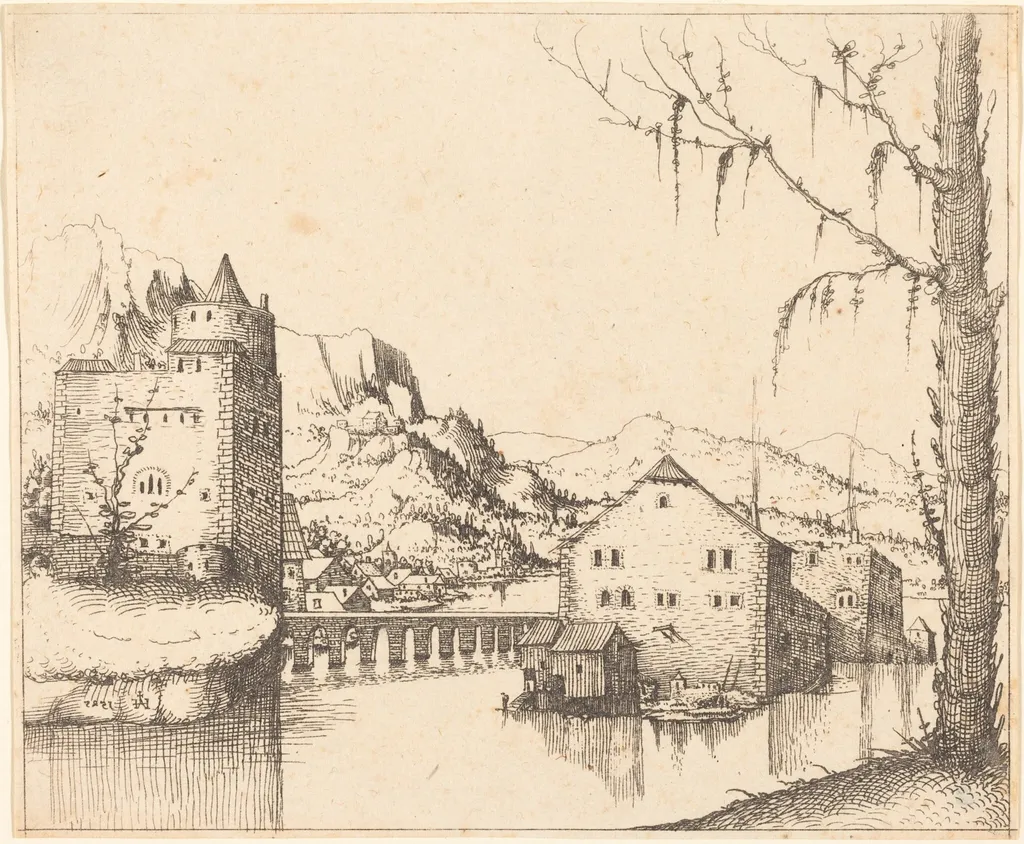
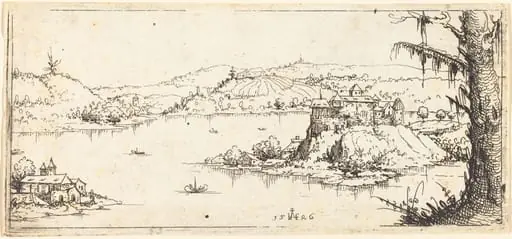
River Landscape with Two Buildings is an ink print by the Renaissance artist Augustin Hirschvogel. It dates from 1545 and is held in the collection of the National Gallery of Art.
About this work
Overview
Augustin Hirschvogel’s *River Landscape with Two Buildings* is an etching executed on laid paper in 1545. Part of a series of thirty‑five modestly sized landscape prints produced between 1545 and 1549, the image presents a quiet riverside scene framed by gentle hills and distant mountains, inviting the viewer into a cultivated view of nature.
Subject & Meaning
The composition centers on a river flanked by two structures: a taller, tower‑crowned building on the left, accessed by a small bridge, and a lower, rustic house with a sloping roof on the right. A leafless tree and a diminutive boat occupy the foreground, while the surrounding terrain suggests a harmonious balance between human habitation and the natural environment.
Technique & Style
Hirschvogel employed the etching process, drawing the design with acid‑resistant ground on laid paper before exposing it to a copper plate. The resulting lines convey fine atmospheric perspective, a hallmark of the Danube School’s early landscape idiom, where delicate hatching and tonal variation render depth and the subtle play of light across water and land.
History & Provenance
The print has survived in several impressions, most of which are catalogued in museum and library collections specializing in Renaissance graphic arts.
Created during the early phase of Hirschvogel’s printmaking career, the work belongs to his first major series of landscape etchings, which helped secure his reputation among the Danube School artists active in mid‑16th‑century Bavaria and Austria. The print has survived in several impressions, most of which are catalogued in museum and library collections specializing in Renaissance graphic arts.
Context
The Danube School emphasized natural observation and the integration of topographical detail within imaginative settings. Hirschvogel, also known for his cartographic and mathematical expertise, applied a precise sense of space to his landscapes, reflecting contemporary interests in geography and the scientific study of terrain, while maintaining a lyrical visual quality.
Artist & collection
Artist
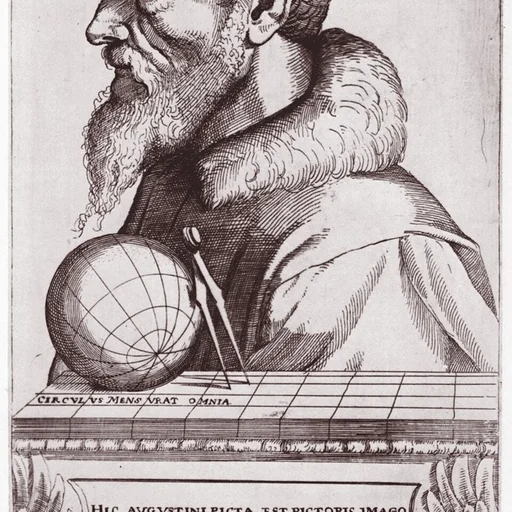
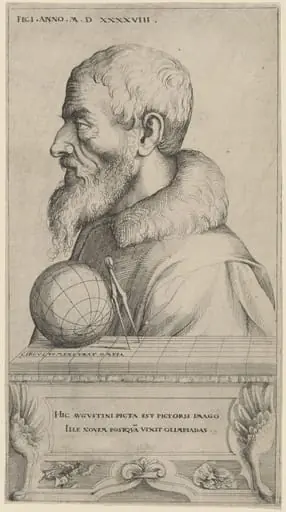
Augustin Hirschvogel (1503 – February 1553) was a German artist, mathematician, and cartographer known primarily for his etchings.

 Landscape with a Large Lake at Center
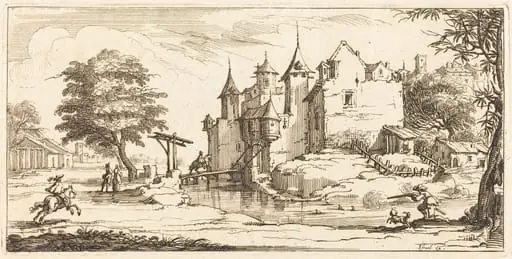 Chateau with a Drawbridge
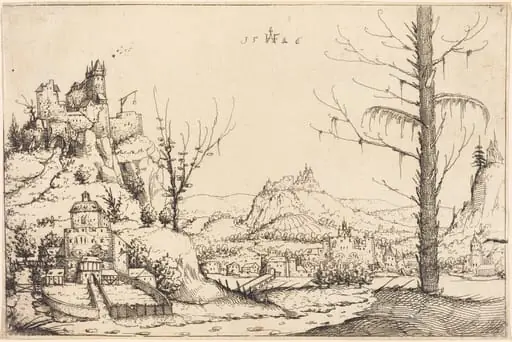 Landscape with High Cliffs, River, and City
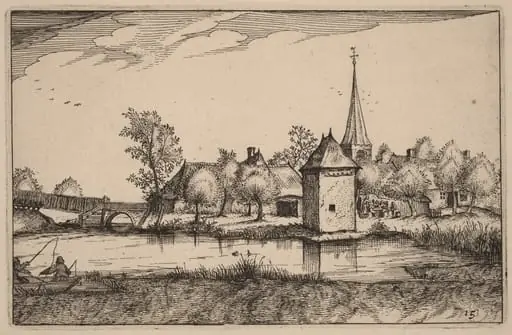 Pond and a Village
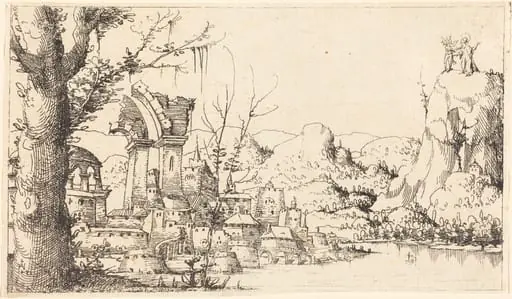 River Landscape with the Temptation of Christ
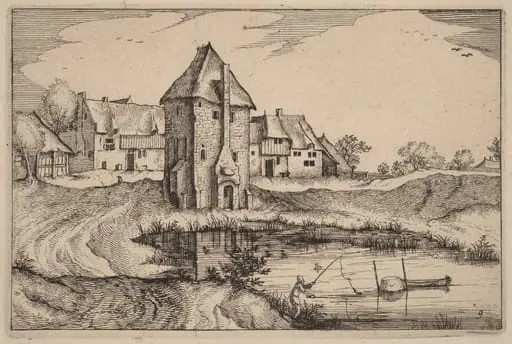 The Pond
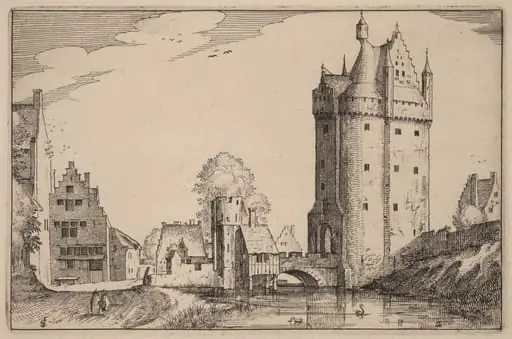 Town Gate
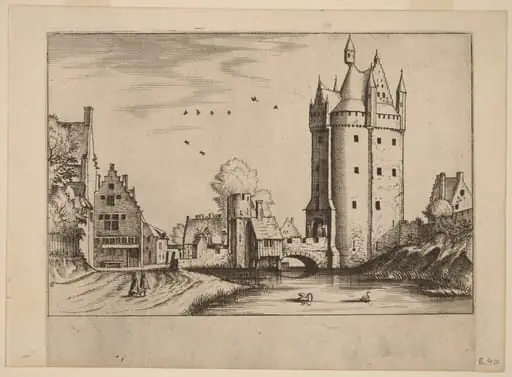 Town Gate with Country Houses
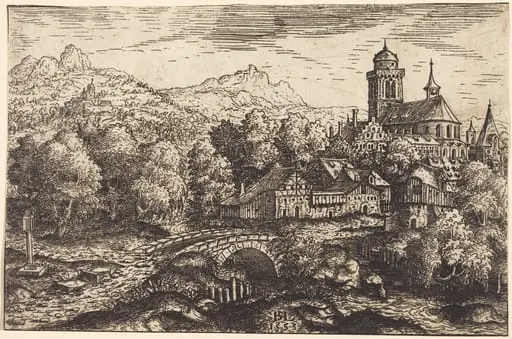 Mountainous Landscape with a Village
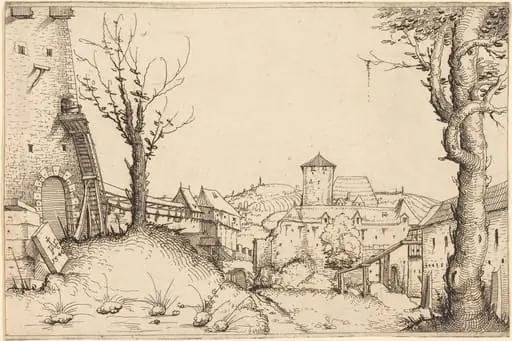 Courtyard of a Castle
 View of a Town near a River with a Church on the Right
 River Landscape with Two Buildings