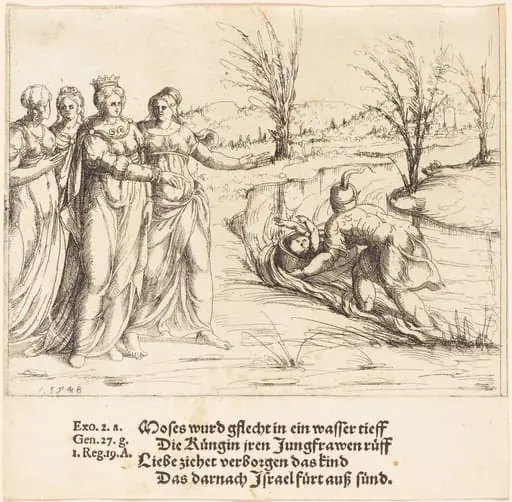
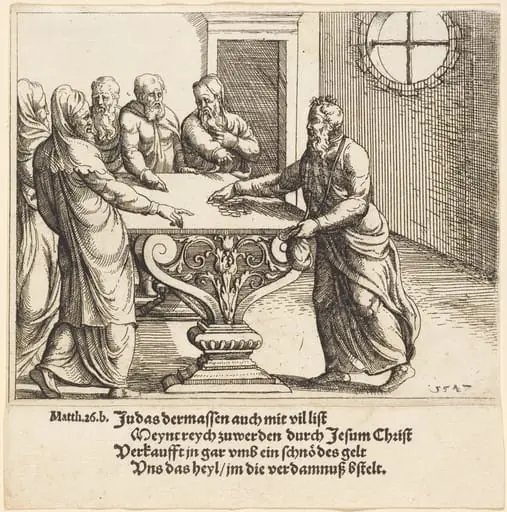
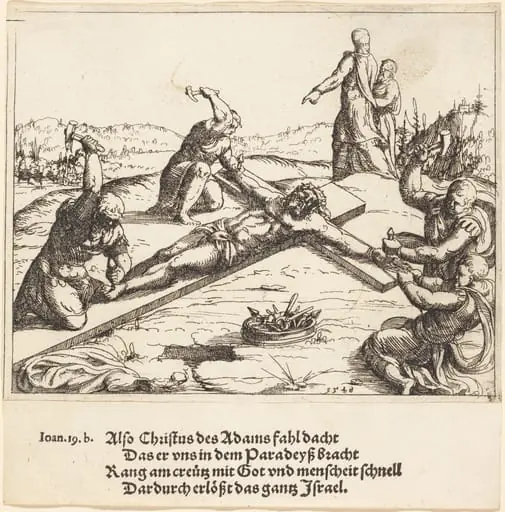
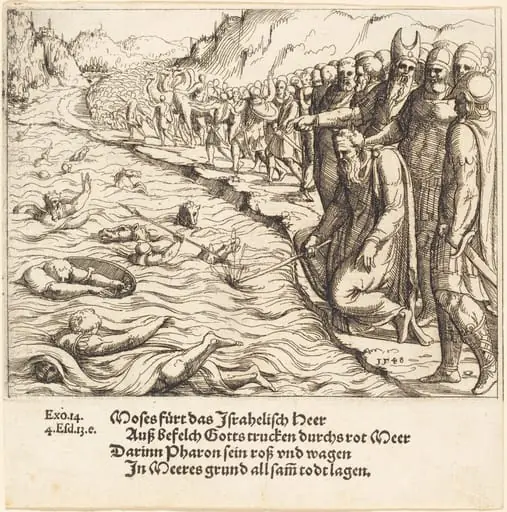
Artwork
The Murder of the Children of Bethel
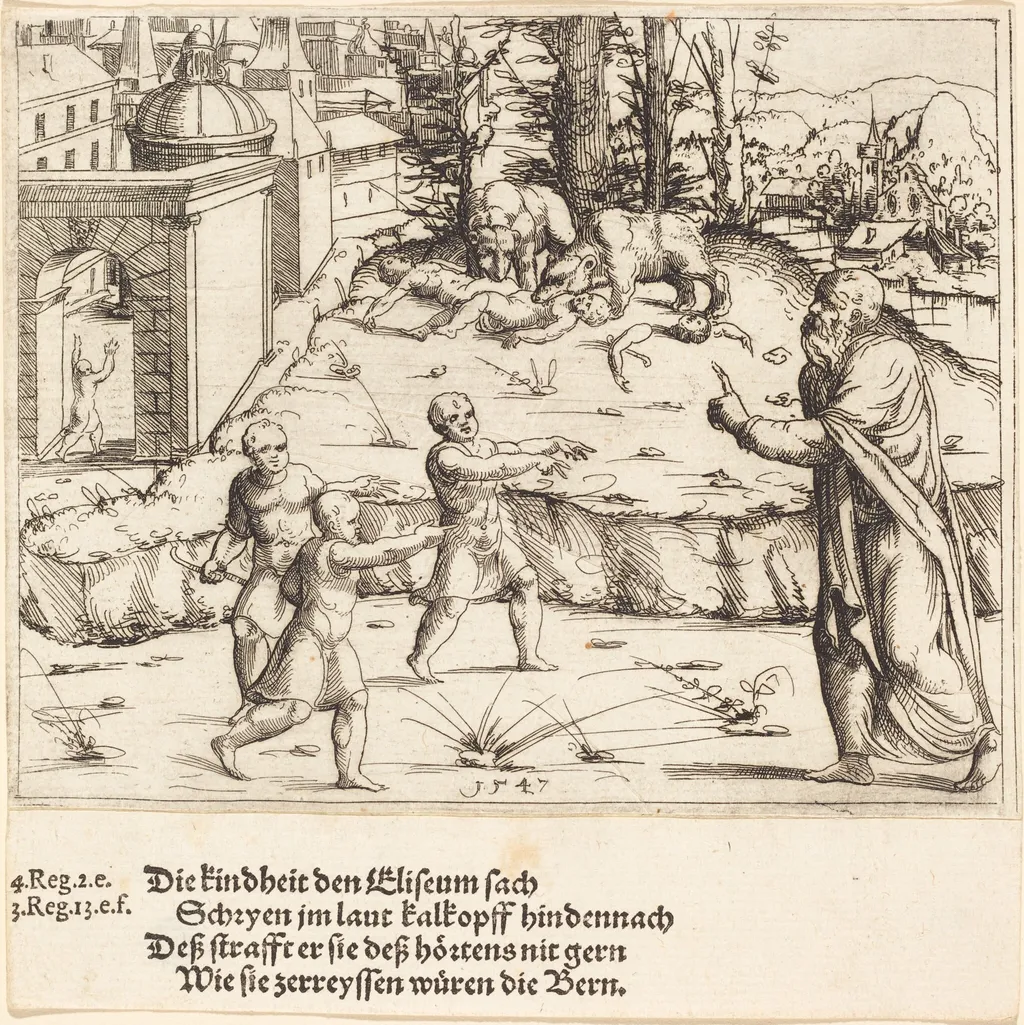
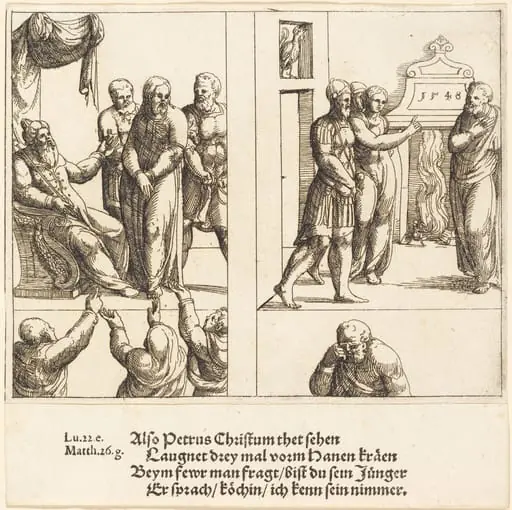
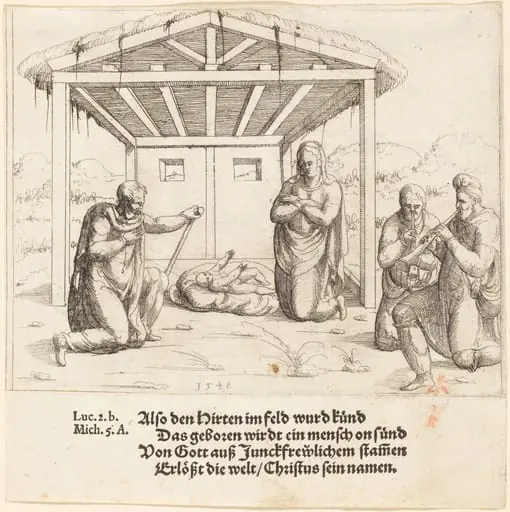
The Murder of the Children of Bethel is an ink print by the Renaissance artist Augustin Hirschvogel. It dates from 1547 and is held in the collection of the National Gallery of Art.
About this work
Overview
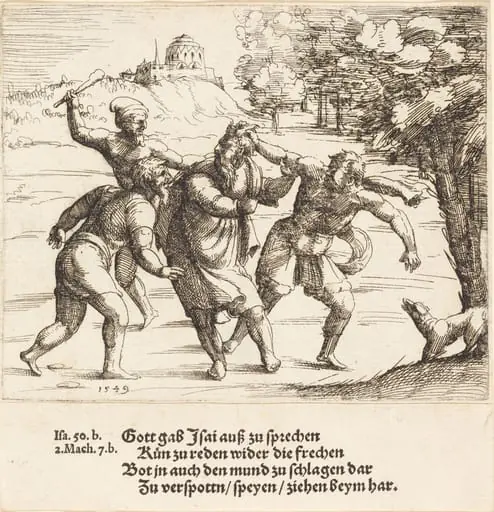
Augustin Hirschvogel’s 1547 print, *The Murder of the Children of Bethel*, is an etching that depicts a biblical massacre. The composition shows soldiers hoisting infants by their feet while blood pools on the ground, illustrating the violent episode recounted in the Old Testament.
Subject & Meaning
The image visualizes the biblical narrative in which a king orders the killing of infants in Bethel, a story that underscores themes of cruelty and divine judgment. By presenting the scene with graphic detail, Hirschvogel emphasizes the horror of the act and its moral implications.
Technique & Style
Created by incising lines into a metal plate, the etching employs sharp, angular strokes that convey abrupt movement and stark violence. The high contrast between the dark figures and the blood‑stained ground heightens the dramatic impact, a characteristic approach in Hirschvogel’s small‑scale prints.
History & Provenance
Hirschvogel, a German artist linked to the Danube School, produced a series of thirty‑five landscape etchings between 1545 and 1549, of which this work is a part. The print was circulated in the mid‑16th century, allowing the biblical story to reach a wider audience through reproducible media.
Context
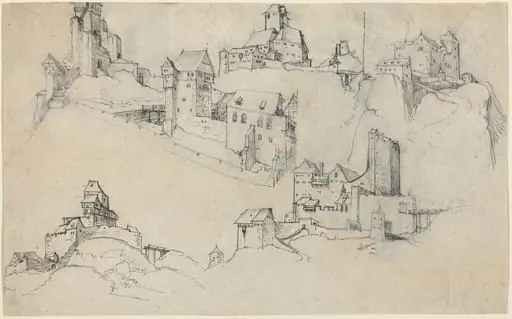
The Danube School, active in Bavaria and Austria, is known for integrating detailed natural observation with narrative content. Hirschvogel’s background as a mathematician and cartographer informed his precise line work, while his religious subjects reflect the period’s pre‑Reformation interest in biblical illustration.
Artist & collection
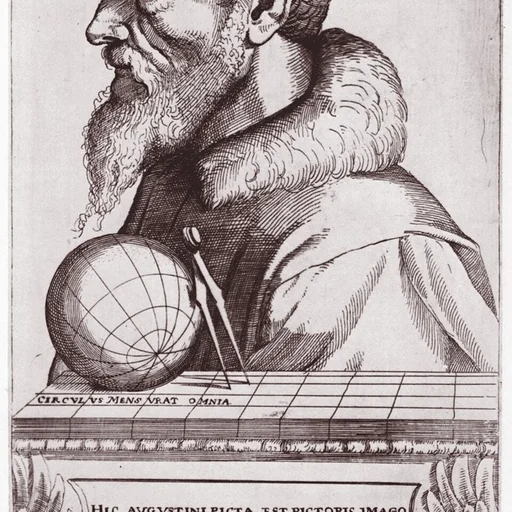
Artist
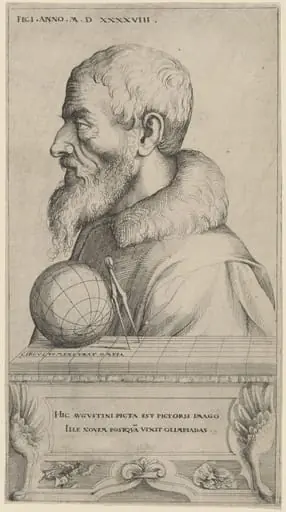
Augustin Hirschvogel (1503 – February 1553) was a German artist, mathematician, and cartographer known primarily for his etchings.