Artwork
The Sacrifice of Isaac
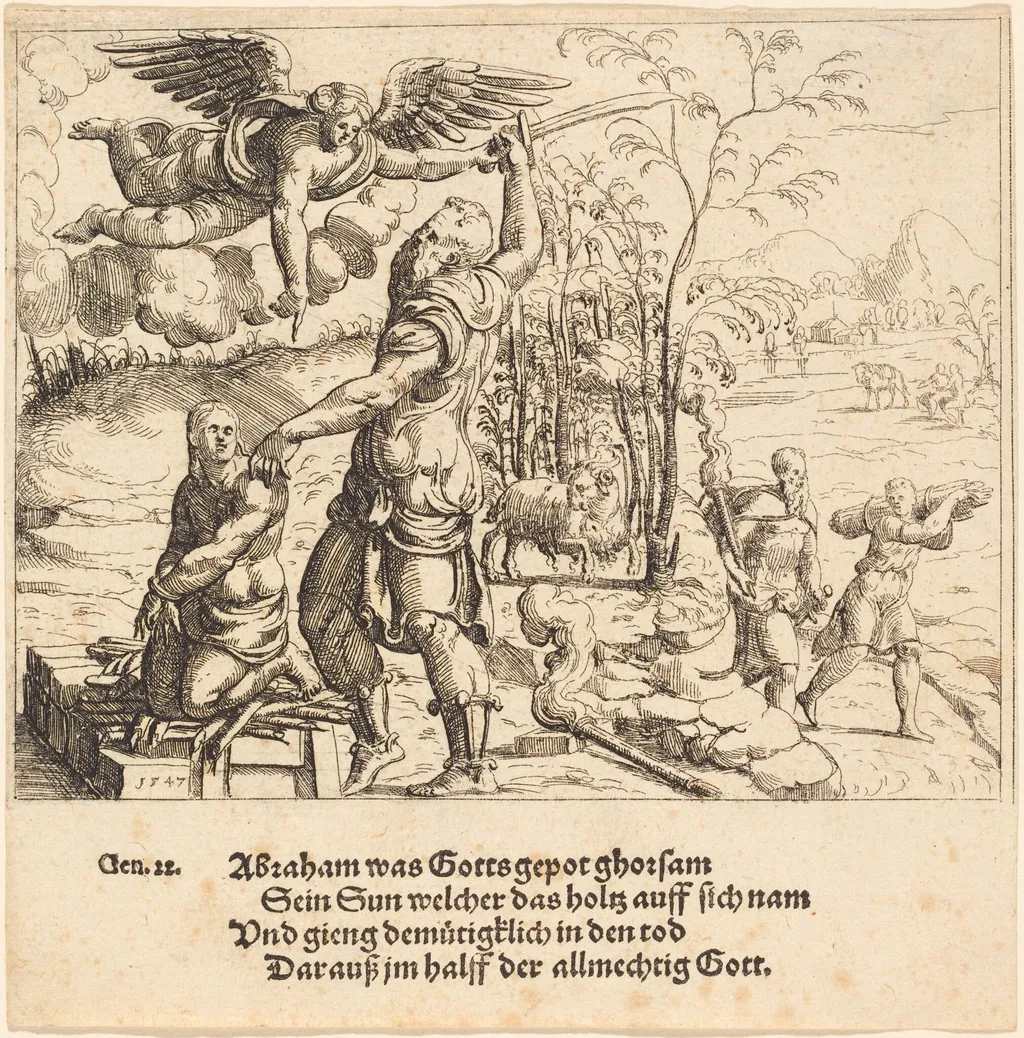
The Sacrifice of Isaac is an ink print by the Renaissance artist Augustin Hirschvogel. It dates from 1547 and is held in the collection of the National Gallery of Art.
About this work
Overview
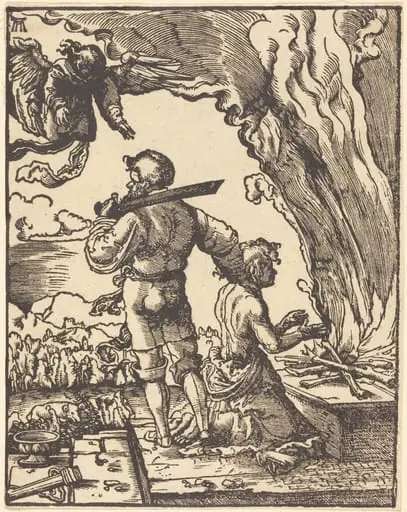
Created in 1547 by the German artist Augustin Hirschvogel, this etching captures the biblical moment when Abraham is halted from sacrificing his son Isaac.
Created in 1547 by the German artist Augustin Hirschvogel, this etching captures the biblical moment when Abraham is halted from sacrificing his son Isaac. As part of a small series of prints made between 1545 and 1549, the work reflects Hirschvogel’s focus on intimate, finely detailed compositions. His background in mathematics and cartography informed his precise line work, evident in the controlled yet dynamic rendering of the scene.
Subject & Meaning
The scene illustrates Genesis 22, where divine intervention stops Abraham’s act of obedience. The angel, descending from above, arrests the knife mid-swing while gesturing toward the ground, signaling divine command. Isaac, bound and reaching upward, and Abraham, frozen in tension, embody the conflict between duty and mercy. Distant figures and a stationary donkey frame the moment, reinforcing its solemnity and isolation within a broader narrative of faith.
Technique & Style
Hirschvogel employed etching to achieve fine, incised lines that convey motion and emotional weight. The contrast between sharp, angular strokes in the figures and softer contours in the landscape creates visual rhythm. His use of negative space and minimal background detail directs focus to the central drama. The monochrome palette enhances the print’s clarity and emotional gravity, typical of Northern Renaissance printmaking traditions.
History & Provenance
Produced during Hirschvogel’s most active period as a printmaker, the etching circulated among educated audiences in German-speaking regions. Though no early ownership records are widely documented, its technical precision and biblical theme align with the devotional print market of the mid-16th century. It likely served both as religious instruction and as an example of artistic skill in a time when prints were widely distributed.
Context
Hirschvogel worked within the orbit of the Danube School, a loose network of artists in Bavaria and Austria who blended landscape elements with religious narratives. Unlike the grand altarpieces of the era, his small-scale prints emphasized personal contemplation. The inclusion of detailed natural elements and quiet, observational figures reflects a regional shift toward intimate, human-centered storytelling in religious art.
Legacy
Hirschvogel’s etchings, including this one, contributed to the elevation of printmaking as a serious artistic medium in Northern Europe. His fusion of technical precision with narrative clarity influenced later generations of printmakers. Though less celebrated than contemporaries like Dürer, his work remains a quiet testament to the expressive potential of etching in conveying complex theological themes through restrained composition.
Artist & collection
Artist
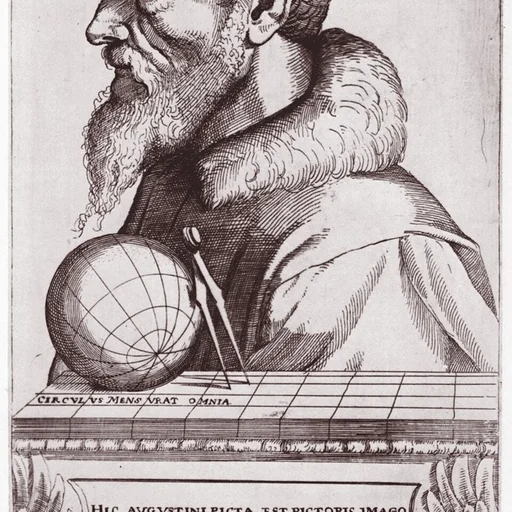
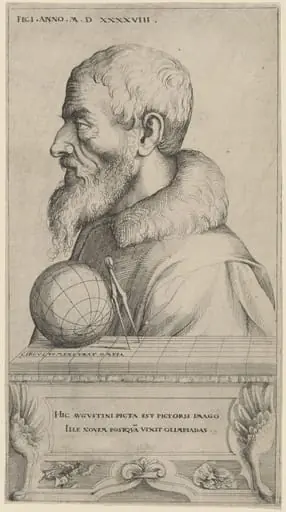
Augustin Hirschvogel (1503 – February 1553) was a German artist, mathematician, and cartographer known primarily for his etchings.

 The Last Judgment
 Abraham's Sacrifice
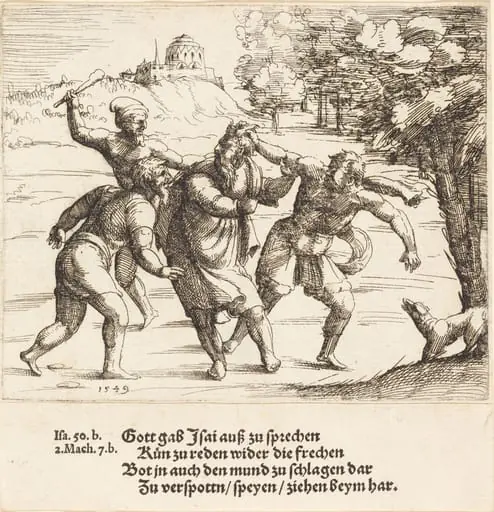 Isaiah Accepts Mockery because of His Faith
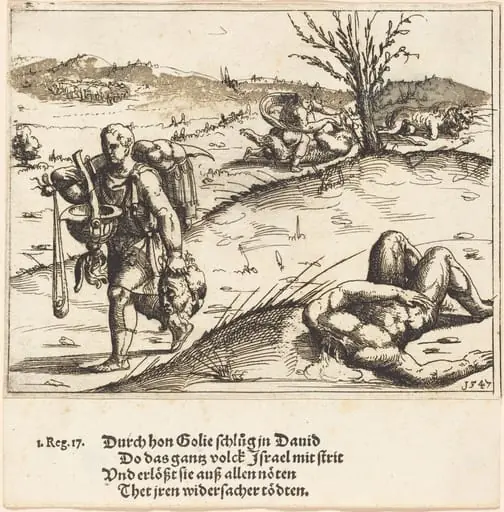 David Beheads Goliath
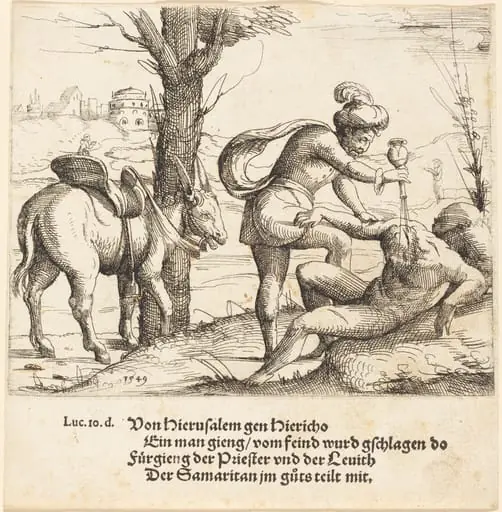 The Parable of the Good Samaritan
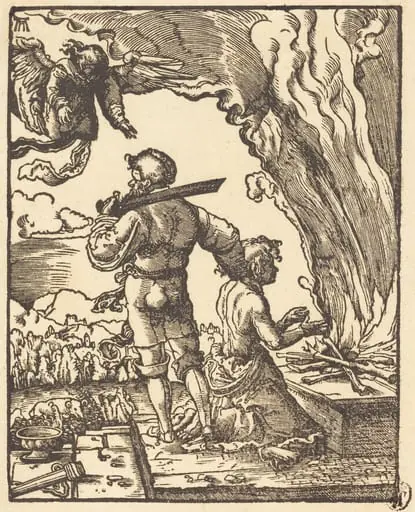 Abraham's Sacrifice
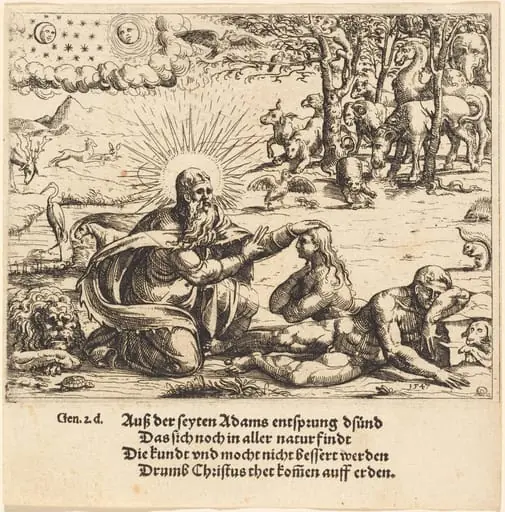 Creation of Eve
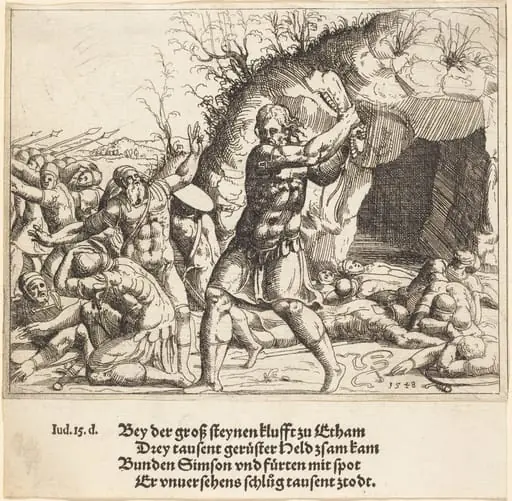 Samson Slays the Philistines
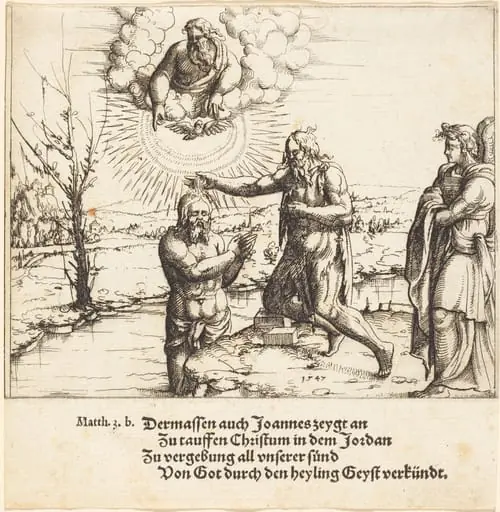 The Baptism of Christ
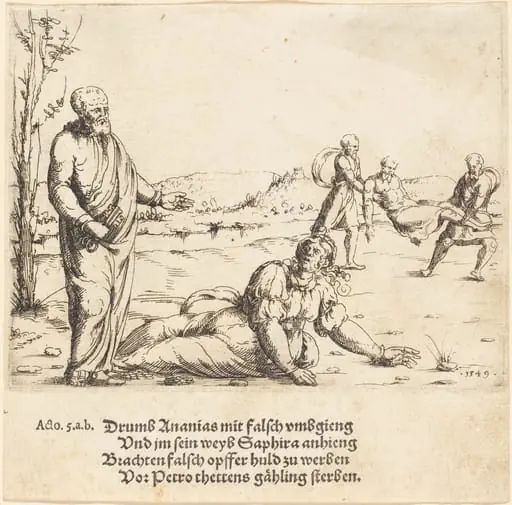 The Punishment of Ananias and Sapphira
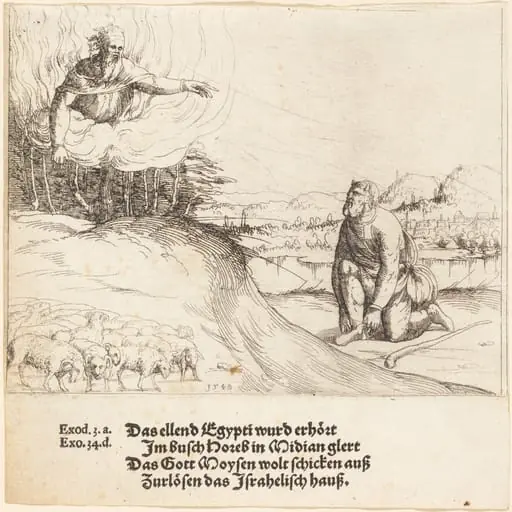 Moses and the Burning Bush
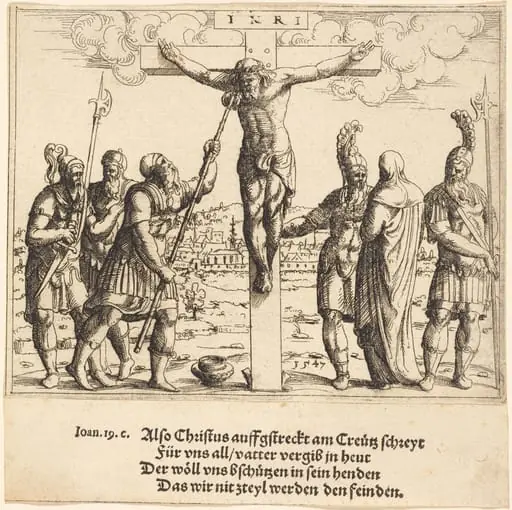 Christ is Given Vinegar to Drink