Artwork
Naaman is Cured of Leprosy
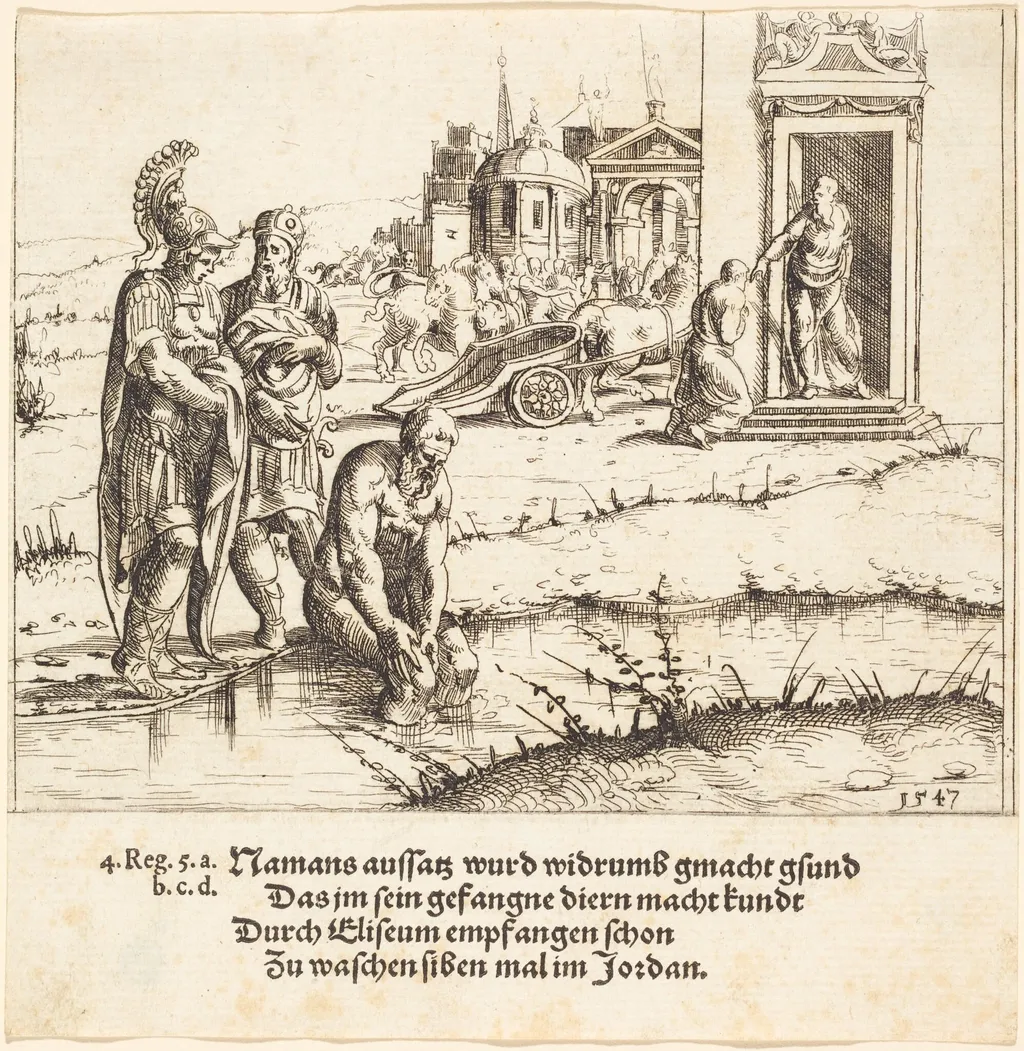
Naaman is Cured of Leprosy is an ink print by the Renaissance artist Augustin Hirschvogel. It dates from 1547 and is held in the collection of the National Gallery of Art.
About this work
Overview
This work illustrates a biblical narrative through the medium of print, reflecting the period’s interest in religious subjects rendered with technical clarity.
Augustin Hirschvogel, a German artist active in the mid-16th century, produced this etching in 1547 as part of a small series of landscape-oriented prints. Known for his precision in line and topographical detail, Hirschvogel combined artistic skill with mathematical discipline. This work illustrates a biblical narrative through the medium of print, reflecting the period’s interest in religious subjects rendered with technical clarity.
Subject & Meaning
The scene depicts the biblical story from 2 Kings 5, in which Naaman, a Syrian military commander afflicted with leprosy, is healed after washing in the Jordan River at the instruction of the prophet Elisha. The kneeling figure in armor represents Naaman, while the crowned figure nearby likely symbolizes Elisha’s authority. The composition emphasizes humility before divine intervention, with the distant city and laboring figures grounding the miracle in a tangible world.
Technique & Style
Hirschvogel employed fine, controlled etching lines to model form and suggest depth, using cross-hatching to define light and shadow on figures and terrain. The riverbank is rendered with dense, irregular strokes that convey natural disorder, contrasting with the orderly architecture of the distant city. His approach reflects the Danube School’s interest in integrating detailed natural elements with human narrative, prioritizing atmospheric texture over idealized form.
History & Provenance
Created during Hirschvogel’s most productive period (1545–1549), this print belongs to a group of thirty-five small etchings focused on biblical and mythological themes. Though few records of its early ownership survive, it was likely circulated among educated patrons in German-speaking regions who valued religious imagery paired with artistic refinement. Its survival reflects the broader dissemination of prints as tools for devotional and intellectual engagement.
Context
In mid-16th-century Germany, printmaking flourished as a means of disseminating religious narratives amid the Reformation. Hirschvogel’s work aligns with a trend of using etching to translate scripture into accessible visual form. His background in cartography informed his precise rendering of landscapes, distinguishing his prints from more ornamental contemporaries and linking them to a growing interest in empirical observation.
Legacy
Hirschvogel’s etchings, including this one, contributed to the development of Northern Renaissance printmaking by blending narrative clarity with topographical realism. While not widely influential in the long term, his technical discipline and integration of landscape as active narrative space influenced later generations of German draftsmen. His work remains a documented example of how religious themes were visually adapted for private contemplation in the early modern period.
Artist & collection
Artist
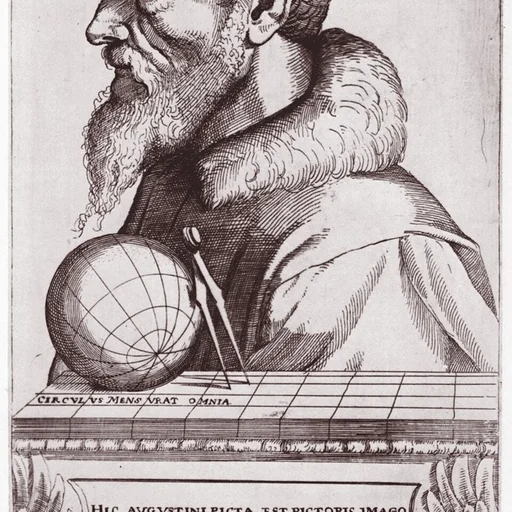
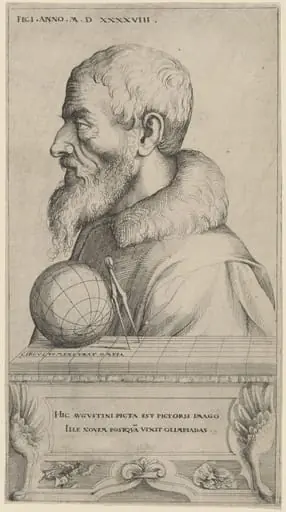
Augustin Hirschvogel (1503 – February 1553) was a German artist, mathematician, and cartographer known primarily for his etchings.

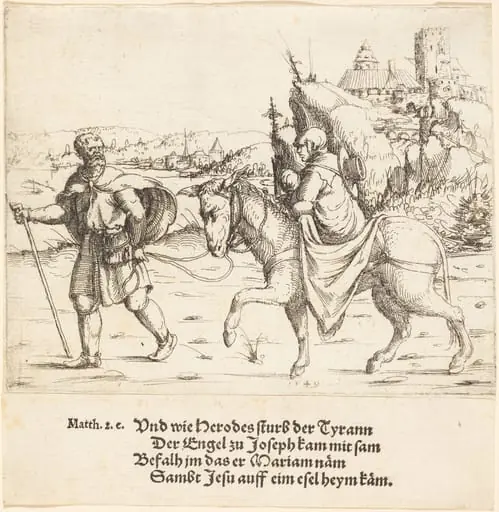 The Holy Family Returns from Egypt
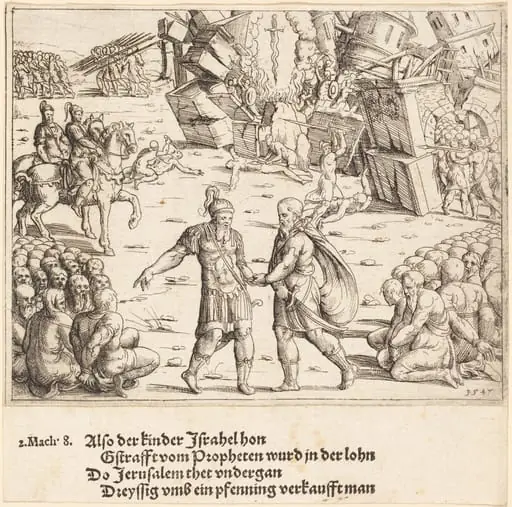 The Victory of Judas Maccabeus Over Niccanor
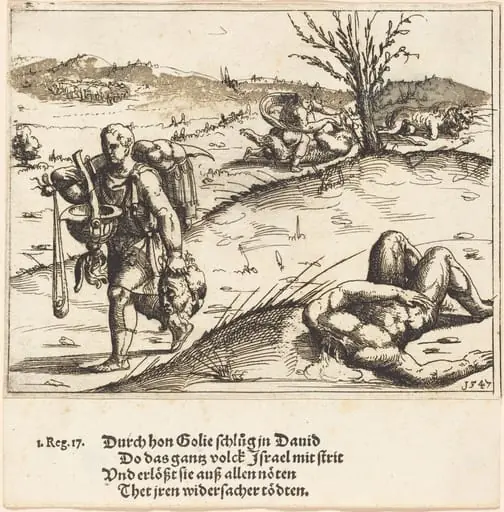 David Beheads Goliath
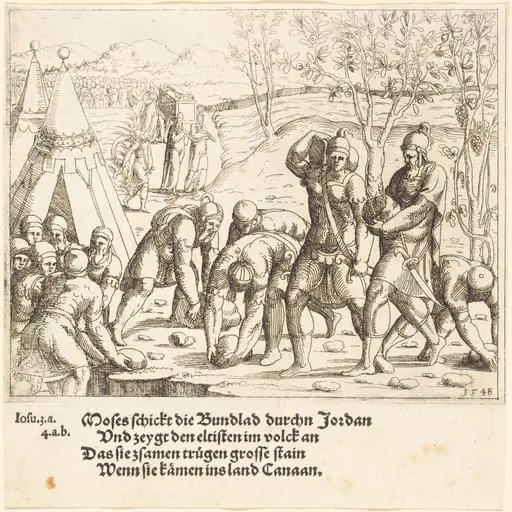 The Twelve Stones, and the Waters of the Jordan are Divided
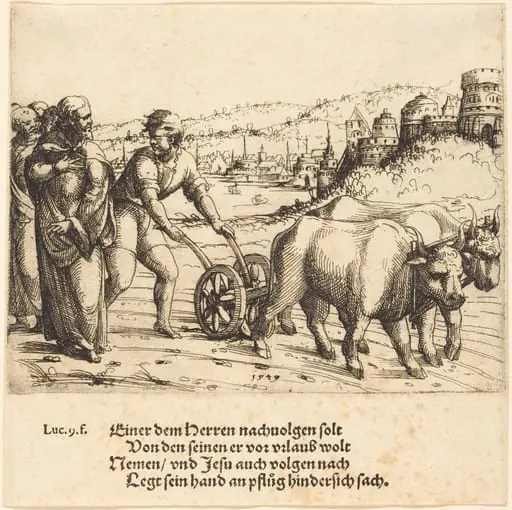 No One Who Puts His Hand on the Plow and Looks Back ia a Follower of Christ
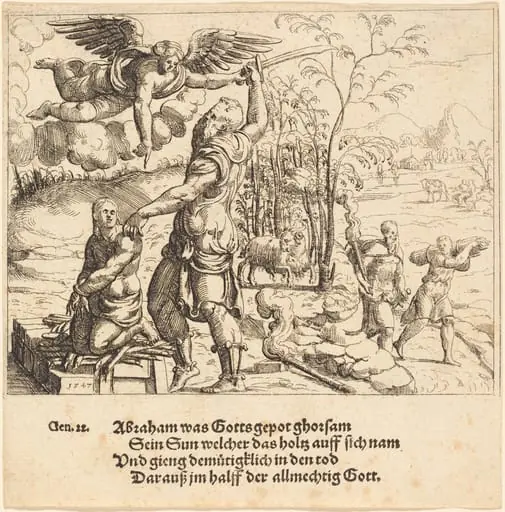 The Sacrifice of Isaac
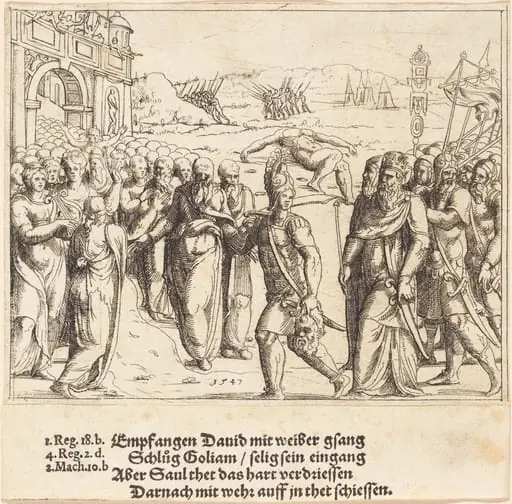 David is Welcomed after Killing Goliath, and Saul's Jealousy
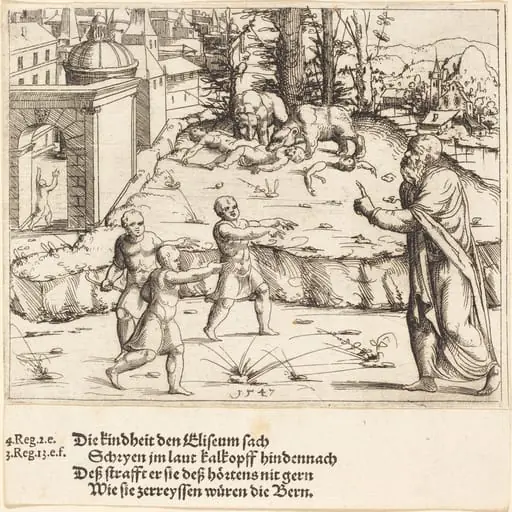 The Murder of the Children of Bethel
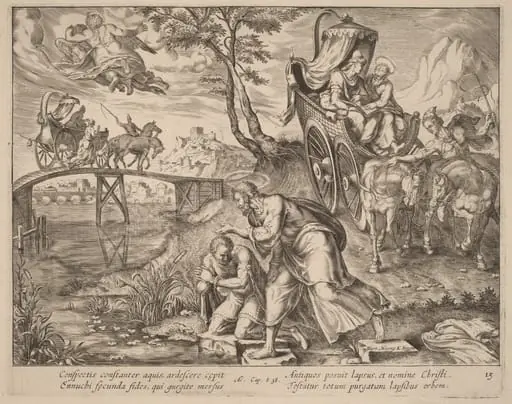 The Baptism of the Eunuch by Saint Philip
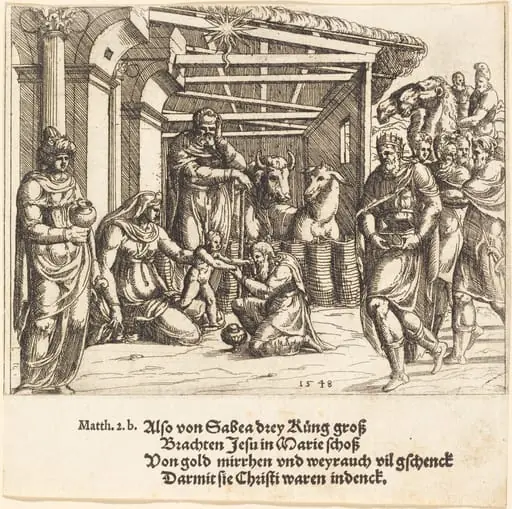 The Adoration of the Magi
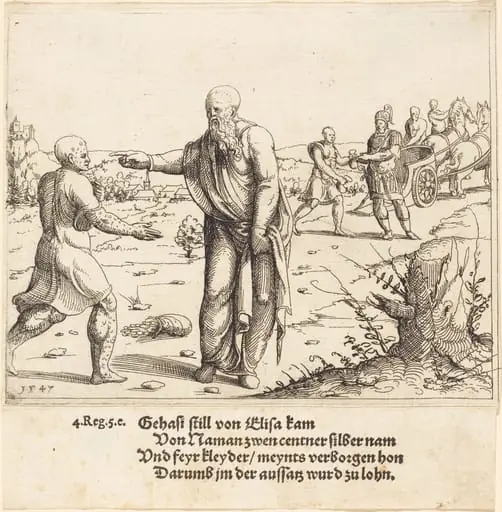 Elisha Punishes Gehazi with Naaman's Leprosy
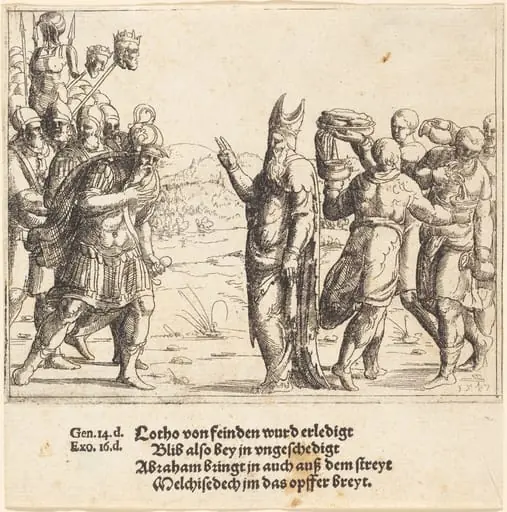 Melchizedek with Bread and Wine