Artwork
The Rival Sacrifices of Elijah and the Priests of Baal
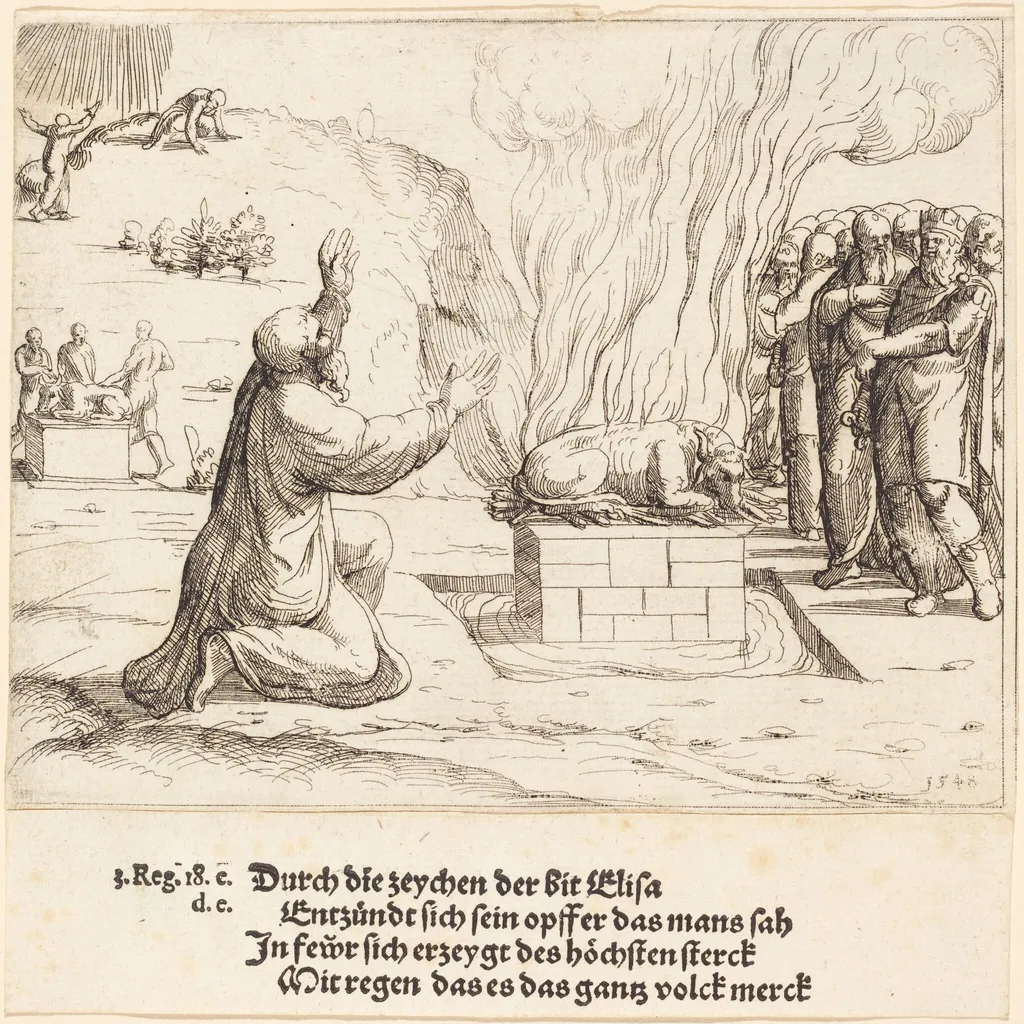
The Rival Sacrifices of Elijah and the Priests of Baal is an ink print by the Renaissance artist Augustin Hirschvogel. It dates from 1548 and is held in the collection of the National Gallery of Art.
About this work
Overview
Hirschvogel, known for his precise line work and small-scale landscapes, produced this print during a productive period between 1545 and 1559.
Created in 1548 by the German artist Augustin Hirschvogel, this etching illustrates a dramatic episode from the First Book of Kings. Hirschvogel, known for his precise line work and small-scale landscapes, produced this print during a productive period between 1545 and 1559. His work bridges artistic and technical disciplines, reflecting the intellectual currents of the Northern Renaissance. The print belongs to a body of work that emphasizes clarity, detail, and compositional balance.
Subject & Meaning
The scene portrays the biblical contest between the prophet Elijah and the priests of Baal, as described in 1 Kings 18. Elijah, on the left, prays fervently before an altar, while the priests on the right gesture in ritualistic desperation. The contrast between solitary devotion and collective ritual underscores the narrative’s theological tension. Hirschvogel captures the moment before divine intervention, inviting contemplation of faith, authority, and divine response.
Technique & Style
Hirschvogel employed fine, controlled etching lines to render texture and spatial depth. The figures are delineated with precision, their garments and gestures carefully articulated. Background elements—trees, hills, distant figures—are suggested with minimal yet effective strokes, enhancing the scene’s spatial recession. Subtle tonal variations, achieved through line density, create atmospheric perspective and dramatic emphasis on the central altar fires.
History & Provenance
The etching was produced during Hirschvogel’s mature period in Nuremberg, a center of printmaking and humanist scholarship. While specific early ownership records are sparse, the work aligns with the broader circulation of religious prints in 16th-century German-speaking regions. It was likely intended for private devotion or scholarly study, reflecting the era’s interest in biblical narratives as subjects for visual meditation.
Context
Hirschvogel’s work emerged alongside the Protestant Reformation, a time when biblical stories were increasingly depicted for personal reflection. Though he was not overtly polemical, his choice of subject resonated with reformist ideals of direct divine encounter. His association with the Danube School connects him to artists who blended naturalistic landscape with spiritual narrative, a trend distinct from Italian Renaissance conventions.
Legacy
Hirschvogel’s etchings, including this one, contributed to the development of Northern printmaking as a medium for intellectual and religious expression. His technical refinement influenced later generations of engravers, particularly in the use of fine line to convey both detail and mood. While less widely known today than contemporaries like Dürer, his work remains a significant example of Renaissance print culture’s quiet rigor.
Artist & collection
Artist
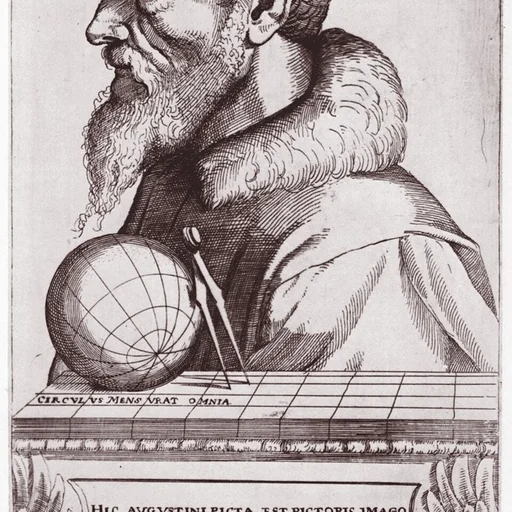
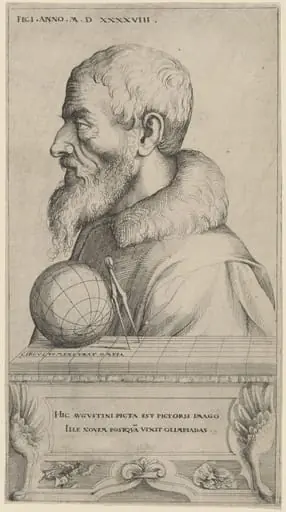
Augustin Hirschvogel (1503 – February 1553) was a German artist, mathematician, and cartographer known primarily for his etchings.

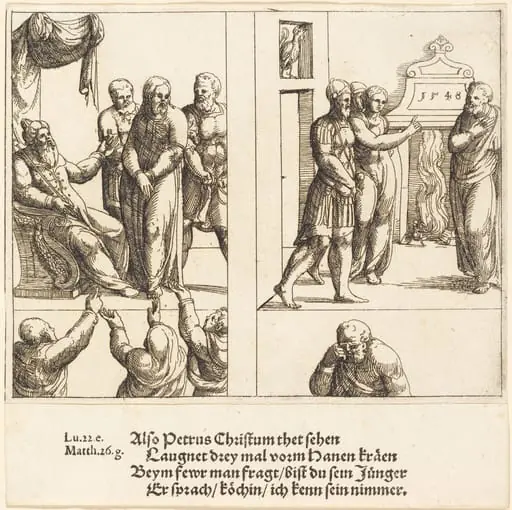
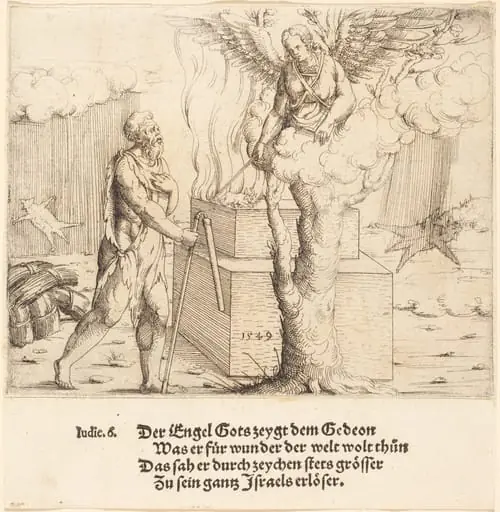 The Sacrifice of Gideon
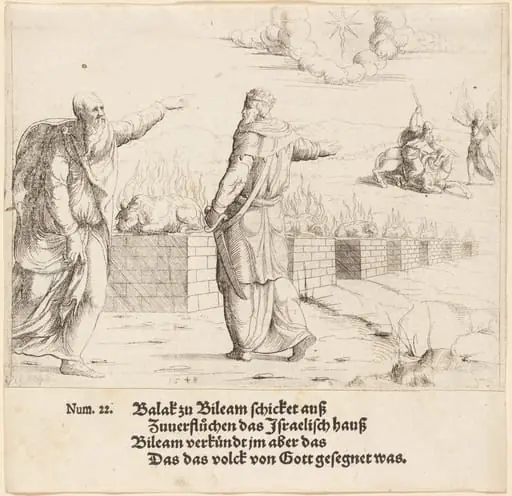 Balak's Sacrifice, and Balaam's Prophecy
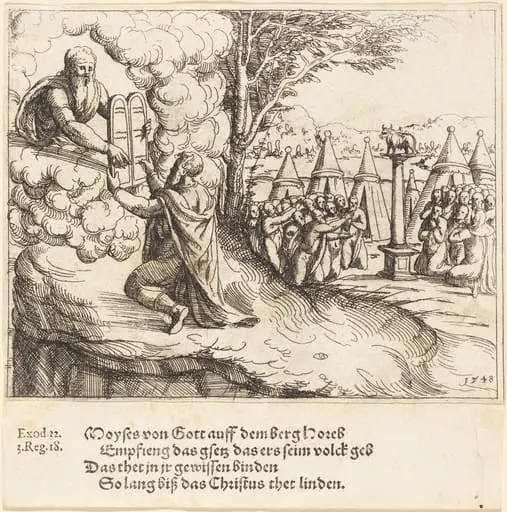 Moses Receiving the Tablets
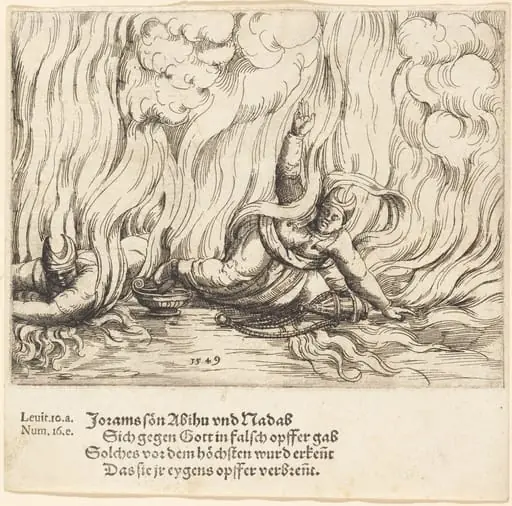 Nadab and Abihu
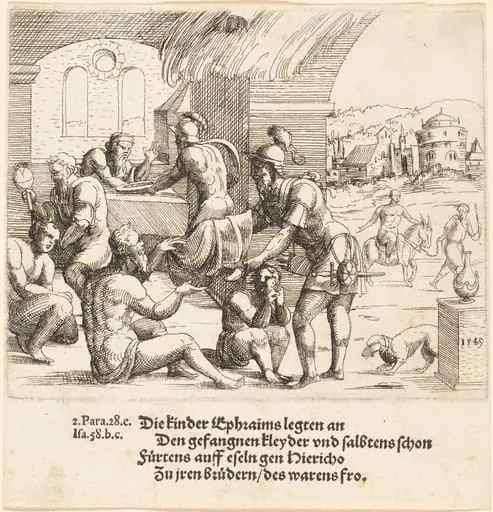 The Men of Ephraim Care for their Captives and Return Them to Jerico
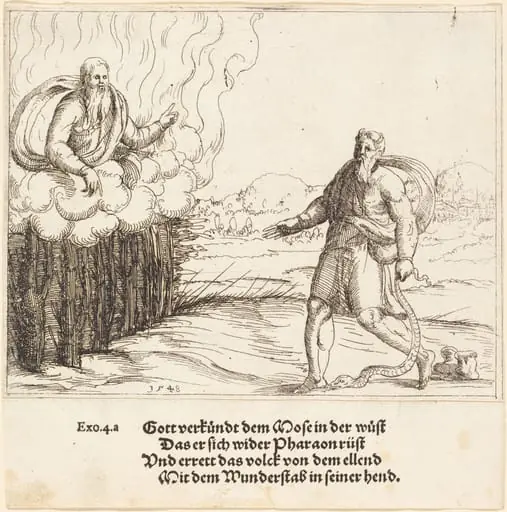 Moses and the Serpent
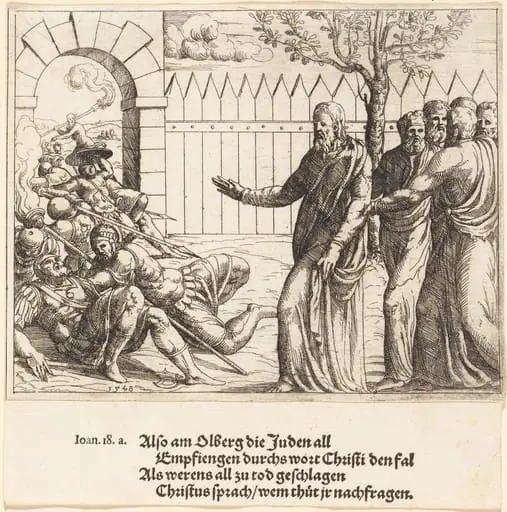 Jesus Identifies Himself before the Arrest
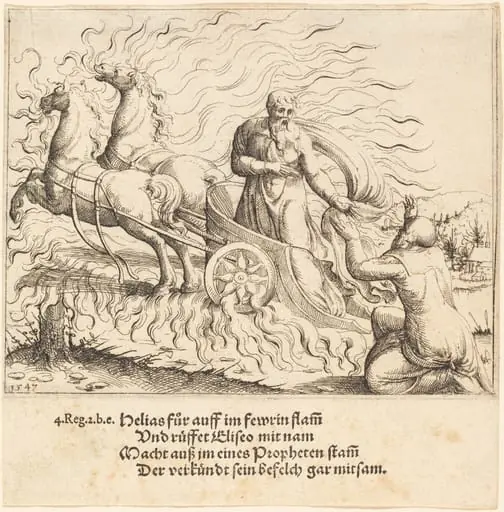 Elijah is Taken up to Heaven
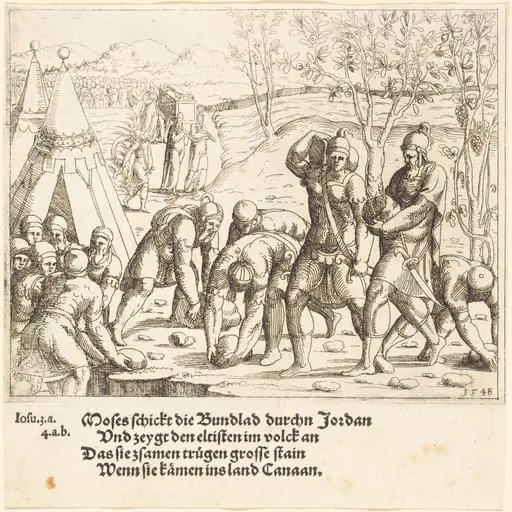 The Twelve Stones, and the Waters of the Jordan are Divided