Artwork
Ecce Homo
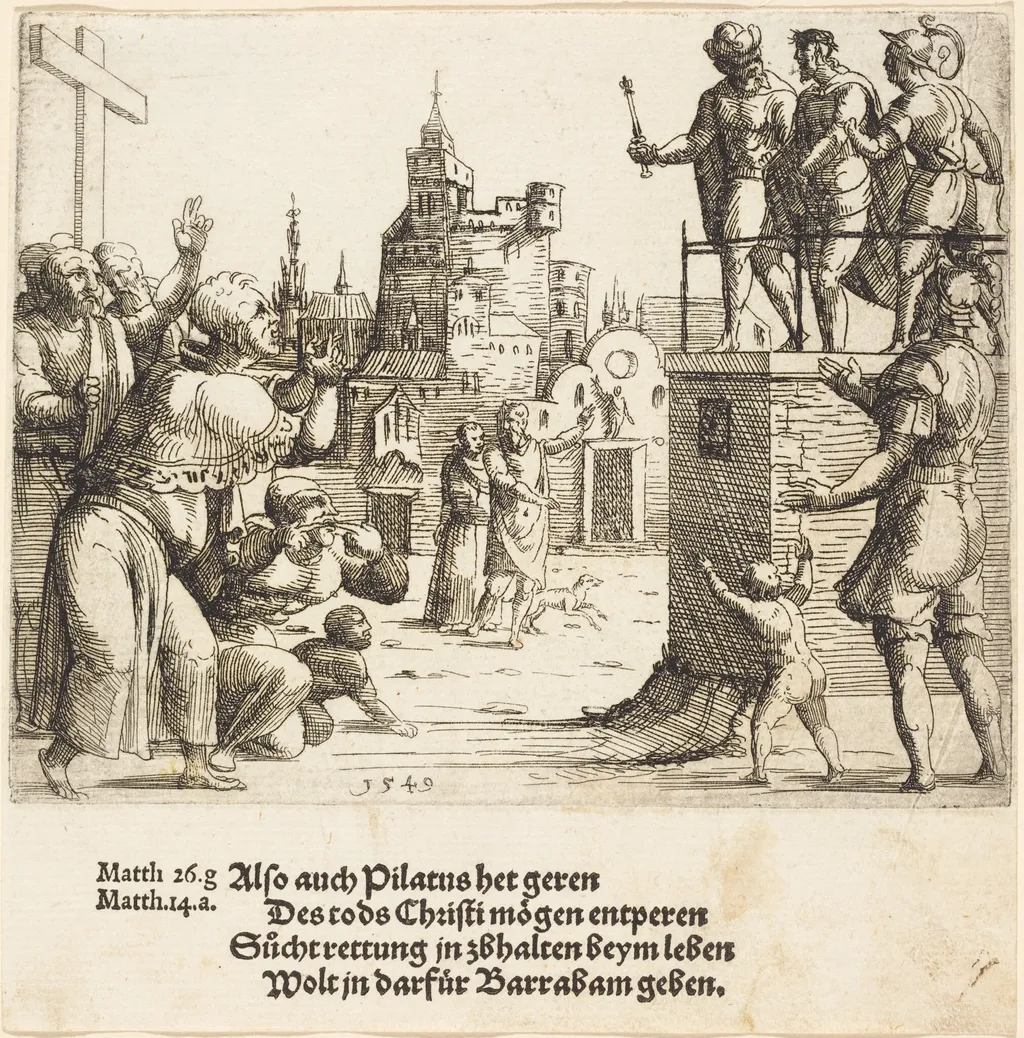
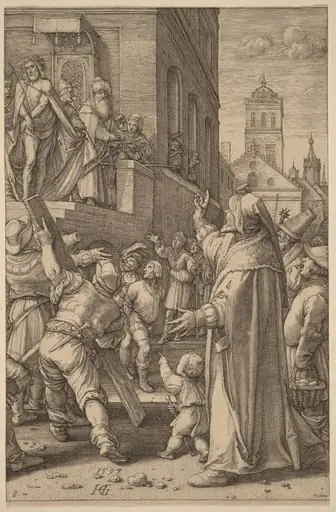
Ecce Homo is an ink print by the Renaissance artist Augustin Hirschvogel. It dates from 1549 and is held in the collection of the National Gallery of Art.
About this work
Overview
Augustin Hirschvogel, a German artist active in the mid-16th century, produced this etching in 1549. Though trained as a mathematician and cartographer, he gained recognition for his finely detailed prints, particularly small landscape scenes. *Ecce Homo* stands as one of his few narrative works, departing from his more common topographical subjects to engage with religious iconography.
Subject & Meaning
The composition centers on isolation within public scrutiny, a theme resonant in Reformation-era religious discourse.
The scene illustrates the moment Pontius Pilate presents Jesus to the crowd, as described in the Gospel of John. Christ, bound and crowned with thorns, stands on a raised platform amid a dense assembly of onlookers. Gestures of accusation and curiosity radiate from the figures surrounding him, emphasizing the tension of judgment. The composition centers on isolation within public scrutiny, a theme resonant in Reformation-era religious discourse.
Technique & Style
Hirschvogel employed fine, controlled lines typical of etching to render texture and spatial depth. The crowd is rendered with varied density of strokes, creating a sense of movement and mass, while the distant cityscape—complete with a church steeple—is delicately suggested through attenuated contours. His precision in line work reflects his cartographic discipline, translating surveying precision into visual narrative.
History & Provenance
Created during Hirschvogel’s most active period as a printmaker, the etching emerged from his Nuremberg workshop, a hub of artistic and scientific exchange. Few of his religious prints survive in large numbers, and this work is among the known examples from his brief shift toward biblical subjects. Its early circulation likely reached collectors and clergy interested in devotional imagery.
Context
Hirschvogel worked within the orbit of the Danube School, which emphasized atmospheric landscapes and intimate naturalism. Though *Ecce Homo* is narrative-driven, its background architecture and spatial recession reflect that school’s interest in topographical realism. The Reformation’s emphasis on scripture may have encouraged such depictions, even as Catholic imagery remained in circulation among educated patrons.
Legacy
Hirschvogel’s *Ecce Homo* remains a rare example of his engagement with religious subject matter, contrasting with his better-known landscapes. It demonstrates how technical mastery in printmaking could serve both devotional and observational aims. While not widely influential in its time, it offers insight into the intersection of cartographic discipline and narrative art in 16th-century German print culture.
Artist & collection
Artist
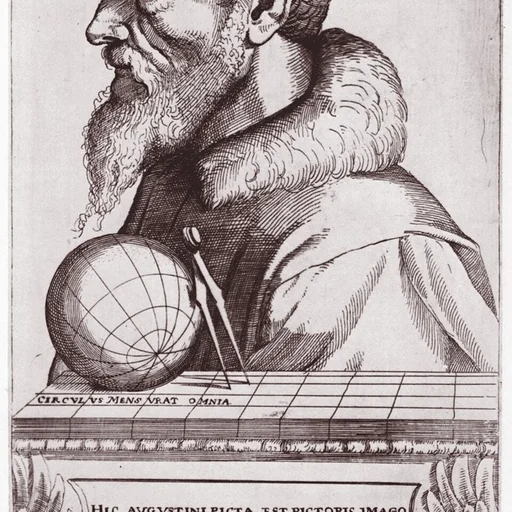
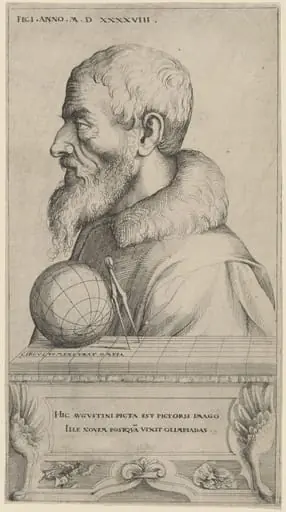
Augustin Hirschvogel (1503 – February 1553) was a German artist, mathematician, and cartographer known primarily for his etchings.

 Ecce Homo
 Ecce Homo
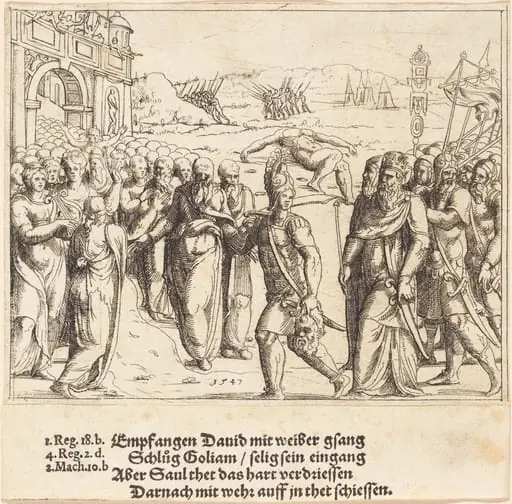 David is Welcomed after Killing Goliath, and Saul's Jealousy
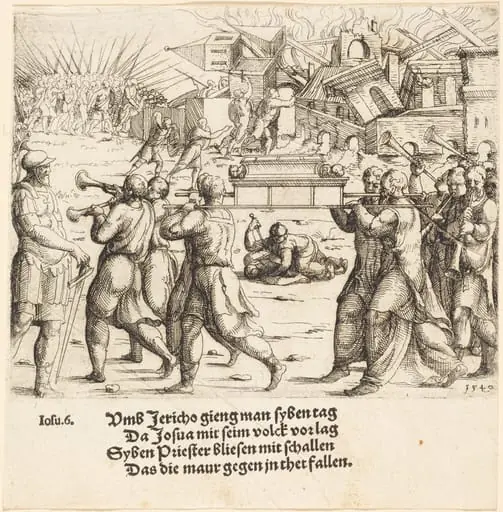 The Fall of Jericho
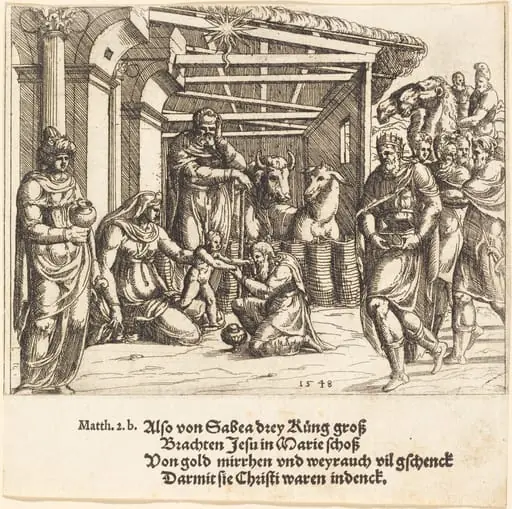 The Adoration of the Magi
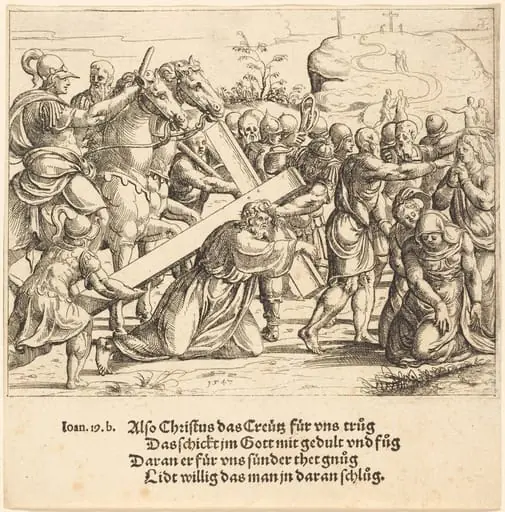 Christ Carrying the Cross
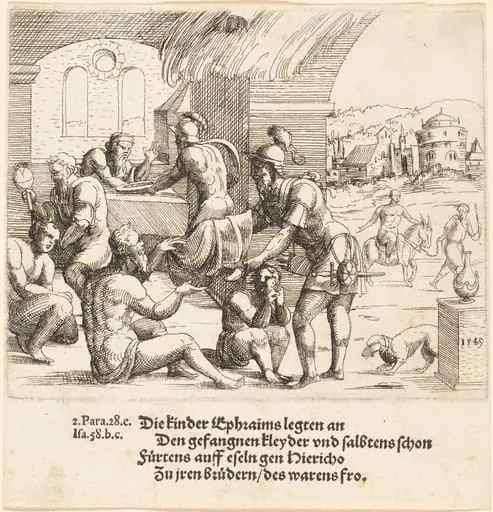 The Men of Ephraim Care for their Captives and Return Them to Jerico
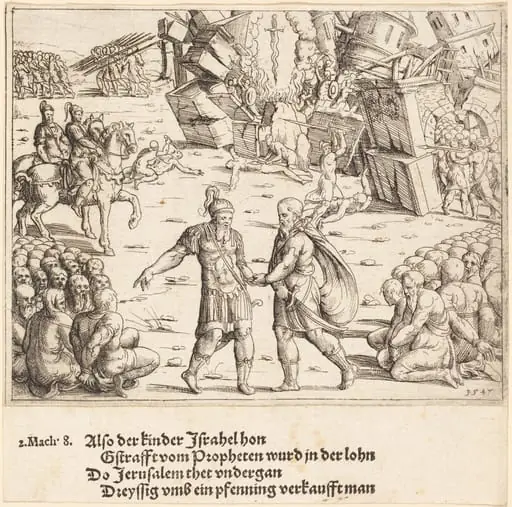 The Victory of Judas Maccabeus Over Niccanor
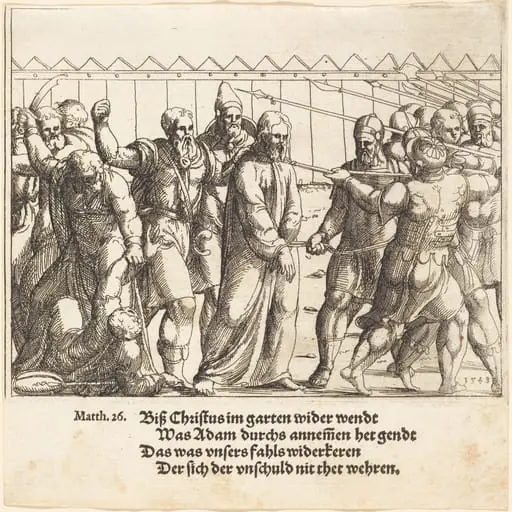 Jesus Being Led to Caiaphas
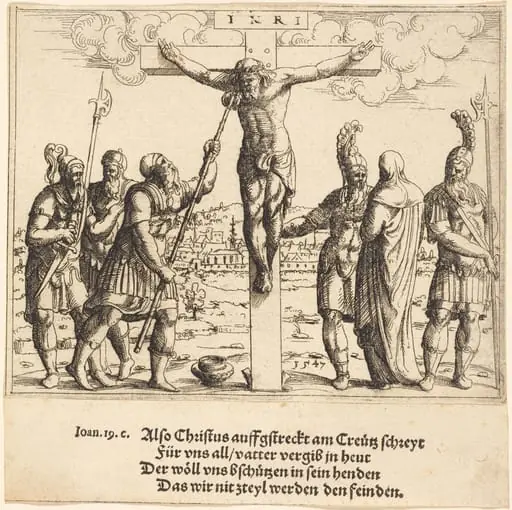 Christ is Given Vinegar to Drink
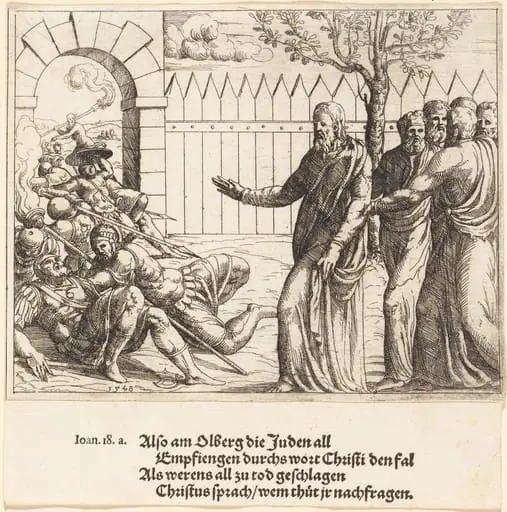 Jesus Identifies Himself before the Arrest
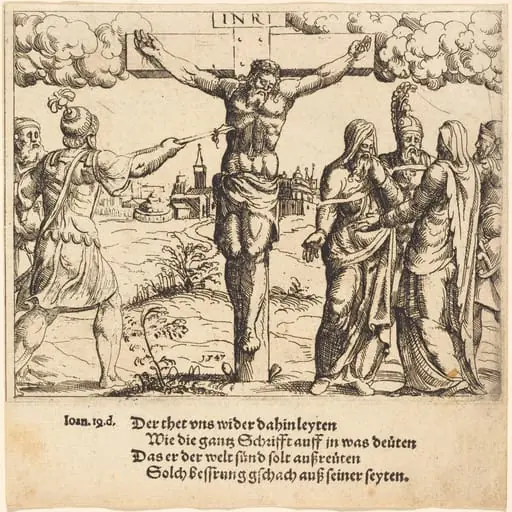 Christ is Pierced with the Lance