Artwork
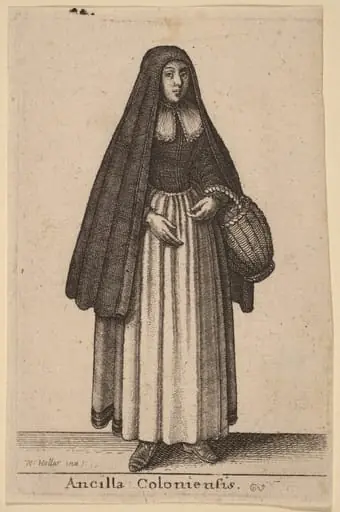
Ancilla Argentinensis
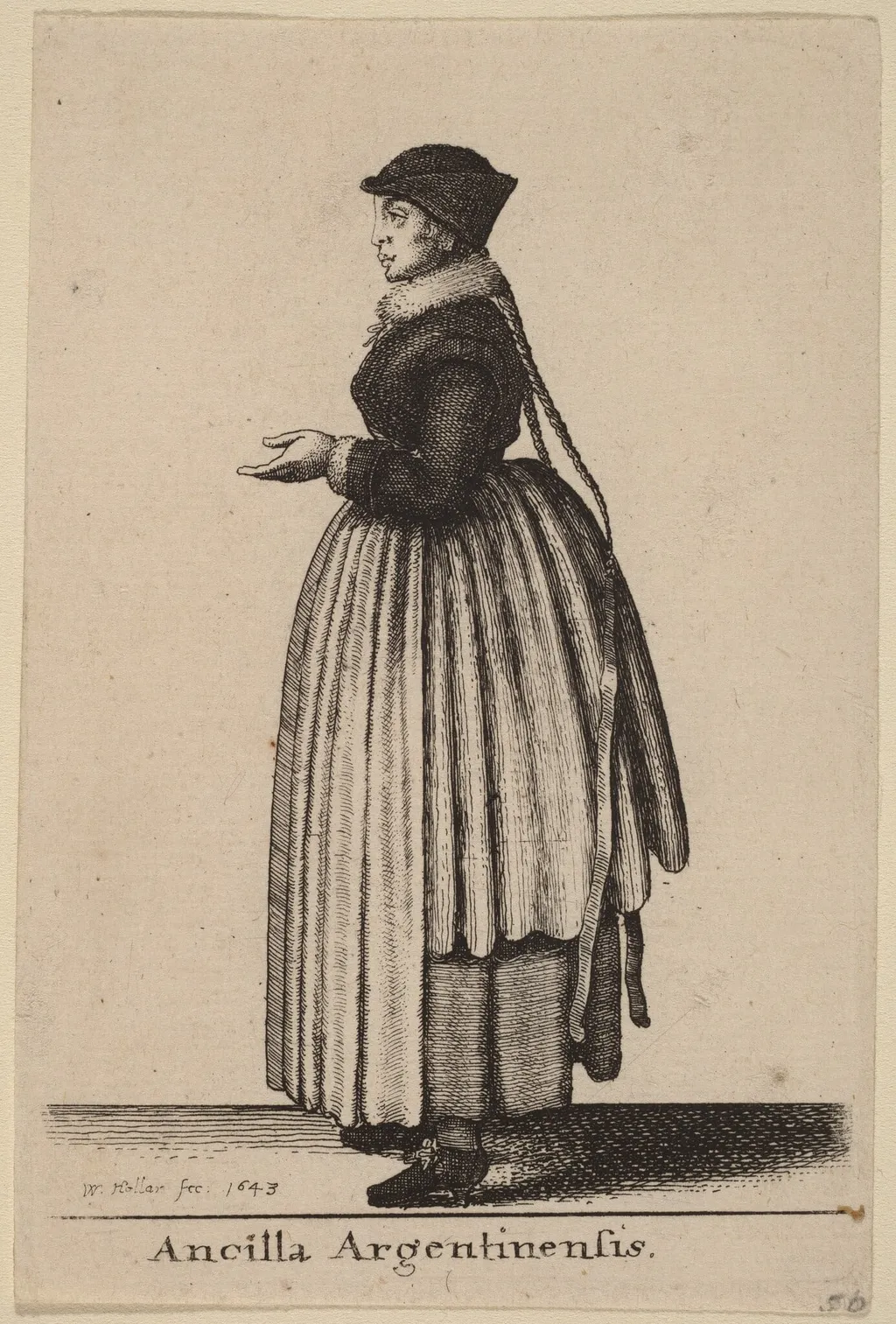
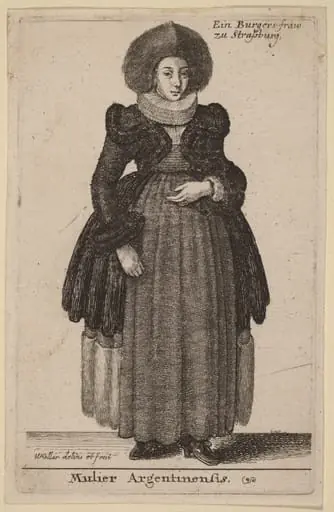
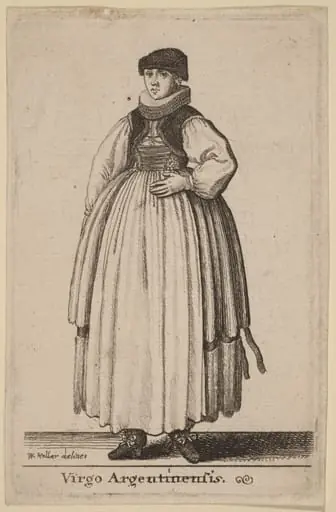
Ancilla Argentinensis is an ink print by the Baroque artist Wenceslaus Hollar. It dates from 1643 and is held in the collection of the National Gallery of Art.
About this work
The title says *Ancilla Argentinensis*—that means "Argentinian Maid," but we don’t know if she’s from Argentina or just dressed in a style linked to it.
This is a black-and-white drawing of a woman in old-fashioned clothes. She’s wearing a long skirt with layers of fabric, a high collar, and a hat pulled low. One hand rests on her hip, and she’s standing on a simple floor line.
The title says *Ancilla Argentinensis*—that means "Argentinian Maid," but we don’t know if she’s from Argentina or just dressed in a style linked to it. The artist signed it in 1643.
If you like this style, look up etching to see how artists like this made detailed prints.
Overview
Wenceslaus Hollar, a Czech artist active in 17th-century England, produced *Ancilla Argentinensis* in 1643 as a black-and-white etching. The work belongs to a body of prints in which he explored figure studies alongside his more familiar architectural views. Created during his years in London, the piece reflects his technical precision and interest in costume and posture, though its subject remains enigmatic.
Subject & Meaning
The figure is a woman dressed in layered garments, a high collar, and a low-crowned hat, her stance relaxed with one hand on her hip. The title, meaning 'Argentinian Maid,' does not refer to the modern nation of Argentina but likely alludes to a historical or mythological association with silver ('argentum'), possibly evoking classical or allegorical ideals of purity or service. The identity of the figure remains unspecified, leaving interpretation open.
Technique & Style
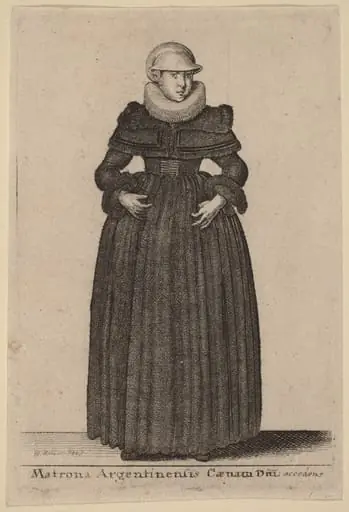
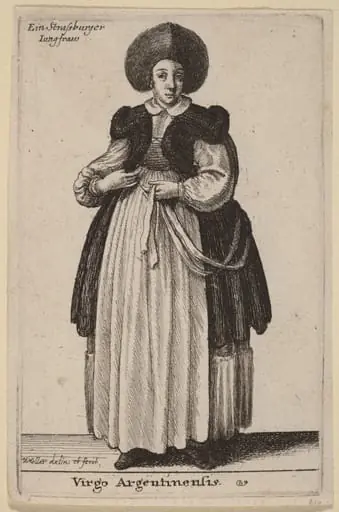
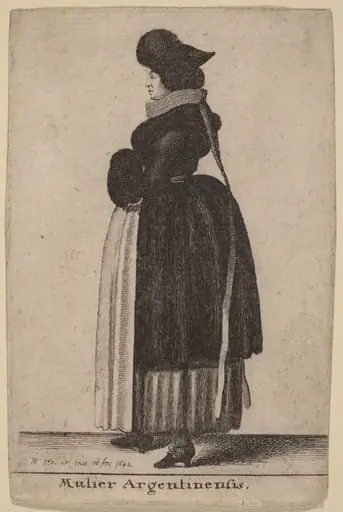
Hollar employed fine, controlled lines typical of etching to render texture in fabric and subtle shifts in light. The composition is minimal, with no background beyond a faint floor line, focusing attention on the figure’s form and attire. His use of cross-hatching and delicate contouring demonstrates mastery of the medium, characteristic of his approach to both portraiture and genre subjects.
History & Provenance
Created in London in 1643, the etching emerged during Hollar’s most productive period, when he was employed by patrons such as the Earl of Arundel. It was likely made for private circulation or as part of a series of character studies. Hollar remained in England for the rest of his life, dying and being buried in London, where many of his works were preserved in collections of antiquarian interest.
Context
In mid-17th-century England, etching was valued for its capacity to reproduce intricate details, making it ideal for documenting dress, architecture, and social types. Hollar’s figures often reflect contemporary fashions or idealized archetypes, blending observation with convention. *Ancilla Argentinensis* fits within a broader trend of symbolic or allegorical portraiture popular among European printmakers of the era.
Legacy
Though not among Hollar’s most widely reproduced works, *Ancilla Argentinensis* exemplifies his skill in capturing costume and posture with quiet dignity. It contributes to the understanding of how early modern artists used printmaking to explore identity and social roles. The piece remains a reference point for scholars studying the intersection of fashion, symbolism, and technique in 17th-century graphic art.
Artist & collection
Artist
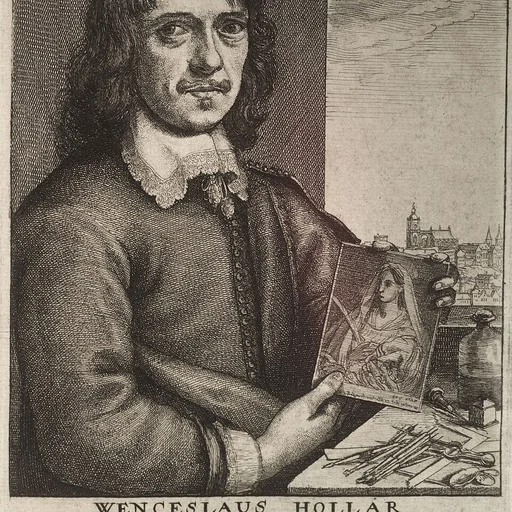
Wenceslaus Hollar (Czech: Václav Hollar (Czech pronunciation: ), German: Wenzel Hollar; 23 July 1607 – 25 March 1677) was a Czech engraver, etcher and painter.