Artwork
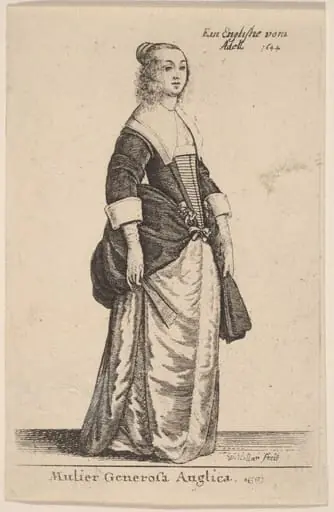
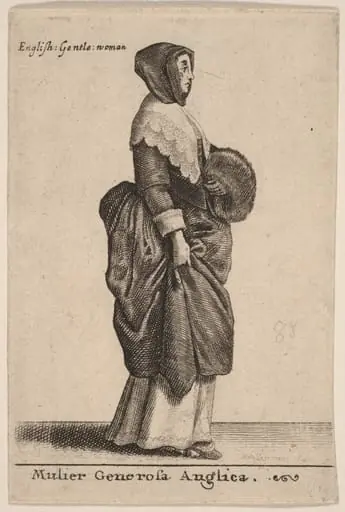
Mulier Generosa Anglica
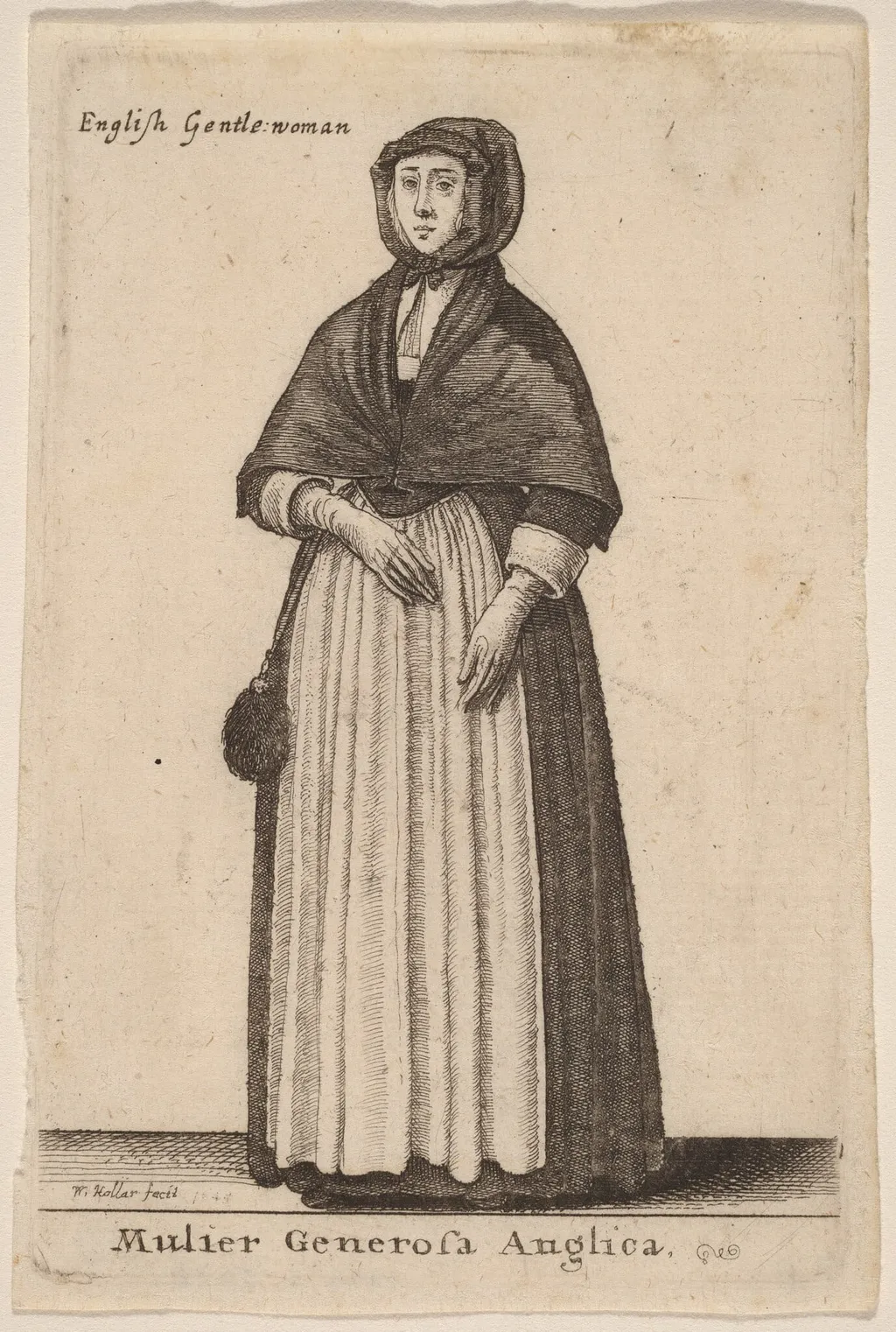
Mulier Generosa Anglica is an ink print by the Baroque artist Wenceslaus Hollar. It dates from 1643 and is held in the collection of the National Gallery of Art.
About this work
" The artist signed it in 1643, and the style looks like a sketch made with a sharp tool.
This is a black-and-white drawing of a woman standing still. She wears a long, striped dress with a high collar and a cape draped over her shoulders. Her hands rest on her stomach, and she holds a small bag in one hand. The background is plain, with just a dark line at the bottom like a floor.
The title at the bottom, *Mulier Generosa Anglica*, means "Generous Englishwoman." The artist signed it in 1643, and the style looks like a sketch made with a sharp tool.
Next, check out the technique: etching.
Overview
Wenceslaus Hollar, a Czech-born printmaker active in 17th‑century England, produced an etched portrait in 1643 titled *Mulier Generosa Anglica*. The work presents a solitary female figure rendered in monochrome, her posture upright and hands placed on her abdomen, a small bag clasped in one hand. The composition rests on a minimal ground line, emphasizing the sitter’s attire and bearing.
Subject & Meaning
The image portrays an English noblewoman, indicated by the title’s translation, “Generous Englishwoman.” Her costume—a long striped gown with a high collar and a draped cape—signals status and contemporary fashion. The restrained pose and plain background focus attention on her identity and the virtues associated with generosity, a common moral theme in portraiture of the period.
Technique & Style
Executed as an etching, the piece displays Hollar’s characteristic fine line work, achieved by incising the design with a sharp needle into a copper plate and then acid‑biting the lines. The drawing‑like quality, with delicate hatching and clear contour, reflects the artist’s skill in rendering texture and fabric within the constraints of a single‑plate print.
History & Provenance
Signed and dated by Hollar in 1643, the print belongs to the middle phase of his English career, when he was establishing a reputation for both topographical views and figure studies. While specific ownership records are scarce, the work has been catalogued among Hollar’s portrait series and appears in several 19th‑century collections of British prints.
Context
During the 1640s England was engulfed in civil conflict, yet Hollar continued to document both urban scenes and individual sitters. This portrait aligns with his broader interest in costume and social rank, complementing his more widely known cityscapes by offering a glimpse into the attire and self‑presentation of the English aristocracy.
Artist & collection
Artist
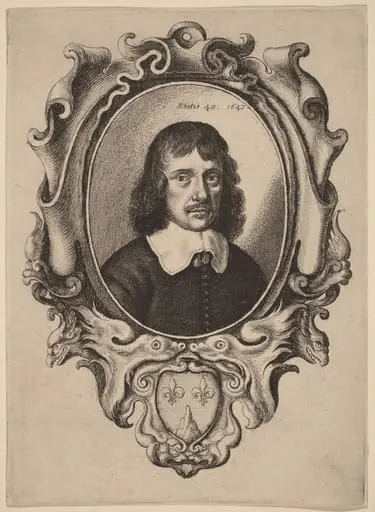
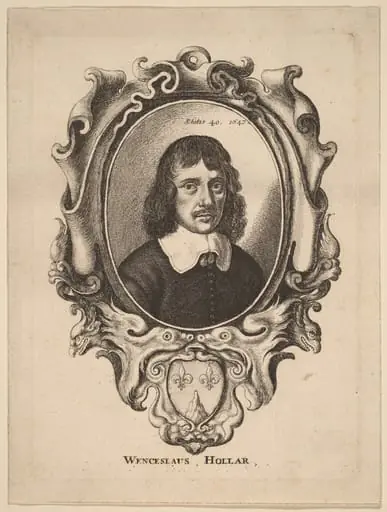
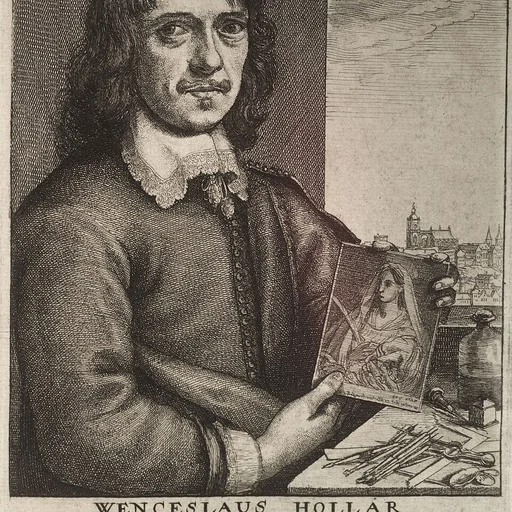
Wenceslaus Hollar (Czech: Václav Hollar (Czech pronunciation: ), German: Wenzel Hollar; 23 July 1607 – 25 March 1677) was a Czech engraver, etcher and painter.