Artwork
Rev. Father Antonius Kress
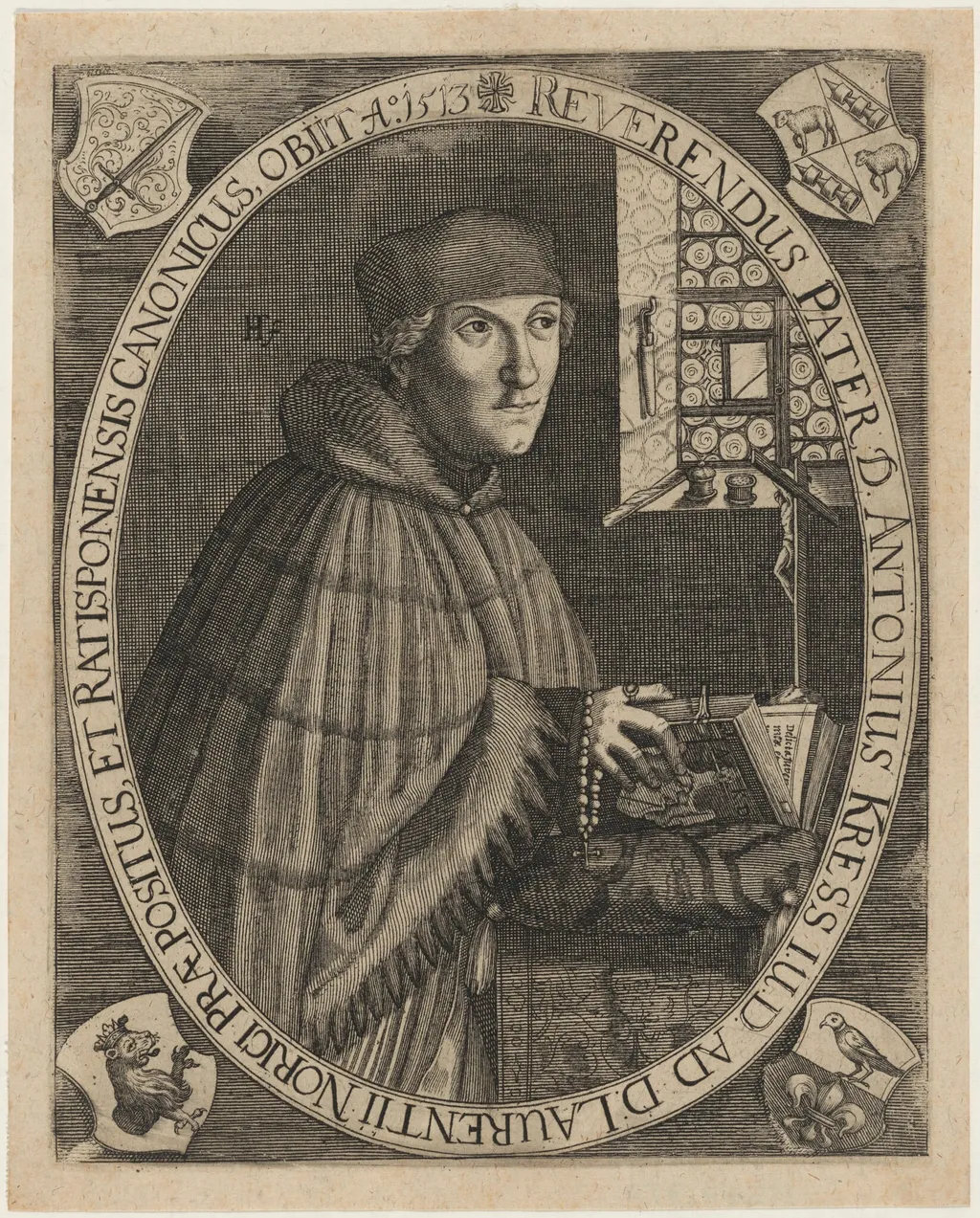
Rev. Father Antonius Kress is an ink print by the Renaissance artist Hendrik Hondius I. It dates from 1611 and is held in the collection of the National Gallery of Art.
About this work
Overview
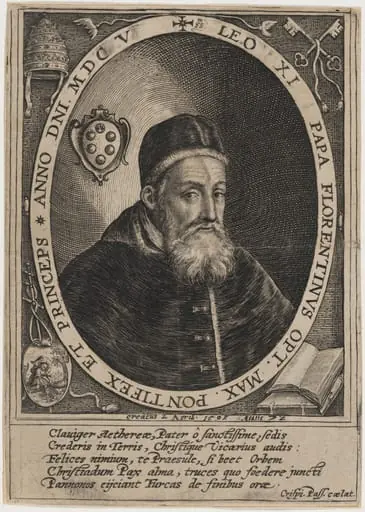
Created in 1611 by Hendrik Hondius I, this engraving depicts Rev. Father Antonius Kress, a Catholic clergyman. Rendered in fine linear detail, the portrait is enclosed within an ornate oval frame bearing heraldic emblems and inscriptions. The composition emphasizes solemnity and spiritual authority, typical of early 17th-century ecclesiastical portraiture in the Northern Renaissance tradition.
Subject & Meaning
The subject, Rev. Father Antonius Kress, is portrayed with a focused gaze and formal attire, suggesting his role as a religious figure. The rosary and book in his hands signify devotion and scholarship, central to clerical identity. The heraldic shields—featuring a cross and lamb, and a bird—likely reference religious symbolism or familial lineage, reinforcing his spiritual and social standing.
Technique & Style
The dark background enhances the figure’s presence, while directional lighting models the face and hands with subtle gradations.
Hondius employed precise engraving techniques to render texture and light, with fine lines defining the folds of the robe, the buckle, and the texture of the book. The dark background enhances the figure’s presence, while directional lighting models the face and hands with subtle gradations. The intricate border integrates decorative elements typical of Northern European printmaking of the period.
History & Provenance
The engraving was produced during a time when printed portraits of clergy were used to disseminate religious authority and personal legacy. Hondius, known for his portraits and maps, likely created this as a commissioned work, possibly for Kress’s community or religious order. Its survival suggests it was valued within ecclesiastical circles, though its early ownership remains undocumented.
Context
In early 17th-century Europe, engraved portraits of clergy served both devotional and commemorative purposes. The Northern Renaissance emphasis on detail and realism aligned with Protestant and Catholic efforts to affirm identity through visual culture. This work reflects the intersection of religious devotion, print technology, and the growing role of individual representation in spiritual life.
Legacy
Though not widely known outside specialist circles, the engraving exemplifies the precision and symbolic depth of early modern printmaking. It contributes to the historical record of clerical portraiture and the use of visual symbols to convey religious identity. Its survival offers insight into how spiritual authority was visually constructed and preserved in print.
Artist & collection