Artwork
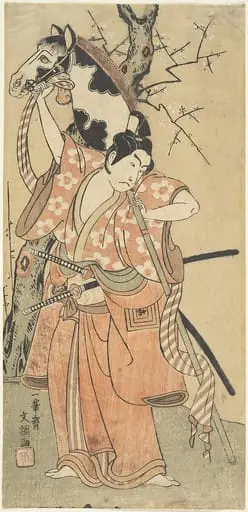
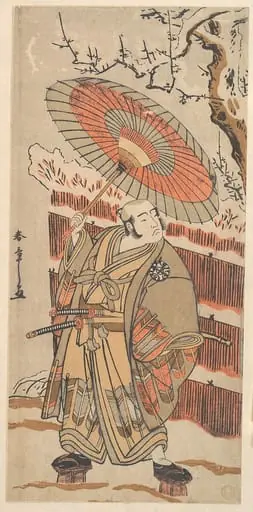
Onoe Kikugorō I as Izumi no Saburō in the Play Snowflakes: Plum Blossoms Kaomise
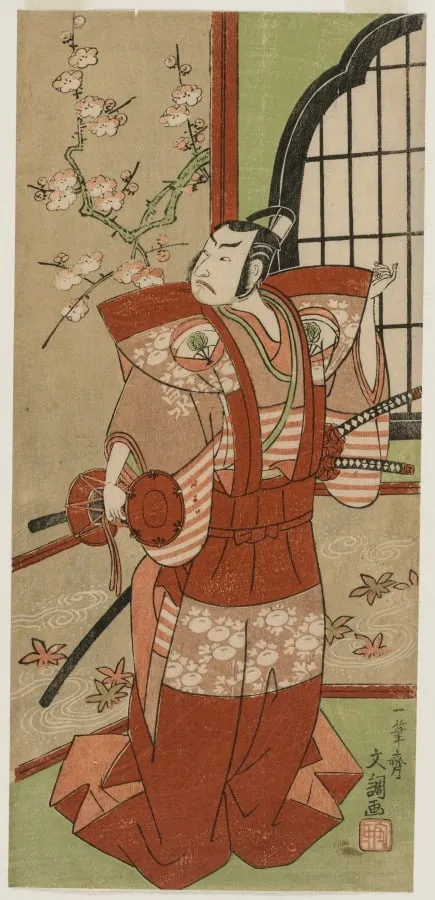
Onoe Kikugorō I as Izumi no Saburō in the Play Snowflakes: Plum Blossoms Kaomise is a print by the Romanticist artist Ippitsusai Bunchō. It dates from 1769 and is held in the collection of the Cleveland Museum of Art. This woodblock print captures a moment from the 1769 kabuki performance of Snowflakes: Plum Blossoms Kaomise at Tokyo’s Ichimura Theater.
About this work
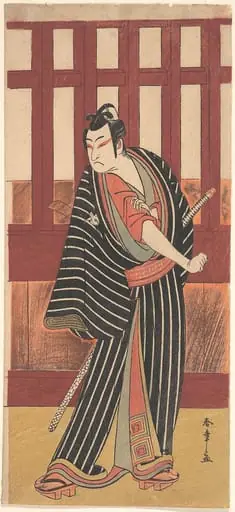
You see a single actor on stage, dressed in a bold black-and-white robe with a fierce scowl and one hand gripping a sword.
You see a single actor on stage, dressed in a bold black-and-white robe with a fierce scowl and one hand gripping a sword.
This is a *kabuki* actor print from Japan’s Edo period. The artist didn’t just show the character—he froze the exact moment when the actor struck a dramatic pose, called a *mie*. These prints were like theater posters, sold to fans who wanted a souvenir of their favorite stars.
To see more of this style, look up *japan, edo period (1615–1868)*.
Overview
This woodblock print captures a moment from the 1769 kabuki performance of Snowflakes: Plum Blossoms Kaomise at Tokyo’s Ichimura Theater. It portrays actor Onoe Kikugorō I in the role of Izumi no Saburō, rendered in the distinctive style of Edo-period actor portraits. Designed for public sale, such prints functioned as both promotional material and collectible memorabilia for theatergoers, preserving the visual impact of live performance.
Subject & Meaning
The figure depicts Izumi no Saburō, a character known for his intense resolve and dramatic presence. The actor’s furrowed brow and tightly gripped sword convey a climactic emotional state, typical of the mie pose—a frozen, stylized gesture used in kabuki to emphasize a character’s inner turmoil or decisive moment. The image does not illustrate narrative but crystallizes theatrical intensity for the viewer.
Technique & Style
Executed in bold black-and-white contrasts, the print employs strong outlines and minimal color to heighten the actor’s dramatic form. The composition isolates the figure against a blank background, focusing attention on posture and expression. This approach reflects the ukiyo-e tradition of capturing fleeting theatrical moments with clarity and emotional precision, using woodblock carving and hand-printing methods.
History & Provenance
Created in 1769 during the peak of kabuki’s popularity in Edo, the print was likely produced by a studio specializing in actor portraits. It was sold at the theater or nearby shops as a keepsake for audiences. While the artist’s name is not recorded here, such works were often attributed to established printmakers like Sharaku or Koryusai, who documented kabuki’s leading performers.
Context
Kabuki theater in mid-Edo Japan was a vibrant urban spectacle, drawing audiences from all classes. Actor prints like this one helped cultivate celebrity culture around performers, turning stage personas into widely recognized images. The kaomise format, used to introduce new seasons or actors, reinforced the link between live performance and mass-produced visual culture.
Legacy
This print exemplifies how ukiyo-e bridged ephemeral theater and enduring art. Though the original performance is lost, such prints preserve the physicality and expressiveness of kabuki’s acting traditions. They remain key sources for understanding Edo-period aesthetics, audience engagement, and the commercialization of performance art in early modern Japan.
Artist & collection


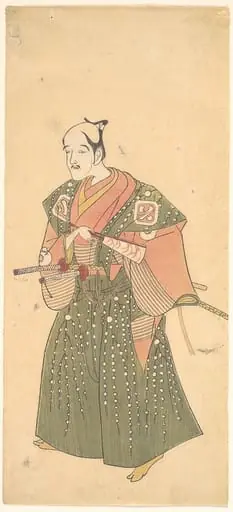 初代嵐音八 (複製?)|The Actor Arashi Otohachi I (facsimile?)
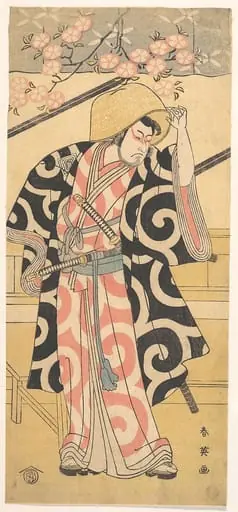 Untitled
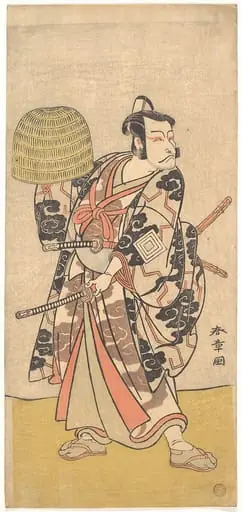 勝川春章画 五代目市川團十郎|Kabuki Actor Ichikawa Danjūrō V
 Untitled
 Untitled
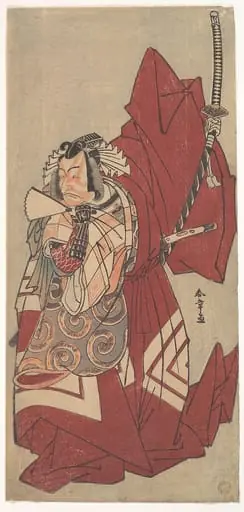 五代目市川団十郎|Kabuki Actor Ichikawa Danjūrō V in a Shibaraku (Stop Right There!) Role as Hannya no Gorō
 Untitled
 Untitled
 Untitled
 Untitled
 Untitled
 勝川春章画 二代目中村傳九郎|Kabuki Actor Nakamura Denkurō II