Artwork
St. Martin
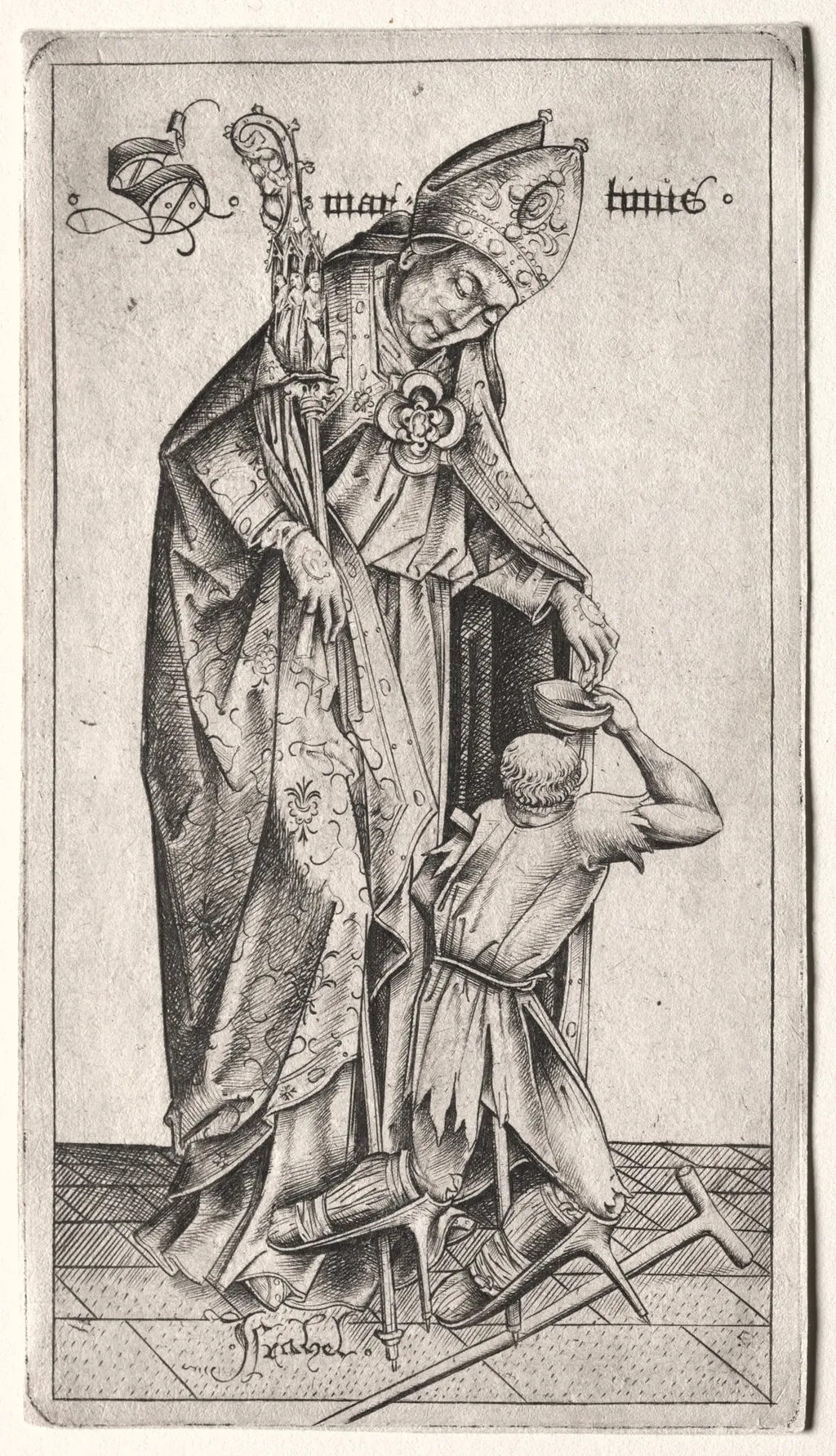
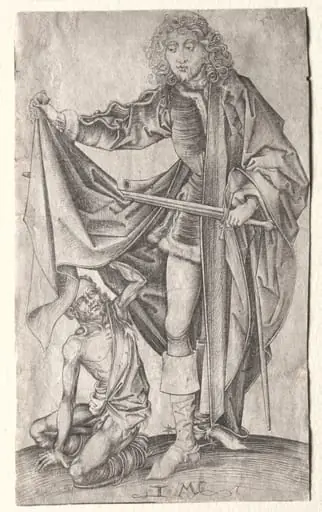
St. Martin is a print by the Renaissance artist Israhel van Meckenem. It dates from 1482 and is held in the collection of the Cleveland Museum of Art.
About this work
Overview
Created in 1482 by Israhel van Meckenem, a German printmaker active in the late fifteenth century, this engraving portrays the legendary act of Saint Martin sharing his cloak with a beggar. Executed in black and white, the image follows the conventions of Northern Renaissance printmaking, emphasizing linear detail and contrast.
Subject & Meaning
The composition centers on a tall, robed figure—identified as Saint Martin—who holds a sword in one hand and extends his cloak toward a kneeling, impoverished figure. The gesture illustrates the saint’s famed charity, a motif frequently employed in devotional art to exemplify Christian generosity.
Technique & Style
Van Meckenem employs precise incised lines and cross‑hatching to render the folds of the garments, the texture of the hat bearing a cross, and a simple checkered floor. The stark chiaroscuro achieved through fine shading differentiates the rich attire of the saint from the humble dress of the beggar, highlighting social contrast.
History & Provenance
As one of over six hundred prints produced by van Meckenem, this work reflects his reputation as the most prolific engraver of the fifteenth century. Many of his prints were adaptations of earlier designs; however, the Saint Martin image stands as an original contribution to the period’s expanding print market.
Context
The engraving belongs to the Northern Renaissance, a time when printmaking began to disseminate religious narratives widely. Scenes of Saint Martin’s almsgiving were popular subjects, serving both didactic and devotional purposes across Europe.
Artist & collection
Artist
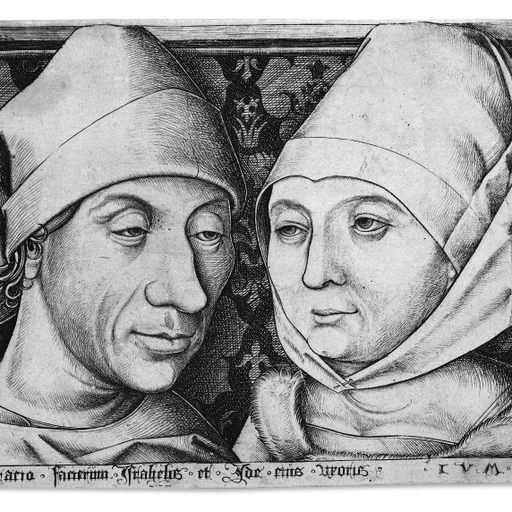
Israhel van Meckenem (c. 1445 – 10 November 1503), also known as Israhel van Meckenem the Younger, was a German printmaker and goldsmith, perhaps of a Dutch family origin. He was the most prolific engraver of the…

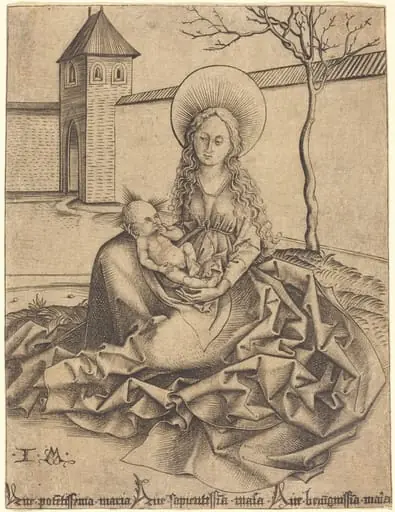
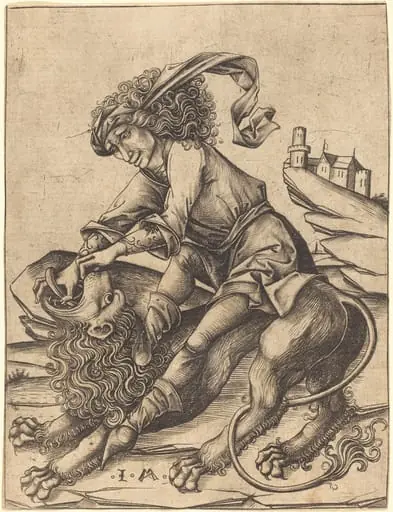
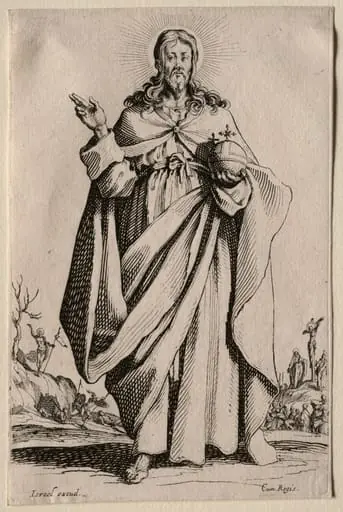 Salvatoris Beatae Mariae Virginis Sanctorum Apostolorum Icones
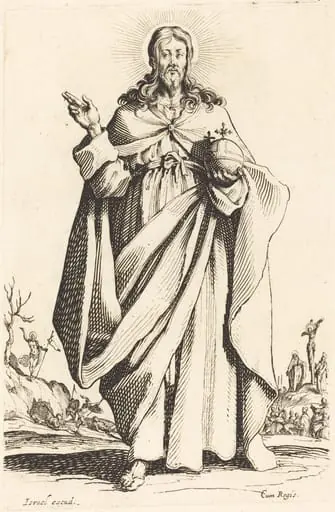 Christ
 Saint Bartholomew
 St. John the Baptist
 The Fourth of the Foolish Virgins
 St. Martin Dividing His Cloak for a Beggar
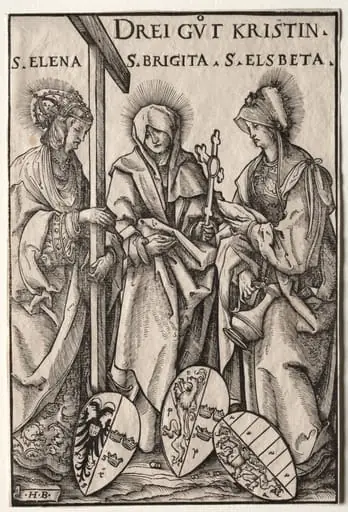 The Three Christian Heroines: Saints Helen, Bridget and Elizabeth
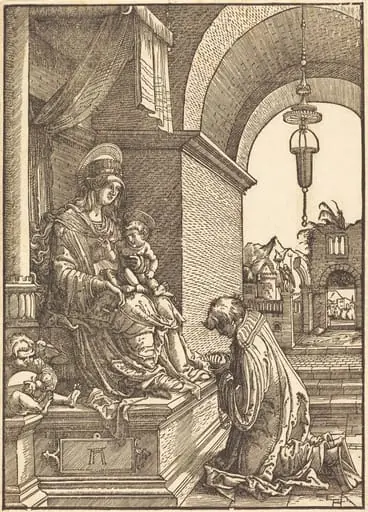 A Cleric Kneeling before the Virgin and the Christ Child
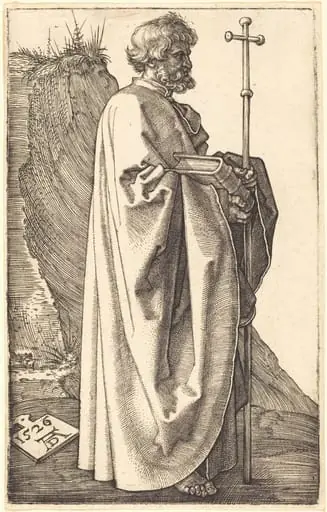 Saint Philip
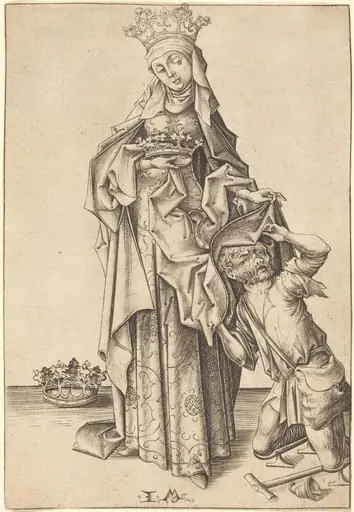 Saint Elizabeth of Thuringia
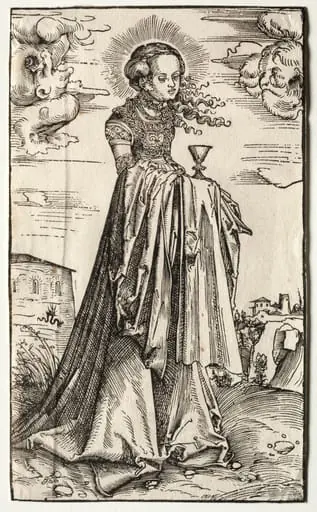 St. Barbara
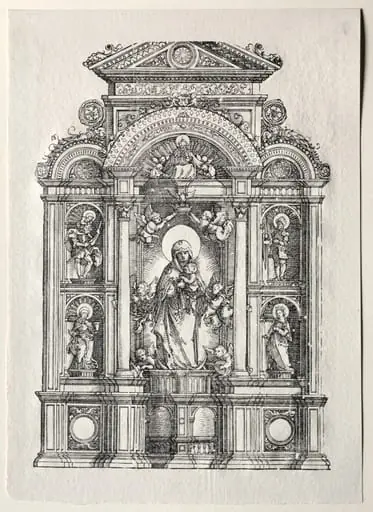 Altar mit der Schönen Maria von Regensburg