Artwork
Saint Elizabeth of Thuringia
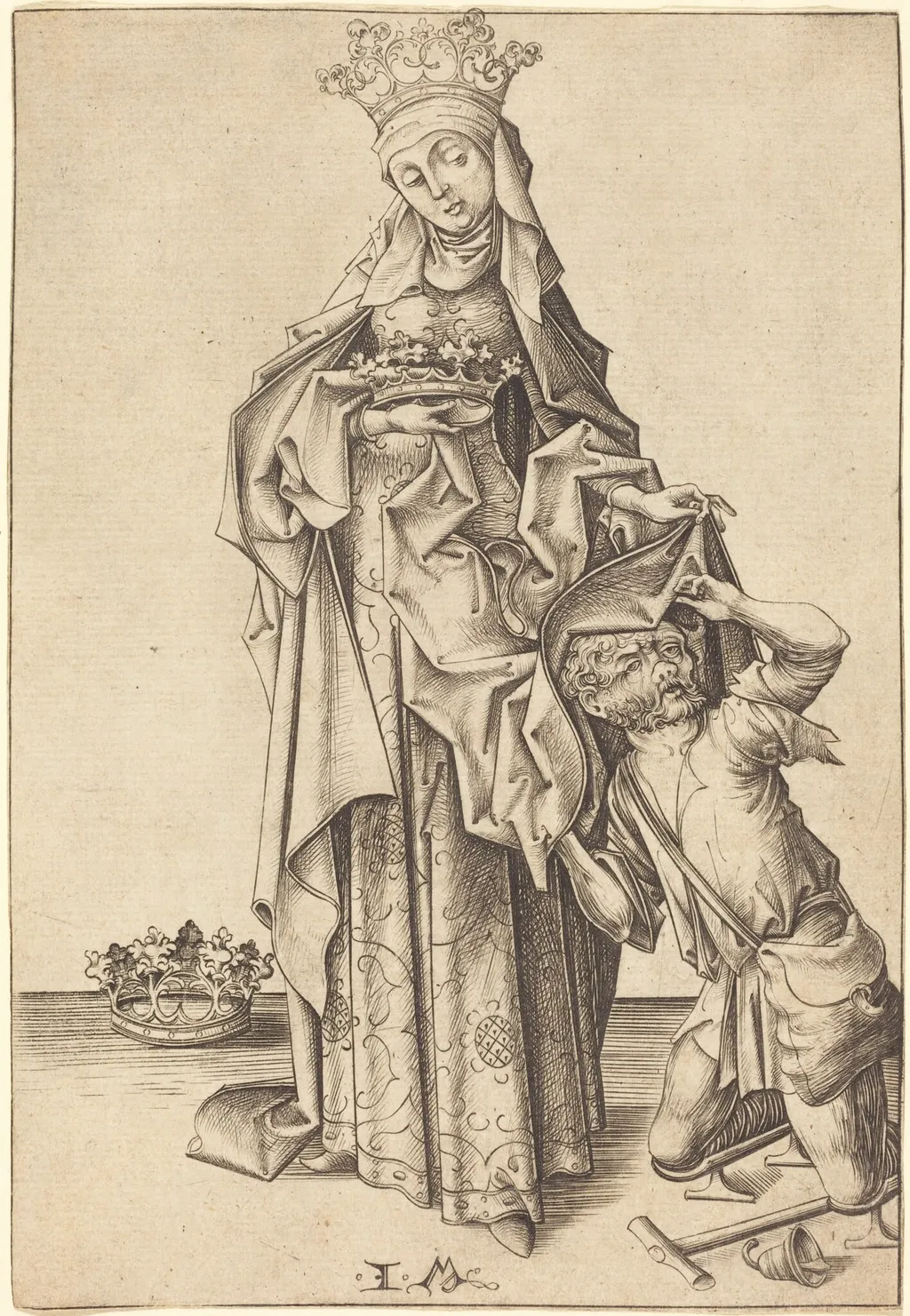
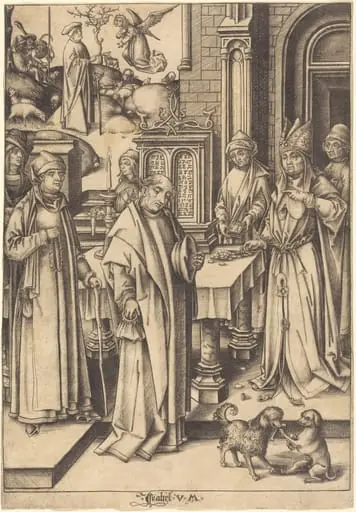
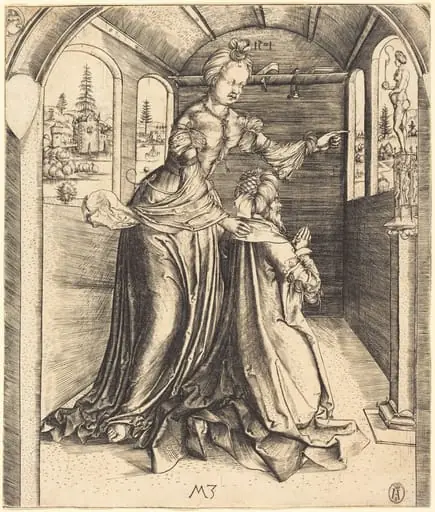
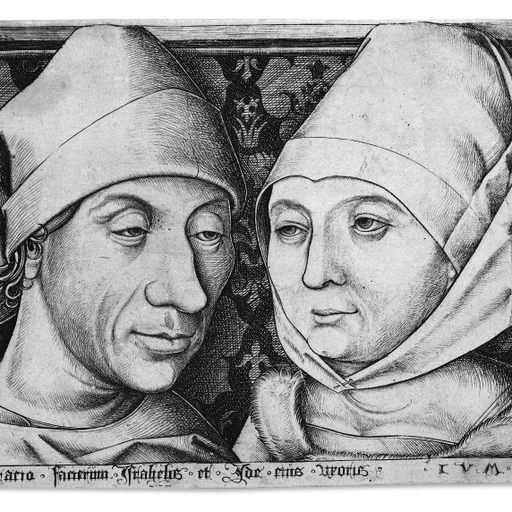
Saint Elizabeth of Thuringia is an ink print by the Renaissance artist Israhel van Meckenem. It dates from 1478 and is held in the collection of the National Gallery of Art.
About this work
Overview
Saint Elizabeth of Thuringia is a 1478 engraving on laid paper by Israhel van Meckenem, a prolific German printmaker and goldsmith active in the late 15th century. This work exemplifies the devotional art of Northern Europe during the period.
Subject & Meaning
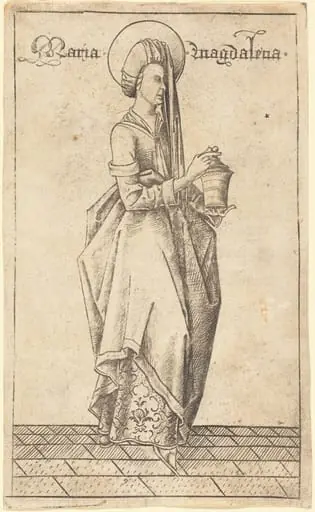
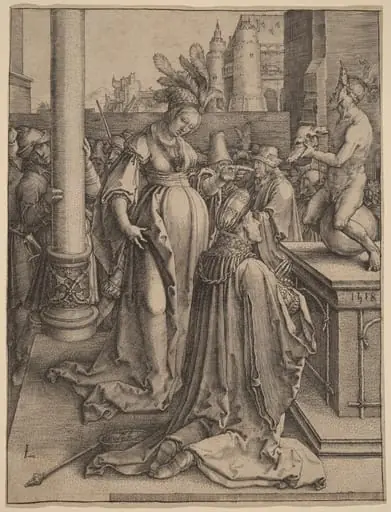
The engraving centers on Saint Elizabeth of Thuringia, depicted in regal and religious attire, accompanied by a kneeling figure. The scene conveys themes of devotion and reverence, characteristic of the era's religious art.
Technique & Style
The engraving showcases intricate details, fine lines, and textures, highlighting Meckenem's craftsmanship. While described in the context of Renaissance attention to detail and realism, the work's style is more aligned with the Northern European Gothic tradition of the time, given the artist's period and the medium of engraving.
History & Provenance
Created around 1478, this work is part of Meckenem's extensive oeuvre of over 620 prints, many of which were reproductions of existing artworks, significantly influencing early Northern European printmaking.
Context
Within the broader artistic landscape, Meckenem's work, including *Saint Elizabeth of Thuringia*, contributed to the dissemination of religious imagery through printmaking, a key aspect of 15th-century Northern European art.
Legacy
As one of Meckenem's works, *Saint Elizabeth of Thuringia* reflects his impact on the development of printmaking in Northern Europe, though its individual significance lies more in representing his prolific output than in innovating the medium.
Artist & collection
Artist
Israhel van Meckenem (c. 1445 – 10 November 1503), also known as Israhel van Meckenem the Younger, was a German printmaker and goldsmith, perhaps of a Dutch family origin. He was the most prolific engraver of the…