Artwork
Die hll. Augustinus und Andreas Außenseite: Buße des hl. Hieronymus und kniende Nonne
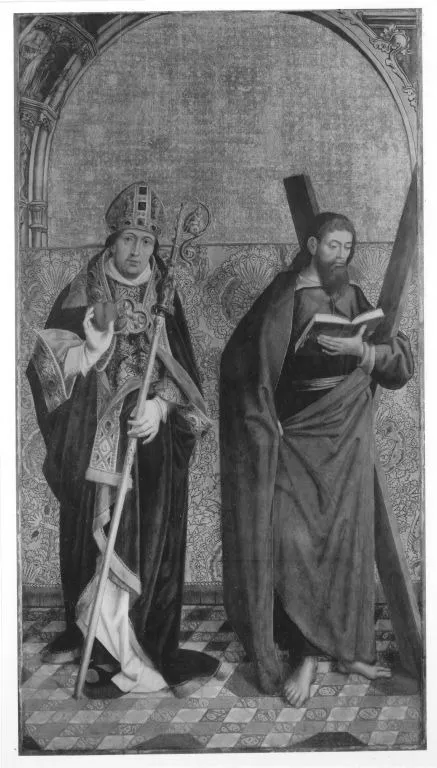
Die hll. Augustinus und Andreas Außenseite: Buße des hl. Hieronymus und kniende Nonne is an unspecified painting by Master of the Holy Kinship the Elder. It is held in the collection of the Bavarian State Painting Collections.
About this work
Overview
The work is an oak‑panel painting attributed to the Master of the Holy Kinship the Elder, presently displayed in Munich’s Alte Pinakothek. Executed in a devotional format, it presents a pair of male saints framed by an ornamental arch, set against a subdued backdrop that emphasizes the figures through subtle modeling.
Subject & Meaning
On the left stands a bishop, identifiable by his mitre and crosier, while his companion on the right wears a modest habit, holds a book and a staff, suggesting a scholarly saint, likely St. Jerome. The composition underscores themes of ecclesiastical authority and ascetic learning, inviting contemplation of penitential devotion.
Technique & Style
The painter employs chiaroscuro to model the forms, creating a gentle gradation of light that gives the figures a three‑dimensional presence. The muted tonal palette and restrained decorative arch reflect a Northern Renaissance sensibility, balancing realism with a devotional solemnity.
History & Provenance
Attributed to the early 16th‑century workshop of the Master of the Holy Kinship the Elder, the panel entered the Alte Pinakothek’s collection during the museum’s formative acquisitions of German religious art. Its provenance prior to museum ownership remains undocumented, typical of many panel works of this period.
Context
The painting belongs to a tradition of small‑scale devotional panels intended for private contemplation or chapel altars. Its iconography aligns with contemporary veneration of saints associated with scholarship and repentance, resonating with the spiritual climate of late medieval Germany.
Artist & collection
Artist
Master of the Holy Kinship the Elder
This late medieval painter made small devotional panels, usually on oak, filled with saints and family scenes.

 Portrait of a Woman
 Triptych: Madonna and Child with Saints
 St. Jerome and a bishop
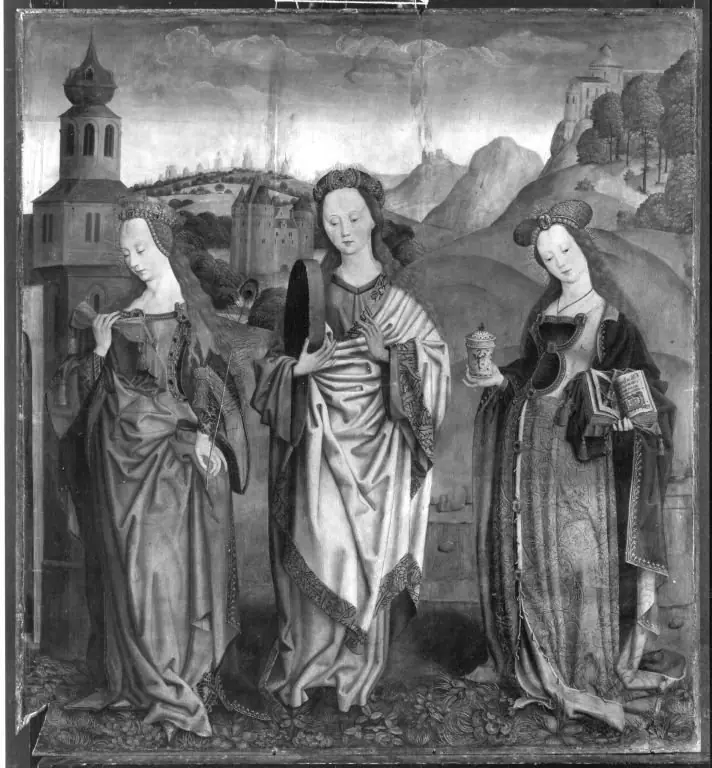 Beschneidungsaltar: Die hll. Barbara(?), Christina und Maria Magdalena
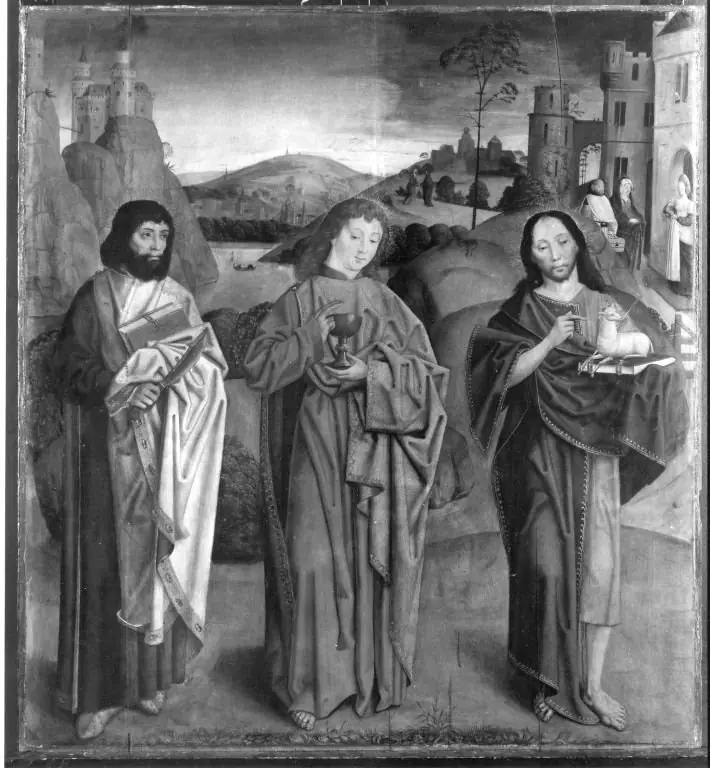 Beschneidungsaltar: Die hll. Bartholomäus, Johannes Ev. und Johannes d. T.
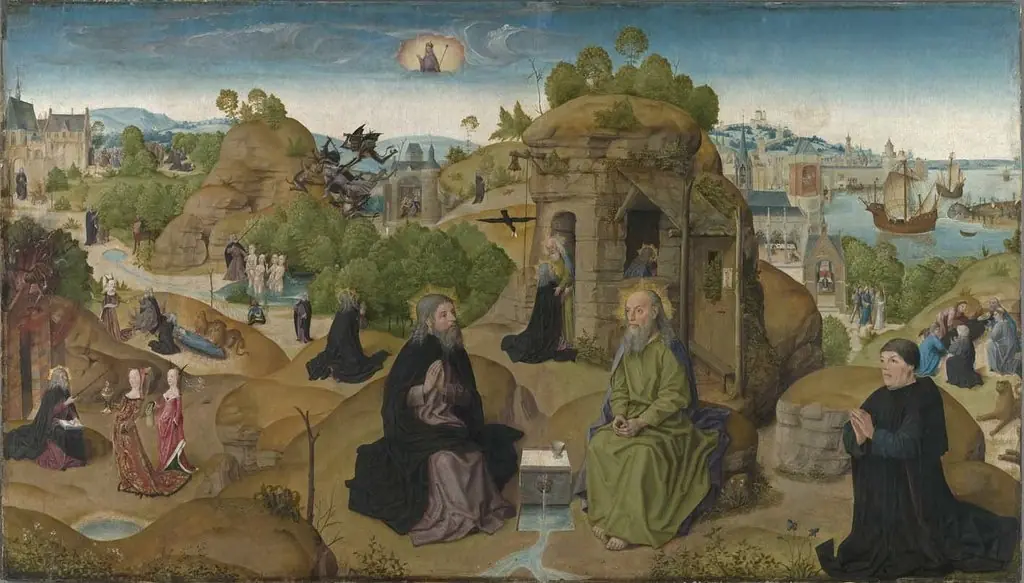 Legend of the Holy Ermite Anthony
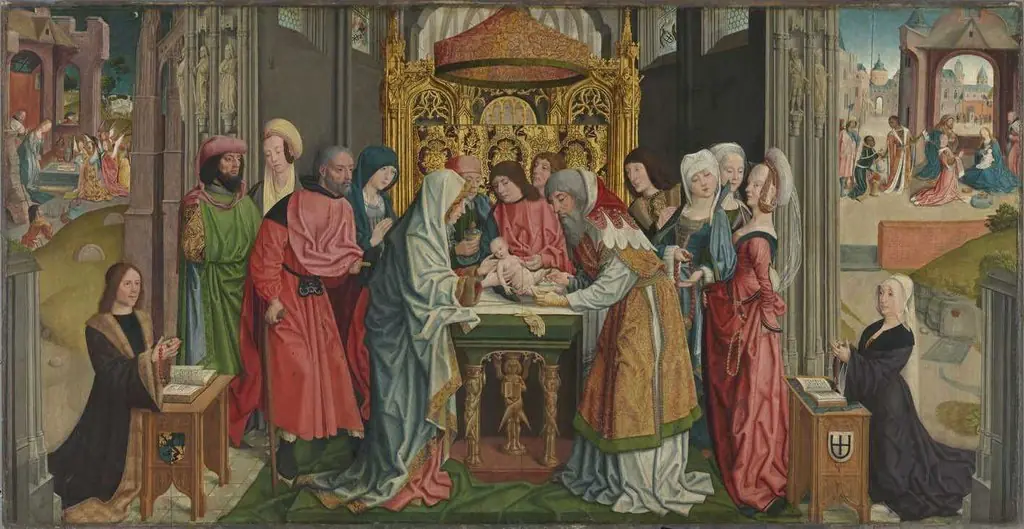 Circumcision of Christ
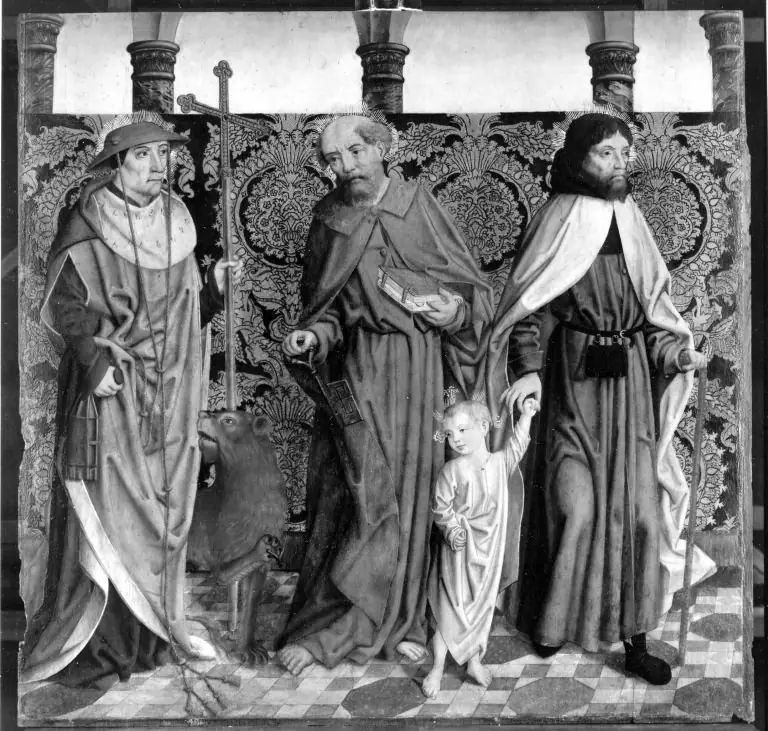 Beschneidungsaltar: Die hll. Hieronymus, Petrus und Joseph
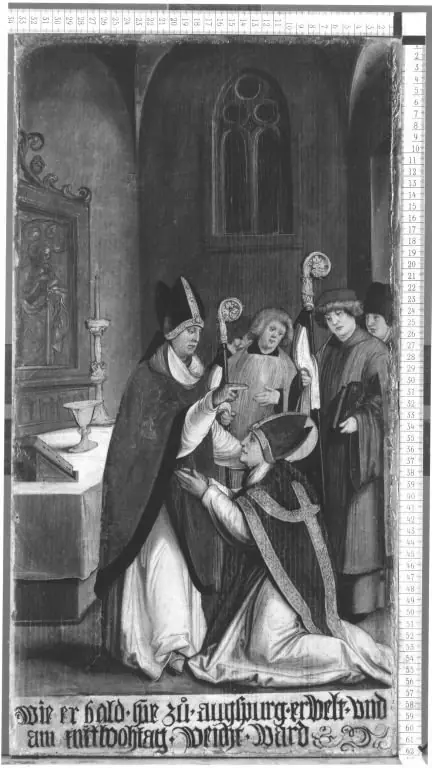 Der hl. Ulrich wird zum Bischof geweiht
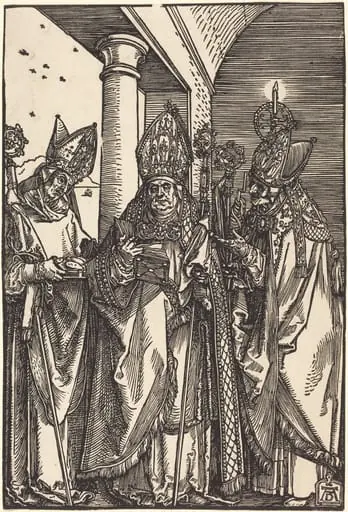 Saints Nicholas, Ulrich, and Erasmus
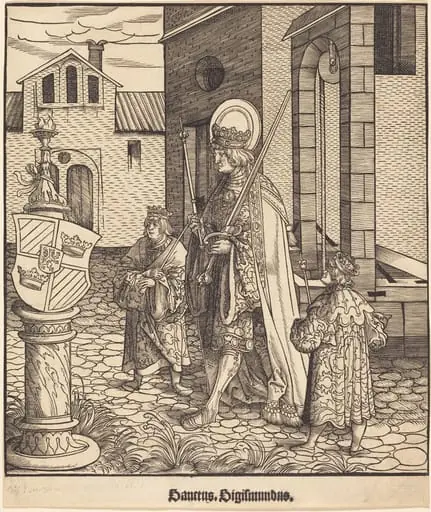 Saint Sigismundus
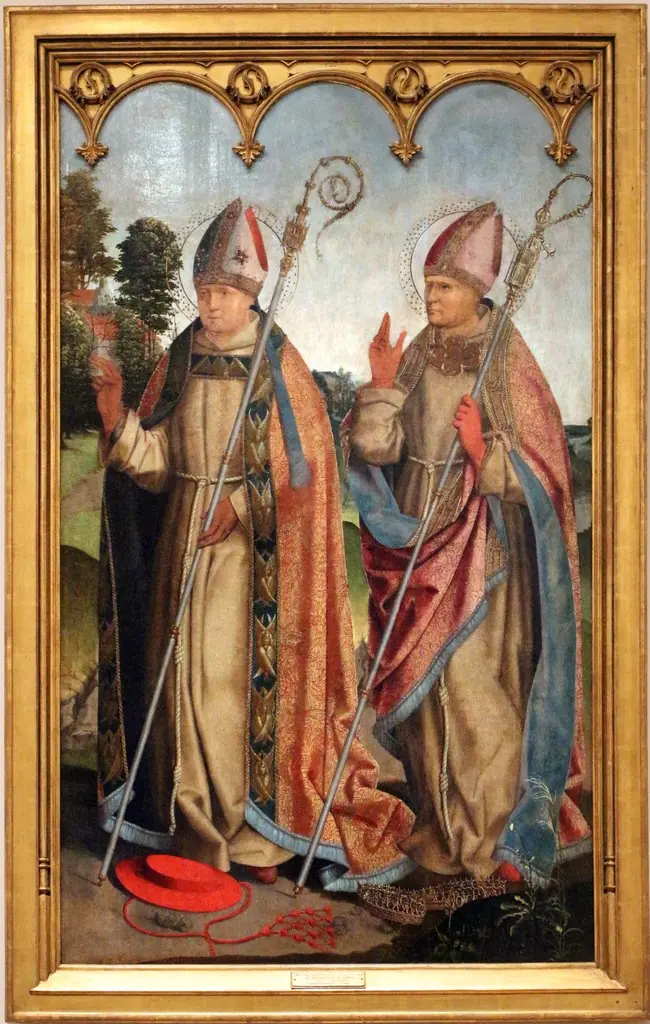 São Boaventura e São Luís de Tolosa
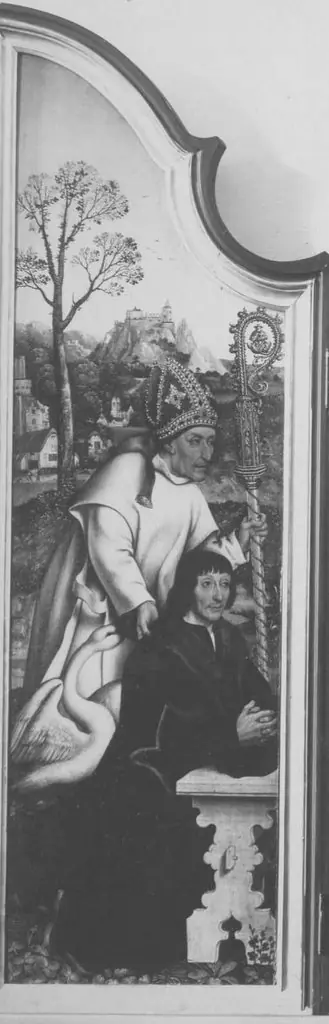 Beweinungsaltar: Hl. Hugo von Lincoln mit Stifter
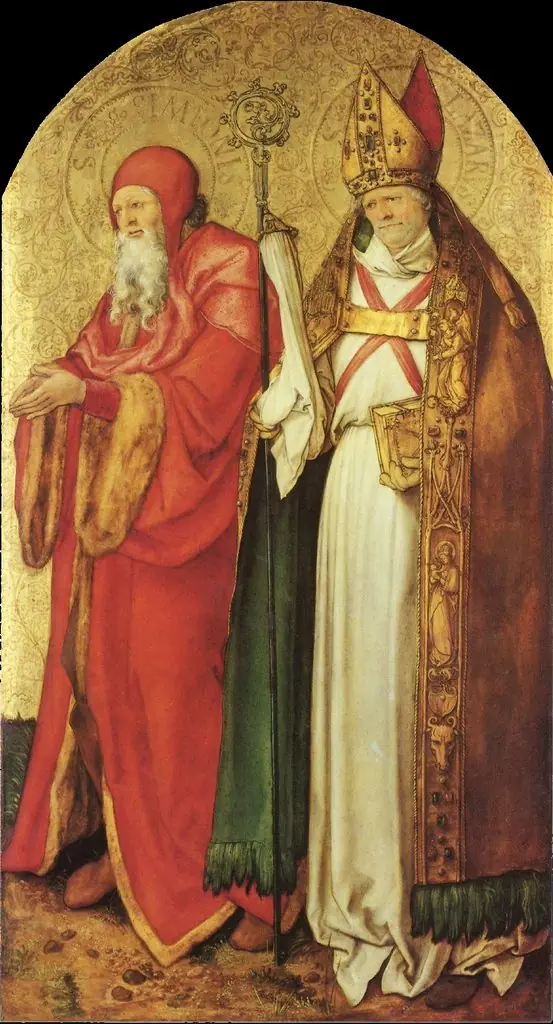 Jabach Altar: Saints Simeon and Lazarus
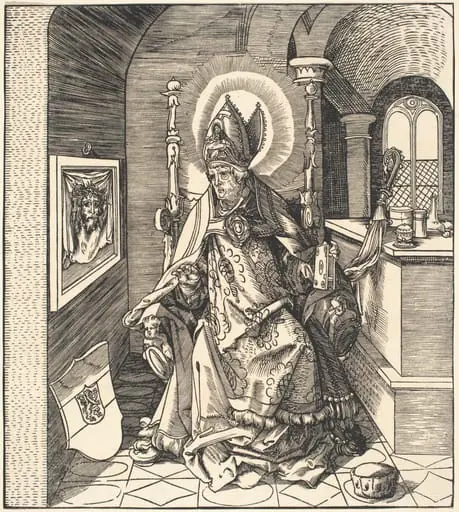 Saint Remigius
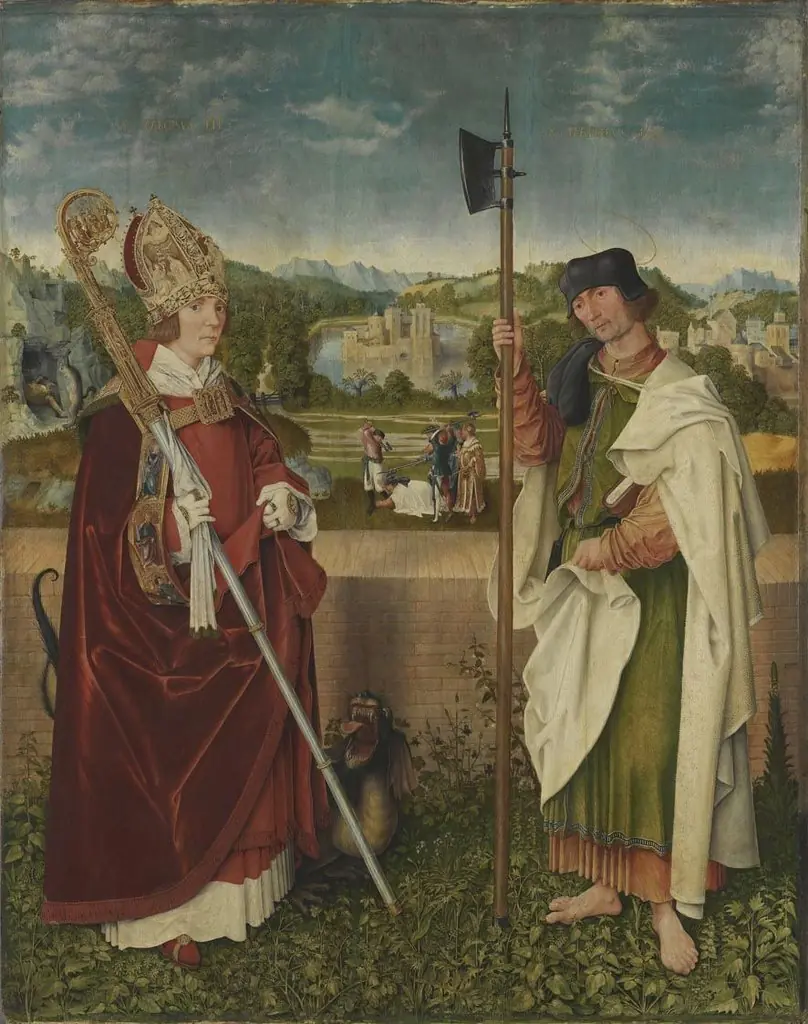 Universitätsaltar: Hll. Narzissus und Mathäus
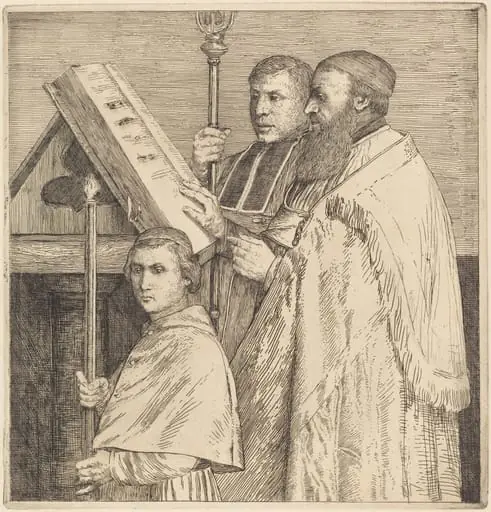 Choristers, 2nd plate (Le lutrin)
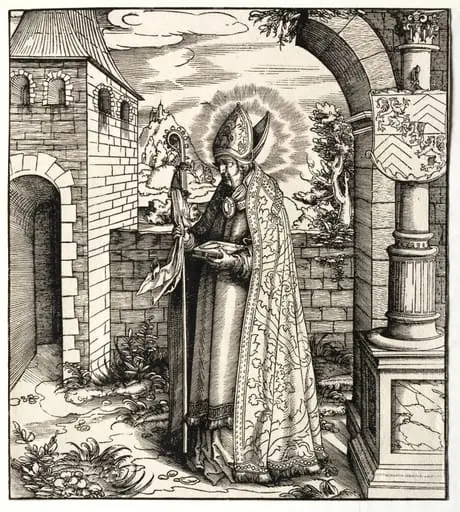 Saints Connected with the House of Hapsburg: A General Account of the Ancestry of Emperor Maximilian I
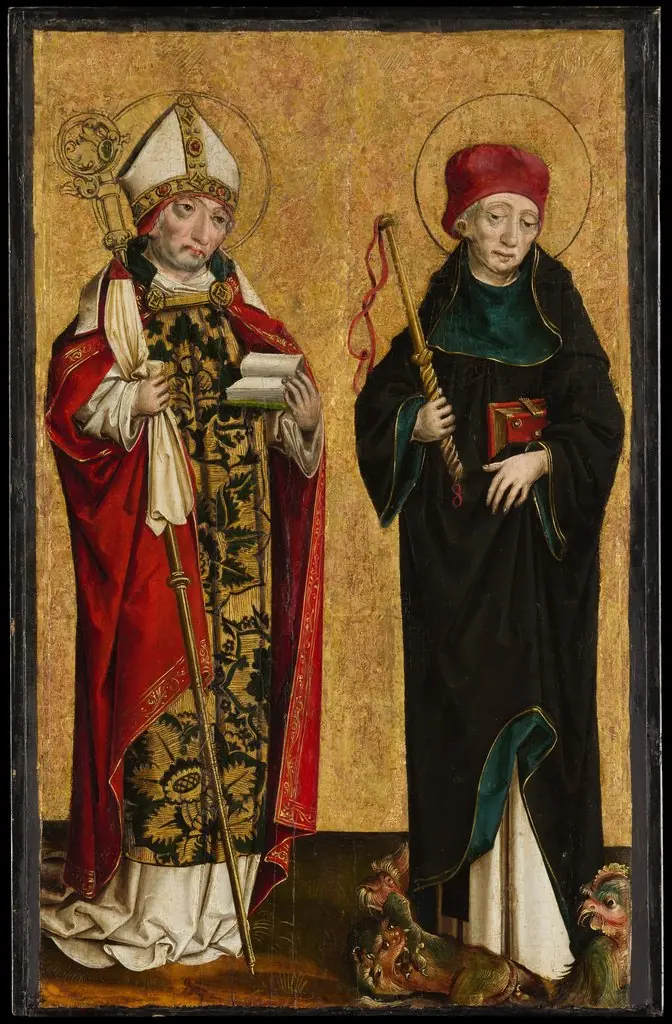 Saint Adalbert and Saint Procopius