Artwork
Saint Bernardino of Siena
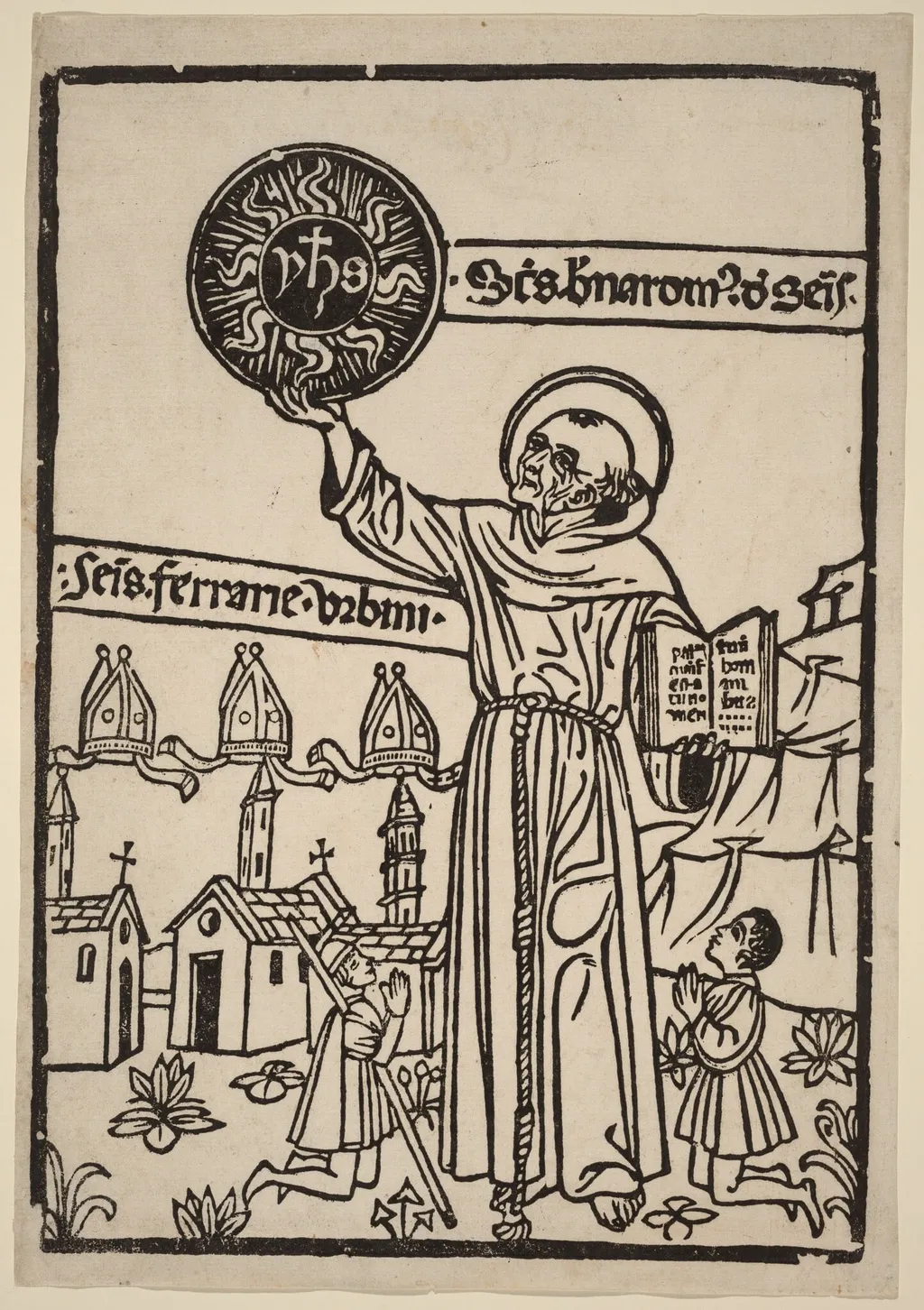
Saint Bernardino of Siena is an ink print by the Renaissance artist Italian 15th Century. It dates from 1475 and is held in the collection of the National Gallery of Art.
About this work
Overview
The scene is framed by modest buildings with steep roofs and church spires, emphasizing the saint’s connection to a communal religious life.
This black-and-white woodcut depicts Saint Bernardino of Siena, a 15th-century Franciscan preacher, standing in a simple landscape. He holds a shield-like emblem bearing a Christogram, radiating light, while two figures kneel in devotion. A book rests in his other hand, and a chain hangs from his wrist, symbolizing humility. The scene is framed by modest buildings with steep roofs and church spires, emphasizing the saint’s connection to a communal religious life.
Subject & Meaning
The image centers on Bernardino’s veneration of the Holy Name of Jesus, represented by the radiant Christogram within the circle. The kneeling figures reflect the saint’s role as a spiritual guide, inspiring devotion among the faithful. The chain signifies his renunciation of worldly status, while the book underscores his role as a teacher. The architecture behind him anchors the scene in a real, earthly context, reinforcing the accessibility of his message.
Technique & Style
Executed as a woodcut, the image relies on bold, linear contrasts between inked areas and the white paper. Fine lines define the folds of the robe and the texture of the buildings, while the radiant circle is rendered through radiating strokes, creating a sense of divine luminosity. The composition is flattened and symbolic, prioritizing clarity and spiritual emphasis over naturalistic depth, typical of early printed religious imagery.
History & Provenance
Produced in the late 15th century, this print likely originated in Italy or southern Germany, where Bernardino’s cult was widespread after his canonization in 1450. Woodcuts like this were mass-produced for devotional use, distributed by religious orders or sold to pilgrims. Its survival suggests it was valued in private or institutional collections, possibly used in chapels or homes for daily prayer.
Context
Bernardino’s preaching emphasized the Holy Name as a unifying force against factionalism in Italian city-states. His iconography, especially the Christogram, became a visual slogan of reform and piety. This print reflects the rise of printed religious imagery in the decades before the Reformation, when visual symbols helped convey doctrine to largely illiterate populations, blending popular devotion with institutional authority.
Legacy
The image contributed to the standardization of Bernardino’s iconography in print culture. Its simplicity and symbolic clarity made it adaptable across regions and media, influencing later engravings and altarpieces. Though not attributed to a known artist, its widespread circulation helped cement his visual identity in European religious art, serving as a model for devotional prints well into the 16th century.
Artist & collection

Artist
This anonymous Italian engraver from the 1490s carved images that could be peeled apart like paper dolls—each knot in the "First Knot" print was cut from a single sheet so you could lift the loops right off the page.

![The Destruction of the Egyptian Idols [verso], by Italian 15th Century](https://artifactworldgallery.com/img/italian-15th-century--the-destruction-of-the-egyptian-idols-verso--646d3c2b8098cfee-w320.webp)
![The Flight into Egypt [recto], by Italian 15th Century](https://artifactworldgallery.com/img/italian-15th-century--the-flight-into-egypt-recto--8f4d5275d7f90f98-w320.webp)
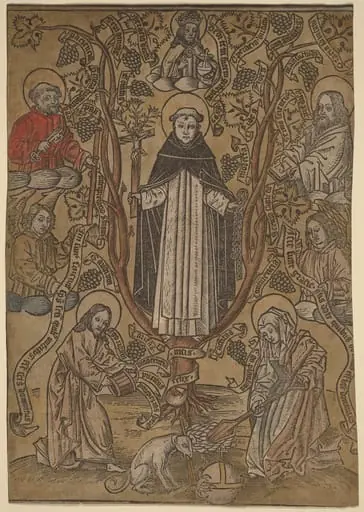 The Genealogical Tree of the Dominicans
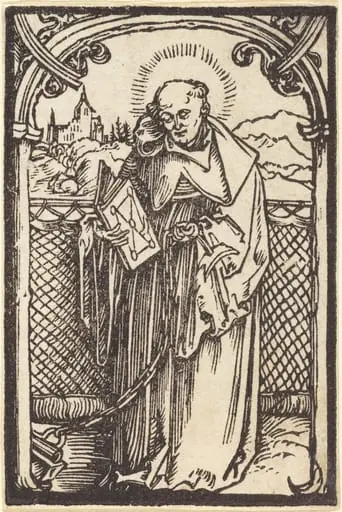 Saint Leonard
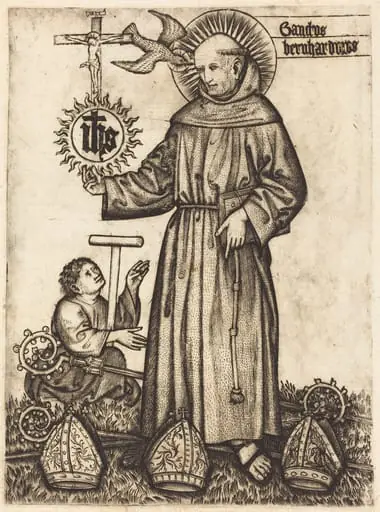 Sanctus Bernhardinus
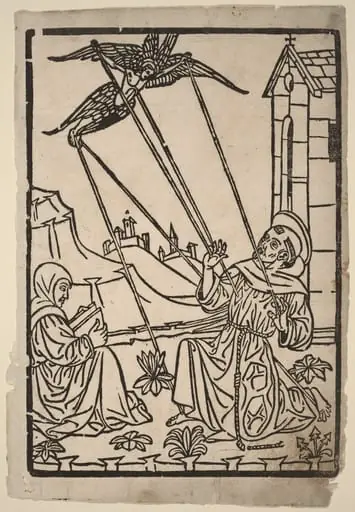 Saint Francis Receiving the Stigmata
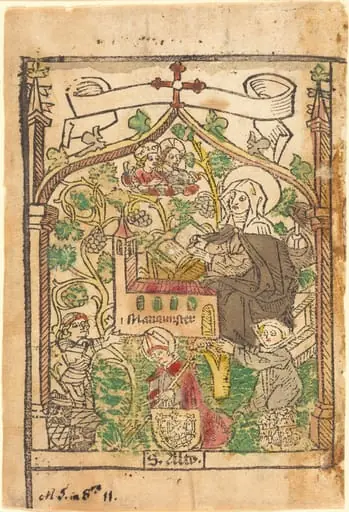 Saint Alto, Saint Bridget and the Founders of the Mariamunster
 Christ as Salvator Mundi
 Saint Bruno
 Saint Wolfgang
 Saint Matthew
 Saint Nicholas (verso)
![Saint John the Baptist [recto], by German 15th Century](https://artifactworldgallery.com/img/german-15th-century--saint-john-the-baptist-recto--4347da889e7eef62-w320.webp) Saint John the Baptist [recto]
Saint John the Baptist [recto] Saint Bartholomew