Artwork
Opus Filiae... Opus Praxitelis
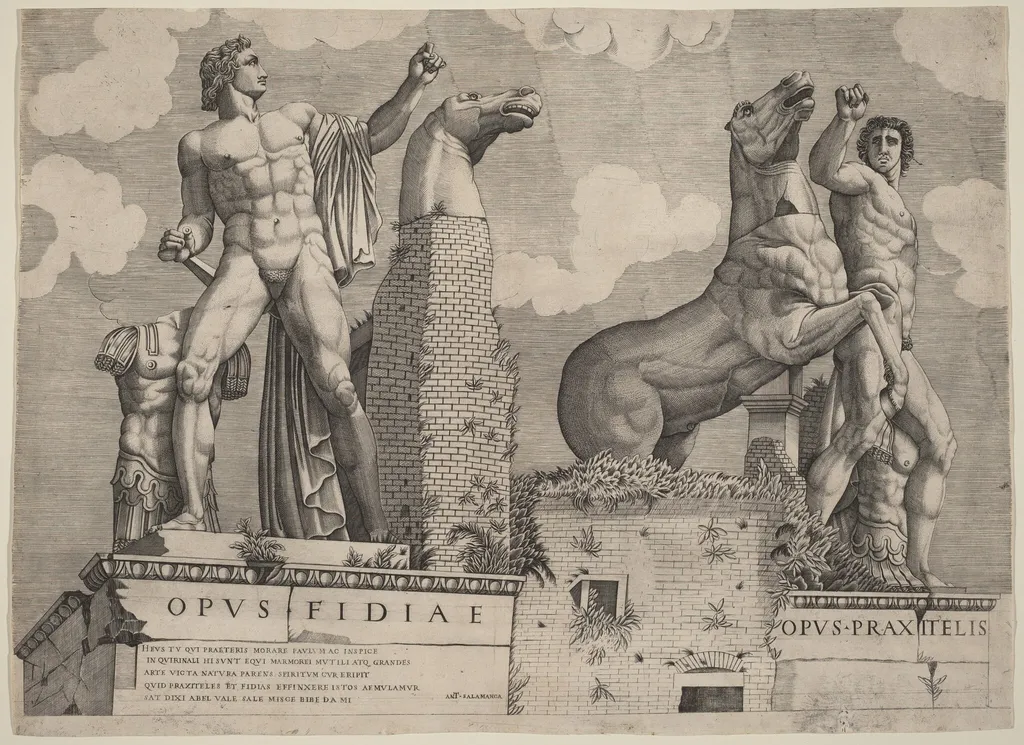
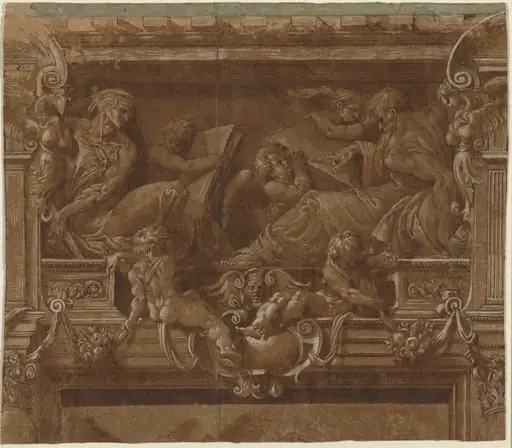
Opus Filiae... Opus Praxitelis is an ink print by the Renaissance artist Italian 16th Century. It dates from 1546 and is held in the collection of the National Gallery of Art. This engraving on laid paper, created before 1546, depicts a woman engaged in scholarly activity.
About this work
Engraving means the artist cut lines into metal, then inked it to print.
This engraving shows a woman sitting at a desk with papers and a quill. Light falls on her face and hands, while the background stays dark. She looks focused, like she’s writing or studying.
This is an old print from before 1546. Back then, paper was handmade and rough. Engraving means the artist cut lines into metal, then inked it to print.
Look up cross-hatching to see how artists made shadows with tight lines.
Overview
This engraving on laid paper, created before 1546, depicts a woman engaged in scholarly activity. The composition emphasizes her focused expression and the play of light on her face and hands, while the surrounding space recedes into shadow. Executed through incised metal lines and inked for printing, the work reflects early Renaissance printmaking techniques, using handmade paper with a textured, fibrous surface characteristic of the period.
Subject & Meaning
The figure is portrayed as a woman immersed in writing or study, suggesting intellectual labor. Her quiet concentration and the presence of papers and a quill imply a private, contemplative act—possibly representing literacy, devotion, or the role of women in scholarly traditions. The absence of overt symbols leaves her identity ambiguous, but her dignity and focus elevate the scene beyond mere domesticity.
Technique & Style
The artist employed engraving on metal, cutting fine lines to create form and tone. Cross-hatching builds subtle gradations of light and shadow, particularly on the face and hands, while the dark background enhances the figure’s presence. The texture of the handmade paper interacts with the inked lines, preserving the tactile quality of early printmaking and emphasizing the craftsmanship of the medium.
History & Provenance
Produced prior to 1546, the print originates from a period when engraved images were widely circulated among educated elites. Its survival suggests it was valued enough to be preserved, though its exact origin and early ownership remain undocumented. The use of laid paper confirms its European provenance, consistent with printing centers in Germany or the Low Countries during the early Reformation era.
Context
In the early 16th century, prints like this served as vehicles for disseminating humanist ideals, including the value of learning. While women were rarely depicted as scholars in public art, private prints occasionally portrayed them in intellectual roles, reflecting evolving attitudes toward female education among the literate classes. This work aligns with a quiet but growing visual language of female intellectualism.
Legacy
As an early example of engraved portraiture centered on a woman’s intellectual activity, the print contributes to the historical record of how learning was visually represented. Its technical precision and restrained composition influenced later printmakers who sought to convey introspection through line and light, preserving a subtle but significant strand in the history of print culture.
Artist & collection

Artist
A 16th-century Italian sculptor left us small bronze works in dark brown and gold.

![The Dioscuri [Frontal View], by Italian 16th Century](https://artifactworldgallery.com/img/italian-16th-century--the-dioscuri-frontal-view--240168a96b76ef0b-w320.webp)
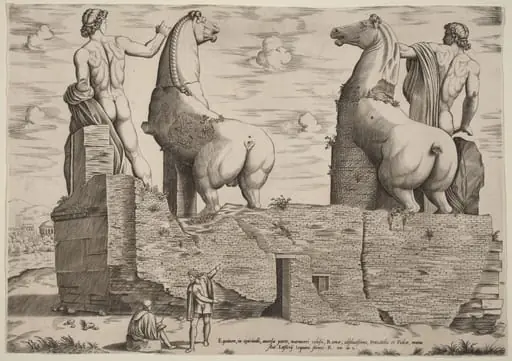
![The Dioscuri [Dorsal View], by Italian 16th Century](https://artifactworldgallery.com/img/italian-16th-century--the-dioscuri-dorsal-view--85eaf25b17a4dcfe-w320.webp)