Artwork
Two Putti with Shield Inscribed Pier Santi
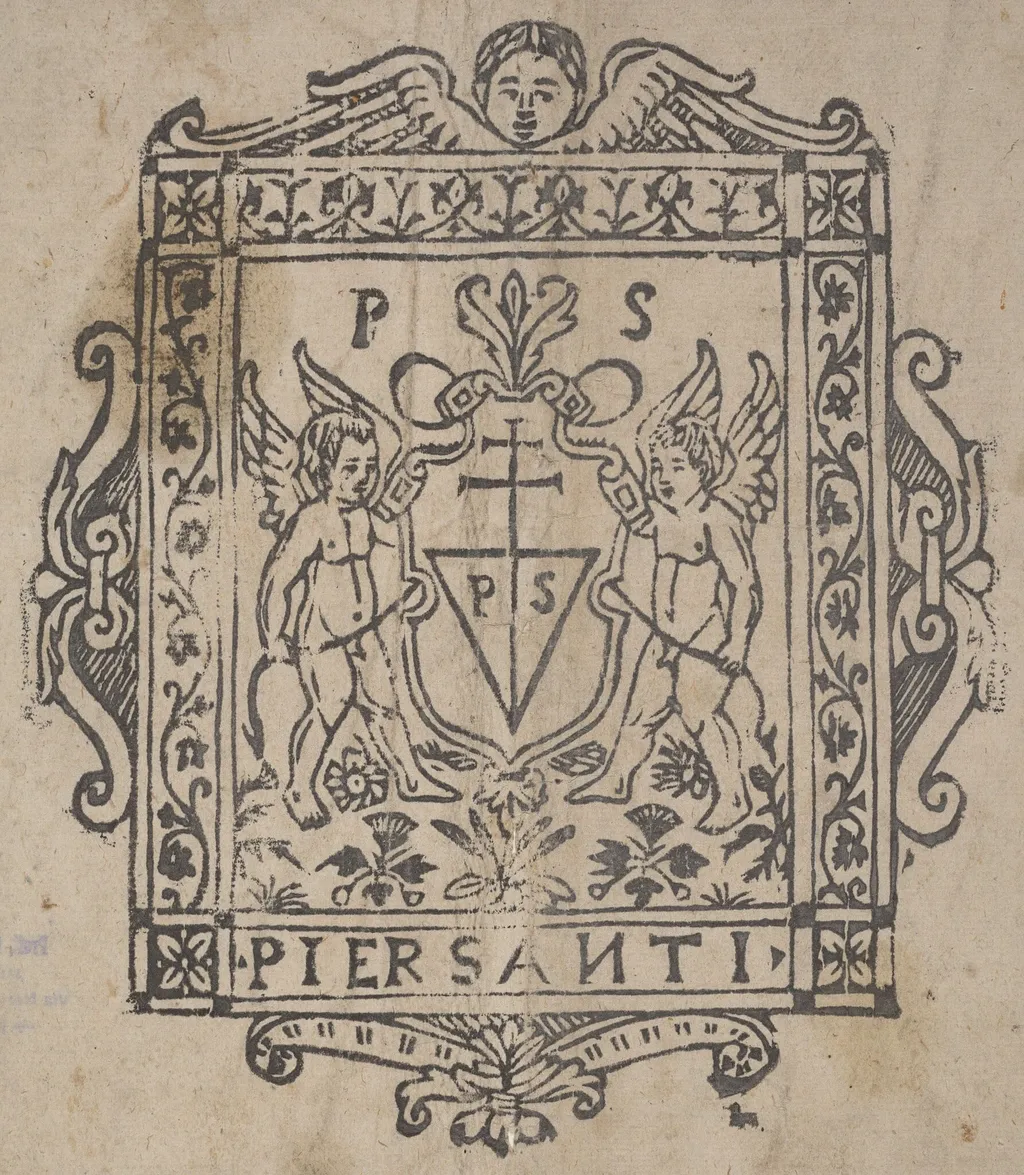
Two Putti with Shield Inscribed Pier Santi is an ink print by the Renaissance artist Italian 16th Century. It dates from 1501 and is held in the collection of the National Gallery of Art. The work is a woodcut print executed on laid paper, depicting a decorative composition centered on a shield bearing the initials “P.
About this work
Overview
The work is a woodcut print executed on laid paper, depicting a decorative composition centered on a shield bearing the initials “P.S.” and the name Pier Santi. Two small, winged figures—putti—support the shield, while a stylized crown hovers above. The surrounding frame consists of swirling lines and floral motifs rendered in a limited palette of brown, black and faint white.
Subject & Meaning
The putti function as allegorical supporters, a common Renaissance device symbolizing innocence or divine assistance. The shield, inscribed with the name Pier Santi, likely serves as a personal or familial emblem, suggesting the print was intended to celebrate or identify the patron. The crown above the shield reinforces notions of honor or authority associated with the name.
Technique & Style
Created through the woodcut process, the image was carved in relief on a wooden block, inked, and pressed onto laid paper. The linear quality, bold contrasts and ornamental borders reflect the late‑Renaissance or early Baroque taste for intricate decorative prints. The use of a limited tonal range emphasizes the graphic clarity typical of woodcut media.
History & Provenance
No specific date or artist is recorded for this print, and its provenance remains unclear. The presence of the name Pier Santi indicates a possible commission by a member of that family, perhaps for private devotional or commemorative purposes. The work survives in museum collections as an example of early modern Italian woodcut ornamentation.
Context
Woodcut prints in the 16th and 17th centuries were widely used for both commercial and personal imagery, often serving as portable symbols of identity. The inclusion of putti and heraldic elements aligns the piece with contemporary practices of embedding personal insignia within decorative motifs for display in domestic or ceremonial settings.
Artist & collection

Artist
A 16th-century Italian sculptor left us small bronze works in dark brown and gold.


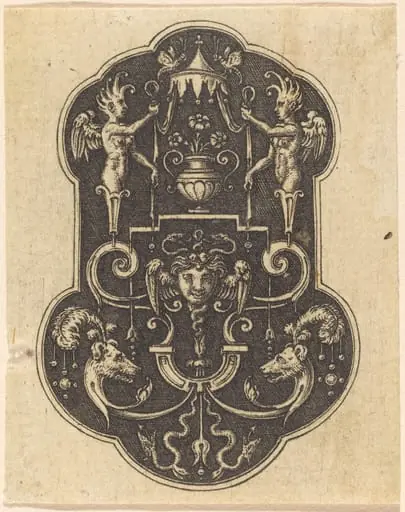 Head of Medusa
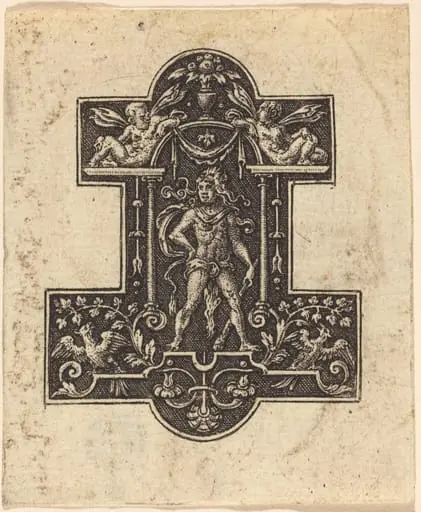 Hercules
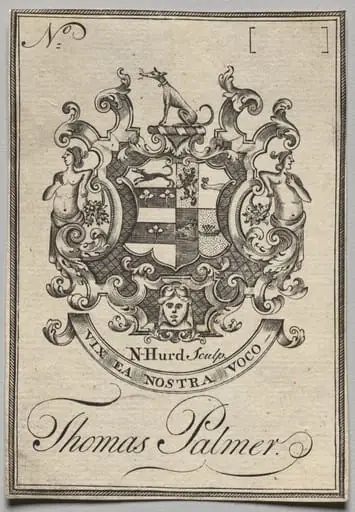 Bookplate: Coat of Arms with Thomas Palmer inscribed
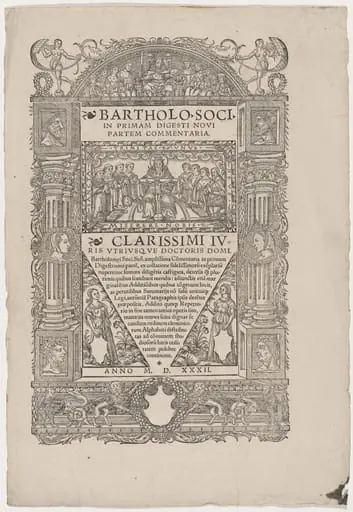 Title Page to Clarissimi IV
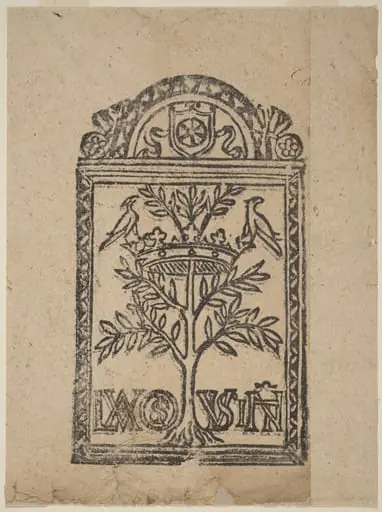 Tree with Crown and Two Birds
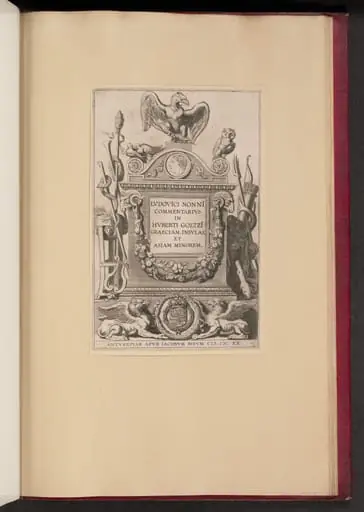 Title Page for Ludovicus Nonnius, Commentarius in Huberti Goltzi Graeciam, Insulas, et Asiam Minorem
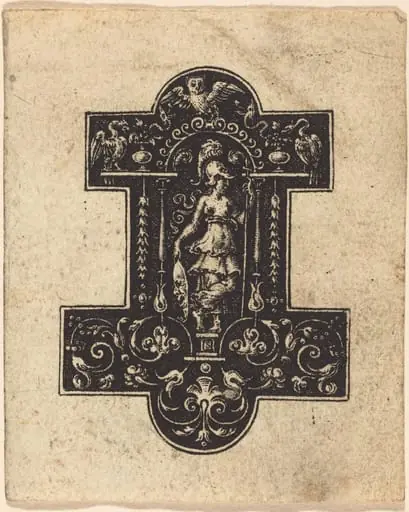 Minerva Standing
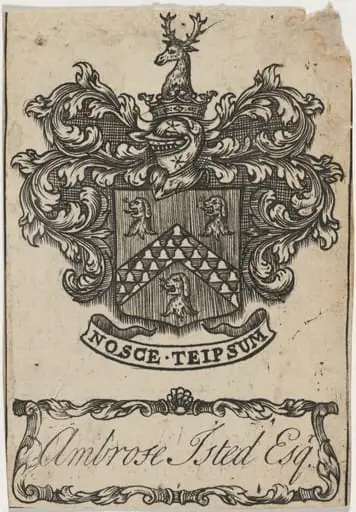 Bookplate for Ambrose Isted
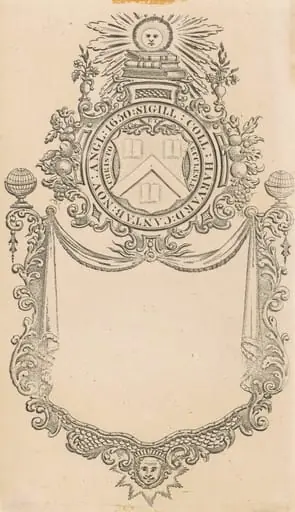 Harvard College Bookplate with the Christo et Ecclesiæ Seal
![Lettering [bottom half], by Simon van de Passe](https://artifactworldgallery.com/img/simon-van-de-passe--lettering-bottom-half--9f50722d991807f6-w320.webp) Lettering [bottom half]
Lettering [bottom half]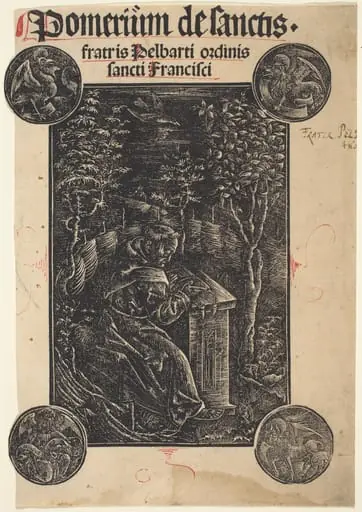 Franciscan, Pelbartus of Temesvar, in a Garden
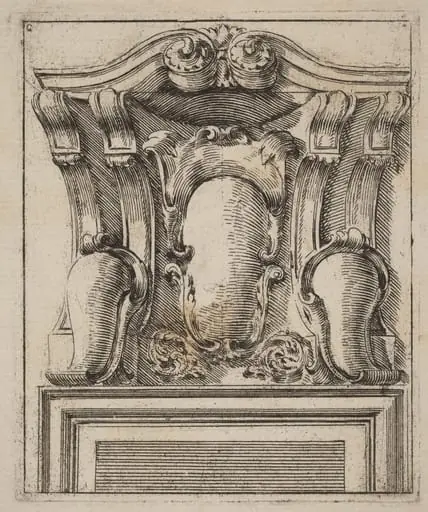 Architectural Motif with Three Shields