Artwork
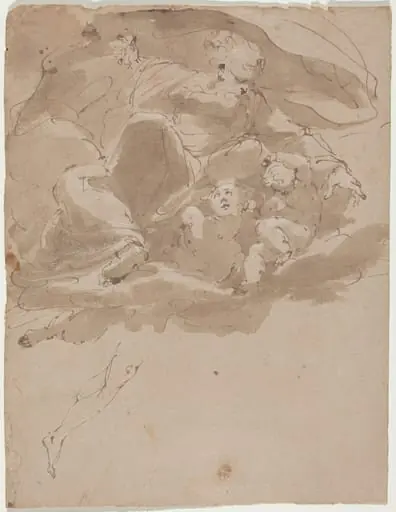
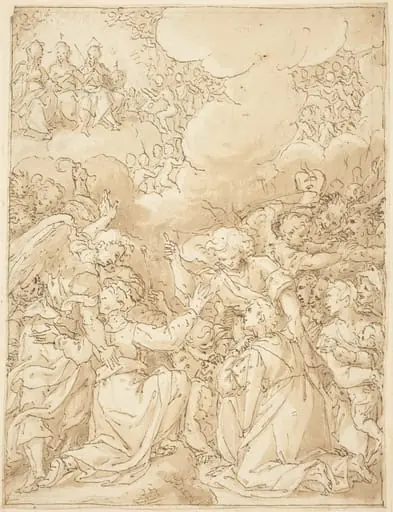
The Assumption of the Virgin
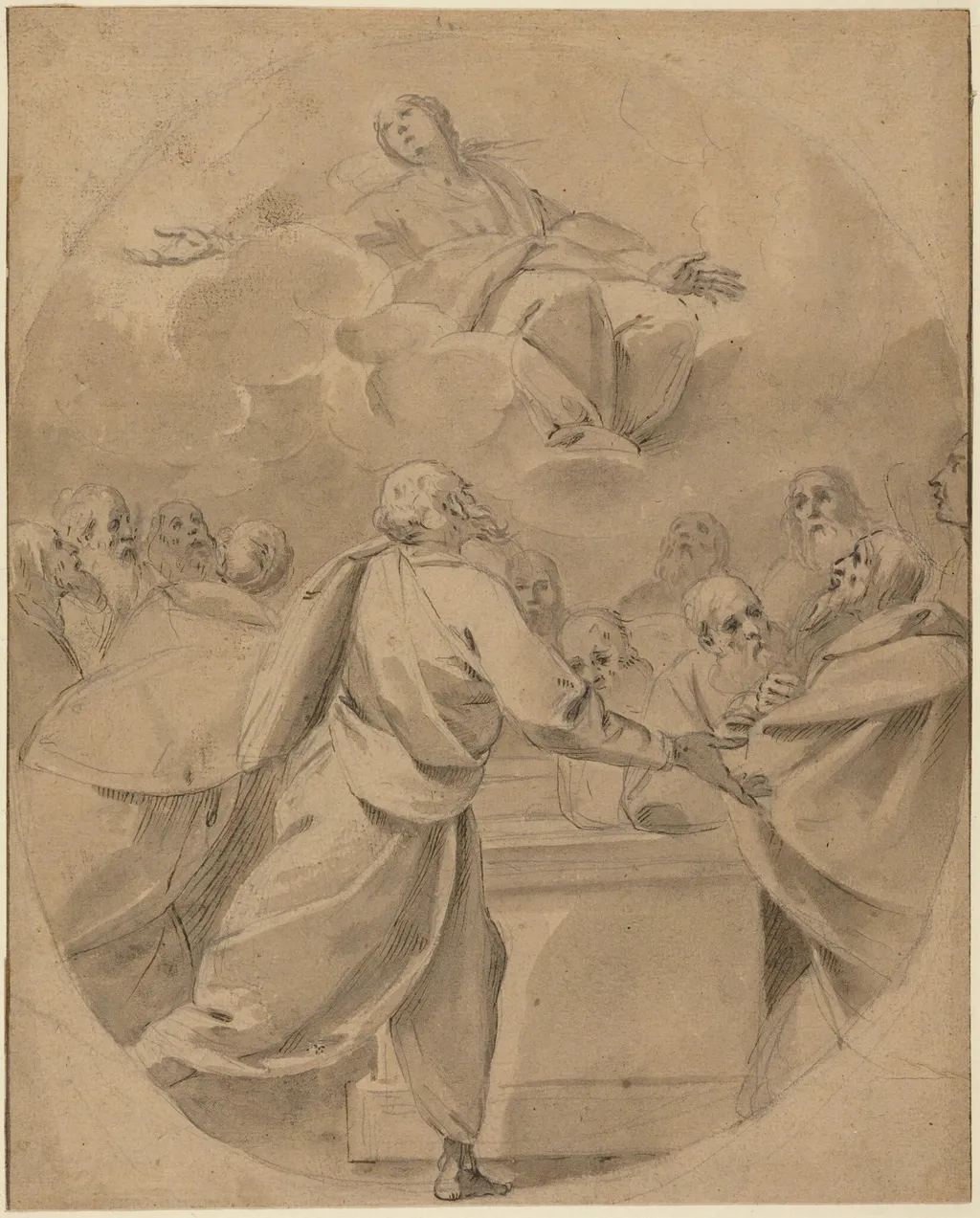
The Assumption of the Virgin is an ink drawing by the Renaissance artist Italian 17th Century. It dates from 1600 and is held in the collection of the National Gallery of Art.
About this work
Overview
This pen and brown ink drawing with brown wash over graphite on laid paper depicts a dynamic scene of the Assumption of the Virgin, rendered in a quick, sketchy style that conveys a sense of urgency and immediacy.
Subject & Meaning
The subject is the Assumption of the Virgin, where the Virgin Mary is shown ascending to heaven, surrounded by clouds, while a group of figures gathers below, some looking upward in response to the event. The composition captures a moment of spiritual transition and observer reaction.
Technique & Style
Characterized by loose, expressive lines and minimal detail, the drawing suggests a preliminary study rather than a finished work. The artist's use of quick strokes and brown wash implies movement and emotion, with the rough texture enhancing the scene's vitality.
Context
The sketch's style and medium are reminiscent of 17th- to 18th-century European drawing practices, where such sketches were often used to explore composition and expressiveness before creating more finished works. The emphasis on capturing movement and emotion aligns with Baroque artistic priorities.
Legacy
While the drawing's sketchy nature might suggest it was not intended for public display in its time, it now provides valuable insight into the artist's creative process and the development of religious themes in art. Its expressive qualities make it a compelling example of preliminary art.
Artist & collection

Artist
This Italian artist worked in the 17th century, making engravings, ink drawings, and oil paintings.

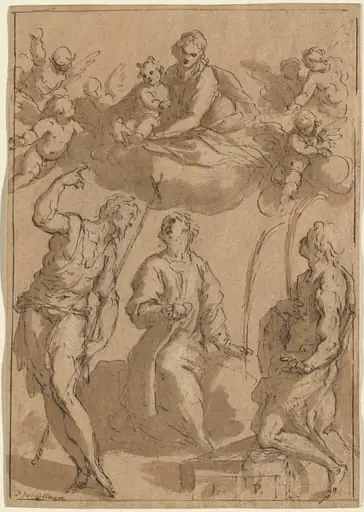 Madonna and Child in Glory with Saints John the Baptist, Stephen, and Lawrence
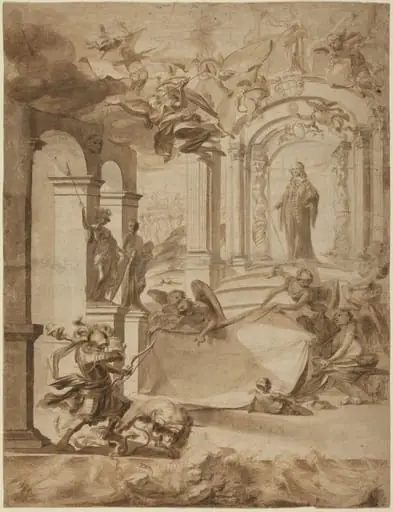 Allegory in Honor of a Gentleman
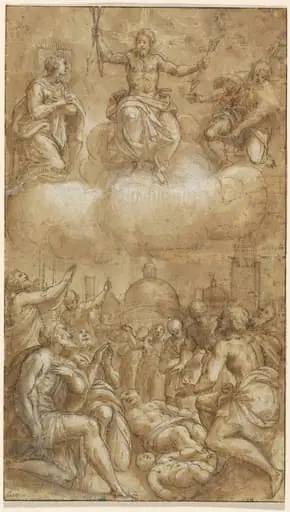 Plague Victims Pleading for Help from Christ, the Virgin, and Saint Roch
 The Last Judgment
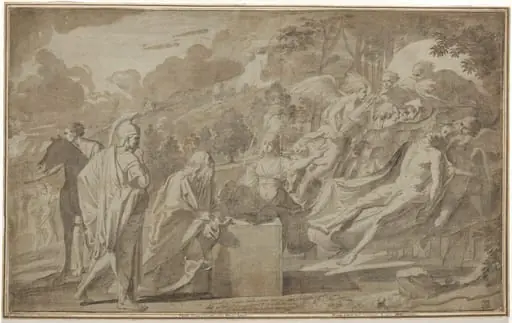 The Prophecy of Basilides
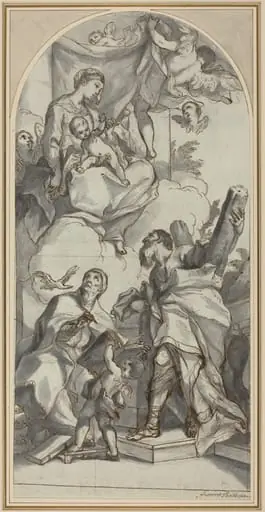 The Madonna and Child in Glory with Saints Gregory the Great and Andrew
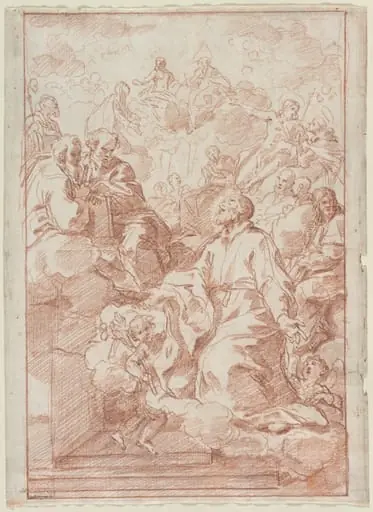 Vision of St. Philip Neri