Artwork
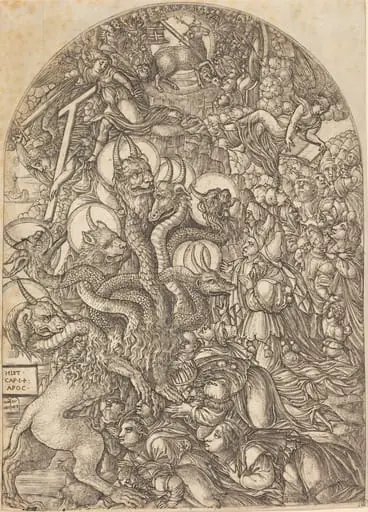
The Apocalypse: The Dragon with Two Horns and the Beast with Seven
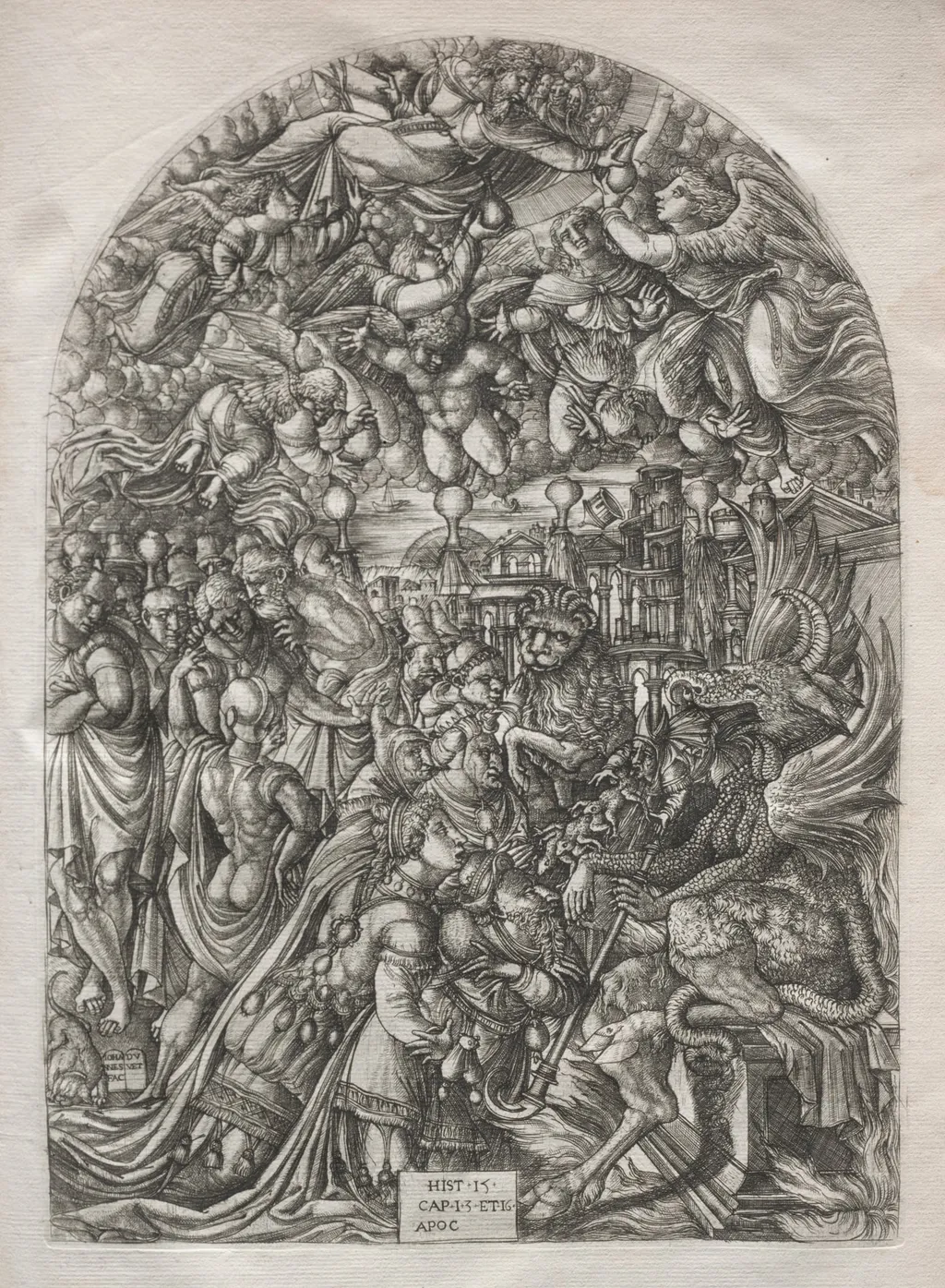
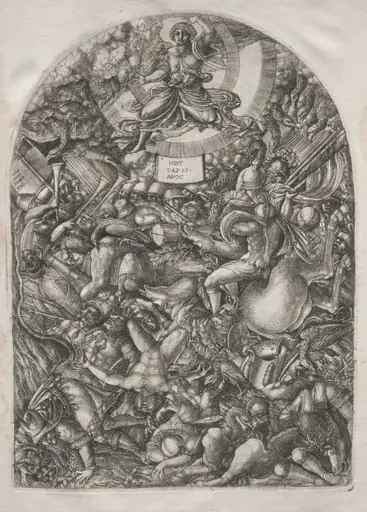
The Apocalypse: The Dragon with Two Horns and the Beast with Seven is a print by the Renaissance artist Jean Duvet. It dates from 1551 and is held in the collection of the Cleveland Museum of Art. This engraving is one of 23 in a bound volume illustrating the Apocalypse, based on the Book of Revelation.
About this work
Overview
This engraving is one of 23 in a bound volume illustrating the Apocalypse, based on the Book of Revelation. The series, the artist's magnum opus, took several years to complete.
Subject & Meaning
Depicting a scene from the Book of Revelation, the print shows a dragon with two horns and a beast with seven heads, symbolizing evil forces as described in the biblical narrative.
Technique & Style
Characterized by crowded compositions and ornamental surface patterns, the work showcases Jean Duvet's idiosyncratic style, which blends Italian High Renaissance influences with a disregard for rational spatial representation.
History & Provenance
Part of a rare complete set (one of seven known), this print is from the oeuvre of Jean Duvet, a pioneering French printmaker of the 16th century, primarily active in Langres.
Context
Though working in a provincial setting, Duvet's exposure to Italian prints (notably Marcantonio Raimondi's) influenced his solidly modeled figures, distinguishing his work within early French printmaking.
Legacy
As one of the first major French printmakers, Duvet's innovative and highly personal style in this series contributes significantly to the development of 16th-century French art.
Artist & collection

Artist
Jean Duvet (1485 – after 1562) was a French Renaissance goldsmith and engraver, now best known for his engravings.

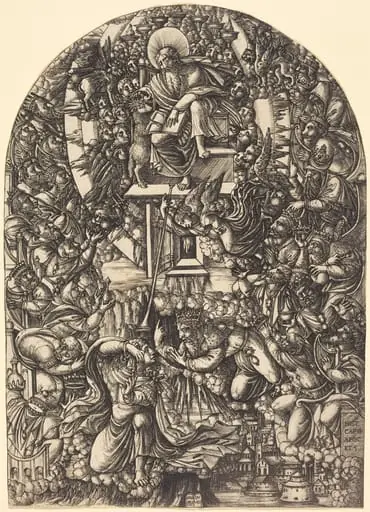
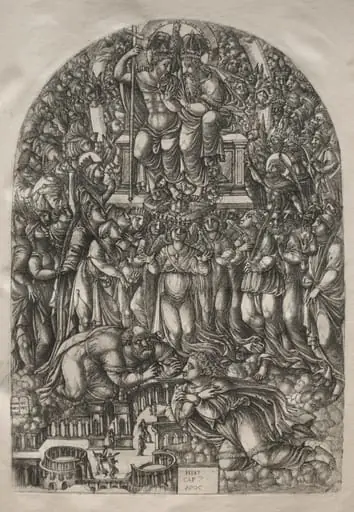 The Apocalypse: An Innumerable Multitude Which Stand before the Throne
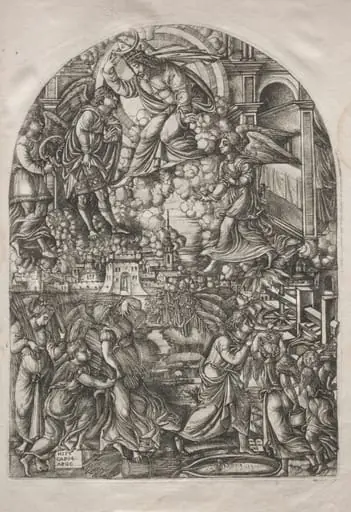 The Apocalypse: The Winepress of the Wrath of God
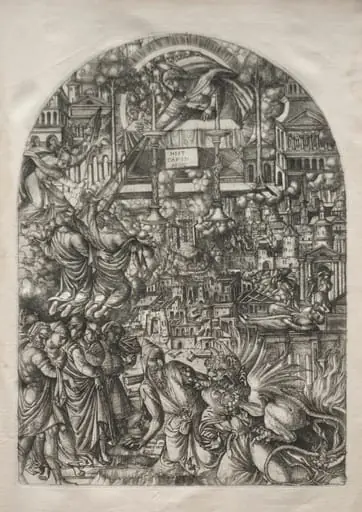 The Apocalypse: The Measurement of the Temple
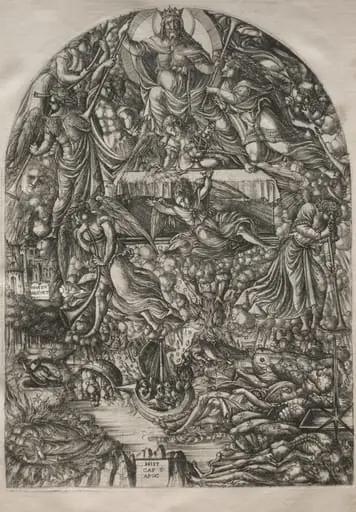 The Apocalypse: The Opening of the Seventh Seal
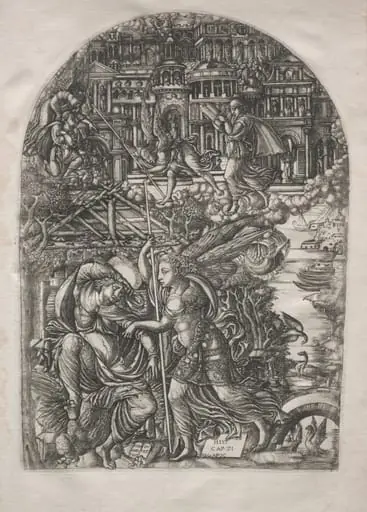 The Apocalypse: The Angel Shows St. John the New Jerusalem
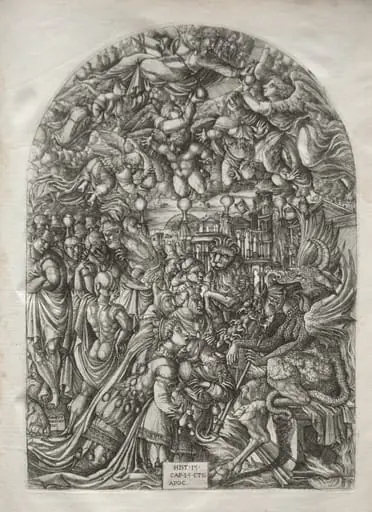 The Apocalypse: The Woman Clothed with the Sun
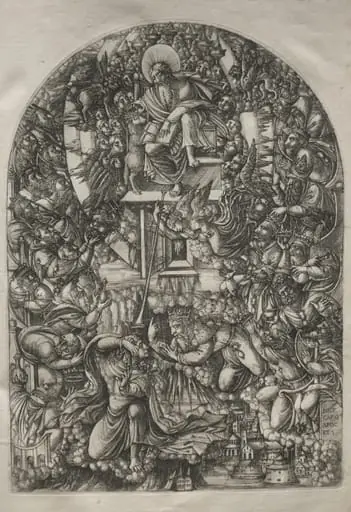 The Apocalypse: St. John Summoned to Heaven
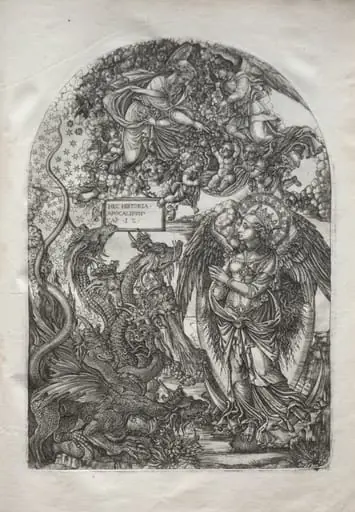 The Apocalypse: St. Michael and the Dragon
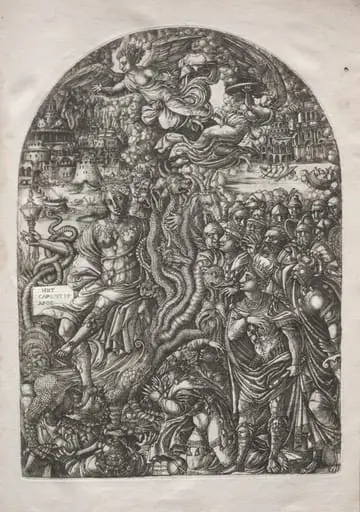 The Apocalypse: Babylon the Harlot, Seated on the Seven-headed Beast
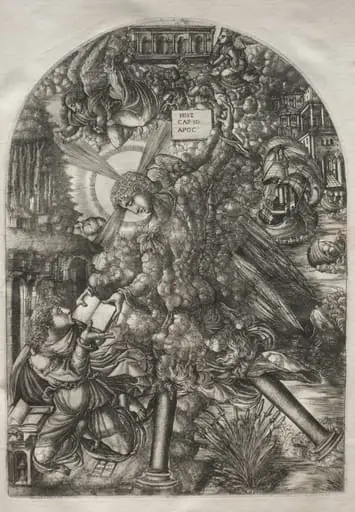 The Apocalypse: The Angel Gives St. John the Book to Eat
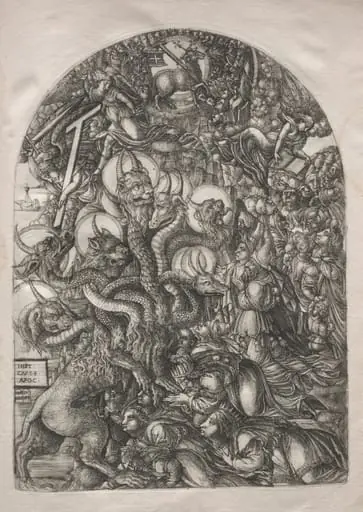 The Apocalypse: The Beast with Seven Heads and Ten Horns
 The Apocalypse: The Angel in the Sun Calling the Birds of Prey