Artwork
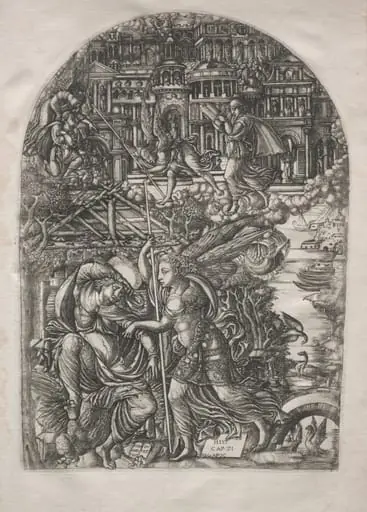
The Apocalypse: The Angel Shows St. John the Fountain of Living Water
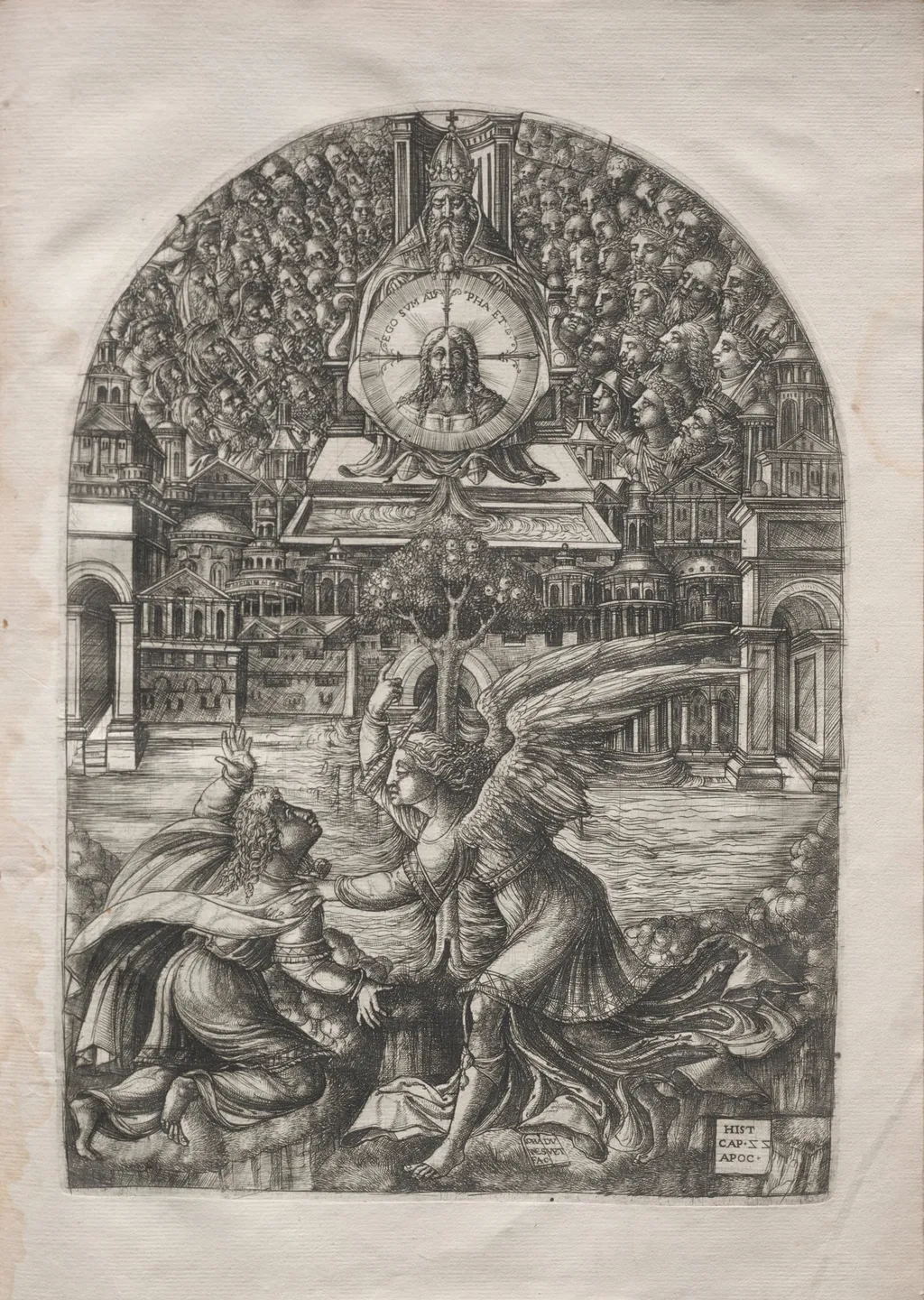
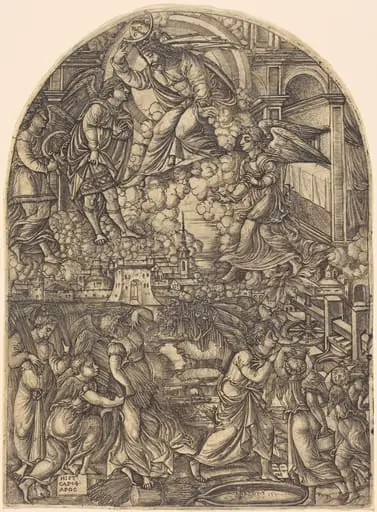
The Apocalypse: The Angel Shows St. John the Fountain of Living Water is a print by the Renaissance artist Jean Duvet. It dates from 1551 and is held in the collection of the Cleveland Museum of Art.
About this work
This painting shows an angel and St. John near a fountain of living water.
The artist spent many years working on this series of engravings. He was one of the first major printmakers in France and worked mostly in a provincial city.
You can learn more about this style by looking at the work of artist: Jean Duvet (French, 1485–1561)
Overview
This engraving belongs to a series of twenty-three prints illustrating the Book of Revelation, created by Jean Duvet over several years.
This engraving belongs to a series of twenty-three prints illustrating the Book of Revelation, created by Jean Duvet over several years. The complete set, preserved in this bound volume, is among only seven known surviving examples. Duvet, a French artist based in the provincial town of Langres, dedicated his career to printmaking at a time when the medium was still emerging as a serious artistic form in France.
Subject & Meaning
The scene depicts the angel revealing to Saint John the Fountain of Living Water, a vision from Revelation 22:1. The imagery symbolizes divine grace and eternal life, central themes in the apocalyptic narrative. Duvet renders the moment with solemnity, placing the figures in a dense, symbolic landscape that prioritizes spiritual meaning over naturalistic setting, reflecting the visionary nature of the biblical text.
Technique & Style
Duvet employed fine-line engraving to build intricate, layered compositions. His figures are robustly modeled, showing awareness of Italian Renaissance anatomy, yet arranged in compressed, non-perspectival spaces. Ornamental patterns, repetitive drapery, and crowded forms dominate, creating a stylized, almost tapestry-like surface that rejects spatial logic in favor of symbolic density and decorative rhythm.
History & Provenance
The series was produced between the 1540s and 1560s, during Duvet’s mature period. Though he rarely traveled beyond Langres, he absorbed Italian artistic trends through circulating prints, particularly those by Marcantonio Raimondi. The museum’s volume is one of seven complete sets known today, underscoring its rarity and the limited circulation of such ambitious print projects in 16th-century France.
Context
Duvet worked during a period of religious upheaval and growing interest in biblical illustration. His prints emerged in a cultural landscape where printed images served both devotional and educational roles. While Italian artists pursued classical harmony, Duvet’s idiosyncratic style—rooted in Northern traditions and infused with visionary intensity—offered a distinct alternative to mainstream Renaissance ideals.
Legacy
Duvet’s Apocalypse series stands as a landmark in French printmaking, notable for its technical ambition and personal vision. Though largely overlooked in his own time, his work later influenced 19th-century Romantic and Symbolist artists drawn to his intense, otherworldly imagery. His ability to merge religious narrative with a highly individual aesthetic secured his place as a pioneering figure in early modern print culture.
Artist & collection

Artist
Jean Duvet (1485 – after 1562) was a French Renaissance goldsmith and engraver, now best known for his engravings.

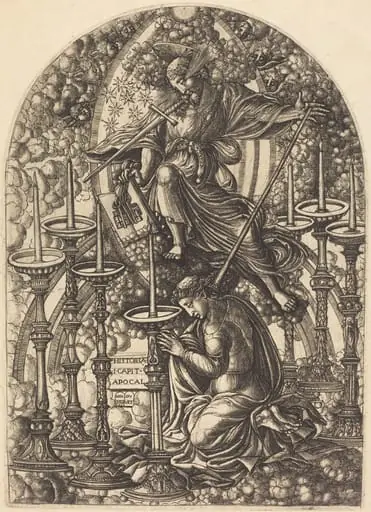
 The Apocalypse: The Angel Shows St. John the New Jerusalem
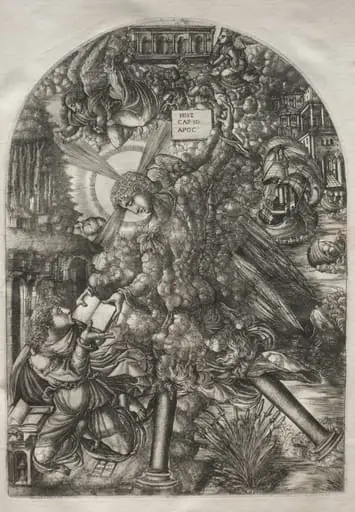 The Apocalypse: The Angel Gives St. John the Book to Eat
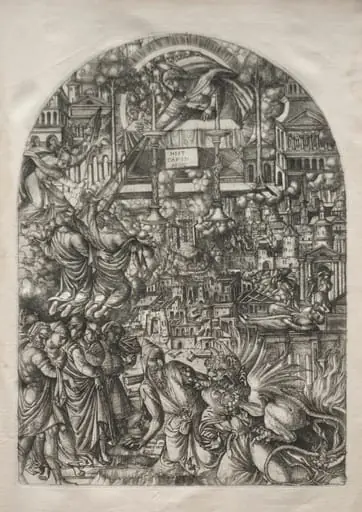 The Apocalypse: The Measurement of the Temple
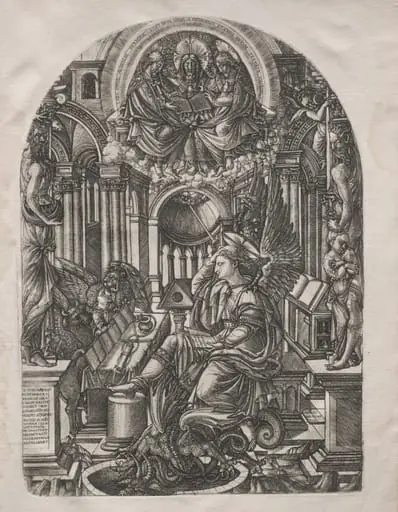 The Apocalypse: St. John on the Island of Patmos
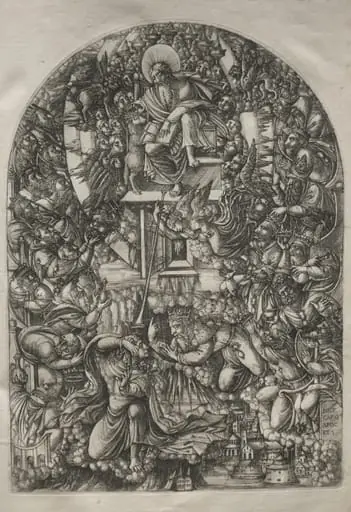 The Apocalypse: St. John Summoned to Heaven
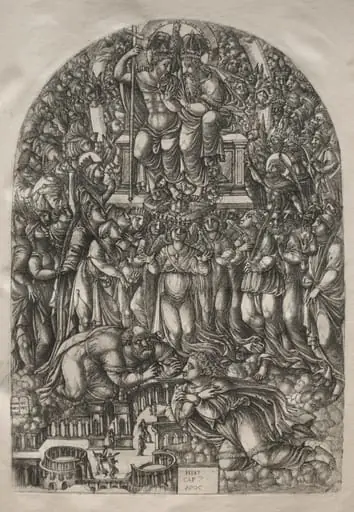 The Apocalypse: An Innumerable Multitude Which Stand before the Throne
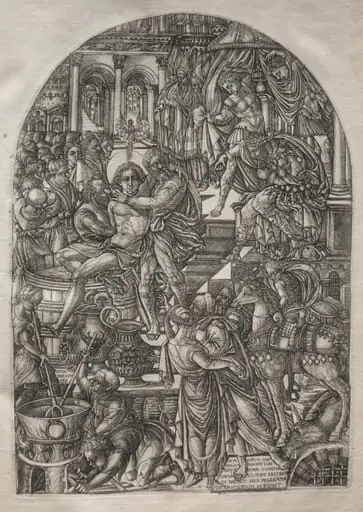 The Apocalypse: The Martyrdom of St. John the Evangelist
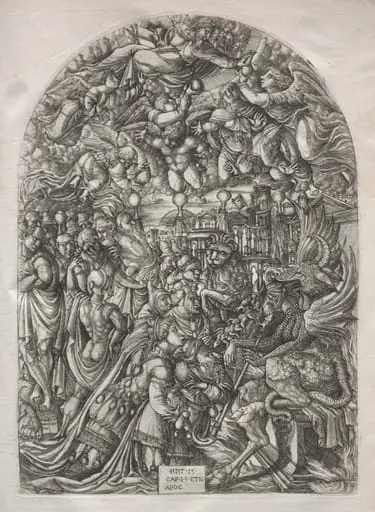 The Apocalypse: The Dragon with Two Horns and the Beast with Seven
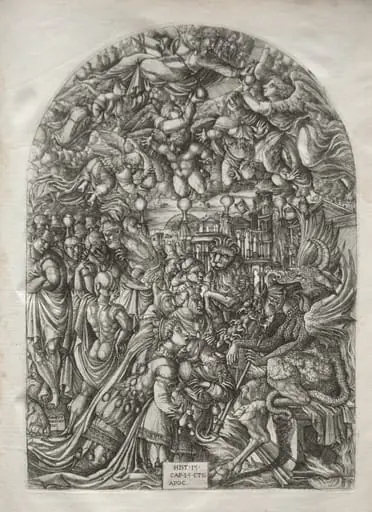 The Apocalypse: The Woman Clothed with the Sun
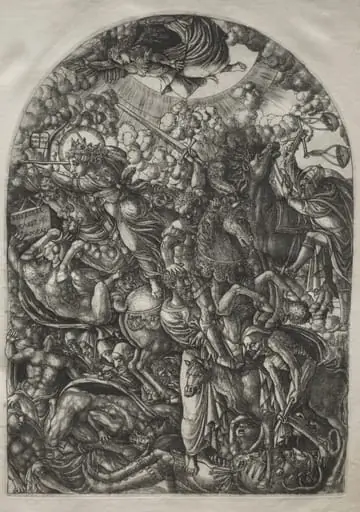 The Apocalypse: St. John Sees the Four Riders
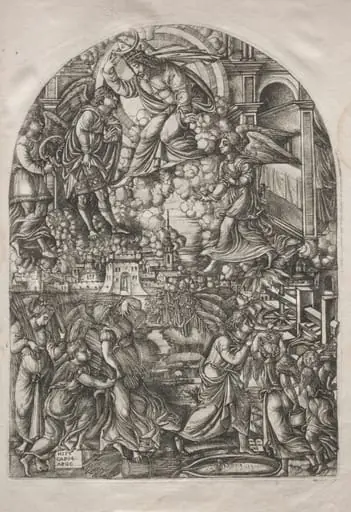 The Apocalypse: The Winepress of the Wrath of God