Artwork
A Soldier in Armor in Front of a Tavern
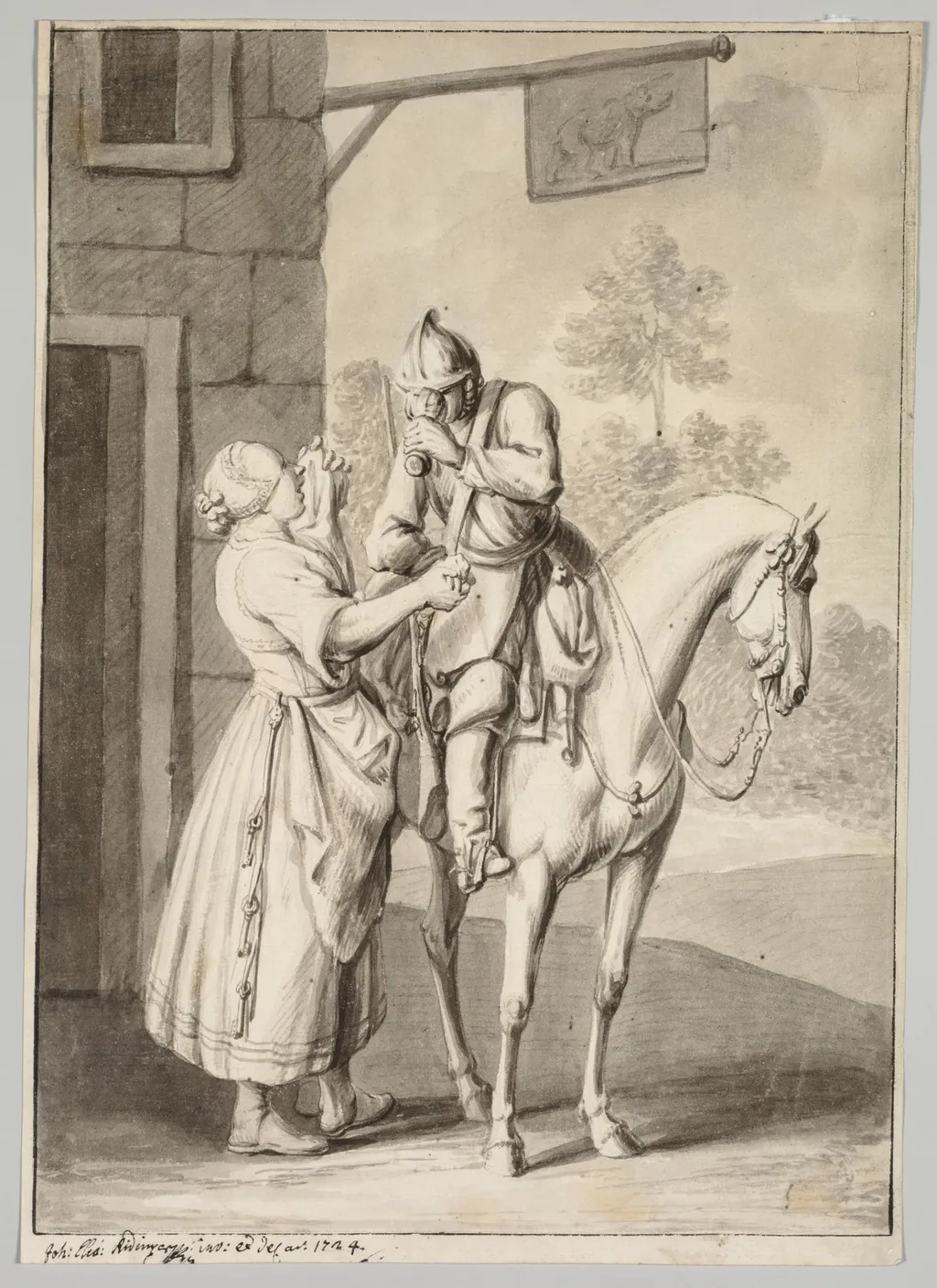
A Soldier in Armor in Front of a Tavern is a drawing by the Baroque artist Johann Elias Ridinger. It dates from 1724 and is held in the collection of the Cleveland Museum of Art.
About this work
Overview
Created in 1724 by Johann Elias Ridinger, this drawing captures a solitary soldier in full armor outside a modest tavern.
Created in 1724 by Johann Elias Ridinger, this drawing captures a solitary soldier in full armor outside a modest tavern. Ridinger, active in Augsburg, was primarily known for his detailed engravings of animals and equestrian subjects. This work, rendered in monochrome, reflects his skill in rendering texture and form without color, aligning with his broader practice of observational precision in everyday and military scenes.
Subject & Meaning
The soldier, pausing before a tavern, is accompanied by a woman who appears to offer assistance or direction, while a saddled horse waits nearby. The scene suggests a moment of transition—between duty and rest, public and private life. The inclusion of a civilian figure and a domestic setting grounds the military figure in a social context, hinting at the daily realities of soldiers in 18th-century Europe beyond battlefield narratives.
Technique & Style
Ridinger employed fine linear shading to convey the weight and texture of armor, woolen fabric, and horsehair. The absence of color emphasizes tonal contrasts, with subtle gradations of gray and brown defining form. The composition is tightly focused, directing attention to the soldier’s posture and the interaction between figures. The use of chiaroscuro enhances volume and depth, particularly in the folds of armor and the shadowed eaves of the building.
History & Provenance
The drawing entered the collection of the Cleveland Museum of Art, where it remains part of its holdings of European graphic art. While its immediate provenance prior to acquisition is not fully documented, its attribution to Ridinger is consistent with his known output in Augsburg during the 1720s. The work likely originated as a preparatory study or independent sketch, reflecting Ridinger’s interest in documenting figures from contemporary life.
Context
In early 18th-century Germany, military personnel were a common presence in urban centers, often interacting with civilian populations. Taverns served as social hubs for soldiers on leave or awaiting orders. Ridinger’s depiction aligns with a broader trend in German art of the period that valued detailed, unidealized portrayals of everyday scenes, contrasting with the grandeur of courtly painting.
Legacy
Though Ridinger is best remembered for his animal and hunting engravings, this drawing illustrates his broader engagement with human subjects and social observation. His ability to render texture and narrative economy in monochrome influenced later draftsmen interested in realism. The work contributes to a modest but significant body of 18th-century German drawings that document the quiet moments of military life.
Artist & collection
Artist
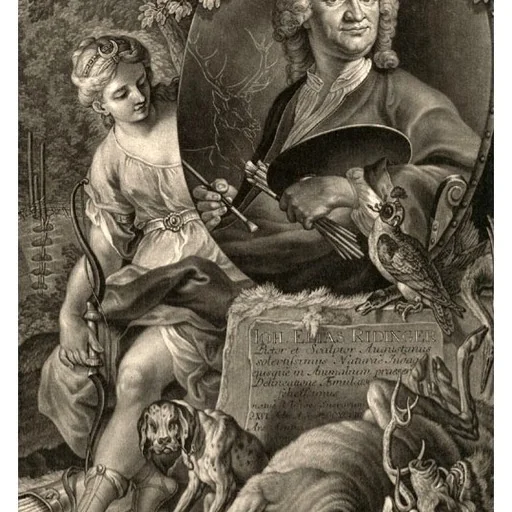
Johann Elias Ridinger (16 February 1698 in Ulm – 10 April 1767 in Augsburg) was a German painter, engraver, draughtsman and publisher.

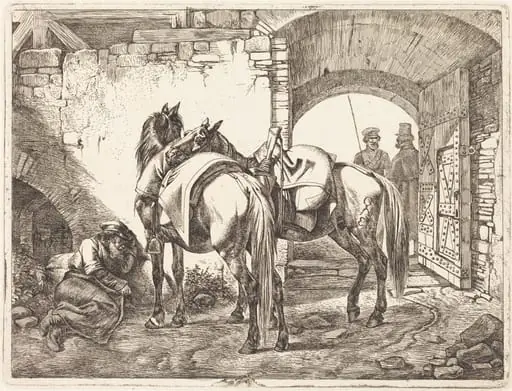 Cossack Horses in a Courtyard
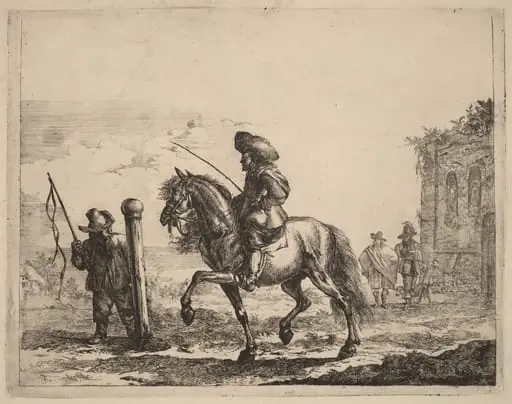 Riding School
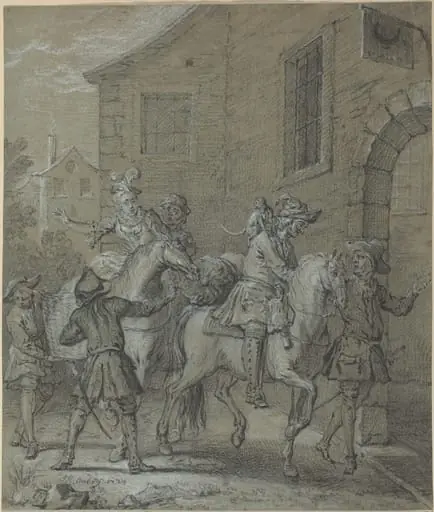 L'Arrivee de l'Operateur dans l'hotellerie
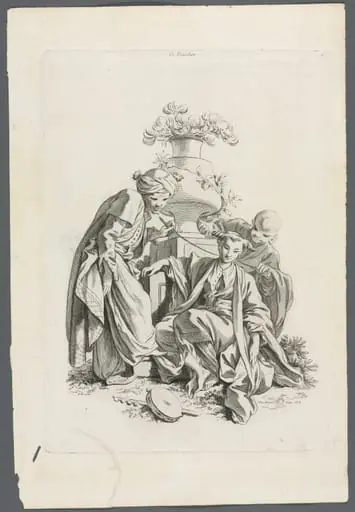 The Senses: Touch (after Boucher)
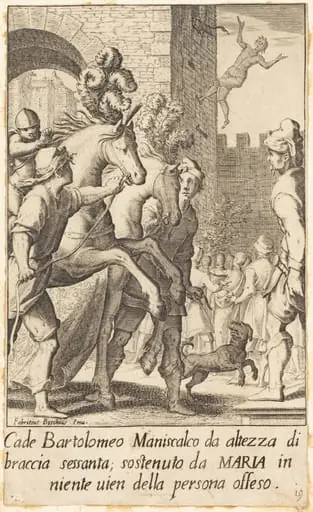 Bartolomeo, Farrier
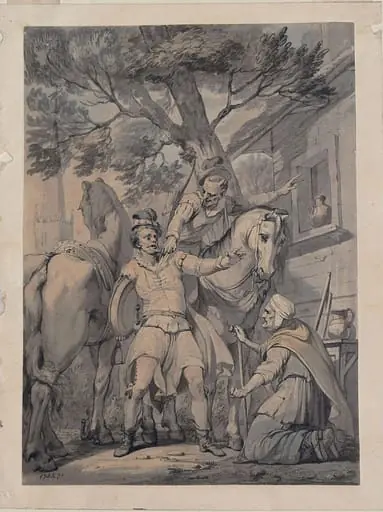 The Sompnour, the Devil, and the Widow
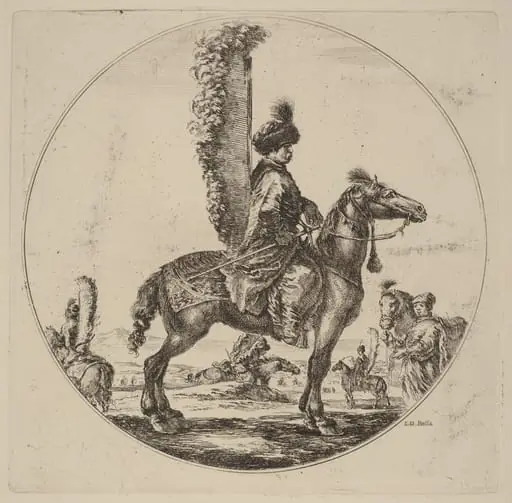 Polish Hussar
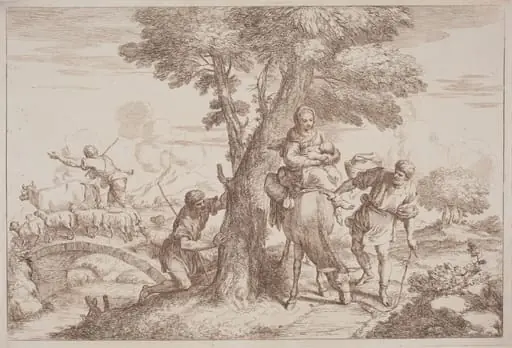 The Flight into Egypt with a Shepherd Watching from Behind a Tree
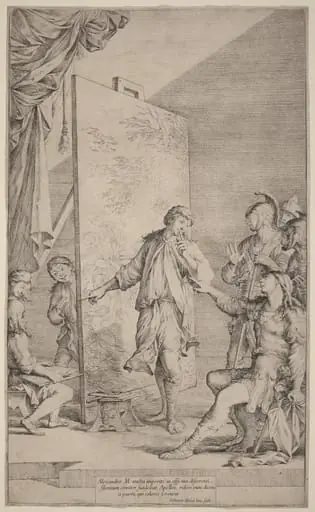 Alexander in the Studio of Apelles
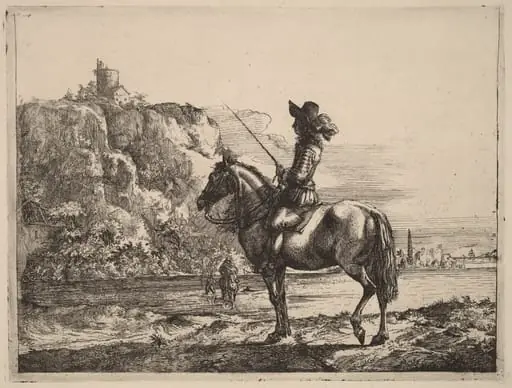 River Landscape with Horseman
 Two Figures in Costume
 Arrival at an Inn