Artwork
Title Page
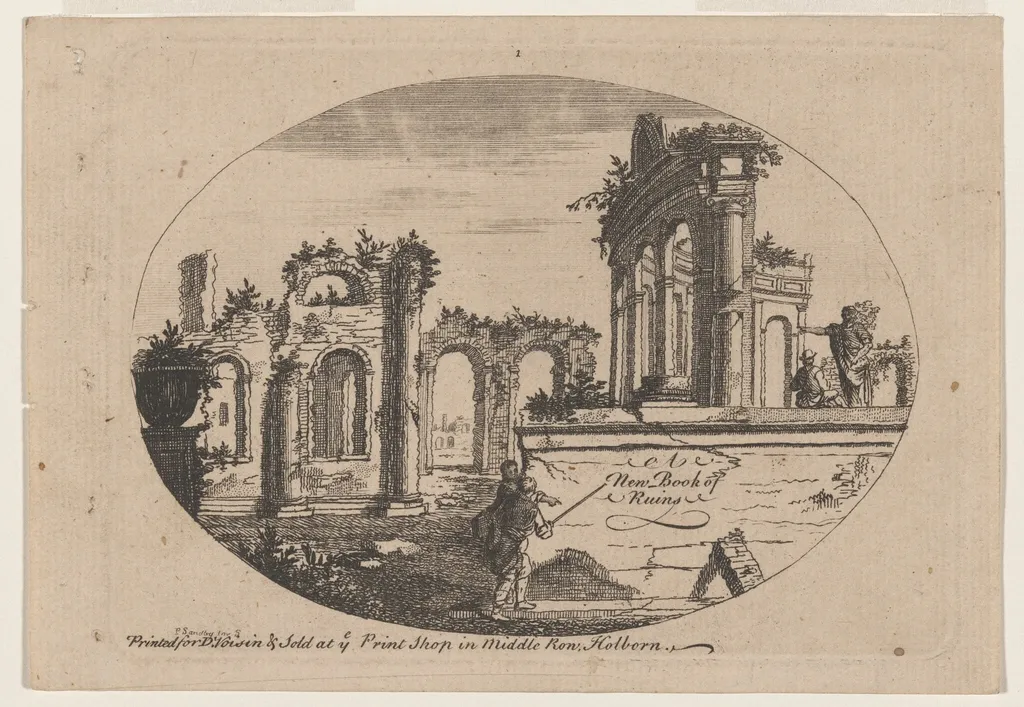
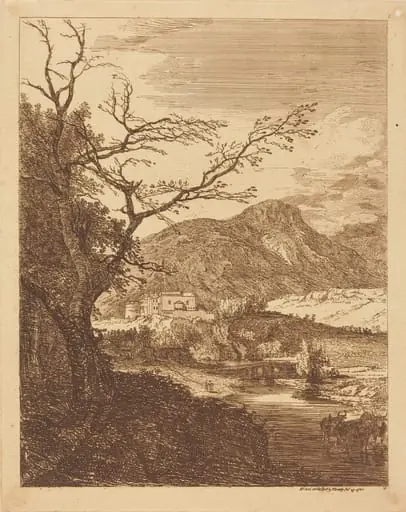
Title Page is an ink print by the Baroque artist Paul Sandby. It dates from 1750 and is held in the collection of the National Gallery of Art.
About this work
Overview
Created around 1750, this etching on laid paper is one of Paul Sandby’s early prints, produced before his involvement with the Royal Academy.
Created around 1750, this etching on laid paper is one of Paul Sandby’s early prints, produced before his involvement with the Royal Academy. It functions as a title page for a projected series, likely intended to accompany a collection of architectural fantasies. The work exemplifies Sandby’s interest in combining topographical precision with imaginative reconstruction, blending observed ruins with invented elements to evoke a sense of antiquity.
Subject & Meaning
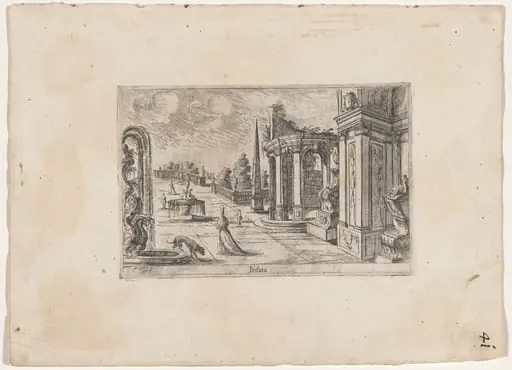
The scene depicts an overgrown, idealized ruin garden populated with fragmented classical architecture—arches, columns, and statues half-consumed by vegetation. A figure in period dress stands centrally, gesturing toward the decay, suggesting contemplation or scholarly inquiry. The inscription 'A New Book of Ruins' implies a narrative of rediscovery, positioning the image as both a visual catalog and a meditation on time’s erosion of human achievement.
Technique & Style
Sandby employed fine, controlled etching lines to model form and depth, using cross-hatching and delicate tonal gradations to suggest the weathered surfaces of stone and the softness of foliage. The contrast between the light paper and dark ink enhances the three-dimensionality of the ruins. His draftsmanship reflects training in surveying, translating cartographic clarity into artistic composition, with precision in structure and restrained emotional tone.
History & Provenance
This print likely originated as part of a planned publication that was never fully realized. Though no complete series survives, similar works by Sandby from this period suggest it was intended for a private or scholarly audience interested in antiquities. Its survival as a single sheet indicates it may have circulated as a standalone image or been bound into a personal album, reflecting the 18th-century fascination with collecting prints of ruins.
Context
In mid-18th-century Britain, interest in classical ruins surged alongside the Grand Tour and the rise of landscape aesthetics. Sandby’s work aligns with contemporaries who romanticized decay as a source of beauty and moral reflection. His background in military surveying and mapmaking informed his approach, merging factual rendering with imaginative reconstruction—a blend that distinguished British print culture from continental traditions.
Legacy
Though not widely exhibited in his lifetime, this print exemplifies Sandby’s role in shaping British printmaking’s transition from technical illustration to artistic expression. His integration of landscape, architecture, and narrative influenced later topographical artists and contributed to the visual language of the picturesque. The work remains a quiet testament to the era’s intellectual engagement with time, memory, and the remnants of antiquity.
Artist & collection
Artist
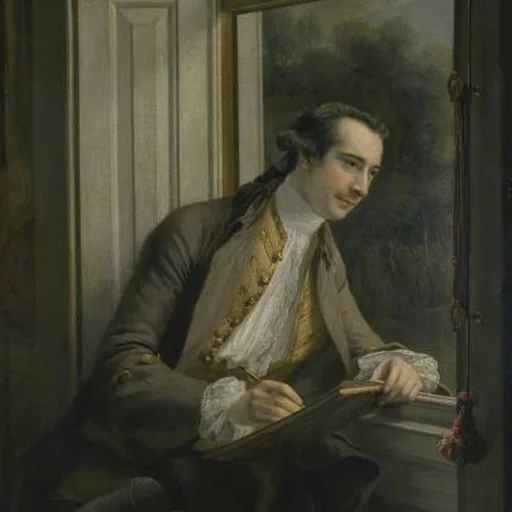
Paul Sandby, (1731 – 7 November 1809) was an English mapmaker and painter who specialised in landscape art. Along with his older brother Thomas Sandby, he was one of the founding members of the Royal Academy in 1768.

 Design for a Garden Court
 Veduta: Design for a Garden Court with a Mountain View
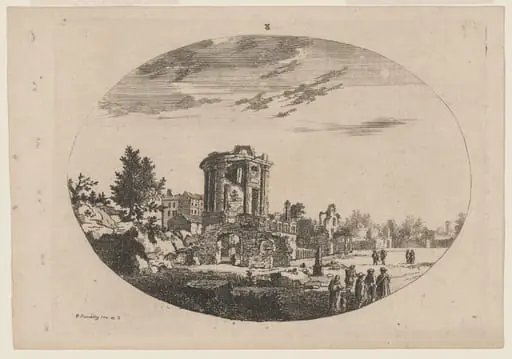 Ruined Circular Temple
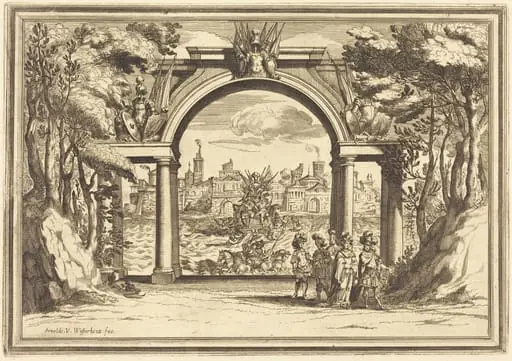 Il Greco in Troia: Plate 1
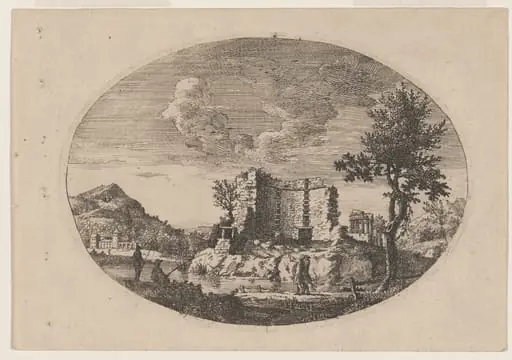 Ruined Two-Story Building with Mountains in Distance
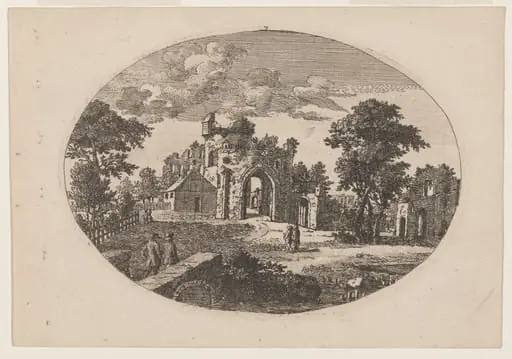 Ruins near a Stream, a Distant Building at the Foot of a Mountain
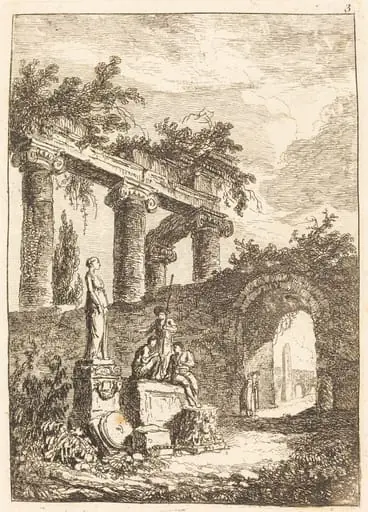 The Statue before the Ruins
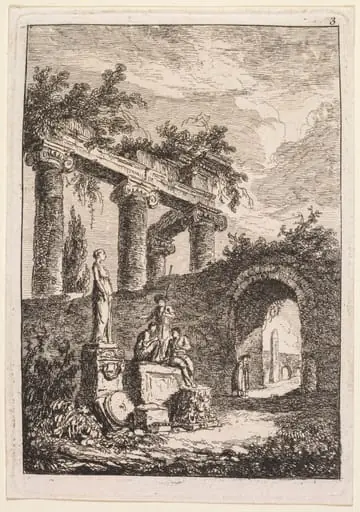 The Statue in Front of Ruins
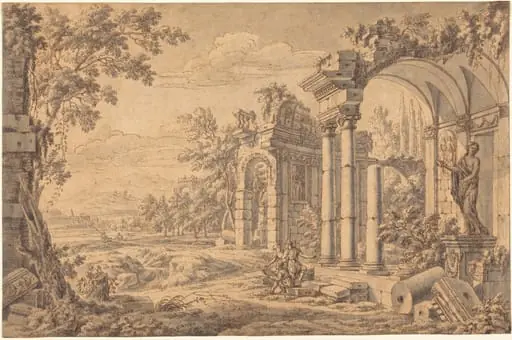 Landscape with a Draftsman among Ancient Ruins
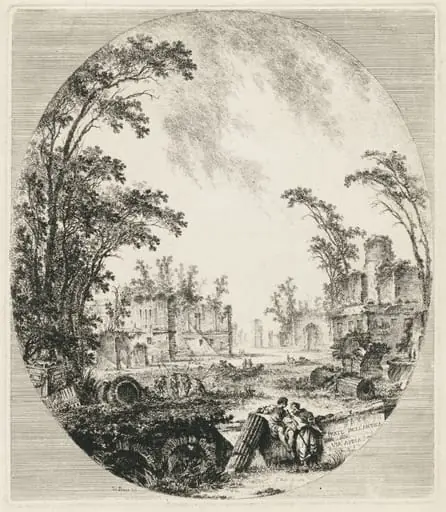 Parte dell'antica via Appia (Section of the Old Appian Way)
 View of an Antique Fountain
 Steps to the Four Landmarks