Artwork
忠臣蔵九段目|A Woman at Her Toilet Seated before a Mirror, Having Her Hair combed by a Kameyui (Woman Hairdresser)
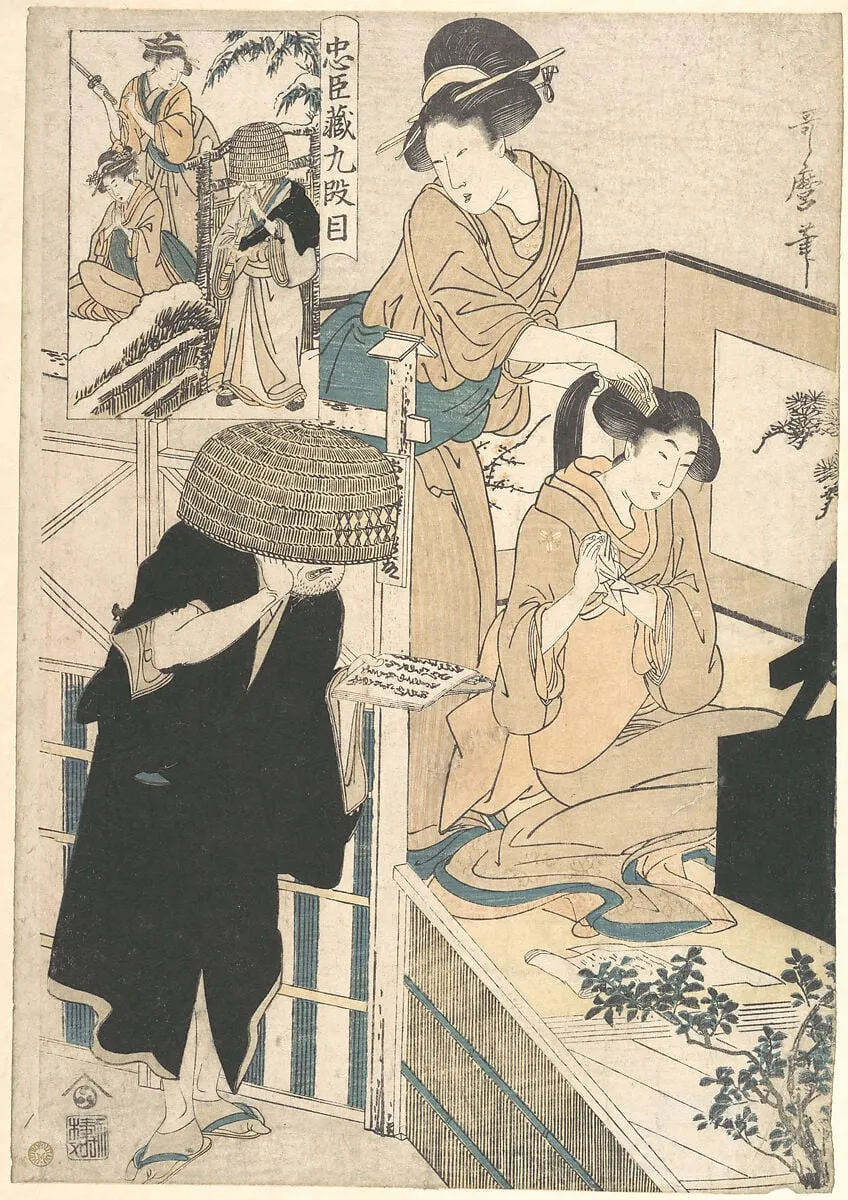
忠臣蔵九段目|A Woman at Her Toilet Seated before a Mirror, Having Her Hair combed by a Kameyui (Woman Hairdresser) is an ink print by the Romanticist artist Kitagawa Utamaro. It dates from 1780 and is held in the collection of the Metropolitan Museum of Art.
About this work
Overview
The composition centers on a quiet moment of personal care, framed by architectural elements like sliding doors and a glimpse of garden space beyond.
This woodblock print by Kitagawa Utamaro, dated around 1780, depicts an intimate interior scene from the domestic sphere. Rendered in ink and color on paper, it belongs to the ukiyo-e tradition of Japanese printmaking. The composition centers on a quiet moment of personal care, framed by architectural elements like sliding doors and a glimpse of garden space beyond. It is part of the Metropolitan Museum of Art’s collection and reflects Utamaro’s focus on everyday life among women of the merchant class.
Subject & Meaning
The scene captures a woman seated before a mirror as another attends to her hair, a ritual of grooming that carried social and aesthetic significance. Two additional women are engaged in labor nearby, one carrying a basket and others handling straw goods. These figures suggest a hierarchy of roles within the household. The quiet, untheatrical nature of the moment emphasizes dignity in routine, avoiding grand narratives in favor of subtle, observed reality.
Technique & Style
Utamaro employs delicate linework and flat, unmodulated color areas typical of early ukiyo-e. The figures are rendered with soft contours, and spatial depth is suggested through overlapping forms rather than perspective. Cross-hatching is used sparingly to define texture in clothing and hair, while the background remains minimal, directing attention to the central interaction. The composition balances asymmetry with rhythmic repetition, enhancing the sense of calm order.
History & Provenance
Created in the late 18th century, this print was likely part of a series illustrating episodes from the Chūshingura tale, though the scene itself is a genre study rather than a direct narrative moment. It entered the Metropolitan Museum of Art’s collection through established channels of early 20th-century acquisitions of Japanese prints. Its preservation reflects growing Western interest in ukiyo-e during the Meiji era and beyond.
Context
During the Edo period, urban culture flourished among the merchant class, and prints like this catered to a growing audience seeking depictions of private life. Women’s domestic spaces became frequent subjects in ukiyo-e, reflecting both fascination and idealization. Utamaro’s focus on intimate, unposed moments distinguished his work from more theatrical or heroic imagery, aligning with broader trends in genre painting of the time.
Legacy
This print exemplifies Utamaro’s influence on the evolution of Japanese printmaking, particularly in elevating everyday female experience to artistic subject matter. His sensitive portrayal of quiet rituals contributed to the global appreciation of ukiyo-e in the 19th century, inspiring Western artists such as Degas and Cassatt. The work remains a reference point for studies of gender, labor, and visual culture in Edo-period Japan.
Artist & collection


 Untitled
 Untitled
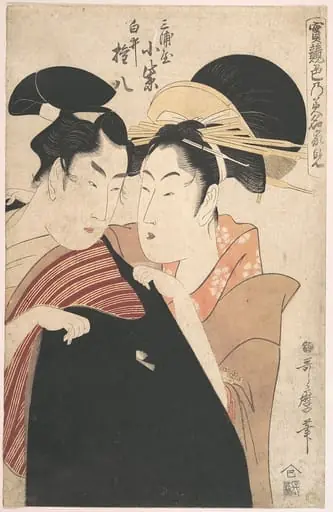 実競色乃美名家見 三浦屋小紫 白井権八|The Lovers Miura-ya Komurasaki and Shirai Gonpachi.
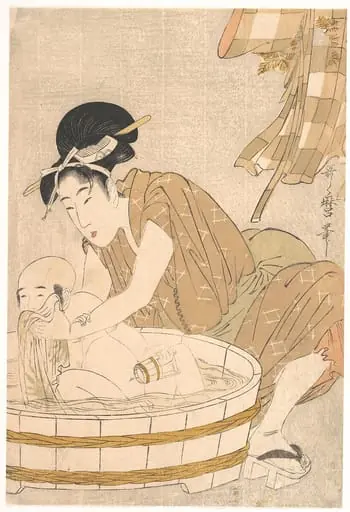 行水|Bathtime (Gyōzui)
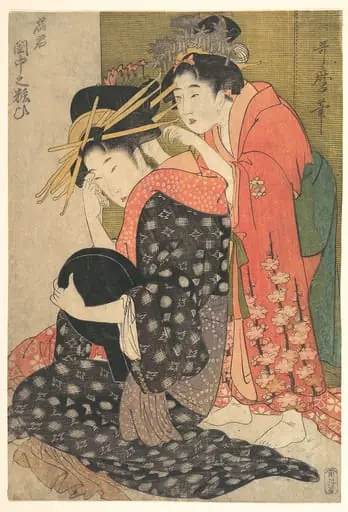 名君 閨中の粧ひ|The Oiran Yoso-oi Seated at Her Toilet
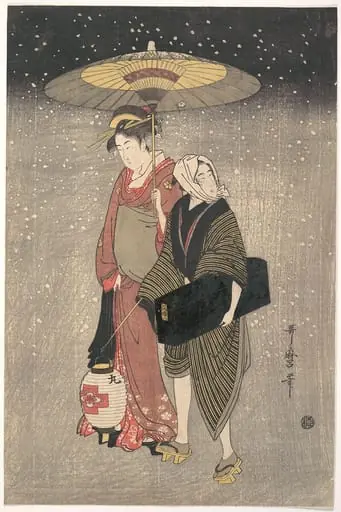 Untitled
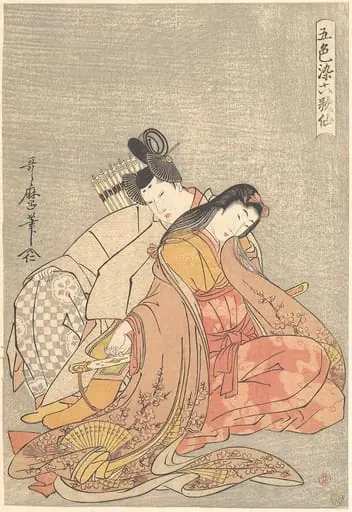 『五色染六歌仙』 在原業平と小野小町|“The Poet Ariwara no Narihira (825–880) and Ono no Komachi,” from the series Five Colors of Love for the Six Poetic Immortals (Goshiki-zome rokkasen)
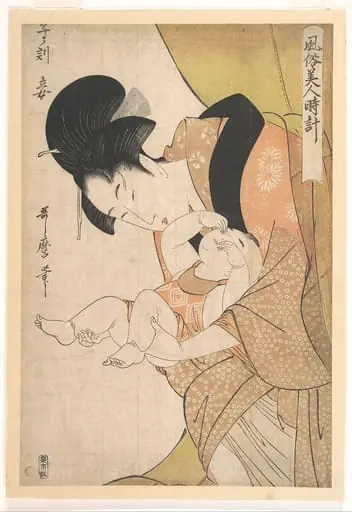 風俗美人時計 子ノ刻 妾|Midnight: Mother and Sleepy Child
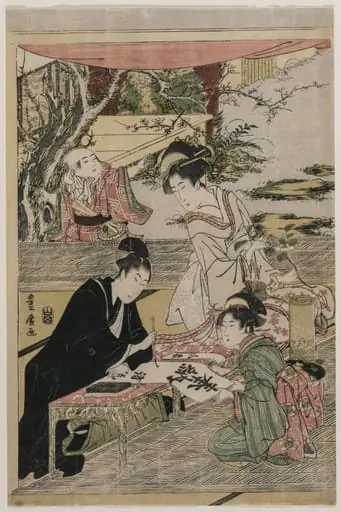 Young Man Writing at a Table
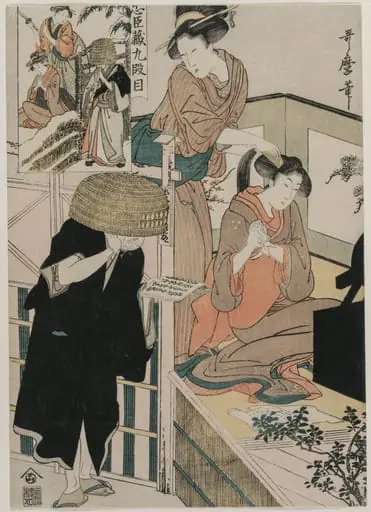 Chushingura: Act IX of The Storehouse of Loyalty
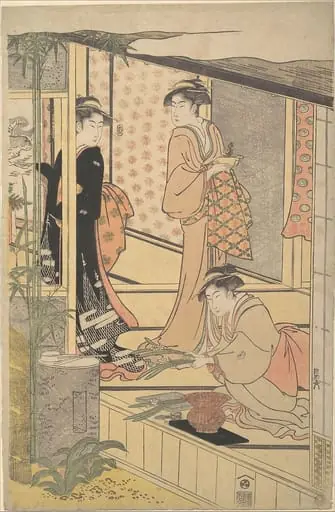 細田栄之画 正月準備|Preparing New Year Decorations
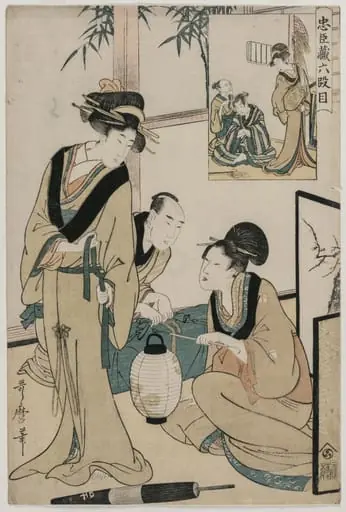 Chushingura: Act VI of The Storehouse of Loyalty
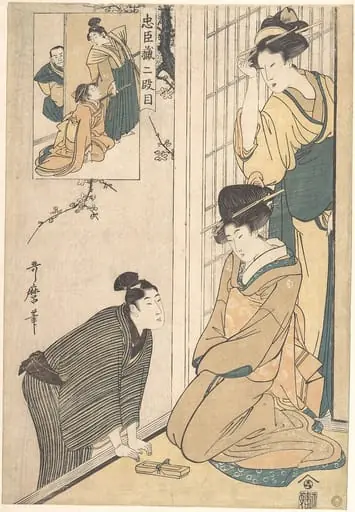 忠臣蔵二段目|A Young Man at the Side of a House
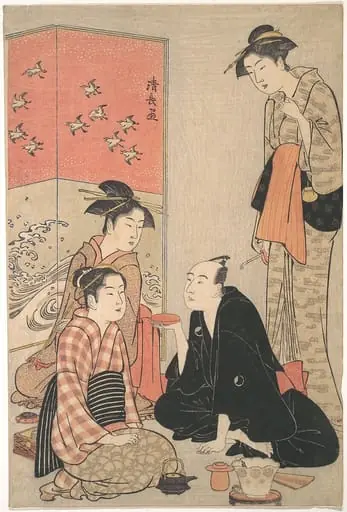 三代目沢村宗十郎と遊女|The Kabuki Actor Sawamura Sōjūrō III and Courtesans
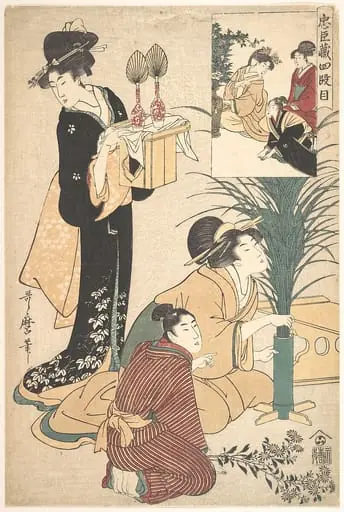 忠臣蔵四段目|A Woman and a Man Arranging Flowers for the Tsukimi (Moon Festival)
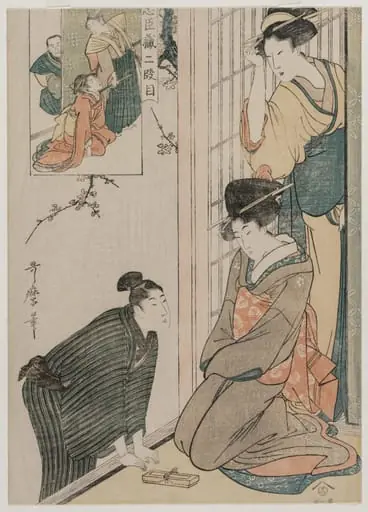 Chushingura: Act II of The Storehouse of Loyalty
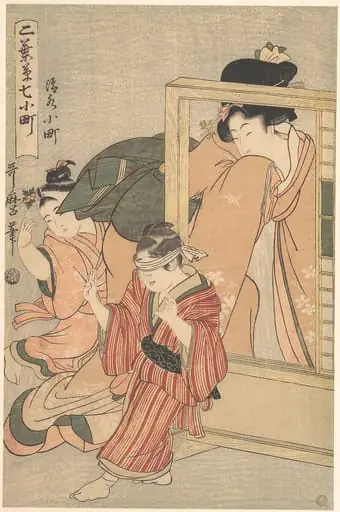 二葉草七小町 清水小町|Kiyomizu Komachi
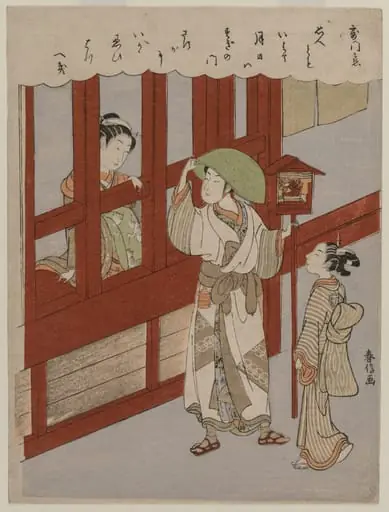 Love at the Brothel Gate
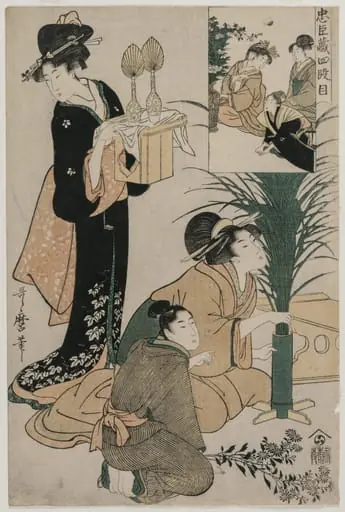 Chushingura: Act IV of The Storehouse of Loyalty