Artwork
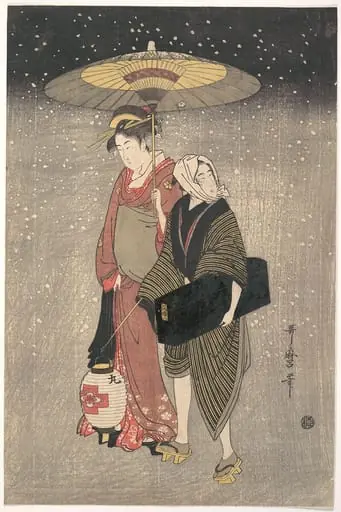
喜多川歌麿画 夜の雨に芸者と三味線箱を持つ女|Geisha and Attendant on a Rainy Night
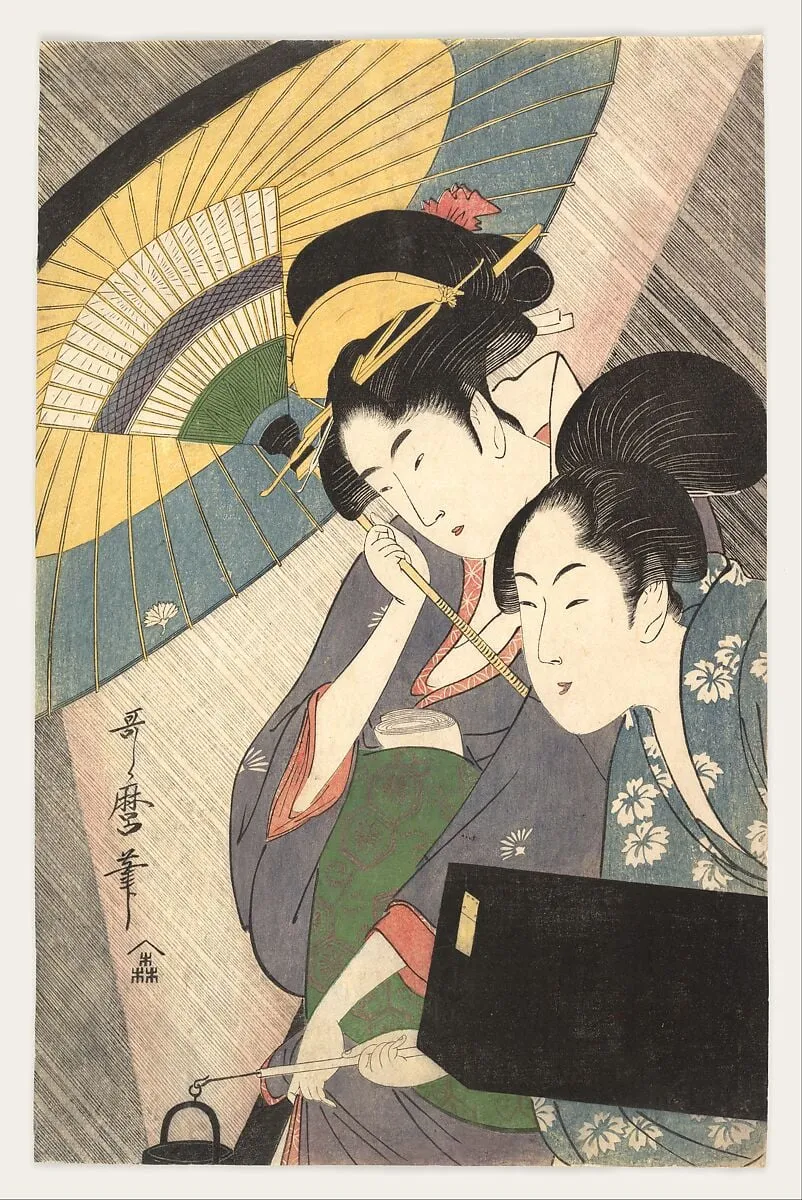
喜多川歌麿画 夜の雨に芸者と三味線箱を持つ女|Geisha and Attendant on a Rainy Night is an ink print by the Romanticist artist Kitagawa Utamaro. It dates from 1797 and is held in the collection of the Metropolitan Museum of Art.
About this work
Overview
Geisha and Attendant on a Rainy Night is a late 18th-century Japanese woodblock print by Kitagawa Utamaro, circa 1797, now part of The Metropolitan Museum of Art's collection.
Subject & Meaning
The print depicts two women in traditional attire on a rainy evening. One, likely a geisha, carries a yellow parasol with blue and green accents, while her attendant holds a black box with a gold latch. Their serene facial expressions convey calmness and tranquility.
Technique & Style
Executed in ink and color on paper, the work features Utamaro's characteristic attention to detail in clothing and accessories. The muted background of gray and beige hues contrasts with the vibrant, intricately patterned kimonos (blue with white flowers and green with red patterns).
History & Provenance
Created around 1797, the print is currently housed at The Metropolitan Museum of Art, though its history prior to acquisition is not detailed here.
Context
While often contextualized within Japanese ukiyo-e, the serene, emotionally nuanced depiction of everyday life might draw superficial comparisons to Western Romanticism's emphasis on mood and atmosphere, though it remains distinctly rooted in Japanese aesthetics.
Legacy
As a work by Utamaro, it contributes to the artist's reputation for capturing the beauty of women's lives in Edo-period Japan, though its specific influence or reception history is not highlighted in available information.
Artist & collection


 Untitled
 Untitled
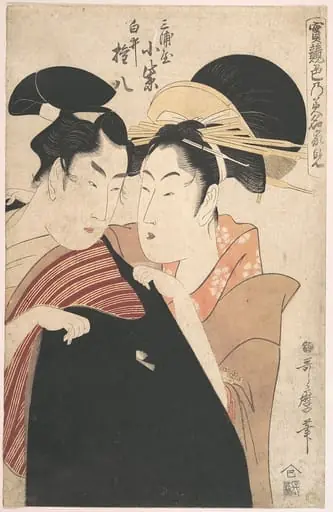 実競色乃美名家見 三浦屋小紫 白井権八|The Lovers Miura-ya Komurasaki and Shirai Gonpachi.
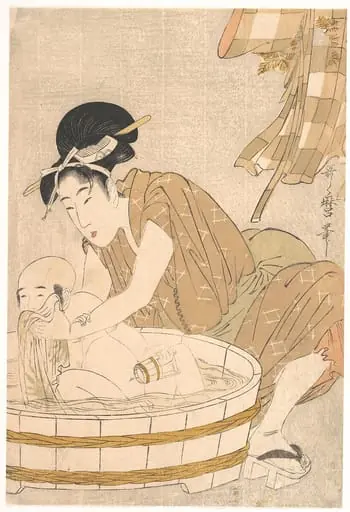 行水|Bathtime (Gyōzui)
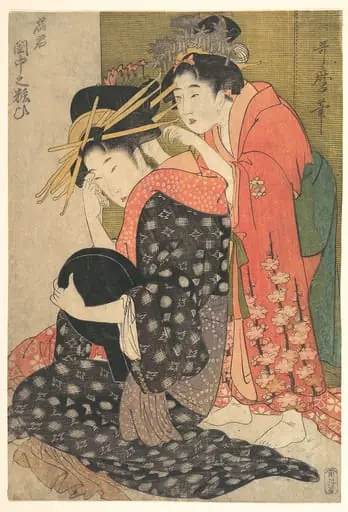 名君 閨中の粧ひ|The Oiran Yoso-oi Seated at Her Toilet
 Untitled
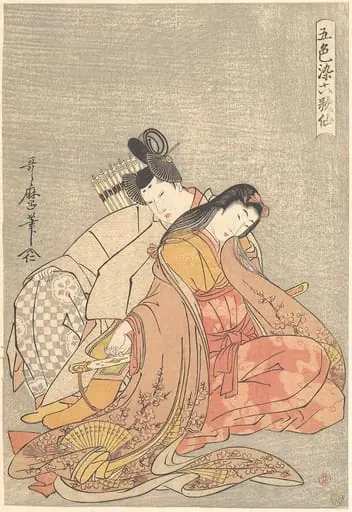 『五色染六歌仙』 在原業平と小野小町|“The Poet Ariwara no Narihira (825–880) and Ono no Komachi,” from the series Five Colors of Love for the Six Poetic Immortals (Goshiki-zome rokkasen)
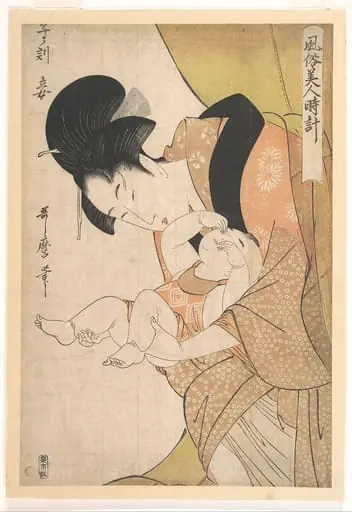 風俗美人時計 子ノ刻 妾|Midnight: Mother and Sleepy Child
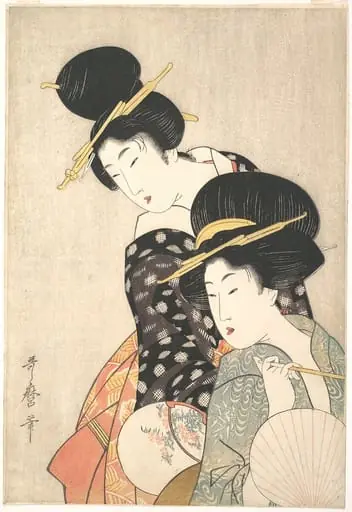 Untitled
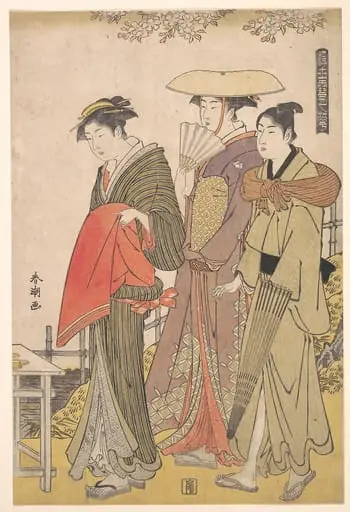 Ukiyoe Ga|The Beauty of the Floating World
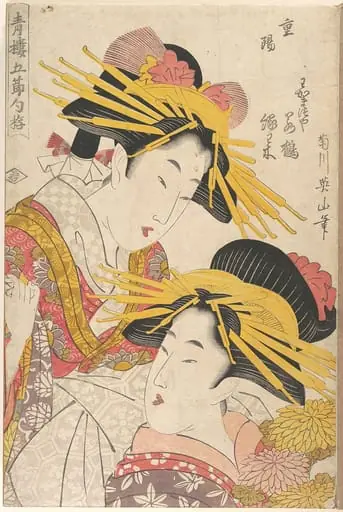 Untitled
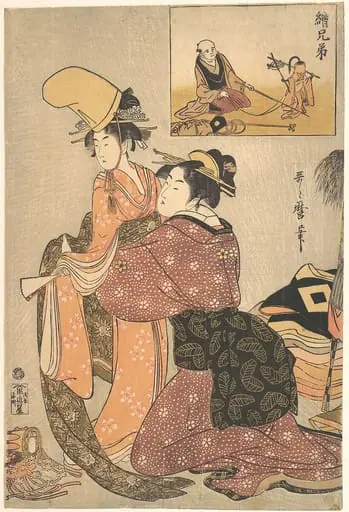 喜多川歌麿画 絵兄弟娘道成寺 見立猿廻し 「絵兄弟」|A Woman Dressing a Girl for a the Kabuki Dance “Musume Dojōji,” with “Brother Picture” (E-kyōdai) of a Monkey Trainer
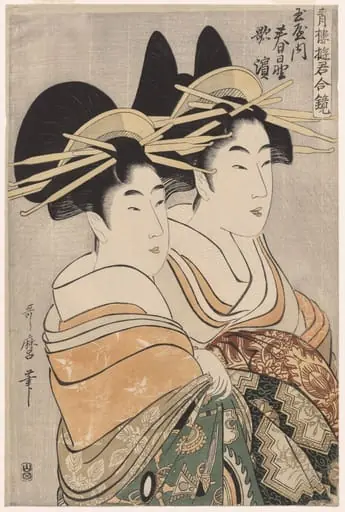 The Courtesans Kasugano and Utahama of Tamaya, from Courtesans of the Pleasure Quarters in Double Mirrors
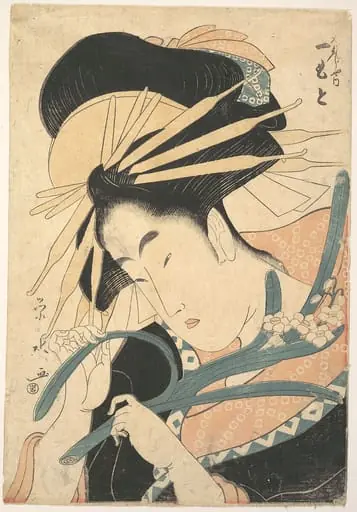 Untitled
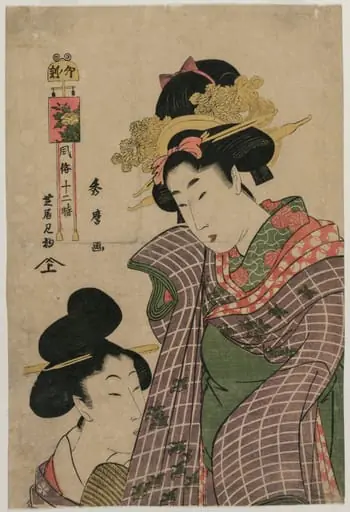 Going to the Kabuki Theater in the Hour of the Hare (From the Series The Twelve Hours with Daily Events)
 Untitled
 Pictures of Eastern Brocade (from the series Famous Products of Edo)
 The Hour of the Snake (from the series A Clock for Young Women)
 喜多川歌麿画 「美人気量競 五明楼 花扇」|“Hanaōgi of the Gomeirō,” from the series Comparing the Charms of Beauties (Bijin kiryō kurabe: Gomeirō Hanaōgi)