Artwork
Untitled
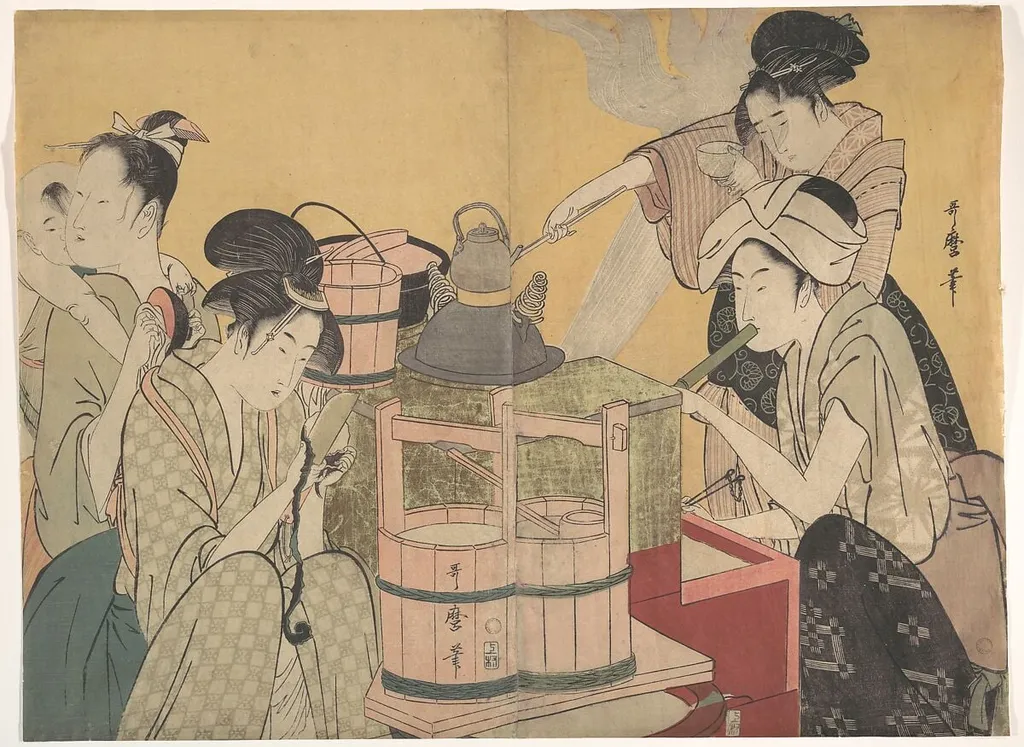
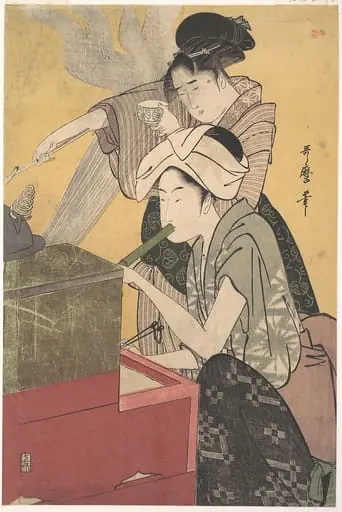
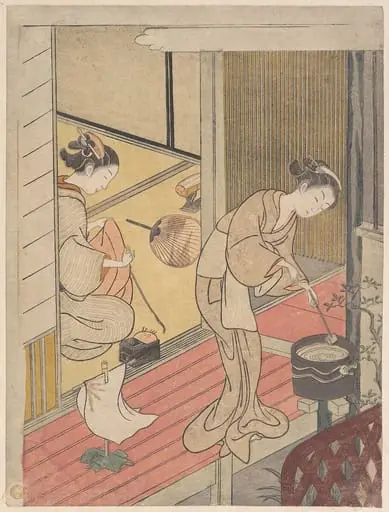
Untitled is an ink print by the Romanticist artist Kitagawa Utamaro. It dates from 1794 and is held in the collection of the Metropolitan Museum of Art.
About this work
Overview
The work is part of the Metropolitan Museum of Art’s collection and exemplifies the ukiyo-e tradition of capturing everyday life through printed imagery.
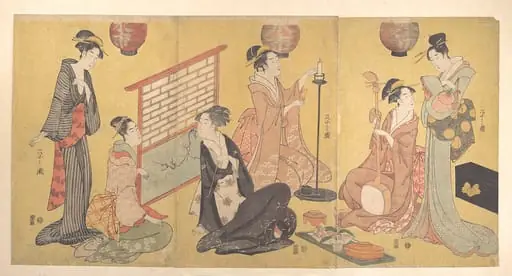
This diptych consists of two woodblock prints on paper, created around 1794 by Kitagawa Utamaro. It depicts an interior kitchen scene with four women engaged in domestic labor. The work is part of the Metropolitan Museum of Art’s collection and exemplifies the ukiyo-e tradition of capturing everyday life through printed imagery. The composition is divided across two panels, enhancing the sense of spatial depth and activity.
Subject & Meaning
The scene portrays women preparing food in a bustling kitchen, each absorbed in a specific task—pouring, stirring, or holding utensils. Their focused expressions and coordinated movements suggest a quiet rhythm of shared labor. Rather than idealizing the setting, Utamaro presents it as a working space, emphasizing diligence and routine. The absence of ornamentation or leisure underscores the dignity of domestic work in Edo-period society.
Technique & Style
Utamaro employed fine, precise lines to define forms and movement, with soft washes of pale green, blue, and earth tones applied over bold black outlines. The use of subtle color gradations conveys texture and atmosphere, while the depiction of rising steam adds a transient, lifelike quality. The diptych format allows for a wider, more immersive view, with figures arranged to guide the eye across both panels in a natural flow of action.
History & Provenance
Created during Utamaro’s peak years as a printmaker, this work reflects his interest in portraying women in private, unidealized moments. It was likely produced for the urban middle class, who valued prints as affordable art and cultural documentation. The diptych entered the Metropolitan Museum of Art’s collection in the 20th century, where it remains part of its extensive holdings of Edo-period prints.
Context
In late 18th-century Edo, ukiyo-e prints often depicted scenes from the pleasure quarters or daily life. Utamaro distinguished himself by focusing on women’s inner lives and labor, moving beyond mere decoration. Kitchen scenes like this one were uncommon in printmaking, making this work a rare glimpse into the domestic sphere, where social roles and gendered labor were quietly but clearly defined.
Legacy
This diptych contributes to the broader recognition of Utamaro’s nuanced portrayal of women outside the realm of courtesans or beauties. It influenced later artists interested in realism and the aesthetics of ordinary life. Today, it stands as a quiet testament to the visual documentation of labor in pre-modern Japan, offering insight into the rhythms of household existence during the Edo period.
Artist & collection


 Untitled
 Untitled
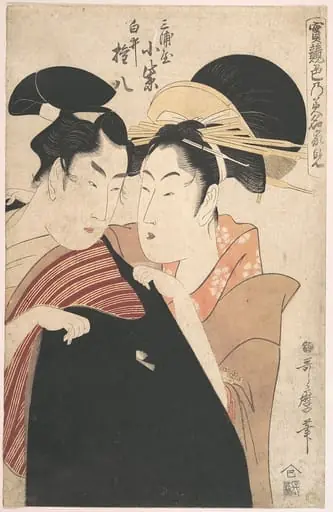 実競色乃美名家見 三浦屋小紫 白井権八|The Lovers Miura-ya Komurasaki and Shirai Gonpachi.
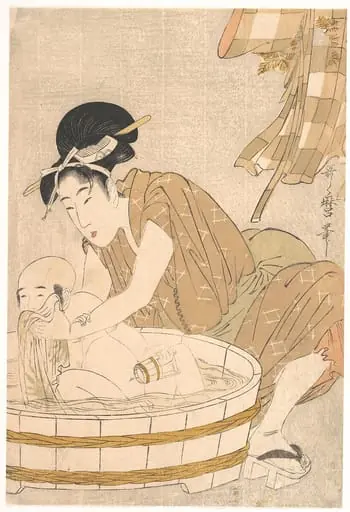 行水|Bathtime (Gyōzui)
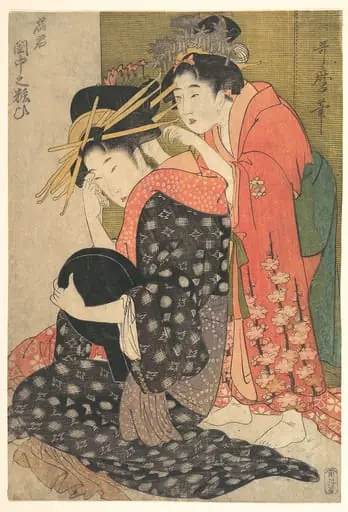 名君 閨中の粧ひ|The Oiran Yoso-oi Seated at Her Toilet
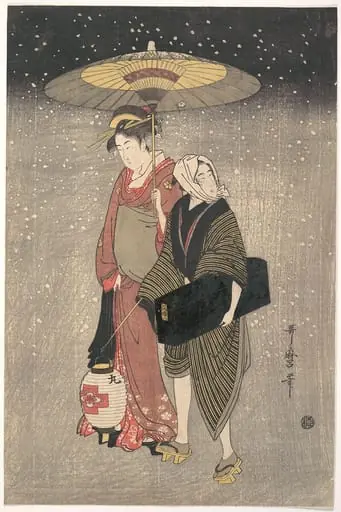 Untitled
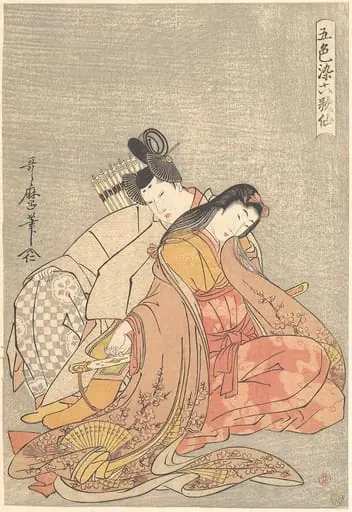 『五色染六歌仙』 在原業平と小野小町|“The Poet Ariwara no Narihira (825–880) and Ono no Komachi,” from the series Five Colors of Love for the Six Poetic Immortals (Goshiki-zome rokkasen)
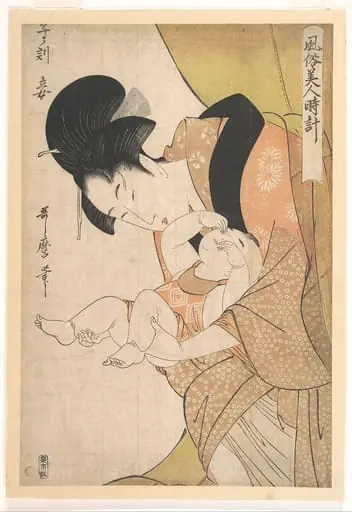 風俗美人時計 子ノ刻 妾|Midnight: Mother and Sleepy Child
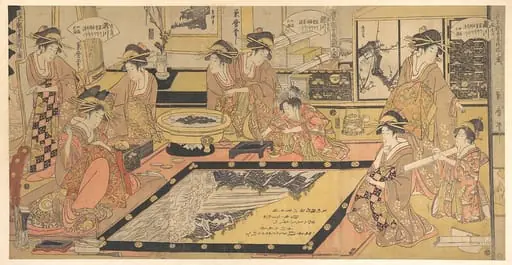 『浅草観音奉掛額之 図』 「扇屋内滝川 富川、粂川、玉川、津川、歌川、清川 め浪、お浪」|A Votive Picture to Be Donated to the Kannon of Asakusa (Asakusa Kannon hō kakegaku no zu), by Takigawa of the Ōgiya, Kamuro Menami and Onami, with Tomikawa, Kumegawa, Tamagawa, Tsugawa, Utagawa, and Kiyokawa
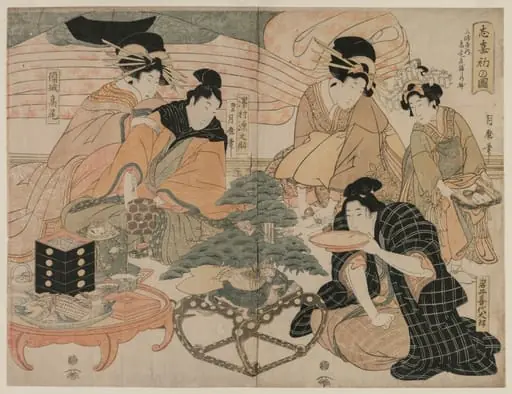 Picture of the First Visit to the Pleasure Quarters
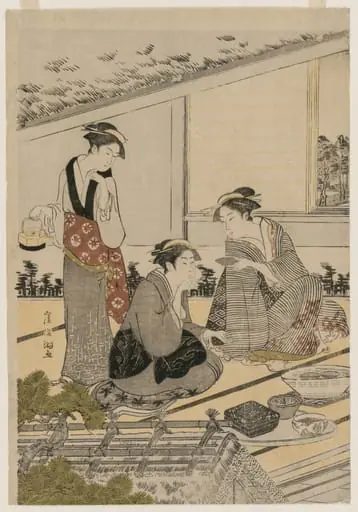 Women in a Tea House
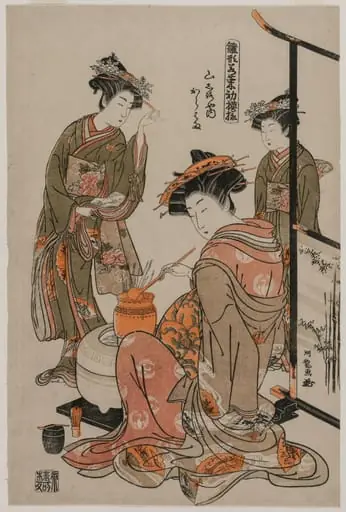 The Courtesan Karahama of Yamashiroya Performing the Tea Ceremony (from the series Models for Fahions: New Designs as Fresh as Young Leaves)
 Untitled
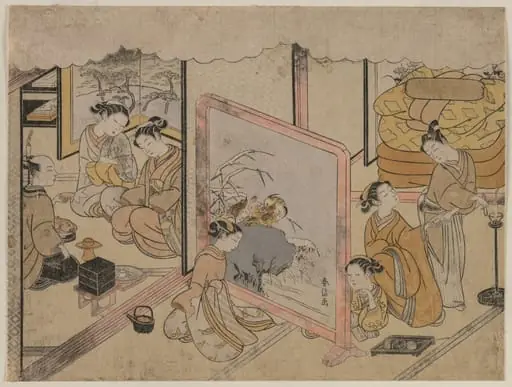 Drinking a Cup of Wine Before Retiring for Bed (From an Untitled Series)
 Untitled
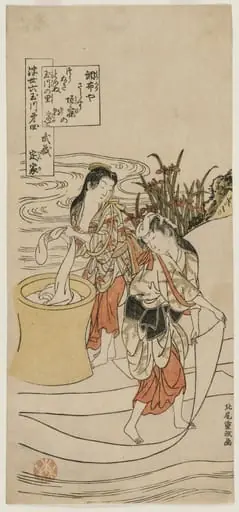 The Chofu Tama River in Musashi Province (from the series The Six Tama Rivers of the Floating World)
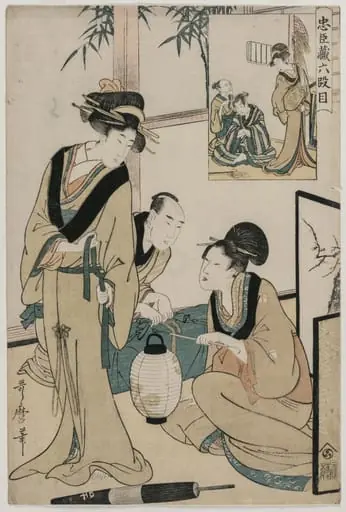 Chushingura: Act VI of The Storehouse of Loyalty
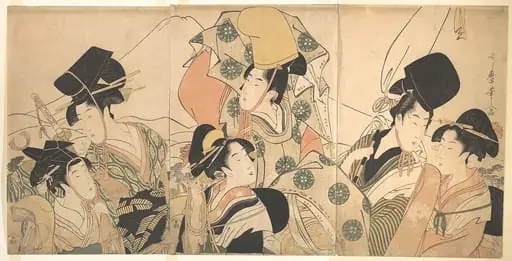 Untitled
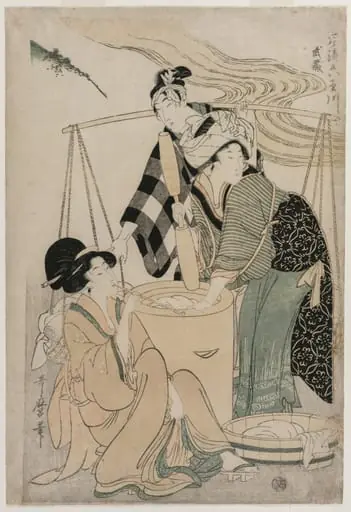 Settsu Province from the series Fashionable Six Jewel Rivers (Furyu Mu Tamagawa)
 Untitled