Artwork
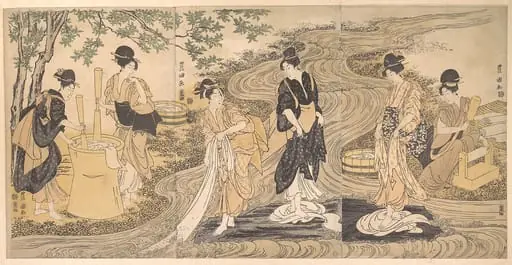
風流六玉川 山城 近江 摂津|Women and Children on the Banks of a Stream
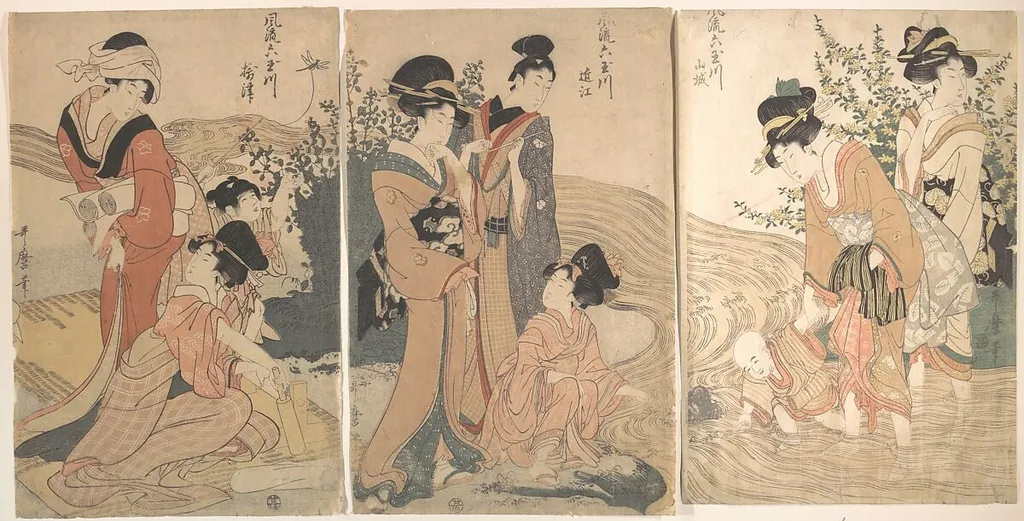
風流六玉川 山城 近江 摂津|Women and Children on the Banks of a Stream is an ink print by the Romanticist artist Kitagawa Utamaro. It dates from 1780 and is held in the collection of the Metropolitan Museum of Art.
About this work
Overview
Created in 1780 by the Edo‑period printmaker Kitagawa Utamō, this three‑panel woodblock work depicts a tranquil riverside scene populated by women and children. Executed in ink and color on paper, the composition is now part of the collection of the Metropolitan Museum of Art.
Subject & Meaning
The panels present everyday leisure along a gently rippling stream: two elegantly dressed women stand or kneel, another holds a fan, while a child engages with a small animal. The figures are arranged in casual poses that suggest a moment of quiet domestic activity, reflecting the genre tradition of portraying ordinary life.
Technique & Style
Utamō employs flat areas of pink, green and earthy brown, outlined with bold black lines that define forms without the use of chiaroscuro. The simple geometric shapes and clear contours give each figure a distinct presence, while the minimal background of bushes and distant hills situates the scene without overwhelming it.
History & Provenance
The triptych was produced as a commercial print in the late eighteenth century, a period when ukiyo‑e images of fashionable society were in high demand. After circulating in Japan, the work entered the Western art market and was eventually acquired by the Metropolitan Museum of Art, where it remains on display.
Artist & collection


 Untitled
 Untitled
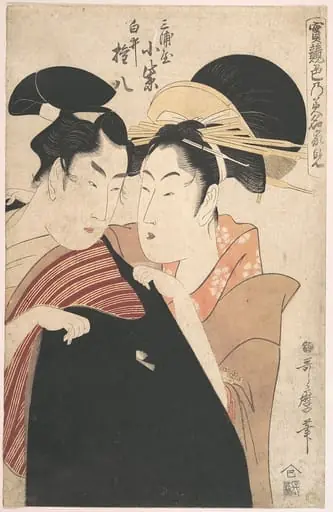 実競色乃美名家見 三浦屋小紫 白井権八|The Lovers Miura-ya Komurasaki and Shirai Gonpachi.
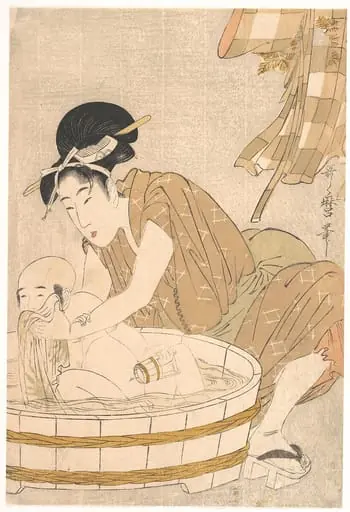 行水|Bathtime (Gyōzui)
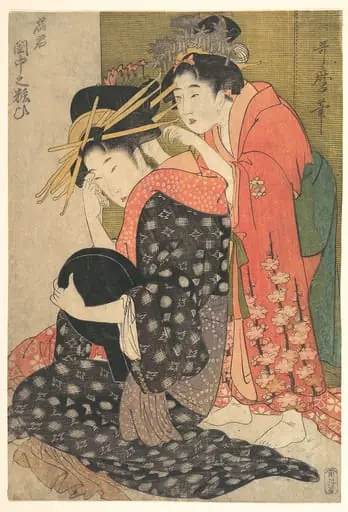 名君 閨中の粧ひ|The Oiran Yoso-oi Seated at Her Toilet
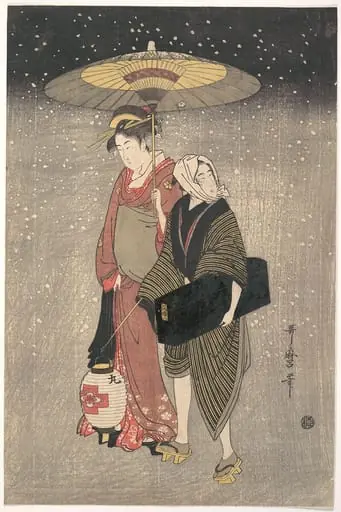 Untitled
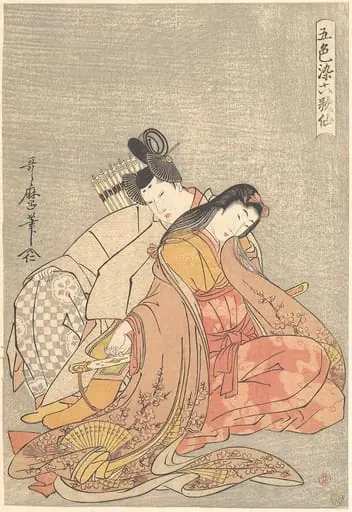 『五色染六歌仙』 在原業平と小野小町|“The Poet Ariwara no Narihira (825–880) and Ono no Komachi,” from the series Five Colors of Love for the Six Poetic Immortals (Goshiki-zome rokkasen)
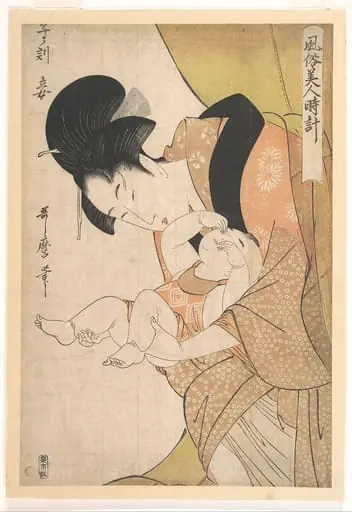 風俗美人時計 子ノ刻 妾|Midnight: Mother and Sleepy Child
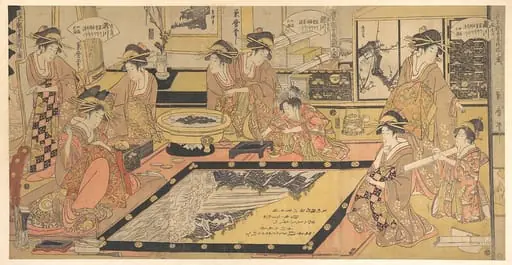 『浅草観音奉掛額之 図』 「扇屋内滝川 富川、粂川、玉川、津川、歌川、清川 め浪、お浪」|A Votive Picture to Be Donated to the Kannon of Asakusa (Asakusa Kannon hō kakegaku no zu), by Takigawa of the Ōgiya, Kamuro Menami and Onami, with Tomikawa, Kumegawa, Tamagawa, Tsugawa, Utagawa, and Kiyokawa
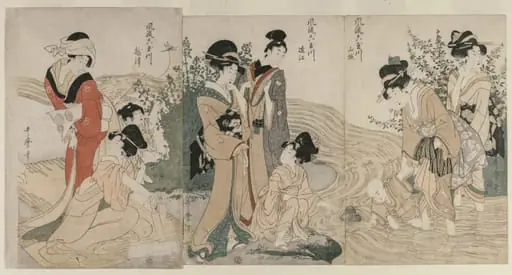 Musashi, Omi, Yamashiro, and Settsu Provinces from the series Fashionable Six Jewel Rivers (Furyu Mu Tamagawa)
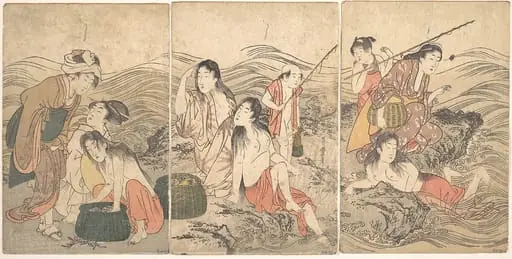 Untitled
 Untitled
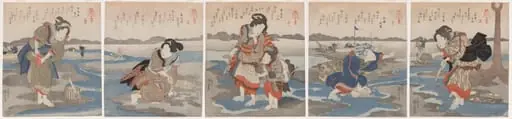 A Low Tide Pentaptych
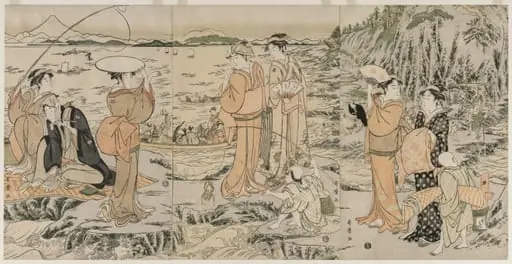 Fishing at Iwaya on Enoshima
 Untitled
 Untitled
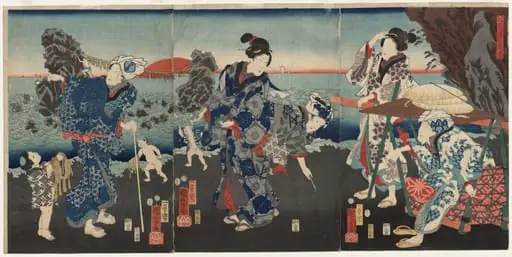 Splendid View at Futamigaura Bay
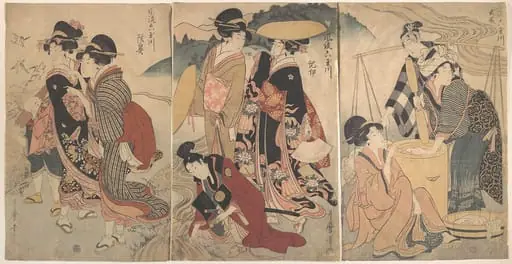 風流六玉川 武蔵 紀伊 陸奥|Women and a Man in the Country; Some pageant(?)