Artwork
舞楽|Courtier Playing a Flute to Accompany a Bugaku Dance
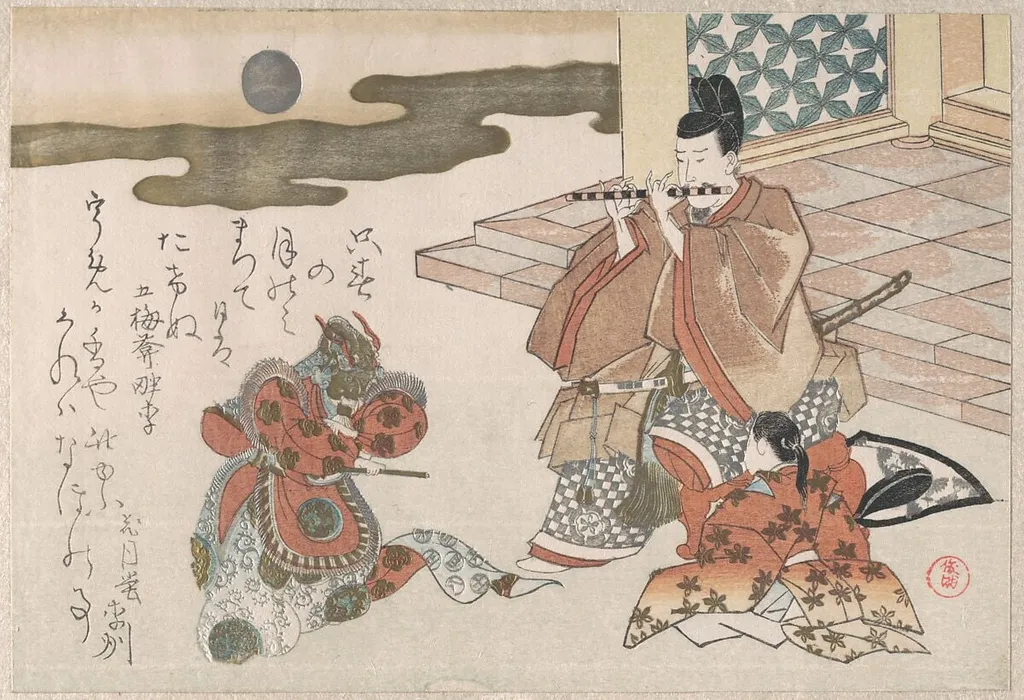
舞楽|Courtier Playing a Flute to Accompany a Bugaku Dance is an ink print by the Romanticist artist Kubo Shunman. It dates from 1810 and is held in the collection of the Metropolitan Museum of Art.
About this work
Overview
Created around 1810 by the Edo‑period artist Kubo Shunman, this woodblock print belongs to a surimono album—privately commissioned prints distinguished by their refined execution. Executed in ink and color on paper, the image is now part of the collection of the Metropolitan Museum of Art.
Subject & Meaning
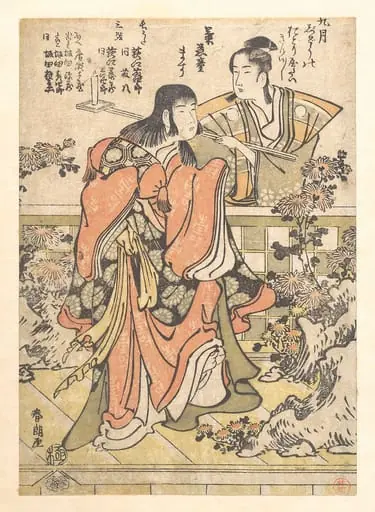
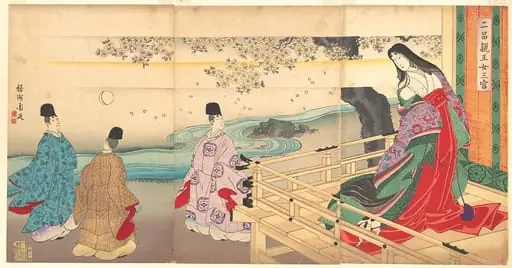
The scene depicts two courtly figures on a tiled veranda beneath a cloudy sky. A seated musician in a brown robe with checkered sleeves plays a long transverse flute, while a kneeling attendant in a vivid red and gold costume, whose garment trails like a dragon’s tail, holds a fan. Japanese poetry inscribed around the figures adds a lyrical, contemplative dimension to the performance.
Technique & Style
Shunman employs precise line work to delineate the intricate patterns of the costumes and the architectural details of the porch. Subtle washes of color define the cloudy atmosphere and the moonlit background, while the use of contrasting reds and golds highlights the attendant’s attire. The careful balance of line and pigment typifies the delicate aesthetic of surimono prints.
History & Provenance
The print was produced as part of a limited‑edition album intended for a select audience of literati and patrons. After circulating in private collections during the Edo period, it entered the holdings of the Metropolitan Museum of Art, where it is displayed as an example of early nineteenth‑century Japanese printmaking.
Artist & collection


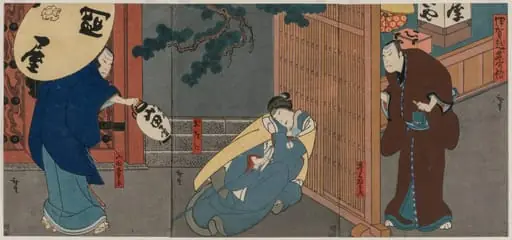 A Tale of Valor at Iga Pass
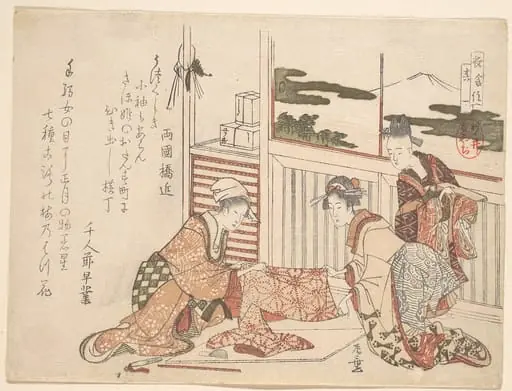 衣食住|Attire
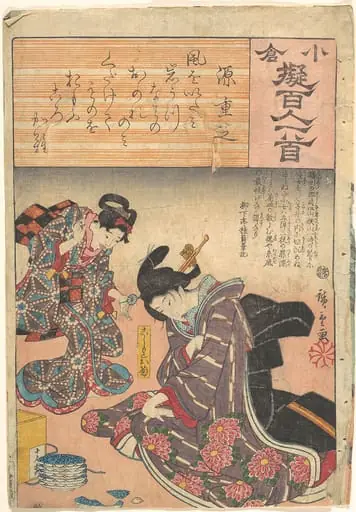 Untitled
 Untitled
 Untitled
 Untitled
 Untitled
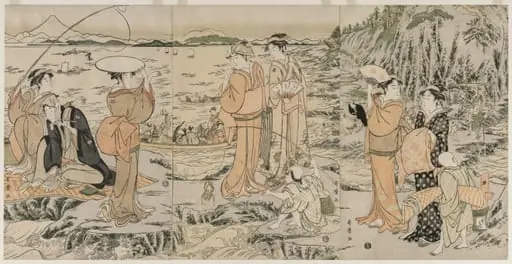 Fishing at Iwaya on Enoshima
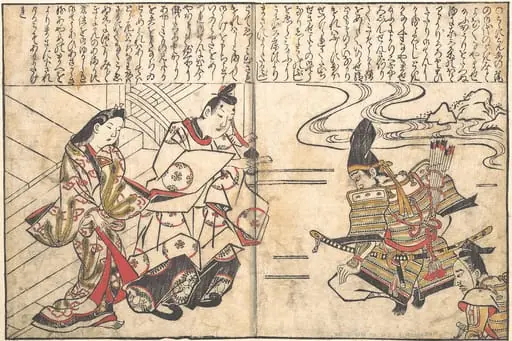 Untitled
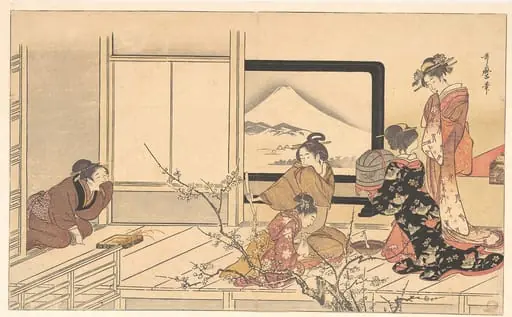 喜多川歌麿画 『男踏歌』 鶯の餌すり|“Preparing Food for the Warbler,” from the album Men’s Stamping Dance (Otoko dōka, uguisu no esa suri)
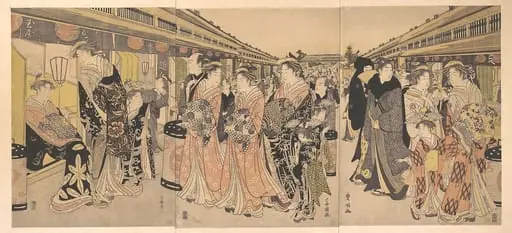 吉原仲の町花魁道中|Courtesans Promenading on the Nakanochō in Yoshiwara
 二品親王女三宮|The Third Princess and Kashiwagi, from Chapter 34, “New Herbs I (Wakana I)” (Nihon shinnō onna sannomiya)