Artwork
Untitled
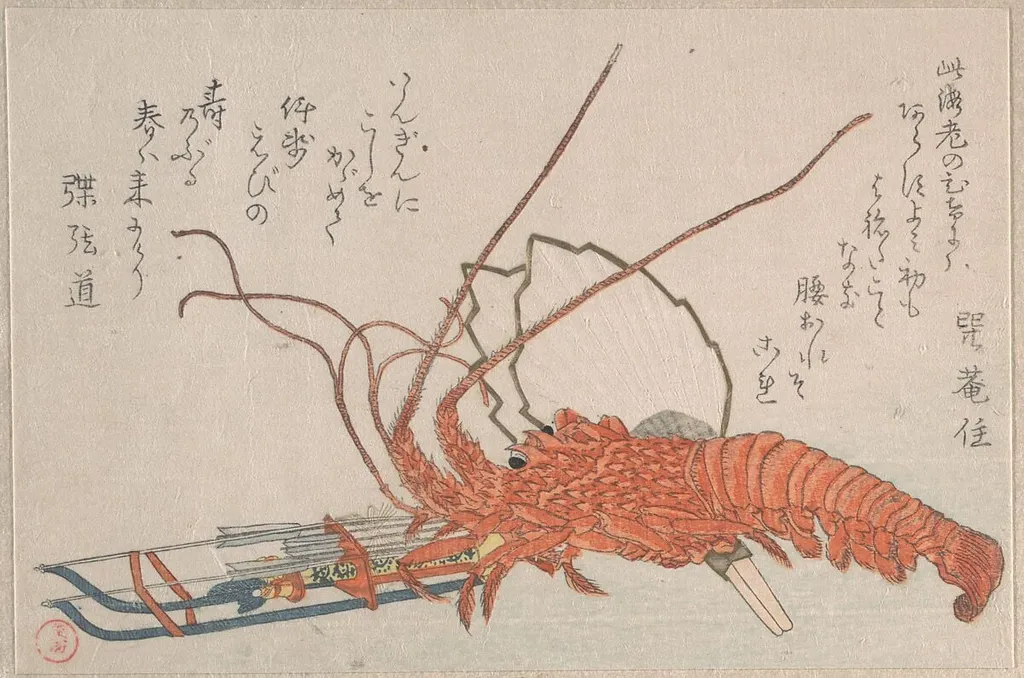
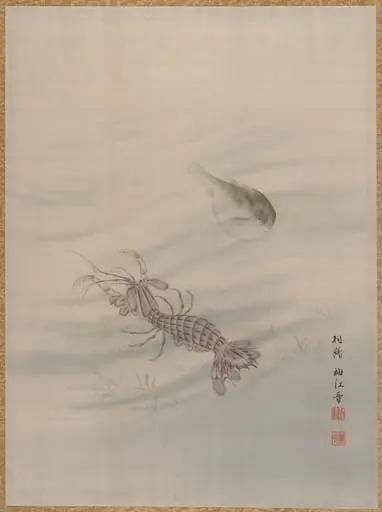
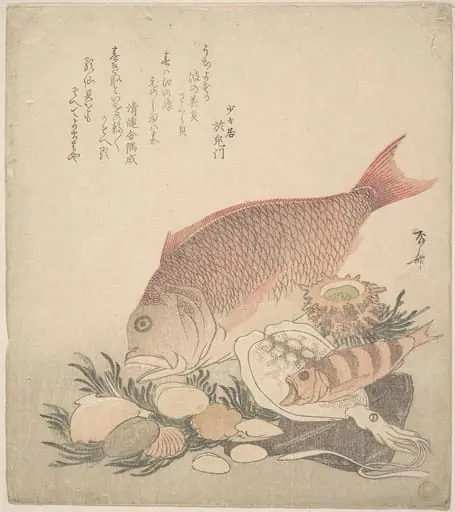
Untitled is an ink print by the Baroque artist Kubo Shunman. It dates from 1800 and is held in the collection of the Metropolitan Museum of Art.
About this work
Overview
The composition balances naturalistic detail with playful exaggeration, characteristic of surimono’s blend of wit and refinement.
This woodblock print, dated around 1800, is attributed to Kubo Shunman and belongs to the surimono genre—privately commissioned prints often circulated among literary and artistic circles. Executed in ink and color on paper, it features a strikingly oversized red lobster atop a miniature boat. The composition balances naturalistic detail with playful exaggeration, characteristic of surimono’s blend of wit and refinement.
Subject & Meaning
The print depicts a colossal lobster, its body rendered with intricate linework, dwarfing a small vessel carrying a solitary figure. The disproportionate scale suggests a humorous or symbolic twist, possibly alluding to folklore or poetic metaphors common in Edo-period culture. The lobster, often associated with the sea’s unpredictability, may serve as a whimsical commentary on human vulnerability or the absurdity of perception.
Technique & Style
The artist employs bold, flat areas of color—crimson for the lobster, indigo for the boat—to create visual contrast. Fine lines define the lobster’s textured carapace and curved claws, using controlled cross-hatching to suggest depth and surface. The boat’s minimal details, including a single sail and figure, enhance the lobster’s dominance. Japanese calligraphy frames the image, integrating text as a compositional element rather than mere annotation.
History & Provenance
Created during the late Edo period, this surimono was likely produced for a private patron or literary group, as was typical of the genre. It entered the collection of The Metropolitan Museum of Art through documented acquisition, preserving its original condition. While the exact commissioning context remains unrecorded, its survival reflects the enduring interest in Edo-period print culture among Western collectors.
Context
Surimono prints emerged in the late 18th century as luxury items, often celebrating seasonal themes, poetry, or personal milestones. Unlike mass-produced ukiyo-e, they were limited in number and featured refined techniques and materials. This print aligns with the genre’s tradition of blending visual wit with literary allusion, appealing to educated audiences who appreciated subtle irony and aesthetic precision.
Legacy
Though not widely known outside specialist circles, this work exemplifies the quiet innovation of Edo-period printmakers who pushed beyond commercial constraints. Its playful distortion of scale and integration of text influenced later Japanese artists exploring surrealism and narrative ambiguity. Today, it remains a quiet testament to the intellectual and artistic depth of private print culture in 19th-century Japan.
Artist & collection


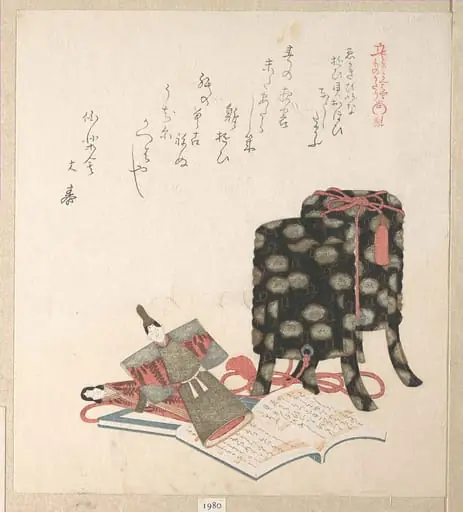
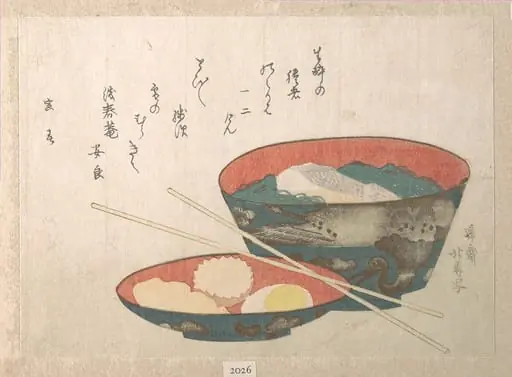 Untitled
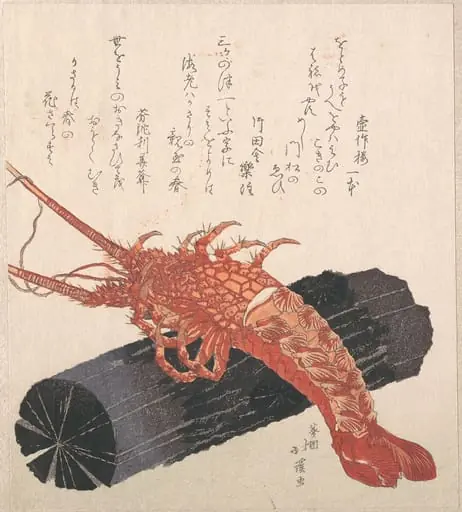 Untitled
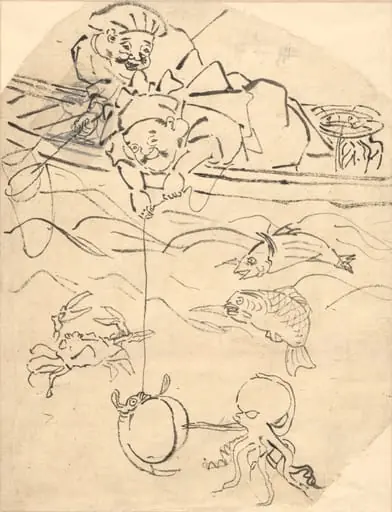 Daikoku and Ebisu, Two of the Seven Gods of Happiness
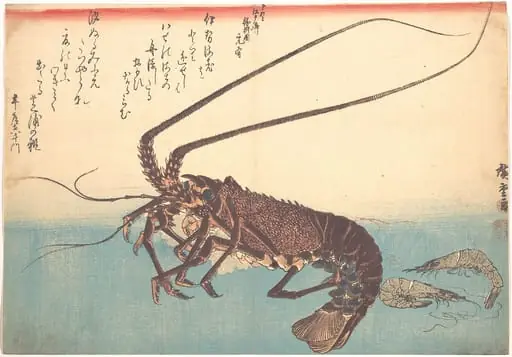 魚づくし 伊勢海老 芝蝦|Ise-ebi and Shiba-ebi, from the series Uozukushi (Every Variety of Fish)
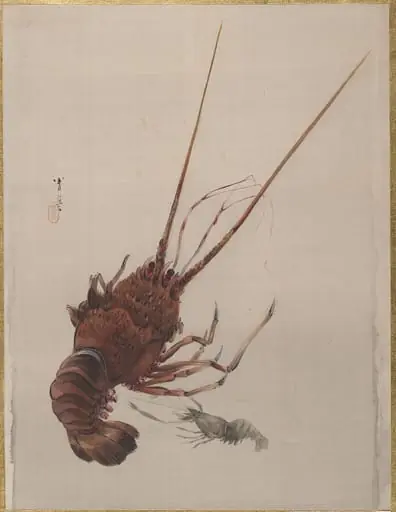 Untitled
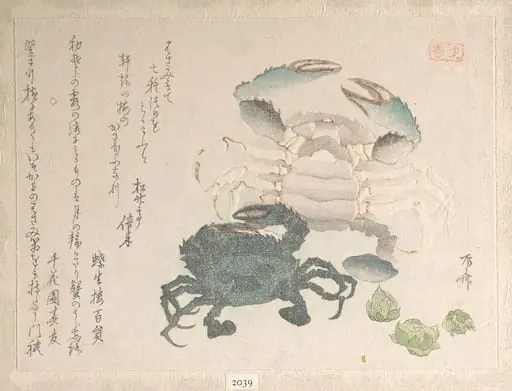 『春雨集』 摺物帖柳々居辰斎画 蟹と蓮華|Spring Rain Collection (Harusame shū), vol. 1: Crabs and Lotus Blossoms
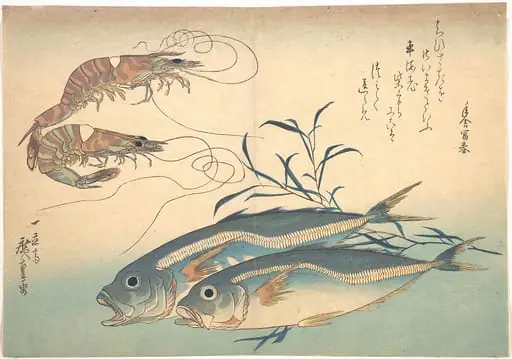 魚づくし 車海老 鯵にたで|Aji Fish and Kuruma-ebi, from the series Uozukushi (Every Variety of Fish)
 Untitled
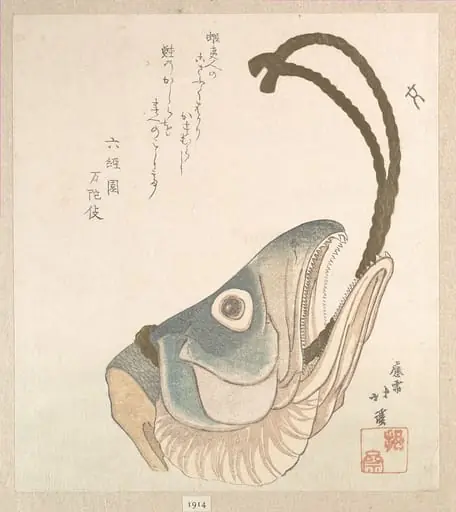 鮭頭|Head of a Salmon
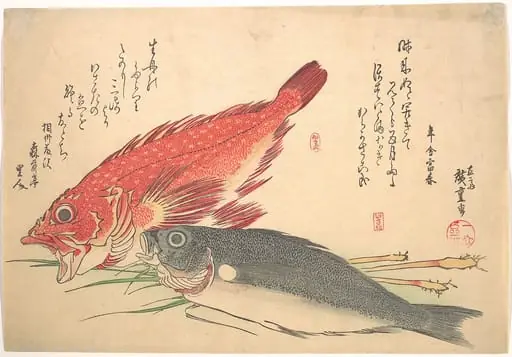 魚づくし かさご いさきに生姜|Isaki and Kasago Fish, from the series Uozukushi (Every Variety of Fish)
 Untitled
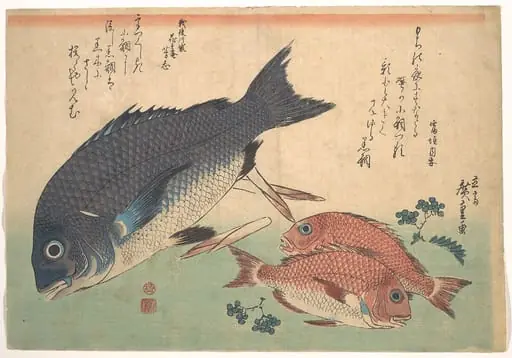 魚づくし 黒鯛 小鯛に山椒|Kurodai and Kodai Fish with Bamboo Shoots and Berries, from the series Uozukushi (Every Variety of Fish)