Artwork
Die Greffinn (The Countess)
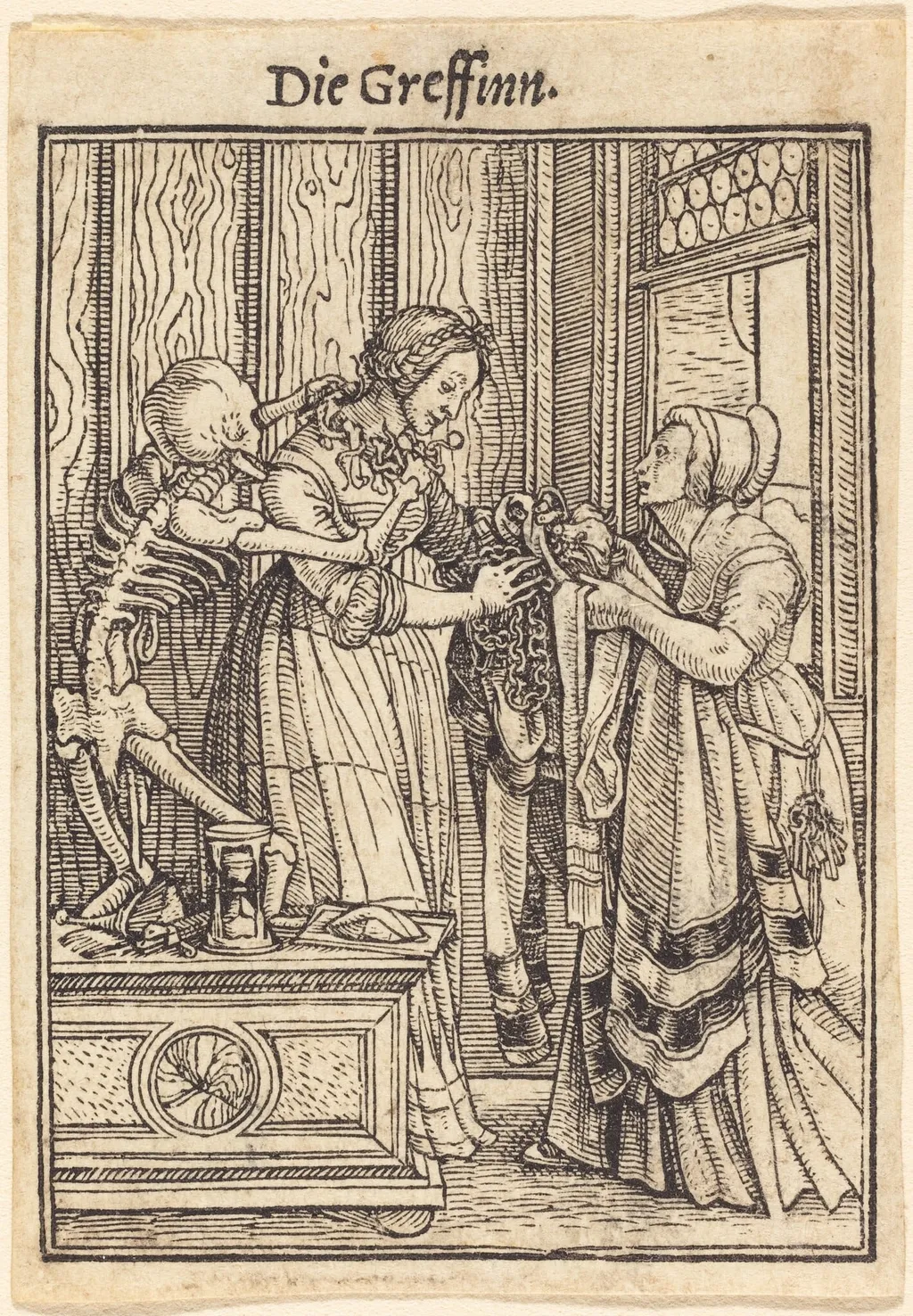
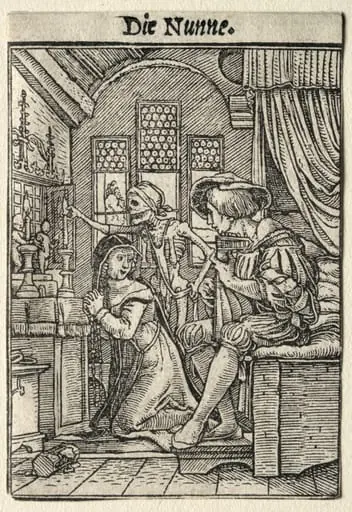
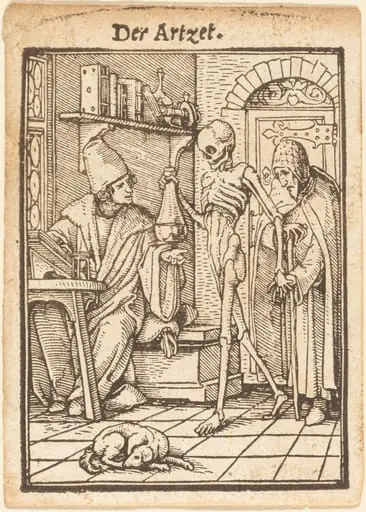
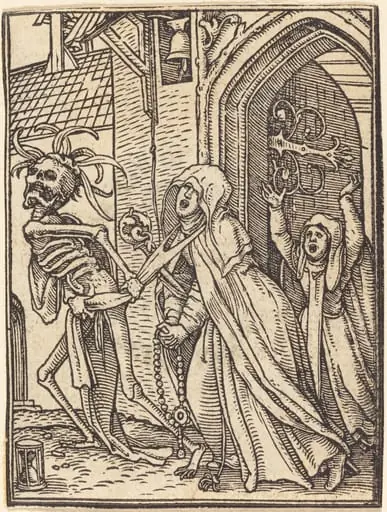
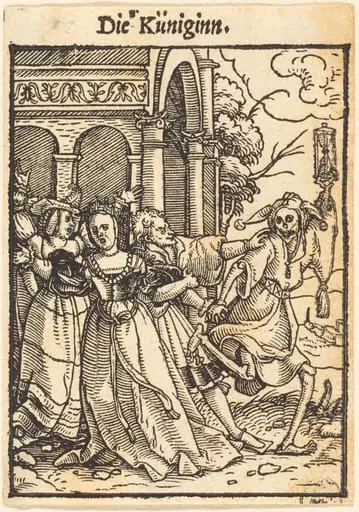
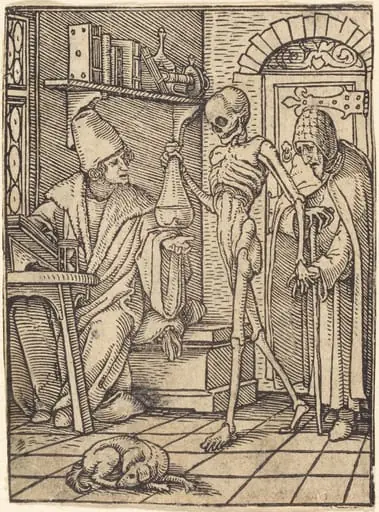
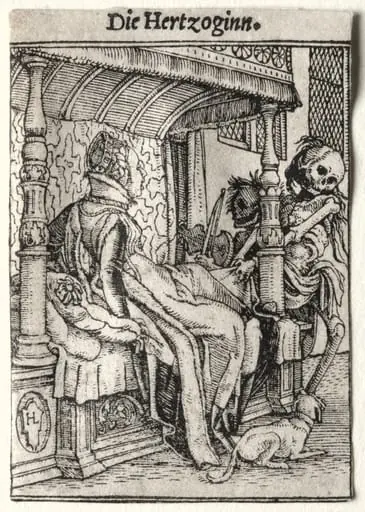
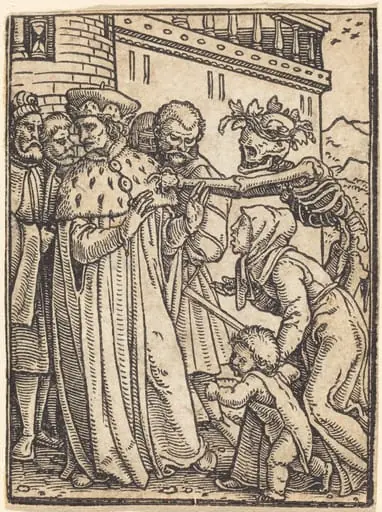
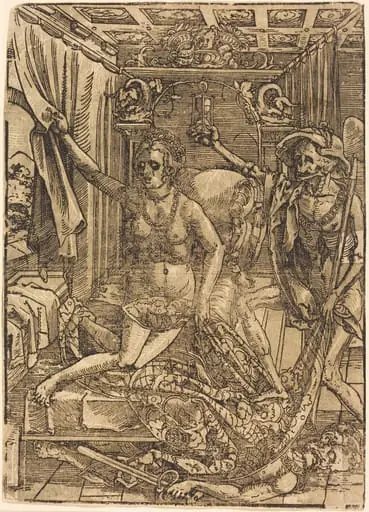
Die Greffinn (The Countess) is an ink print by the Renaissance artist Hans Lützelburger. It dates from 1526 and is held in the collection of the National Gallery of Art.
About this work
Overview
This piece was part of a broader tradition of collaborative printmaking, where artists provided compositions and craftsmen executed the blocks.
Created around 1526, *Die Greffinn* is a woodcut by Hans Lützelburger, a master blockcutter active in Augsburg. Though he rarely claimed authorship of designs, his technical precision made him a key figure in producing illustrated prints. This piece was part of a broader tradition of collaborative printmaking, where artists provided compositions and craftsmen executed the blocks. Lützelburger’s role was instrumental in translating Holbein’s aesthetic into durable, widely distributed imagery.
Subject & Meaning
The scene portrays a noblewoman holding an infant, flanked by two figures: a man leaning on a cane and a woman reaching toward the child with her gaze averted. The presence of a cup on a table and fruit in a basket beneath a window suggests domesticity, yet the title—*The Countess*—and the somber lighting imply a symbolic layer. Such imagery in early 16th-century German prints often conveyed moral or allegorical themes, possibly reflecting on lineage, mortality, or the burdens of aristocratic duty.
Technique & Style
Lützelburger’s carving exhibits exceptional control, with fine lines defining textures of fabric, wood grain, and firelight. The composition relies on chiaroscuro effects achieved through dense hatching and selective negative space, enhancing the quiet intimacy of the scene. Though stylistically aligned with Holbein’s refined draftsmanship, the execution reflects the blockcutter’s hand—precise, restrained, and attuned to the mechanical demands of relief printing.
History & Provenance
The print emerged during a period when Augsburg was a hub for commercial print production. Lützelburger’s workshop was known for its collaboration with major designers, including Holbein. While the exact provenance of this specific impression is undocumented, similar woodcuts from his studio circulated widely across German-speaking regions, often bound in illustrated books or sold as single sheets to educated urban audiences.
Context
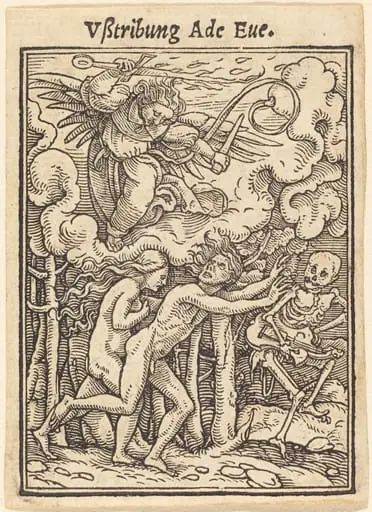
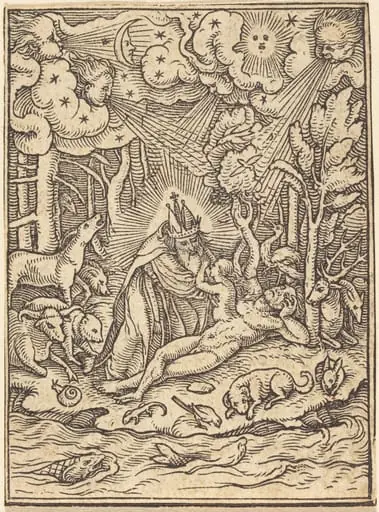
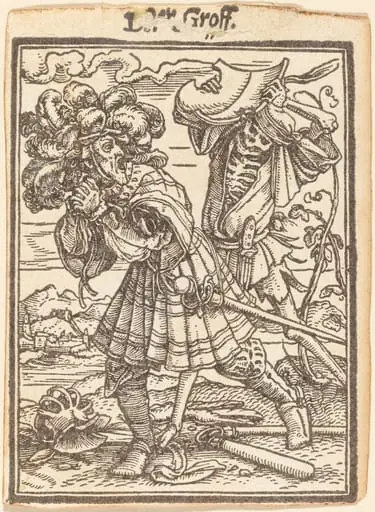
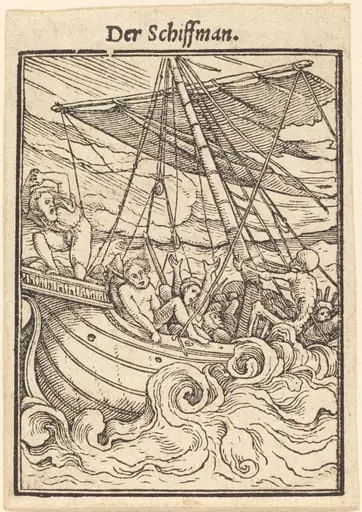
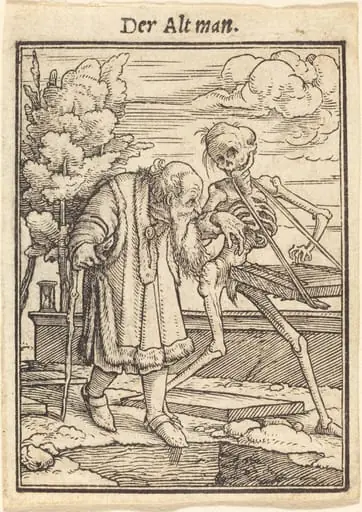
In early 16th-century Germany, woodcuts served both devotional and secular purposes, often encoding moral lessons within everyday scenes. The depiction of aristocratic figures in domestic settings was not uncommon, especially in works influenced by humanist ideals. Lützelburger’s output, including his contributions to Holbein’s *Dance of Death*, reflects a cultural moment where visual narrative was used to mediate between social status and existential themes.
Legacy
Lützelburger’s work helped elevate the status of the blockcutter from mere artisan to essential collaborator in the printmaking process. Though his name was often overshadowed by designers like Holbein, his technical contributions preserved the integrity of complex compositions across multiple impressions. His legacy endures in the precision of surviving prints, which remain key examples of early modern German print culture.
Artist & collection

Artist
Hans Lützelburger (died June 1526), also known as Hans Franck, was a German blockcutter ("formschneider") for woodcuts, regarded as one of the finest of his day.