Artwork
Lady von Eckh (born Piencsenau)
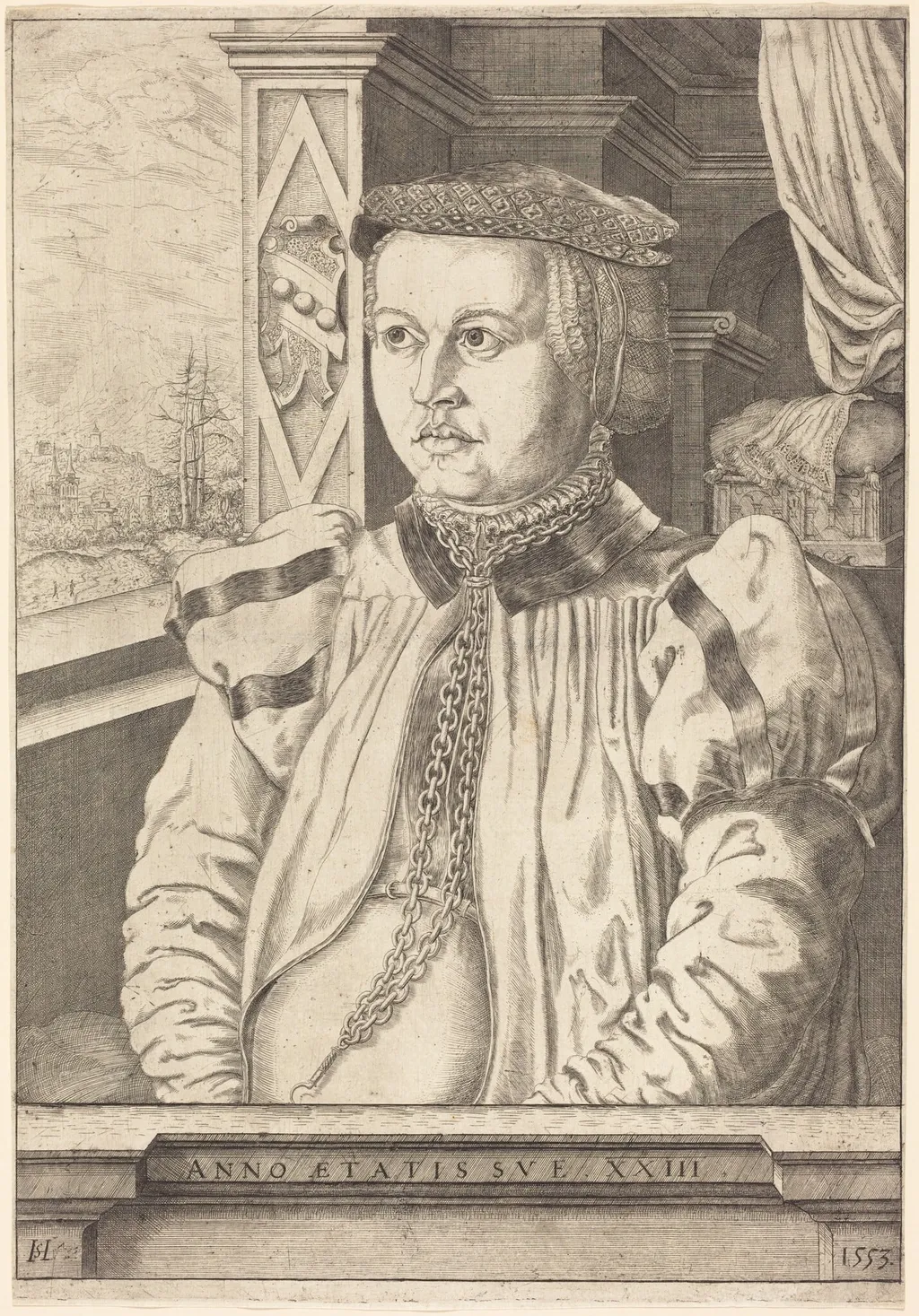
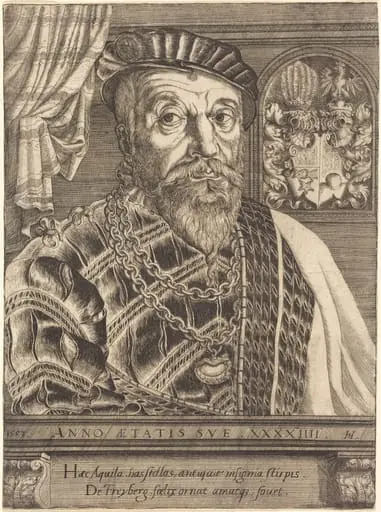
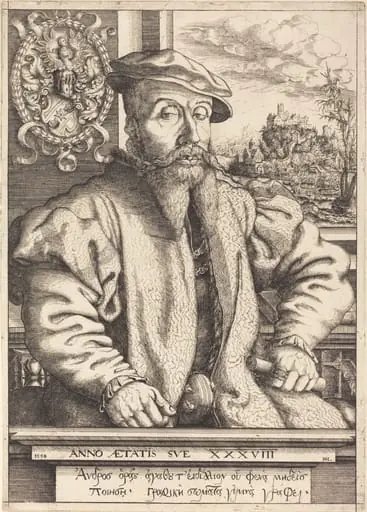
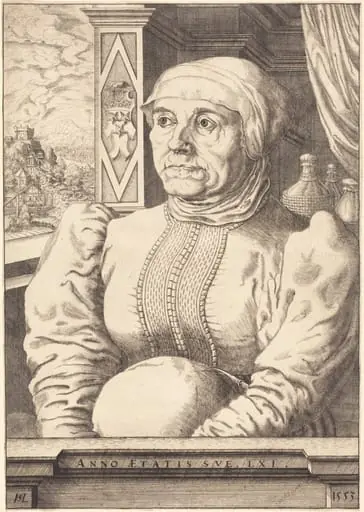
Lady von Eckh (born Piencsenau) is an ink print by the Renaissance artist Hanns Lautensack. It dates from 1553 and is held in the collection of the National Gallery of Art. Created in 1553, this monochrome print portrays a woman of status, rendered through a combination of etching and engraving.
About this work
She wears a high-collared dress with a chain across her chest, and her hair is pulled back under a small hat.
This is a black-and-white portrait of a woman in fancy clothes. She wears a high-collared dress with a chain across her chest, and her hair is pulled back under a small hat. Behind her, a curtain frames her like a window, and a shield with a cross sits on the wall.
The artist used lines to show her rich fabrics and serious expression. The date "1553" is written at the bottom, and the word "ANNO" hints at her age.
Next, check out the technique: etching, drypoint, aquatint.
Overview
Created in 1553, this monochrome print portrays a woman of status, rendered through a combination of etching and engraving. The composition centers the figure against a curtained backdrop, with a heraldic shield positioned to her left. A modest hat frames her tightly gathered hair, while the inscription of the year and a reference to her age appear at the lower edge of the image.
Subject & Meaning
The sitter, identified as Lady von Eckh, née Piencsenau, is depicted in elaborate attire that signals her noble rank. The high‑collared gown, ornate chain, and the presence of a cross‑bearing shield suggest both wealth and a connection to chivalric or familial symbolism, emphasizing her social standing and possibly her piety.
Technique & Style
Hanns Lautensack employed both etching and engraving to achieve fine linear detail, using incised lines to model the texture of luxurious fabrics and the sitter’s solemn expression. The interplay of shallow etched lines and deeper engraved strokes creates a nuanced tonal range, characteristic of mid‑16th‑century German printmaking, while the crisp rendering of the background elements adds depth to the portrait.
History & Provenance
Born in Bamberg in 1524, Lautensack was the son of painter Paul Lautensack and spent much of his professional life in Nuremberg before relocating to Vienna, where he may have worked under the patronage of Emperor Ferdinand I. The portrait likely originated from his Viennese period, reflecting the artist’s connections to aristocratic patrons during that time.
Context
The work exemplifies the German tradition of detailed portrait prints that flourished in the mid‑1500s, a period when print media served both as a means of personal commemoration and as a vehicle for disseminating the visual language of status. Lautensack’s combination of etching and engraving aligns with contemporary practices that sought to capture the precision of drawing while exploiting the reproducibility of prints.
Artist & collection
Artist
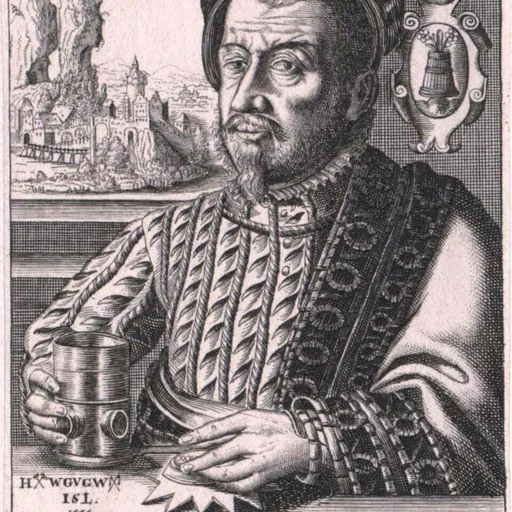
Hanns Lautensack (sometimes erroneously referred to as Hans Sebald Lautensack) (1524 – c.

![View of Nuremberg from the West [center section], by Hanns Lautensack](https://artifactworldgallery.com/img/hanns-lautensack--view-of-nuremberg-from-the-west-center-section--12422dca269411c0-w320.webp)