Artwork
Icoana este pictată pe dosul unei bucăți de sticlă, de formă dreptunghiulară în ax vertical. De o parte și de alta a unei cruci treflate, plasată pe un promontoriu, sugerând Golgota, sunt reprezentați Constantin și Elena. Conturul brațelor superioare este încadrat de o zonă incandescentă în culori intunecate. Sfinții redați în picioare, 1/1, susțin cu o mână crucea. Poartă veșminte împărătești bizantine, destul de simple, cu câteva elemente decorative (romb, val, spirală). Pe cap coroane înalte, deschise. Carnația roz, fețele ușor disproporționate; sfânta Elena are părul acoperit; Constantin are barba scurtă , părul brun-roșcat. Chenar pe laturile verticale, superior bandă ondulată. Spațiul rămas până la ramă decorat cu benzi oblice de culoare galbenă. Culoarea de fond este înlocuită în transparența sticlei de foița argintată. Desenul ușor stângaci, tușele groase, fețele expresive. Paleta cromatică: alb, verde, negru, galben, verde închis, brun-roșcat, fond gri-argintiu. Rama, lată , profilată, din lemn de brad, vopsită cu maro. Capac din lemn, pe dos, cu inel metalic pentru agățare.
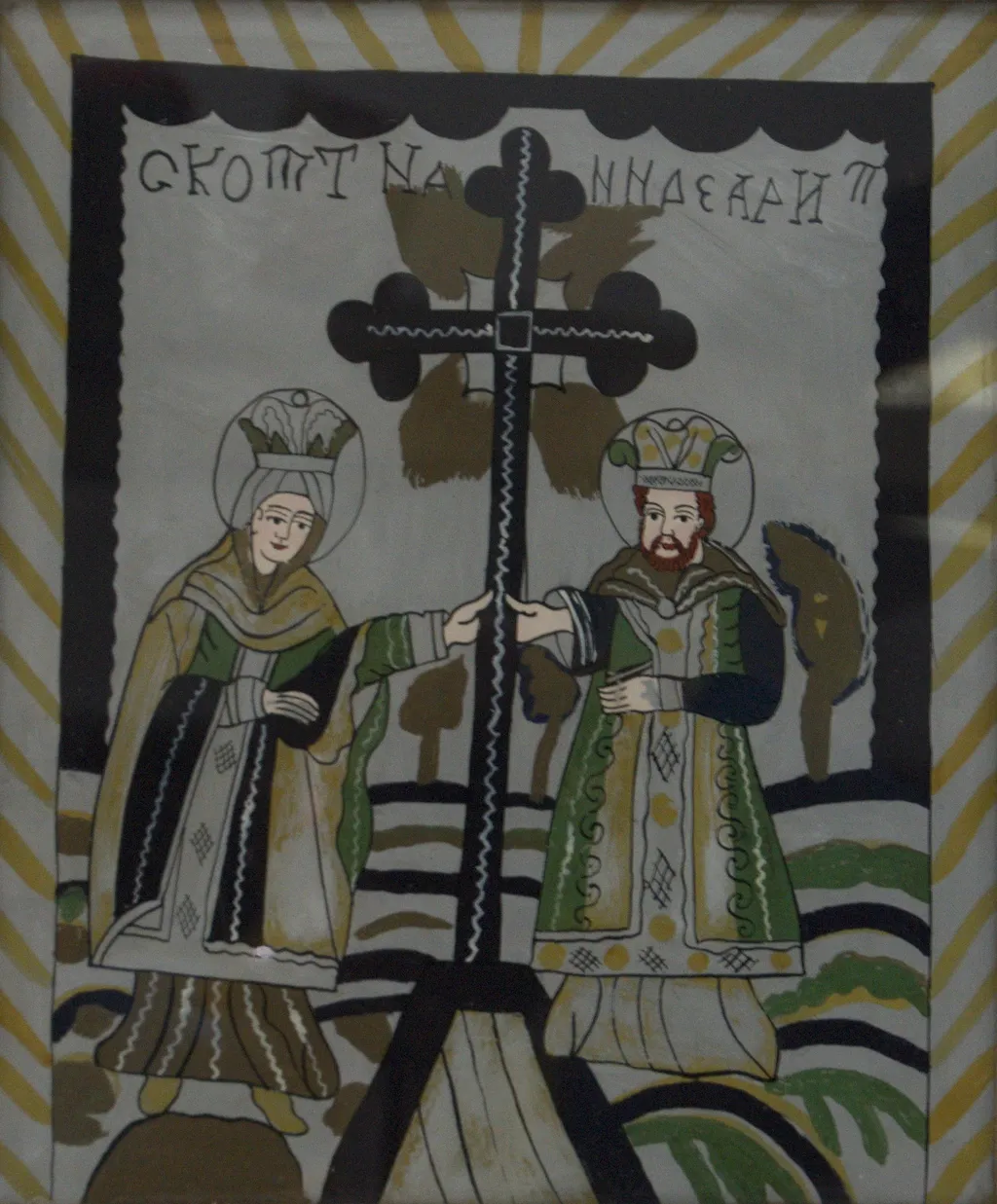
Icoana este pictată pe dosul unei bucăți de sticlă, de formă dreptunghiulară în ax vertical. De o parte și de alta a unei cruci treflate, plasată pe un promontoriu, sugerând Golgota, sunt reprezentați Constantin și Elena. Conturul brațelor superioare este încadrat de o zonă incandescentă în culori intunecate. Sfinții redați în picioare, 1/1, susțin cu o mână crucea. Poartă veșminte împărătești bizantine, destul de simple, cu câteva elemente decorative (romb, val, spirală). Pe cap coroane înalte, deschise. Carnația roz, fețele ușor disproporționate; sfânta Elena are părul acoperit; Constantin are barba scurtă , părul brun-roșcat. Chenar pe laturile verticale, superior bandă ondulată. Spațiul rămas până la ramă decorat cu benzi oblice de culoare galbenă. Culoarea de fond este înlocuită în transparența sticlei de foița argintată. Desenul ușor stângaci, tușele groase, fețele expresive. Paleta cromatică: alb, verde, negru, galben, verde închis, brun-roșcat, fond gri-argintiu. Rama, lată , profilată, din lemn de brad, vopsită cu maro. Capac din lemn, pe dos, cu inel metalic pentru agățare. is a drawing by Lupu Ana. It is held in the collection of the "Dimitrie Gusti" National Village Museum. The work is a painted image executed on the reverse side of a vertical rectangular glass panel.
About this work
Overview
The work is a painted image executed on the reverse side of a vertical rectangular glass panel. Two standing figures, identified as Constantine and Helena, hold a tall, three‑armed cross positioned on a small promontory that evokes Golgotha. The composition is framed by a wide, profiled fir‑wood frame painted brown, with a metal hanging loop on the back.
Subject & Meaning
Constantine and his mother Helena are depicted as imperial saints, each supporting the cross with one hand. Their attire consists of simple Byzantine court robes adorned with modest decorative motifs such as a rhombus, wave, and spiral. The crowns are open and elevated, emphasizing their regal status while the scene alludes to the Christian triumph associated with the cross.
Technique & Style
The image is rendered with bold, somewhat clumsy strokes and thick ink lines, giving the faces an expressive, slightly disproportionate quality.
The image is rendered with bold, somewhat clumsy strokes and thick ink lines, giving the faces an expressive, slightly disproportionate quality. A limited palette of white, green, black, yellow, dark green, reddish‑brown and a silvery‑gray background—enhanced by the glass’s translucency—creates a metallic sheen. Diagonal yellow bands border the remaining glass surface, and a wavy upper band frames the central scene.
History & Provenance
The piece is presented as a single, unique object, mounted in a wooden frame with a removable lid. No specific date or workshop is recorded, but the use of painted glass and Byzantine‑inspired iconography suggests a regional devotional production, likely intended for private or small‑scale liturgical use.
Context
By portraying the imperial couple as saints, the work reflects the 4th‑century tradition that linked Constantine’s conversion and Helena’s pilgrimage to the Holy Land with the sanctity of the cross. The simplified decorative elements and modest clothing indicate a focus on narrative over lavish ornamentation, aligning with folk‑type religious art rather than courtly commissions.
Artist & collection
Artist
Ana Lupu painted religious scenes on the backs of glass panels, a tradition from the Lancrăm region.
Museum
"Dimitrie Gusti" National Village Museum
Continue through works from the same source collection.
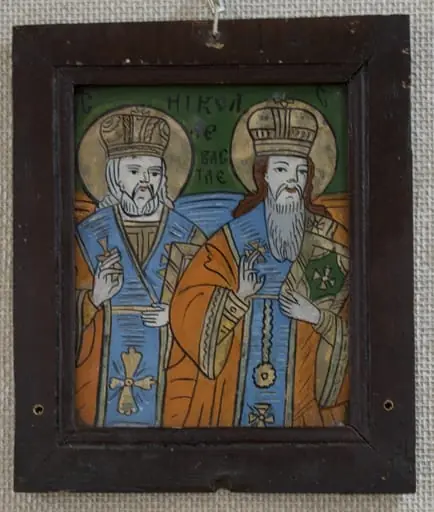 Icoana este pictată pe dosul unei bucăți de sticlă dreptunghiulară, în ax vertical; Sunt reprezentați sfinții ierarhi Nicolae al Mirelor Lichiei și Vasile cel Mare, într-o asociere mai puțin întâlnită. Cei doi sfinți sunt redați 3/4, din ușor semiprofil, privind către stânga lor. Cu dreapta binecuvintează cu degetul inelar unit cu cel mare, în stânga țin o carte sfântă la piept. Poziția este mai puțin uzitată: sfântul Nicolae este plasat puțin în spatele sf Vasile, creînd perspectivă. Ambii sunt înveșmântați cu sacosuri roșu cărămiziu cu borduri aurite, stihare orange cu mânecuțe, aurite, omofor bleu cu chenar și cruci aurite. Pe cap au mitre rotunde, înalte, bipartite. Sfântul Vasile are la gât un engolpion circular, confundat probabil cu o decorațiune. Sfântul Nicolae are barba scurtă, părul lung, alb, iar sfântul Nicolae are babrba lungă, albă și părul castaniu. Câmp verde întunecat, cu porțiuni de bleu și orange în dreptul umerilor sfinților, corespunzător culorilor veșmintelor. Inscripția este scrisă cu negru, cei doi S fiind plasați în colțuri,. Compoziția este ușor comprimată. Rama este alcătuită din patru șipci drepte, îmbinate oblic la colțuri, profilate pe o porțiune mică la interior, vopsite cu o culoare maron închis-roșcat, peste care s-a aplicat un lac lucios. Are trei găuri circulare, suscentral și lateral jos, pentru a fi prinsă oblic(mai târzii) Dosul este realizat din brad, fixate în cuie.
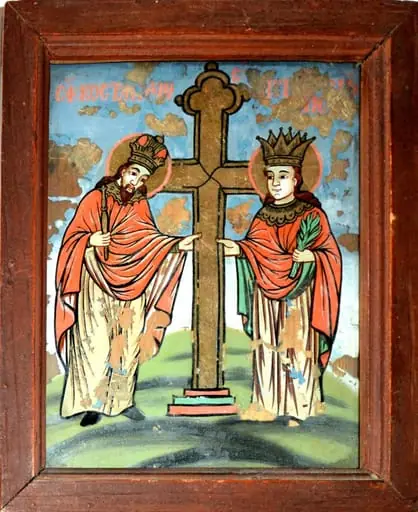 Sfinții împărați Constantin și Elena
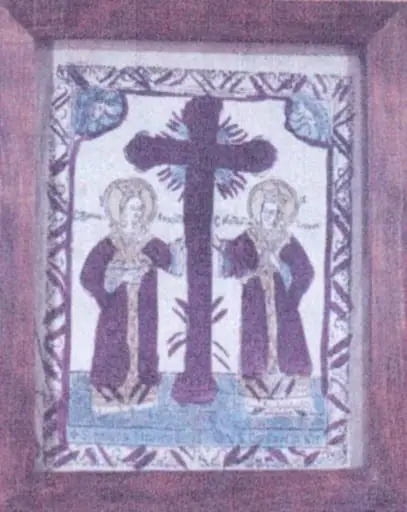 Sfinții Constantin și Elena
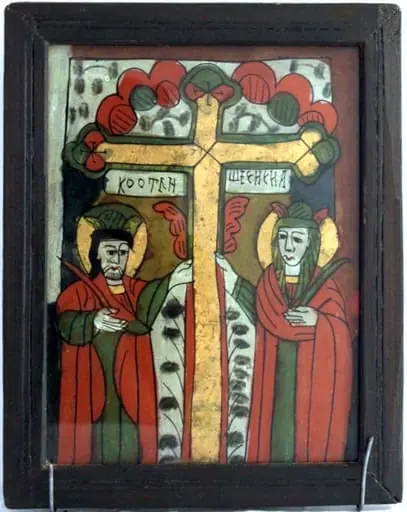 Sf. Constantin și Elena
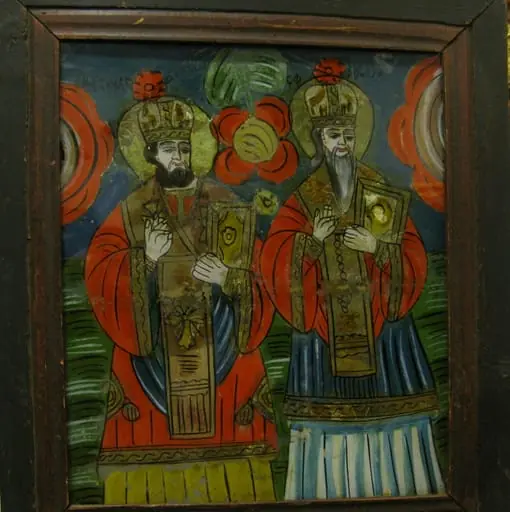 Sf. Nicolae și Vasile
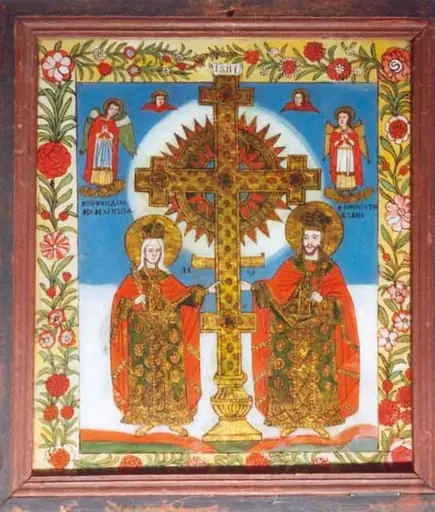 Sfinții Constantin și Elena
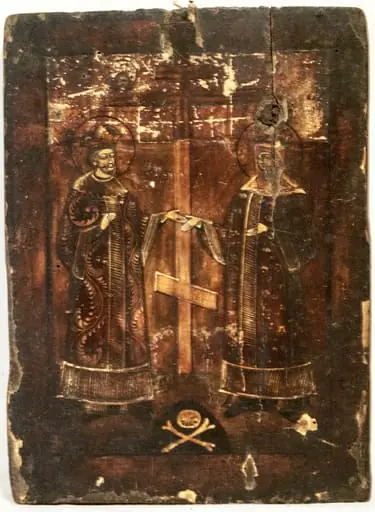 Sfinții împărați Constantin și Elena sunt redați conform erminiilor, de o parte și de alta a crucii răstignirii(aici de tip rusesc, cu 6 brațe), cruce găsită de împărăteasa Elena la Ierusalim. La baza crucii, craniul lui Adam, sugerând răscumpărarea păcatelor omenirii prin jertfa lui Iisus. Cei doi poartă coroane și veșminte împărătești, bogat decorate cu motive fitomorfe, la împărat în volute mari, la sfânta Elena mici, punctiforme. Gestul mâinilor, de arătare a crucii. În partea stângă a crucii, pe latura de sus, imediat sub chenar, chipul lui Iisus, așa cum s-a imprimat pe mahrama Veronicăi. Cromatica specifică, tonuri de roșu, brun, valorate de fondul foiței(aplicată în partea de sus, incluzând coroanele celor doi sfinți. Bordura roșiatică o înscrie în categoria icoanelor de tip krasnushka, caracteristice pentru centrul Holui. Pe spatele icoanei lipit un timbru al miliției RPR cu numele Zoe Apostolescu cu cerneală neagră..
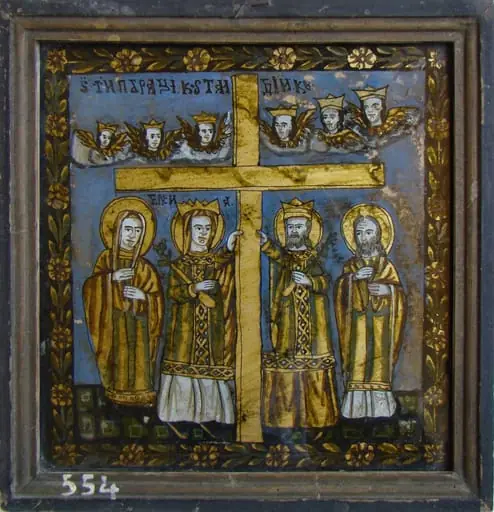 Înălțarea Sfintei Cruci
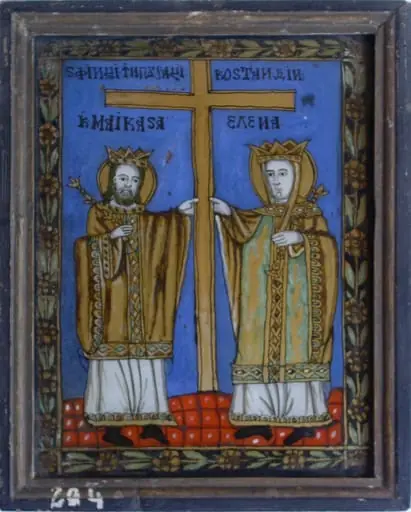 Sfinții împărați Constantin și Elena
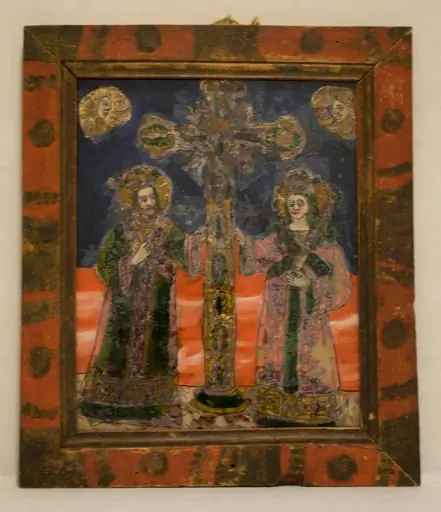 Icoana este pictată "în oglindă", pe un suport de sticlă de formă dreptunghiulară în ax vertical. Compoziția îi reprezintă pe Sfinții Împărați Constantin și Elena, susținând crucea pe care a fost răstignit Isus, cruce găsită de Împărăteasa Elena la Ierusalim. Crucea, aflată pe un postament circular, are brațele trilobate și raze care pornesc de la întretăierea brațelor. Este bogat ornamentată cu motive geometrice și florale stilizate pictată neîngrijit în alternanțe cromatice de verde smarald și galben, auriu. Cei doi sfinți sunt reprezentați cu însemnele împărătești, coroane pe cap și sceptru în mână. Veșmintele bogat ornamentate prin desenul cu condeiul, cu motive florale și fitomorfe , șiruri de romburi cu laturile duble încheiate cu cercuri.Aureolele aurite, cu marginea din desen vălurită. Apare aici și perspectiva, Crucea și sfinții fiind așezate pe o pardoseală, în spate până aproape la jumătatea icoanei un amestec de orange cu alb dând tridimensionalitate compoziției. Restul câmpului este de un albastru intens, cu reprezentări ale soarelui și lunii în cele două colțuri.Cele două astre sunt antropomorfizate, asemănătoare. Paleta cromatică variată: roșu, negru, alb, verde-oliv, gri, albastru, galben, orange, auriu, culorile intense. Desenul trasat cu condeiul este foarte încărcat și destul de neglijent, la fel umplerea cu culoare. Rama orange, ornamentată cu puncte și benzi transversale de grosimi diferite, de culoare verde.Dosul din șipci orizontale fixate de ramă.
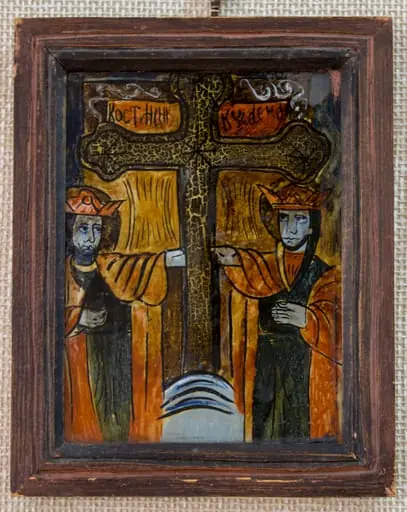 Icoana este pictată pe spatele unei bucăți de sticlă dreptunghiulară, în ax vertical. Compoziția îi reprezintă pe Sfinții Împărați Constantin și Elena, susținînd crucea pe care a fost răstignit Isus, cruce găsită de Împărăteasa Elena la Ierusalim. Crucea, aflată pe un postament semicircular, are brațele trilobate și brațele însemnate cu cruci. Chenarul crucii este trasat cu negru, din două linii subțiri. Cei doi sfinți sunt reprezentați cu coroane împărătești, în picioare, sub brațele crucii. Veșmintele sunt simple, mantii aurii și tunici verzi.Câmpul- aceeași nuanță de orange cu tonuri de brun, rezultate din distribuția neuniformă a culorii. În partea de sus, prelungit lateral până la brațele crucii, chenarul specific Niculei, zăluțe albe pe fond brun. Compoziția se remarcă prin simetrie și valorația cromatică. Rama este pictată în cafeniu la interior și roșu la exterior.
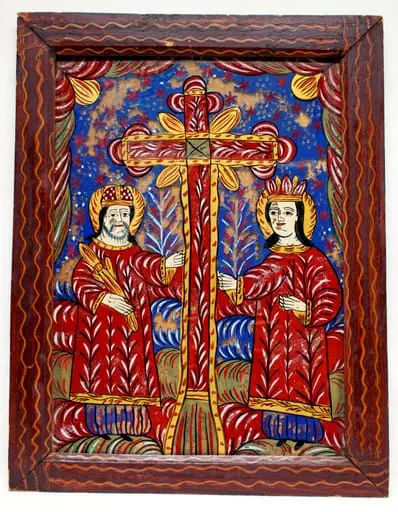 Icoana îi reprezintă pe Sfinții Împărați Constantin și Elena, susținând crucea pe care a fost răstignit Isus, cruce găsită de Împărăteasa Elena la Ierusalim. Crucea, tipul Calvarului, având brațele trilobate este în centrul compoziției pe care o domină.Cei doi sfinți sunt reprezentați cu însemnele împărătești, coroane pe cap și sceptru(împăratul Constantin). Veșmintele sunt simple, decorate doar cu șiruri de ghirlande fitomorfe verticale, în alternanță cromatică. Crucea decorată cu motive fitomorfe Câmpul icoanei, albastru ultramarin, decorat cu motive astrale și florale. În colțurile superioare sunt pictate falduri de draperii iar jumătatea inferioară a icoanei este "umplută" cu un relief vălurit și elemente vegetale. Compoziția foarte încărcată. Rama decorată cu căte trei șiruri de linii vălurite de culoare mai deschisă. Paleta cromatică: roșu, negru, alb, verde-oliv, gri, fond albastru cu decor roșu și alb. Rama - lemn de brad, "dosul" din șipci orizontale fixate de ramă.