Artwork
Saint Roch
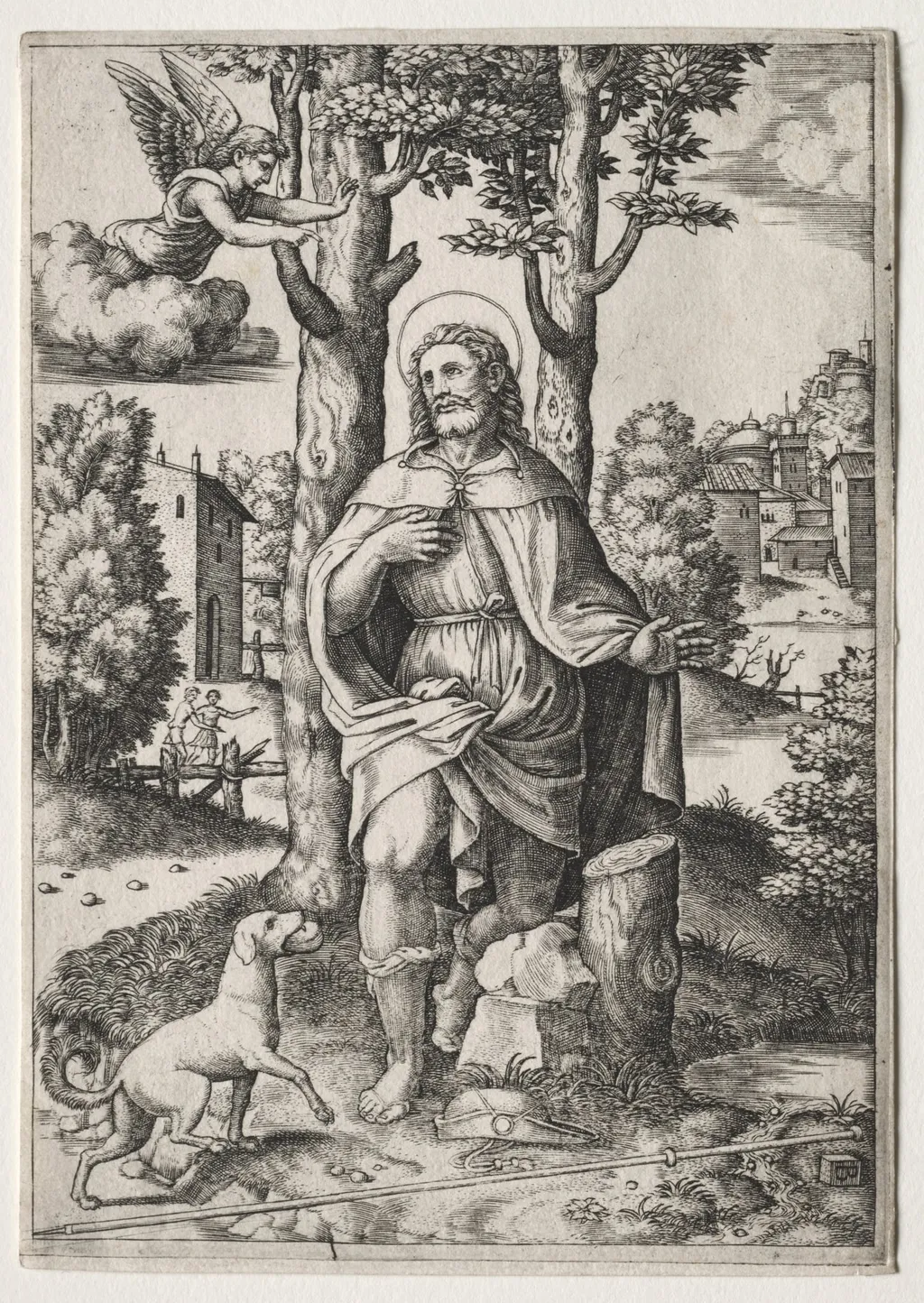
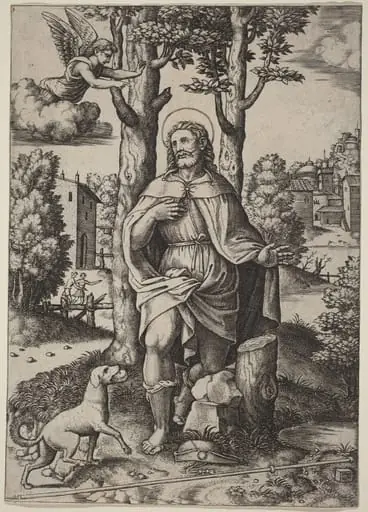
Saint Roch is a print by the Renaissance artist Master of the Die. It dates from 1545 and is held in the collection of the Cleveland Museum of Art.
About this work
Overview
The work is part of a broader tradition of devotional prints circulating in mid-16th-century Italy.
This black-and-white engraving, produced in 1545 by an anonymous Italian printmaker known as the Master of the Die, depicts Saint Roch, a figure venerated for protection against plague. The work is part of a broader tradition of devotional prints circulating in mid-16th-century Italy. The artist, identified by a distinctive die-shaped signature, was likely trained in the circle of Marcantonio Raimondi and worked within the stylistic influence of Raphael’s school.
Subject & Meaning
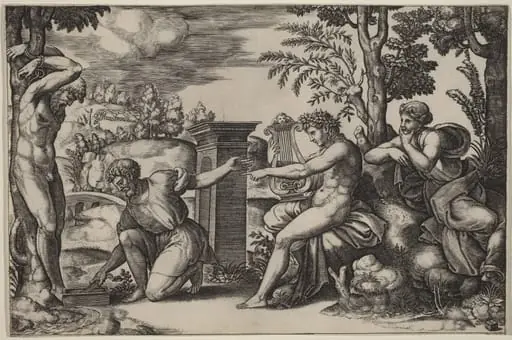
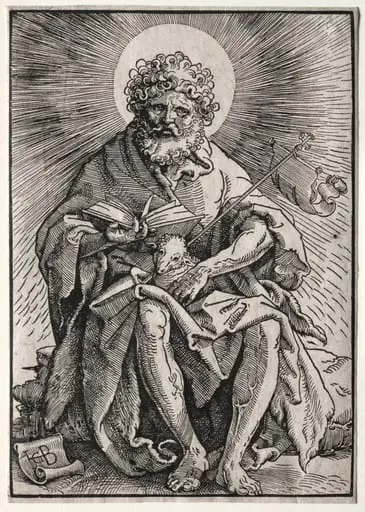
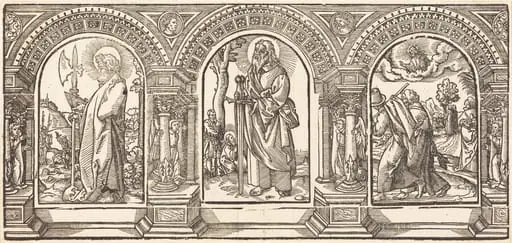
Saint Roch is shown standing beneath a tree, holding a book and gesturing outward, while a dog licks his leg and a lion rests at his feet. These animals reflect traditional hagiographic symbols: the dog, often linked to the saint’s care during illness, and the lion, representing divine protection. An angel hovers above, reaching for fruit, suggesting heavenly provision. The composition reinforces Roch’s role as an intercessor during epidemics, blending narrative clarity with spiritual symbolism.
Technique & Style
Executed in fine linear engraving, the print employs delicate hatching to model form and depth, characteristic of Italian Renaissance printmaking. The figures are rendered with restrained elegance, their drapery and anatomy echoing Raphael’s idealized figures. Background elements—the village, the tree, the angel—are subtly suggested, creating spatial recession without overwhelming the central figures. The precision of the lines reflects technical mastery and adherence to established compositional norms.
History & Provenance
The engraving entered the collection of the Cleveland Museum of Art as part of its holdings of early Italian prints. While the artist’s identity remains undocumented, his body of work is consistently attributed to a single hand active between 1525 and 1560. The print’s survival in good condition suggests it was carefully preserved, likely by private collectors or religious institutions interested in devotional imagery during the Counter-Reformation.
Context
Produced during a period of recurring plague outbreaks in Italy, images of Saint Roch served both devotional and protective functions. Printmakers like the Master of the Die met demand for affordable, portable religious images, making saintly intercessors accessible beyond church walls. The stylistic debt to Raphael reflects the enduring influence of High Renaissance ideals on even modest print productions of the era.
Legacy
The print exemplifies how religious iconography was standardized and disseminated through print technology in the 16th century. Though the artist’s name is lost, his work contributes to understanding the transmission of visual motifs across regions and social classes. Similar compositions persisted in later devotional prints, demonstrating the lasting resonance of Saint Roch’s imagery in European religious culture.
Artist & collection

Artist
Master of the Die (fl. 1525–1560) was an Italian engraver and printmaker. His year of birth and death are unknown. The identity of the Master of the Die is uncertain. He was given this name because he signed his prints…