Artwork
Beheading of Saint John the Baptist
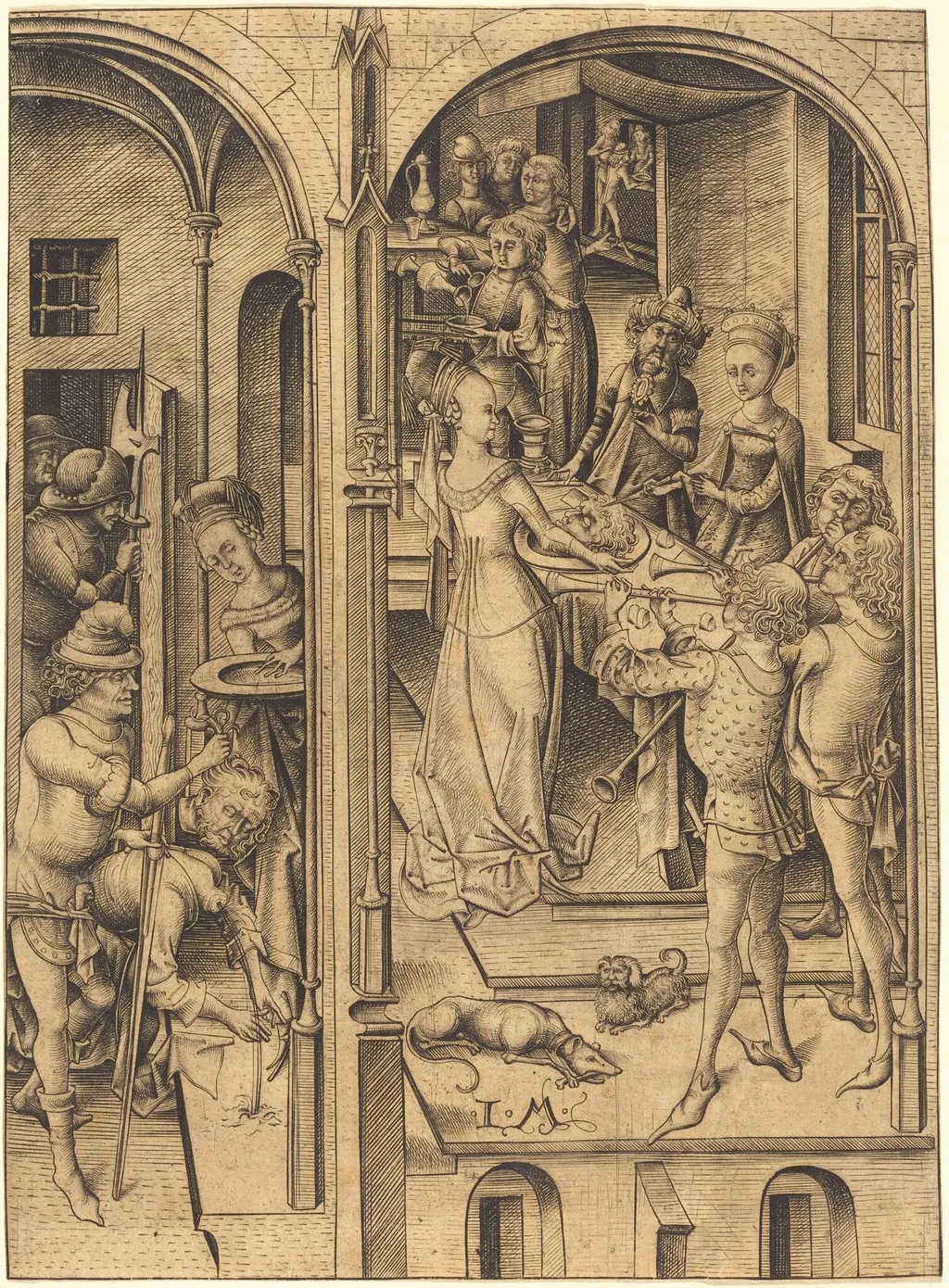
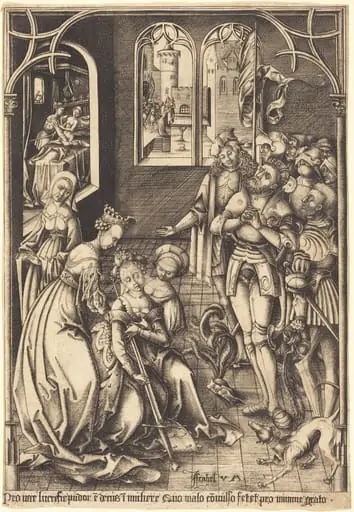
Beheading of Saint John the Baptist is an ink print by the Renaissance artist Israhel van Meckenem. It dates from 1480 and is held in the collection of the National Gallery of Art.
About this work
Overview
Beheading of Saint John the Baptist is an engraving created by Israhel van Meckenem around 1480. As a prolific German printmaker and goldsmith of the Northern Renaissance, van Meckenem produced over 620 prints, often adapting existing works. This piece exemplifies the period's focus on detailed religious imagery.
Subject & Meaning
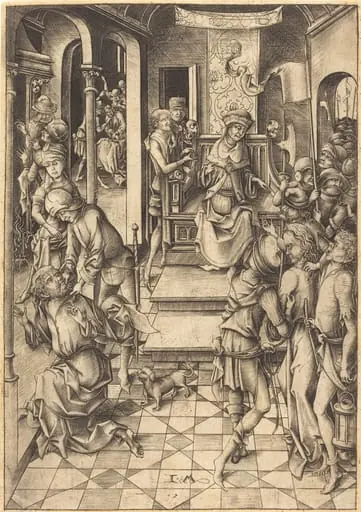
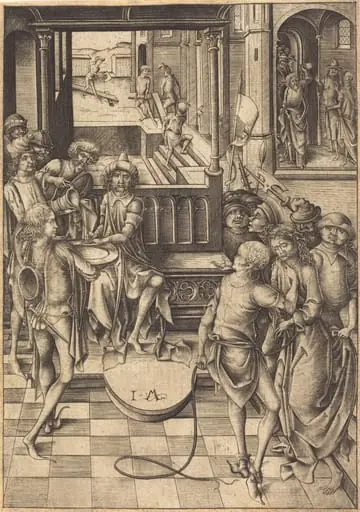
The engraving depicts the biblical scene of John the Baptist's execution, a common theme in Christian art. The crowded composition features a central beheading, with onlookers reacting in various ways, alongside symbolic elements such as a lion and a half-naked woman holding a dish, conveying the dramatic and religious significance of the event.
Technique & Style
Van Meckenem employed fine lines to achieve intricate details, evident in the distinct facial expressions, textured clothing, and the lion's fur. The use of engraving techniques allowed for precise rendering of arched windows, a throne-like seat, and other architectural elements in the background.
History & Provenance
Created circa 1480, the engraving is characteristic of van Meckenem's prolific output during his active period (1465-1503). While specific ownership history is not provided, it is known to be one of many adaptations of existing works by the artist.
Context
This work reflects the Northern Renaissance's emphasis on religious themes and meticulous detail. As an engraving, it was likely produced in multiple copies, contributing to the widespread dissemination of religious imagery during this period.
Artist & collection
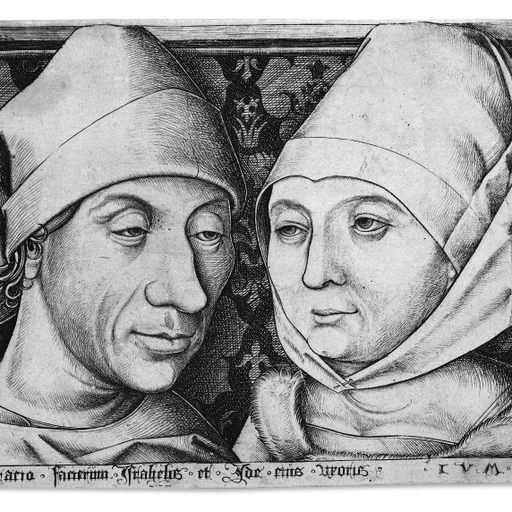
Artist
Israhel van Meckenem (c. 1445 – 10 November 1503), also known as Israhel van Meckenem the Younger, was a German printmaker and goldsmith, perhaps of a Dutch family origin. He was the most prolific engraver of the…