Artwork
Title-Page: Brooch, Snail-like Animals Above, Centaurs with Banners at Bottom
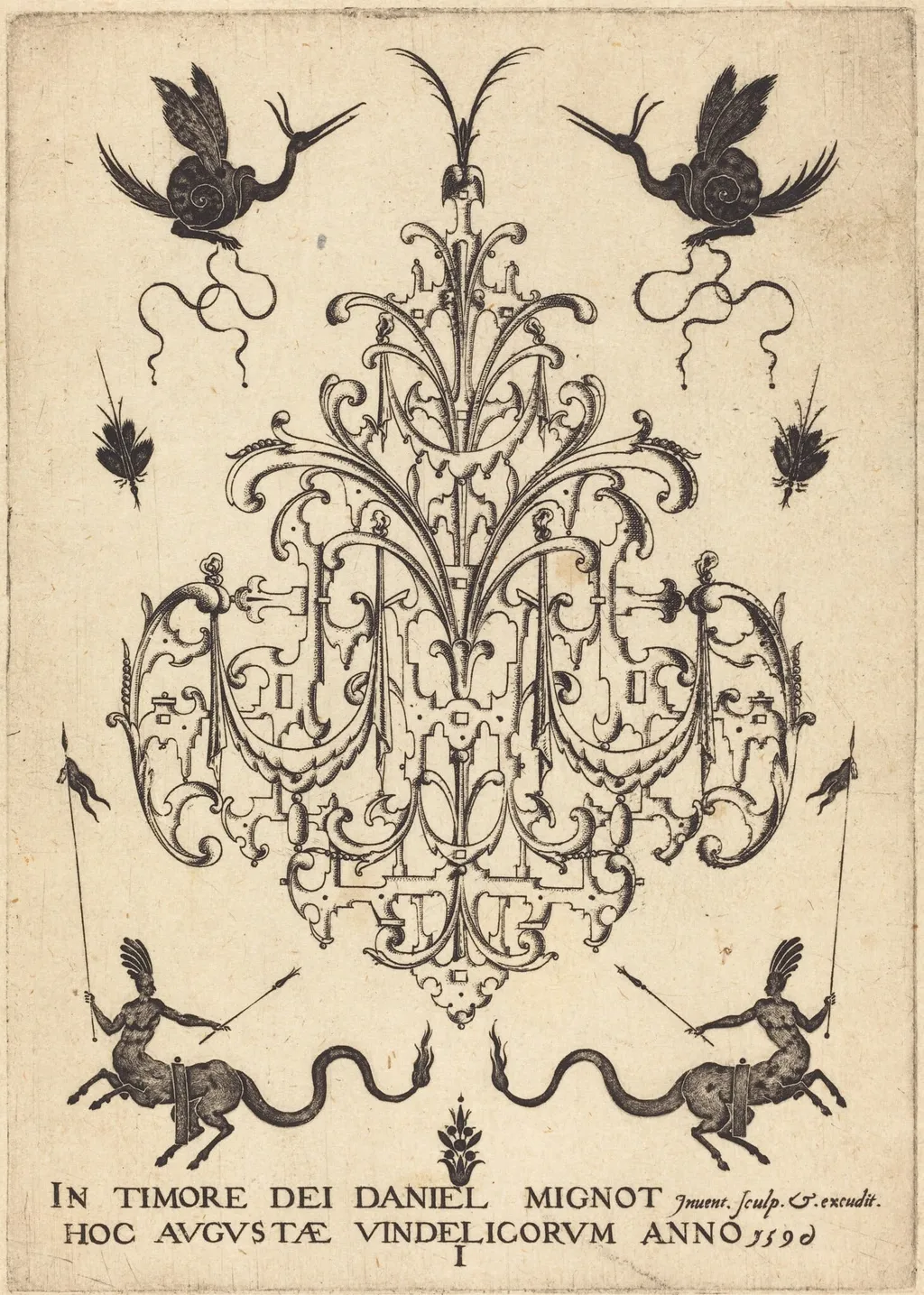
Title-Page: Brooch, Snail-like Animals Above, Centaurs with Banners at Bottom is an ink print by the Renaissance artist Daniel Mignot. It dates from 1596 and is held in the collection of the National Gallery of Art.
About this work
If you like this style, look up engraving to see how artists create these sharp, precise lines.
This image shows a detailed engraving with a fancy, swirly design at the center. Around the top, two birds with long tails and curved beaks face each other. Below, two half-horse, half-human figures hold banners and ride on snail-like creatures. The background is mostly empty, letting the black lines stand out sharply.
The tiny text at the bottom names the artist and says it was made in 1596. The design looks like something you’d see on old jewelry or decorations.
If you like this style, look up engraving to see how artists create these sharp, precise lines.
Overview
Daniel Mignot’s 1596 engraving, titled “Title‑Page: Brooch, Snail‑like Animals Above, Centaurs with Banners at Bottom,” presents a symmetrical, ornamental composition. The central motif consists of an intricate, swirling pattern reminiscent of decorative jewelry, framed by bird‑like figures at the top and mythic centaur figures supporting banners at the lower edge.
Subject & Meaning
The upper register features two long‑tailed birds with curved beaks that face one another, suggesting a balanced, perhaps allegorical dialogue. Below, half‑human, half‑equine centaurs are depicted riding on elongated, snail‑shaped forms while bearing banners, a motif that may allude to triumph or procession in a decorative context.
Technique & Style
Executed in fine line engraving, Mignot employs crisp, controlled strokes that give the design a stark contrast against the largely empty background. The precision of the incised lines highlights the ornamental quality of the central swirls and the delicate detailing of the animal and mythic figures.
History & Provenance
The work bears a small inscription at its base confirming Mignot’s authorship and the date 1596, placing it firmly in the late Renaissance period of French printmaking. Its format and decorative motifs suggest it was intended as a title page or frontispiece for a printed volume, possibly a pattern book for artisans.
Context
During the late sixteenth century, engravers often supplied ornamental designs for book illustrations, metalwork, and textile patterns. Mignot’s composition reflects contemporary tastes for intricate, symmetrical ornamentation that could be adapted across various applied arts, linking print culture with material design.
Artist & collection


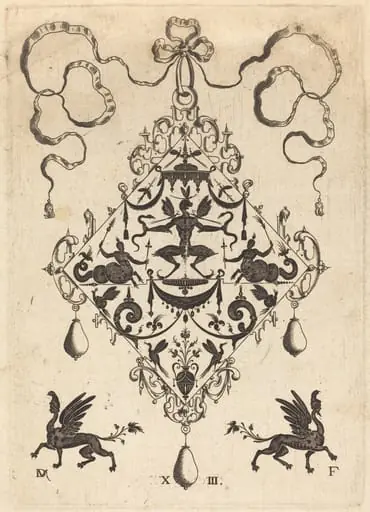 Large Pendant, Winged Fantasy Creature Holding Two Snakes
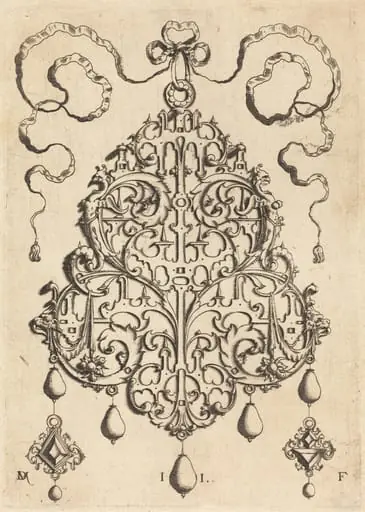 Large Strapwork Pendant with Two Hangers as Earrings at Left and Right
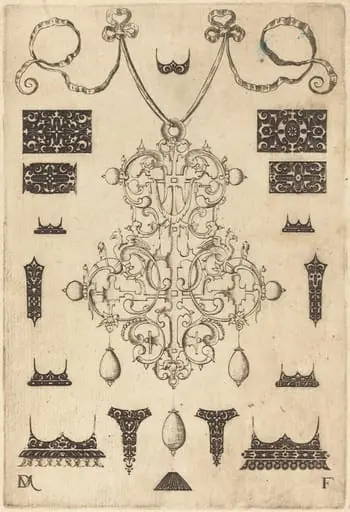 Large Pendant with Three Drops Below, Surrounded by Fifteen Different Studs
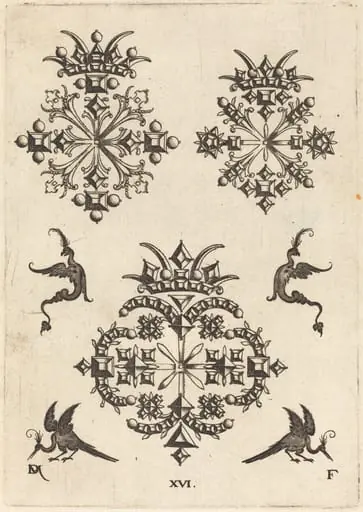 Three Brooches with Fantasy Birds at Left, Right, and Bottom
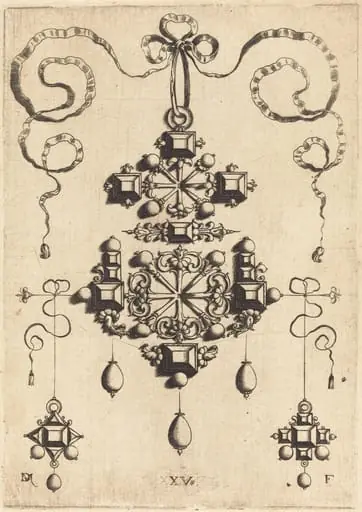 Pendant with Two Double Crosses, Surrounded by Four Diamond-Shaped Stones, Five Table-Stones, and Thirteen Pearls
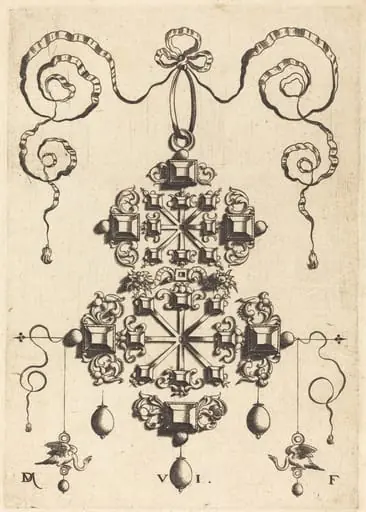 Large Pendant with Two Double Crosses, Surrounded by Six Large and Sixteen Small Table-Stones
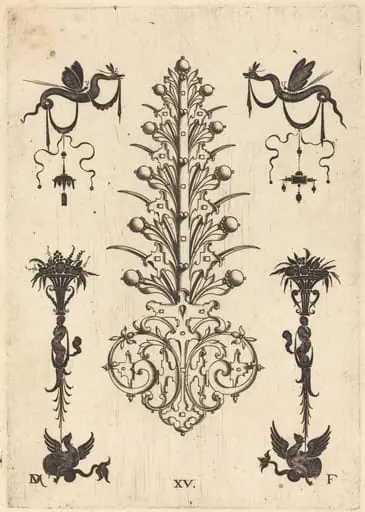 Hyacinth-Shaped Brooch with Winged Snakes at Top and Winged Animals at Bottom
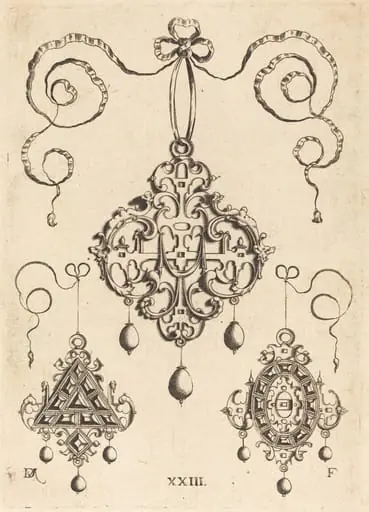 Three Strapwork Pendants, The Lower Ones Triangular and Oval
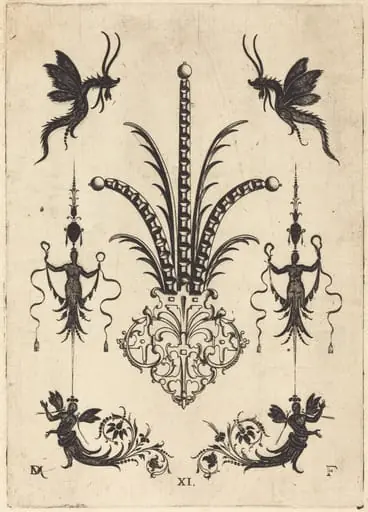 Brooch with Table-Stones, Winged Animals at Top, and Winged Human Beings at Bottom
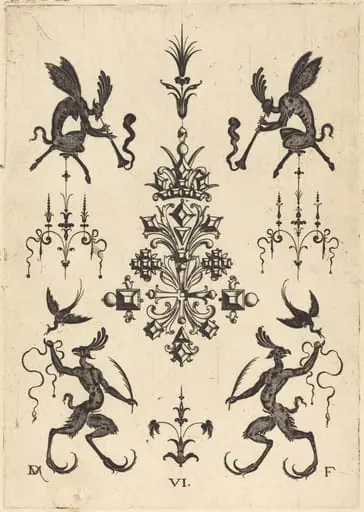 Brooch with Winged Fauns Blowing Trumpets at Top and Fantasy Creatures with Birds at Bottom
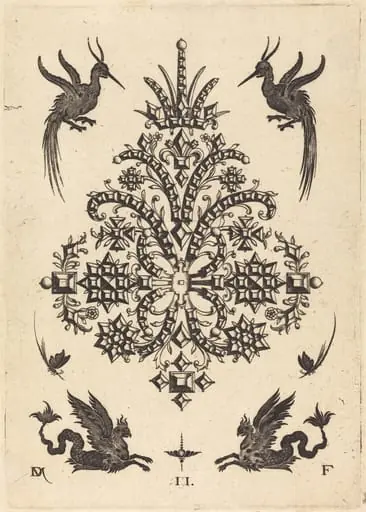 Brooch with Tablestones and Winged Griffins Above and at Bottom
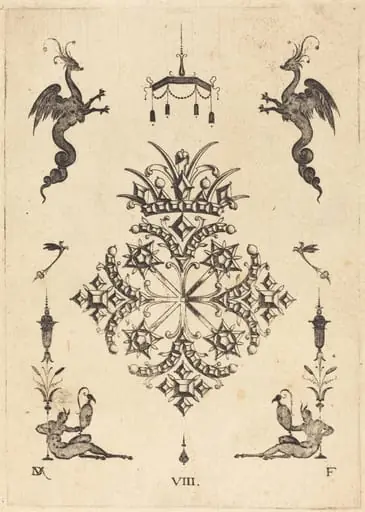 Brooch with Fantasy Animals at Top and Fauns with Vases at Bottom
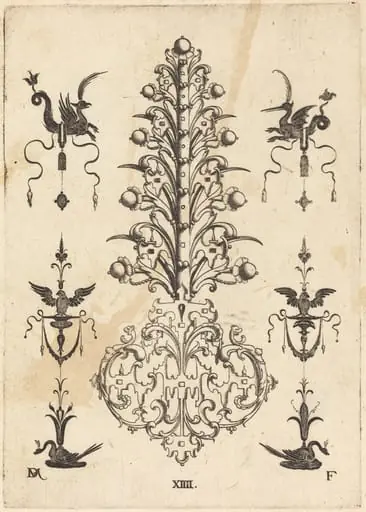 Hyacinth-Shaped Brooch with Winged Animals at Top and Crouching Swans at Bottom
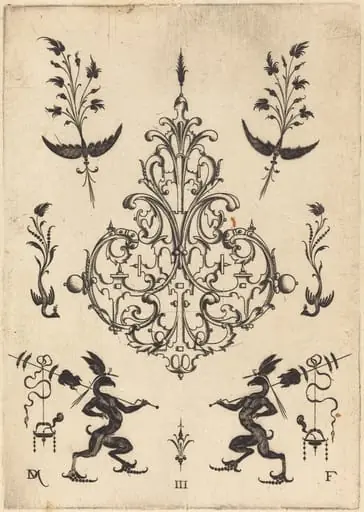 Brooch with Sprigs at Top and Griffins with Trophies at Bottom
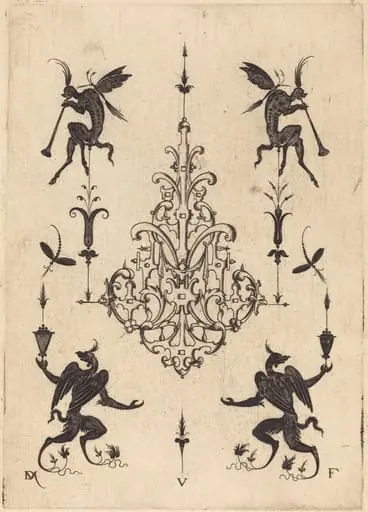 Brooch with Fantasy Creatures Blowing Horns at Top and Winged Griffins at Bottom
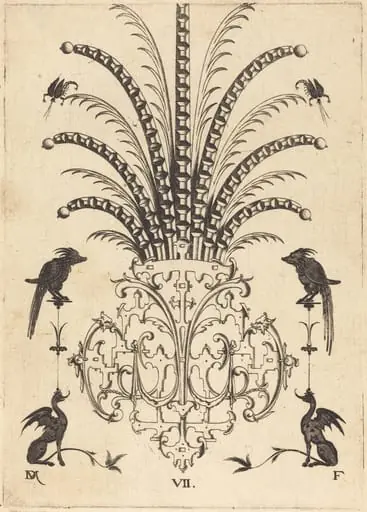 Brooch with Table-Stones, Flying Scorpions at Top, and Dogs at Bottom
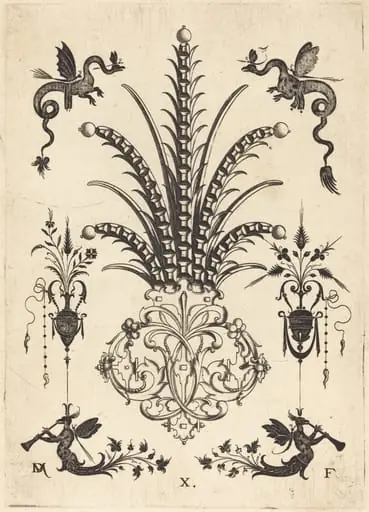 Brooch with Table-Stones, Dragons at Top, andWinged Monsters Blowing Horns at Bottom
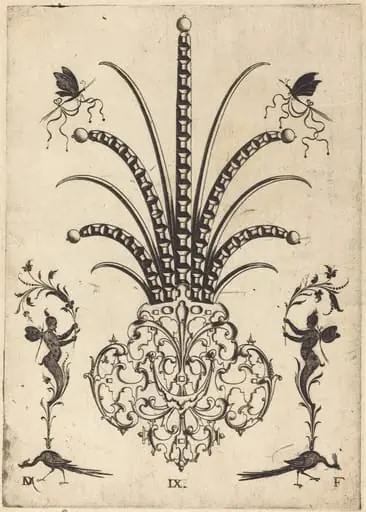 Brooch with Table-Stones, Butterflies at Top, and Peacocks and Hermes at Bottom
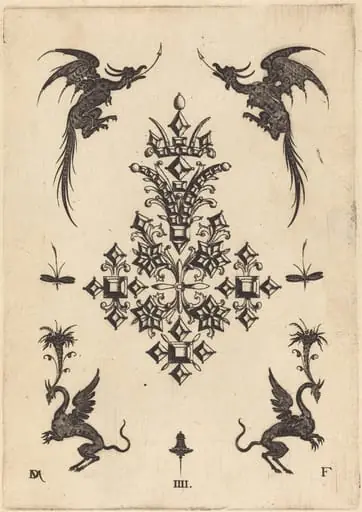 Brooch with Table-Stones, Winged Dragons at Top, and Griffins at Bottom